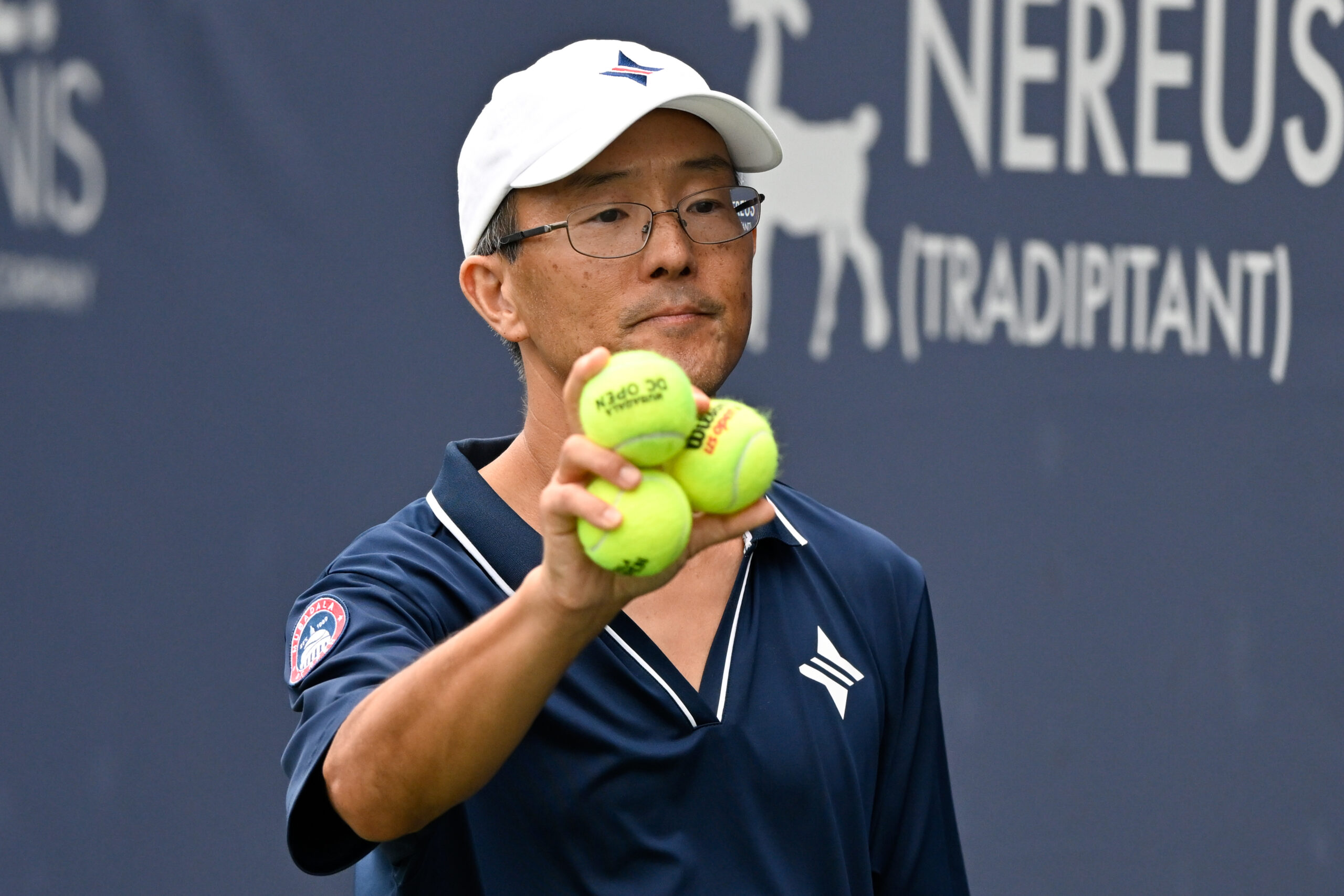
Kuangkai Tai waits. As the tennis pros bat and grunt back and forth, he stretches underneath the bleachers. A light squat, some lunges — anything to keep the 54-year-old limber and ready to perform.
Read more States cast doubt on Trump’s claim that China hacked their voter rolls
“Advantage, set point,” the umpire calls. The crowd hushes. Tai jumps, eagerly trotting toward the gate near the back of the DC Open grandstand. His hands grab the metal fence, leaning over to look toward the far baseline, where the serve draws from. The players exchange smacks, and Tai turns away, stepping to the side, closing his eyes.
Now he listens. His job is to disappear into the world around him. He’s silent, motionless at nearly every glance.
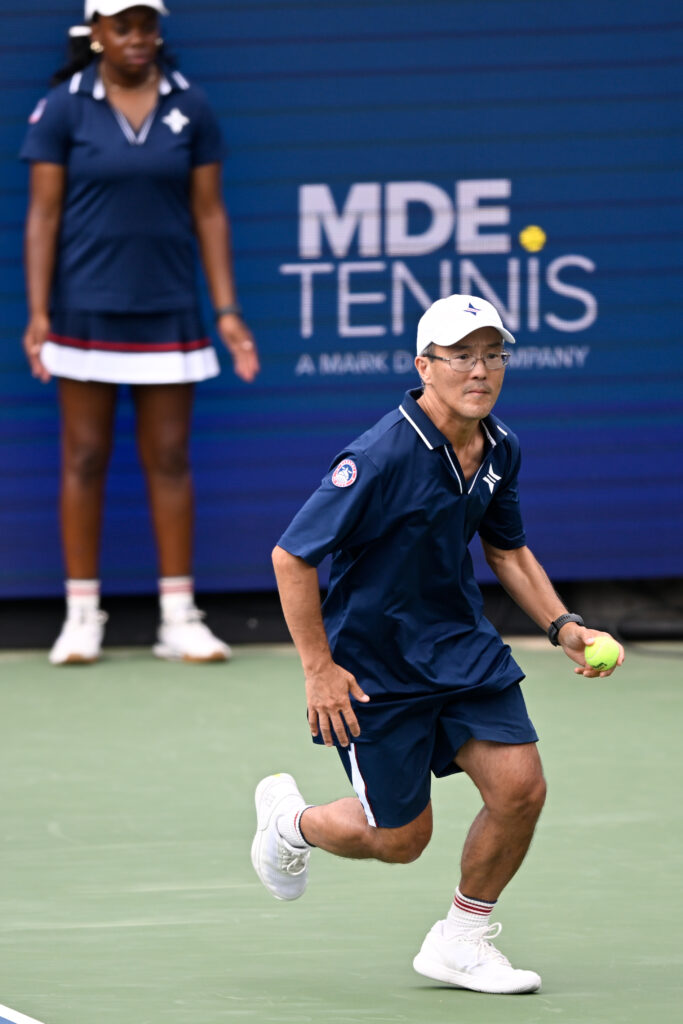
But with the ceremonious roar of a game-ending point, his eyes open, and he takes off toward the ball.
Tennis tournaments can feel like a bubble of serenity, silence filling the space between the players and spectators for almost the entirety of matches. Fans in sundresses and slacks stroll as games play, fruity cocktails abound. The atmosphere can be, depending on the tournament, a bit posh.
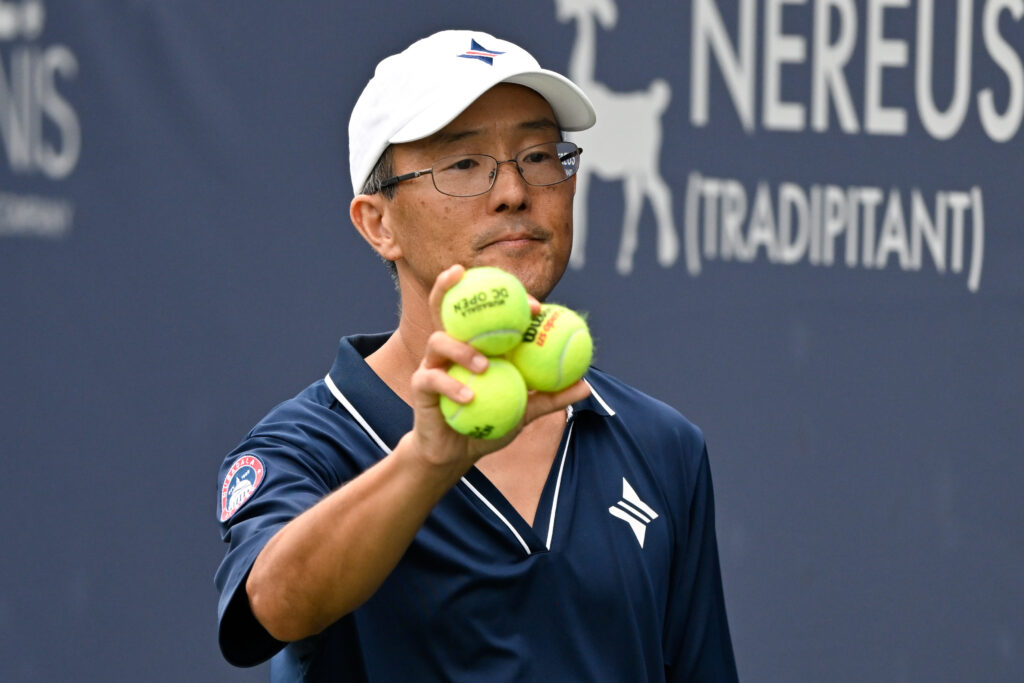
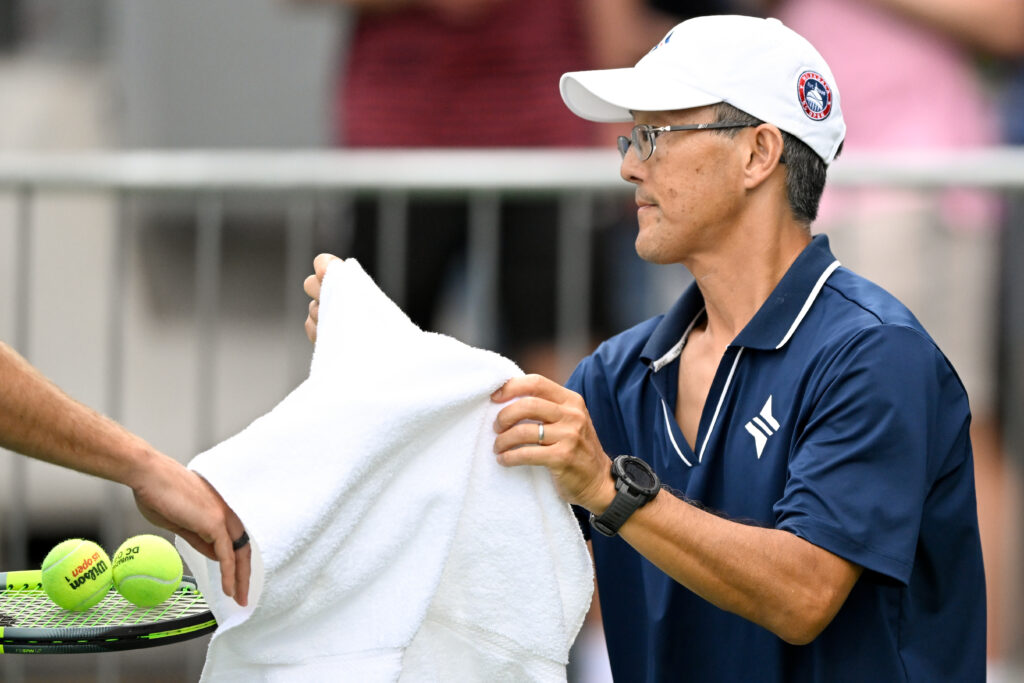
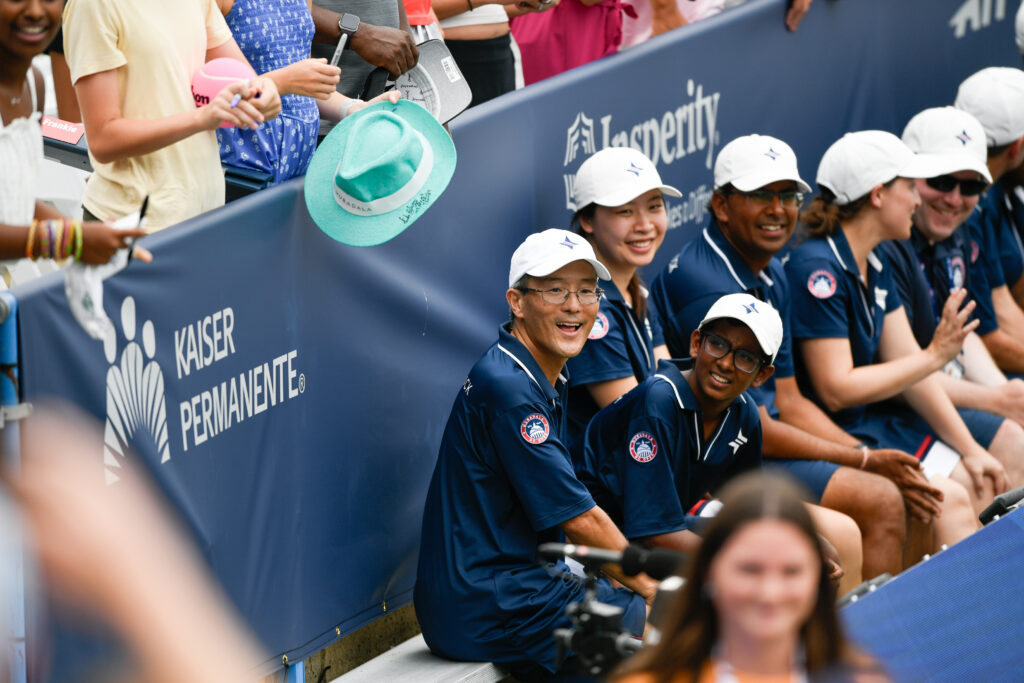
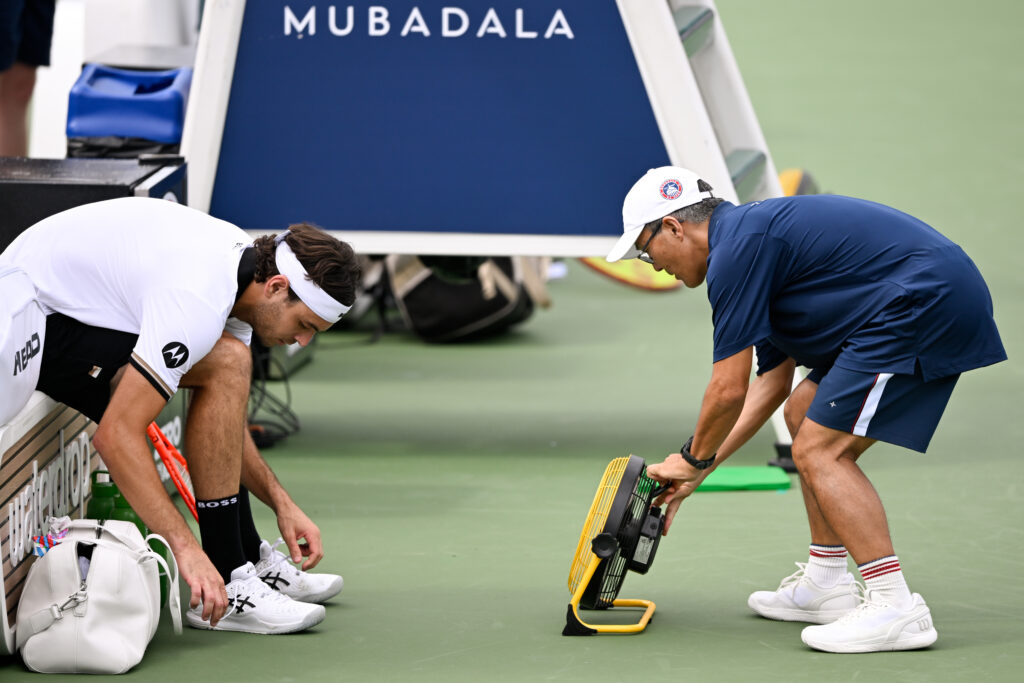
The ball crew holds a special place in that snow globe of history and swank. Away from the trained eye, uniformed volunteers turn the gears of every match. At the DC Open, they wear navy blue getups and white caps, and can be anywhere from 14 to 70, so long as they’re capable of following a few rules. They’re trained to avoid interactions with players and, for the most part, fans. They stand still, without reaction, in the corners of each court. The cardinal sin is making a mistake that disrupts play. If they execute their job — sprinting for balls between points and performing any other tasks a player may require, like holding towels and umbrellas — they receive no recognition.
Yet they’re present everywhere. And they want to be. They had to fight to be.
“We try out for this,” Tai says, “because we love it. It’s intense. It means something. And you just want to keep coming back.”
Back before the DC Open was the Citi Open or the Legg Mason Tennis Classic or the Newsweek Tennis Classic, it was the Sovran Bank Classic. Then, during the 1980s, Tai stumbled into becoming a ball person through a love for playing tennis. Getting closer to the action of top stars was a no-brainer.
Since then, he’s moved to San Diego and become a pediatrician. Every once in a while, though, he’ll find his way back to the court, often traveling with his daughter Emily to work as ball people at top U.S. events. For each, there’s a sharp cutline.
“You have to be skilled,” DC Open ball crew chair Joey Ramsey says. “If the goal is to blend into the environment, there’s a level of speed, agility, precision that [role] requires that we want to measure. More than anything else, you need to know what you’re doing.”
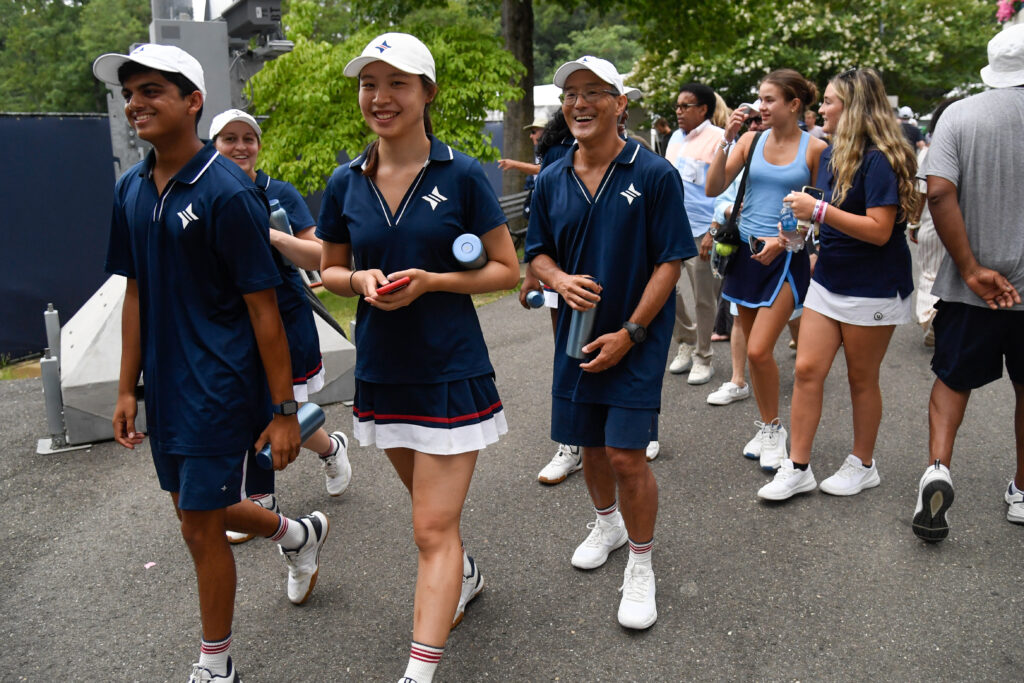
A few weeks before each year’s tournament, Ramsey and six other chairs host tryouts. This year, 60 tried out for 16 open spots. Drills can range from running tests, ball-rolling examinations and quizzes about court positioning. With a player’s every movement, ball people need to shift and remain close enough to their eye line to throw a prospective ball but far enough away to avoid being a distraction. Finding that feel comes with time. But the crew can’t have any weak links.
Most prepare for tryouts by watching and playing tennis. Some say running practice can help, but the job is one of intuition.
“Everyone needs to know what they’re doing,” says Max Sheldon, a 17-year-old who has worked the event four times. “You have to know tennis and have a feel for the athlete.”
Selectees join a staff of 120, most of whom return from prior years. If someone makes the team once, they’re automatically admitted to future staffs. A large selection is valuable. The chairs assign 10 members to each of the five available courts, and groups alternate at the hour mark. “That’s about the amount of time we’ve found someone can be at their top sprint without appearing exhausted,” Ramsey says. Because, of course, a fine ball person isn’t panting in the corner.
“You really never notice them,” world No. 26 Emma Navarro jokes. “A good ballboy I’ll never remember, honestly.”
In the north corner of the Rock Creek Tennis Center property, a few industrial white tents and trailers serve as the mess hall, command center and, on occasion, trivia outpost for ball crew members.
Each morning, the staff begins filing in around 9:30 for the first matches at 11. Folks receive their schedules, which shift them among the five courts every day alongside a new band of fellow “ballers” (as those on the younger end refer to themselves). Some scarf down some Dunkin’ and a bit of coffee.
Read more Most Americans say they would not back a democratic socialist for president
Then “summer camp” commences, Ramsey says. His staff requires that volunteers submit a fun fact about themselves before the event. Between shifts, they play cards — Uno, poker and more — and social games involving those fun facts.

Late Tuesday afternoon, after Tai’s morning match, he walks toward the computer-outfitted camper to talk about plans for his evening assignment if it rains, as the forecast projects. As he takes the first step, the door slings open and a 14-year-old crew member jumps out laughing.
“Obviously, we don’t want people to think about us out there,” says chairman John Ginsberg, 40. “But this should be a good time. We want people to want to do this, no matter their background.”
In that sense, Tai stands out a bit. Most volunteers are local teenagers, many of whom are players for area tennis clubs and high school teams. Tournaments largely don’t promote applications. You hear about openings through the proverbial grapevine.
Sects of traveling ball people, however, pop into pools. Tai, alongside his daughter, tried out for the U.S. Open (she got the bid and he didn’t). Ramsey uses his vacation time each summer to follow some friends along parts of the “East Coast swing” — the U.S. Open, DC Open and Cincinnati Open. “I would do all of them every year if my wife left me,” he says. “But we have kids. She’d leave me if I did that.”
The allure is simple. Watching top-level tennis for free with the best view in the house, all while hanging out with similar racket lovers for days on end, is “the dream,” Tai says. Even then, the ordeal is still a job.
After a two-hour rain delay Tuesday, most crew members have checked out as the final two matches of the night drag past 10. The camper is quiet. Inside, Ramsey and Ginsberg scroll through a web program designed by a former DC Open ball crew member. It tracks all 120 staffers, allowing chair people and crew captains to assign ratings to each.
After the round of 32 is complete, it’s their job to make cuts. With fewer matches, fewer crews are needed. The pair have been taking notes.
“This is when it gets tough,” Ramsey says. “You never want anyone to have to leave.”
He glances back at the small stars beside each name, then at Venus Williams on the TV screen.
After years of repetition, Tai knows how to survive. He does some work between matches (he’s still, in fact, a pediatrician). He stretches and warms up his mind as he watches other matches, processing where he’d need to run in each scenario.
The environment, he says, is enjoyable. He had an 18-year-old crew captain a few days ago. It keeps him young. But, more than anything, he wants to stay.
“You have to take this serious,” he explains. “Tennis is a serious sport, and it’s our job to be prepared, in the right place, ready to help.”
Under the lights for his final match before the first round of cuts will come, he stands behind the chain-link fence once more, watching. Following a point, one of the younger workers on the court drops a ball and has to run onto the court before the next serve. The limited crowd murmurs.
Tai’s lips quiver, and he looks down.
“It’s just intense,” he says. “You need to be everywhere and nowhere.”
After the next point, the shift changes and he opens the gate. In a brief, silent exchange, he smiles at the teenager. Then he replaces him, grabbing two neon balls from his hands. He turns, looks forward, and the next play begins.
Read more Lawmakers will investigate Iranian attack that killed 6 U.S. troops