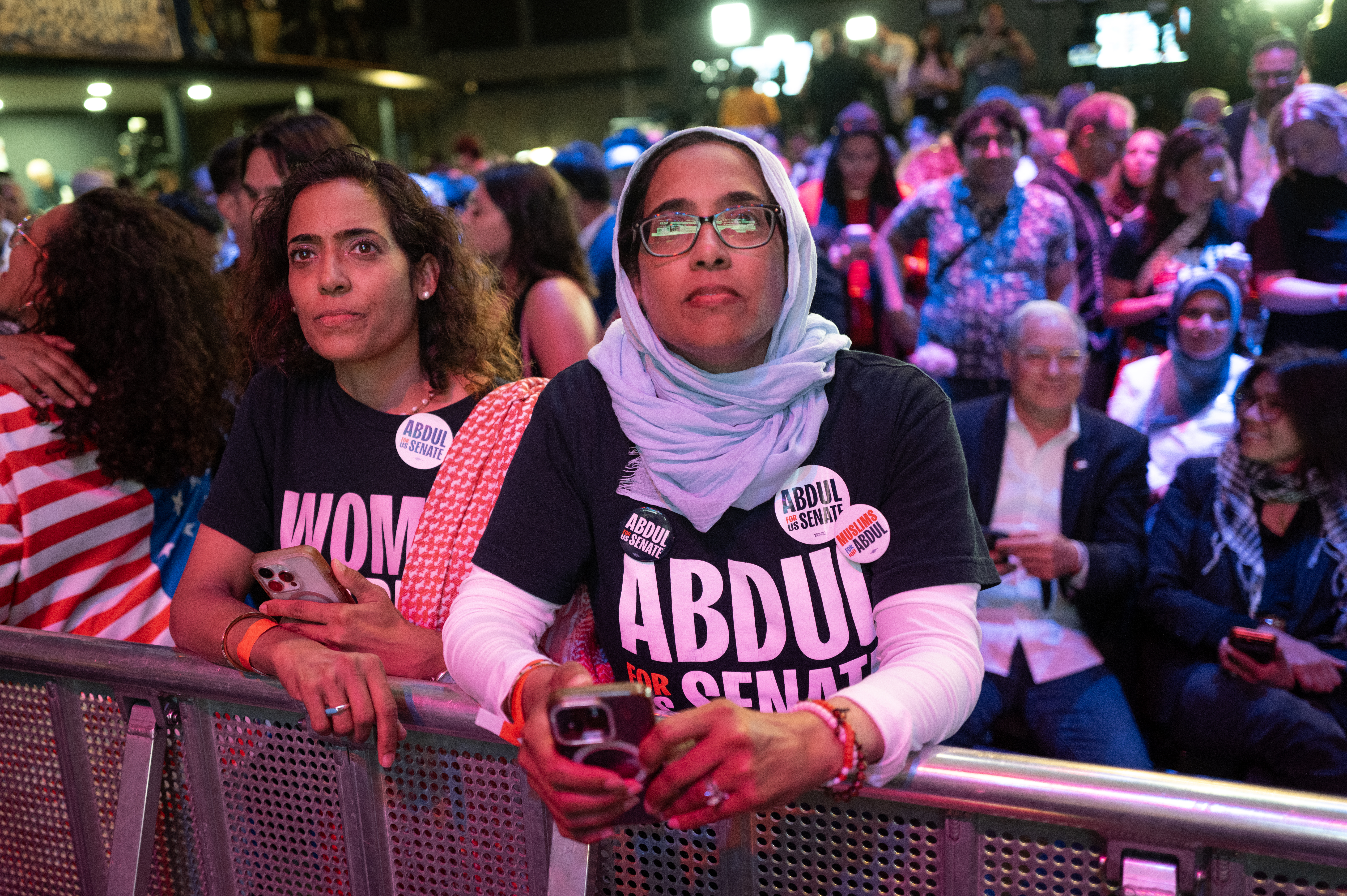
Abdul El-Sayed’s narrow win over Rep. Haley Stevens in Michigan’s Democratic primary for U.S. Senate on Tuesday — despite polls showing he was leading by double-digits — has sparked questions about why polls got it so wrong, and whether they’re useful for anything.
Read more Preakness shifts date amid rocky week for horse racing’s Triple Crown
While the causes of big polling errors can be elusive, one thing is clear: They happen more often in primaries than general elections. And there are some additional factors that may have led the Michigan polls astray.
Polls in the primary’s final 24 days found El-Sayed leading by 13 percentage points on average. If El-Sayed’s current one-point winning margin holds, that would result in a 12 percentage-point overestimate.
That’s similar to the typical 13 percentage-point error in primary elections for U.S. Senate and governor, according to polling and elections analyst G. Elliot Morris. And it’s more than double the average error in general election polls for president (4.2 points), according to elections forecaster Nate Silver. Primary polling is harder because voters’ opinions are more fluid, and lower turnout makes the task of identifying “likely voters” more challenging than in general elections.
In Michigan, an Emerson College poll found El-Sayed’s lead was driven heavily by younger voters and political independents, groups that tend to turn out at lower rates. Turnout records will eventually show whether polls overestimated these groups’ share of the electorate.
Read more Democrats ask Interior watchdog to investigate response to Reflecting Pool damage
Michigan’s primary also had few independent, high-quality surveys. Three of the final eight polls in the contest were sponsored by groups that supported El-Sayed. Only one — a Detroit News poll by the Glengariff Group — contacted voters with live interviewers, a more expensive method than online surveys that can be useful in reaching older and Black voters, where Stevens was strongest. The survey found Stevens leading by seven points in the first half of July.
Lastly, the large number of undecided voters should have been a warning sign. An average of 13 percent of voters were undecided between El-Sayed and Stevens in polls over the past month, and that should have been a sign that El-Sayed’s lead was shakier than it seemed.
Catch up quickly every weekday morning with a rundown of the 7 most important and interesting stories. Sign up for The 7 newsletter.
Read more Democrats turn out big in Michigan gubernatorial primary