A coalition of groups is asking the Appropriations Committee to account for more than 80 years of work.
Read more Trump says he’ll bring ballroom fight to Supreme Court after lower court halts work
For 81 years, a secretive team inside the House Appropriations Committee investigated how federal agencies spent the public’s money — military construction costs, Agriculture Department contracts, children’s television funded by the Education Department.
The team produced hundreds of reports detailing the ways the U.S. government funded American life across decades — a rich trove of information experts say could help study successful federal spending, as well as fraud and abuse, in the nation’s key government programs, and military and infrastructure projects during the 20th century.
The problem is, a complete archive of the team’s findings is missing, and no one with the Appropriations Committee will say where it went.
“These records, in particular, shed really important light into the operations of Congress and how the Appropriations Committee has changed the course of history,” said Dan Schuman, executive director of the American Governance Institute (AGI). “We want this information to be available so that people can understand what appropriators have done and how it shaped some of most pivotal battles inside the legislative branch.”
Known as Surveys and Investigations, the team was created in 1943 and was staffed by a rotating cast of FBI investigators alongside federal agency experts and, at times, analysts from the Government Accountability Office. S&I, as it was known, was quietly disbanded in 2024. While House rules say most congressional records that old should be open to the public by now, experts say that the committee did not completely file the records with the National Archives, as mandated by House rules.
On Friday, a group of 15 government watchdog groups and experts, led by Schuman and the AGI, sent a letter asking that Appropriations Committee leaders provide assurance that the records were properly preserved.
Only bits and pieces of the S&I records have been made public, largely due to the work of Matthew Dull, a professor at Virginia Tech’s Center for Public Administration and Policy. For years, Dull has worked with an archivist seeking out these reports, often finding them in public and private libraries, agencies, archives and reading rooms. The professor has identified about 2,000 study titles, but a complete archive of S&I’s work is missing, and the committee’s leaders have not explained why.
Dull, who signed Schuman’s letter, said up to 60 percent of the studies he’s been able to account for focus on military expenses, while the rest touch on issues as varied as Interior Department geological surveys, Department of Agriculture solid waste removal prices and Education Department school infrastructure costs.
The professor maintains an online archive of the S&I investigations he’s found, but most reports have never been publicly accounted for.
Read more Court deals setback to Trump’s war on wind as Pentagon is ordered to review projects
“The rules of the House say that the committee turns over everything at the end of the Congress to the clerk,” Dull said, but “they did not, in general, turn over copies of those reports to the clerk.”
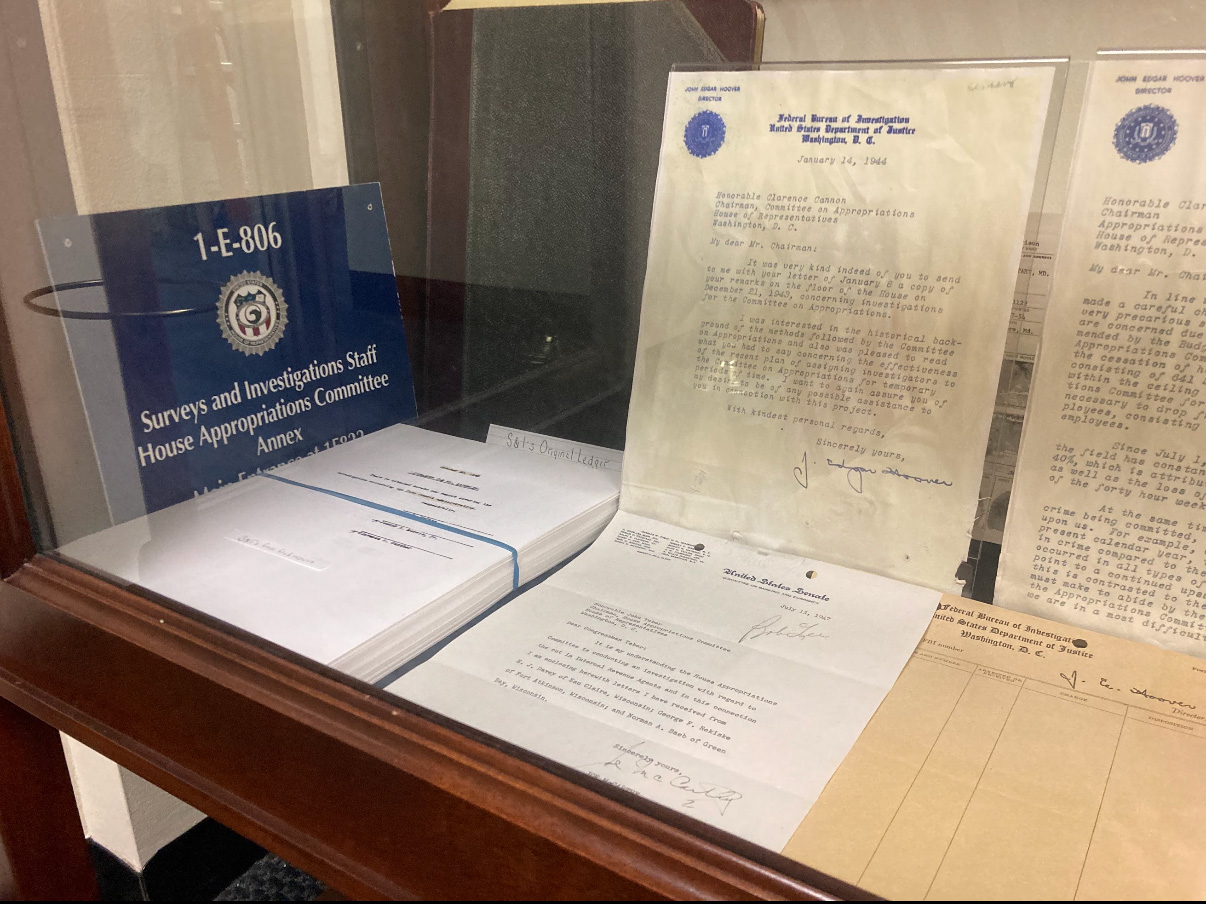
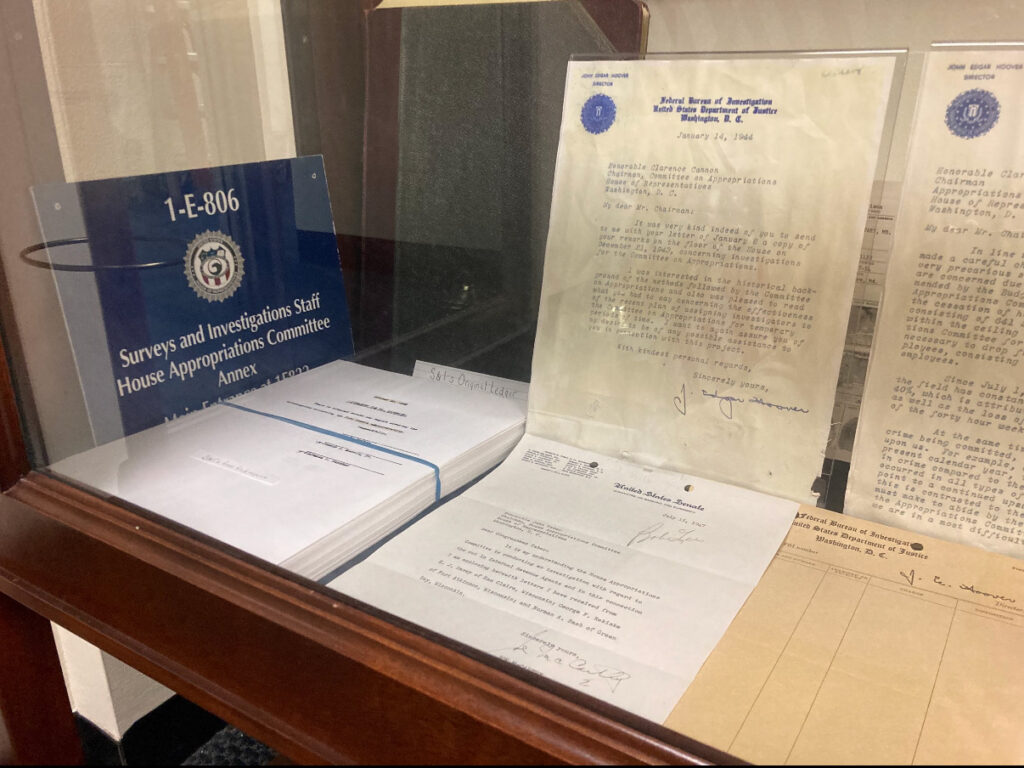
Dull provided The Washington Post with photographs he said he took of a room at the Ford House Office Building, one in 2024 and another in 2025. The first is of a display case that he said held some of the team’s investigations and historical mementos of its work — showing that, at some point, at least some of the documents were being held in a Capitol office. He said the door to the other rooms in the office was locked, including that of a closet where he was told paper reports were housed. In the second photo, he said, the display case was gone and shelves in that closet were empty.
Spokespeople for both the Republican and Democratic leaders of the panel did not respond to multiple inquiries from The Post on the documents’ location and whether they were properly stored away after S&I stopped producing new reports in 2024.
The House clerk, the House historian and the National Archives said they could not publicly comment on closed House records.
The committee did not issue an official announcement marking the end of S&I in 2024. But over the past decade, S&I was tasked with fewer and fewer investigations, according to a list of reports Dull provided to The Post. Dull said a former S&I staffer told him that the last members of the team were let go as they were finishing a report on general provisions in December 2024.
S&I was started in 1943 by then-appropriations chairman Clarence Cannon, a powerful Democrat from Missouri who held the nation’s purse strings tight. He received support from then-FBI Director J. Edgar Hoover, who let bureau investigators take on S&I investigations, according to historical records.
A former S&I staffer who was brought onto the team in the 2010s to conduct an investigation — and who spoke on the condition of anonymity because they still work with the secretive sectors of the federal government — described the work as “pretty unique.” The former staffer said that specialists from across the federal government were brought in to investigate how agencies spent money. The former staffer also said they understood that the investigations were kept secret because the Appropriations Committee wanted to remove any sense of bias or partisanship from their reports. Still, the former staffer argued that the public — or at least academics — should now be allowed to see S&I’s decades-old work.
“The taxpayers paid to produce those documents,” the former staffer said. “You paid 10 people for six months, that’s a lot of money.”
Read more Tariffs on brass instruments come too late for unemployed Ohio factory workers