It’s just in time for the midterm elections.
In his second term, President Donald Trump has prioritized the building of data centers; he has promised that massive warehouses filled with giant computers to feed artificial intelligence will make communities “rich.”
Read more Human rights groups sue Trump administration over International Criminal Court sanctions
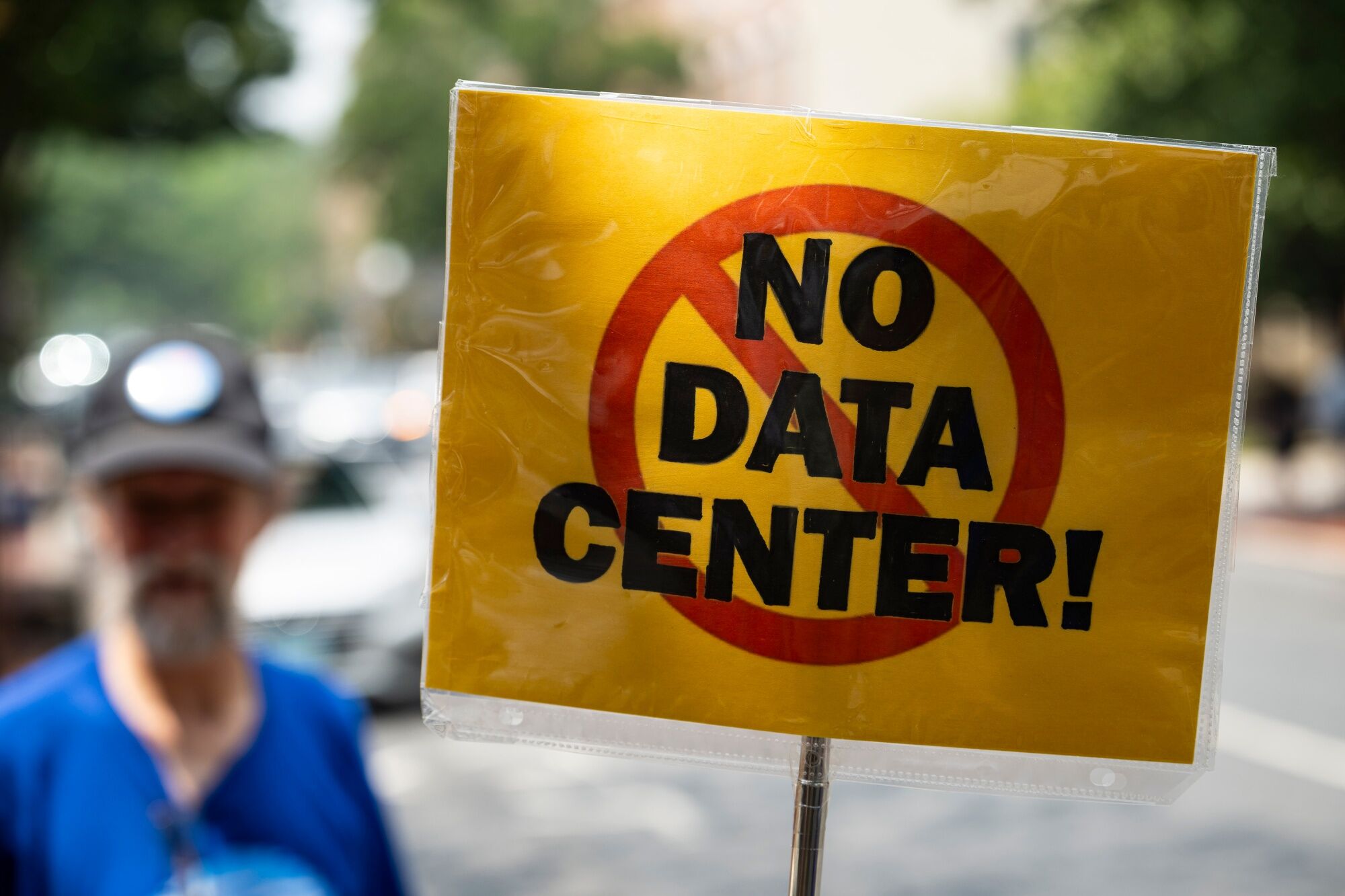
But the public is skeptical, and the bipartisan backlash to them is building just in time for the midterm elections.
Data centers are popping up everywhere, and Trump has lowered environmental regulations, making it much easier to build them without community input.
“I don’t think people quite get the scale,” said Mark Muro, a senior fellow at the Brookings Institution who studies the AI economy.
Conservatives in rural Texas and liberals in New York oppose them being built in their communities.
“Data centers are a big political issue wherever I look,” said Republican campaign strategist Mike DuHaime.
Building data centers provide some temporary construction jobs, Muro said.
But once built, they are starving for energy. Data centers can consume more electricity than entire cities, and an independent analysis of electricity bills predicts data centers could raise average Americans’ utility costs by up to 40 percent by 2030. (Trump has urged states to find a way to lower electricity costs.) They also gobble up water, and in data center-heavy Virginia, diesel-powered sites are spewing air pollution.
This past year, dozens of communities, including in rural Indiana and Oklahoma, have passed or tried to pass moratoriums on building data centers. Last month, New York became the first state to do so. Recent polling shows most Americans think AI is developing too quickly and that much of America would be more comfortable with a nuclear power plant in their town than a data center.
“We deserve protection, not to be sacrificed for outside investment,” three-time Trump voter Nikki Meador in East Texas told The Washington Post. “Industrialization is irreversible.”
Grassroots opposition to data centers has the potential to be the sleeper issue of November, said Jessica Taylor, Senate and governors editor for the Cook Political Report With Amy Walter.
“There is a lot of skepticism about growth of AI and how these centers are zapping up resources,” Taylor said. “I see it across the board, especially in governor’s races.”
A few months ago, very few politicians were speaking out against building data centers. That’s changing rapidly. In Wisconsin, democratic socialist Francesca Hong could win Democrats’ nomination for governor Tuesday after proposing a moratorium on building data centers in the state.
Read more National Democrats step up support for Rep. Max Miller’s opponent
Two full-time moms in Ohio are leading a long-shot push in that state to get a ballot measure to ban data centers, an effort that is getting the attention of candidates for competitive Senate and governor’s races.
That has the potential to put some Republican candidates in conflict with Trump, whose administration is plowing ahead with data center construction. This summer, the Trump administration approved a data center on public land in Boulder City, Nevada, despite enraged residents.
Nevada has one of the most competitive governor’s races in the country, and data centers are a top issue with voters there. It’s a dominant issue in the governor’s race in Florida, where Trump-backed Republican candidate Byron Donalds has promised data centers won’t raise residents’ utility rates despite experts’ skepticism. In Texas, Gov. Greg Abbott (R), a Trump ally running for reelection, is now campaigning on restraining data centers.
AI is such a new issue that politicians are still taking sides, said Muro. Overall, Democrats have focused on safety issues for kids, the bias of algorithms, privacy issues, civil rights and concerns over job displacement. “Democrats have, for some time, been bringing a stricter eye to AI development,” he said.
“Republicans have been what I call accelerationist,” Muro said. “It’s this mindset of ‘Get out of the way because we need to move as fast as possible to outstrip China’s development of superhuman intelligence.’”
The Trump administration is actively fighting regulation of AI, framing the technology as the future of the U.S. economy. Investment in AI is a big driver of the U.S. economy, and nations like China are rapidly building up their own AI capabilities. This summer, the administration is reorienting hundreds of billions of dollars of research grants from universities to AI.
“This is how you lose the AI race,” White House AI czar David Sacks posted on social media last month, citing new developments in China. “The rest of the world won’t play by our rules if we bog ourselves down.”
But members of both parties are starting to speak up about data centers. Sen. Josh Hawley (R-Missouri) has proposed legislation to restrict construction of data centers. “People just feel like they’re under siege,” he told the Wall Street Journal in May.
Sen. Bernie Sanders (I-Vermont) has proposed blocking construction of all data centers in the United States until Congress can enact more regulations on AI.
“There are people who are talking about this being much more transformational than the Industrial Revolution in terms of impacting more people in a much more rapid timeline,” Sanders told The Post in March. “And I think it is amazing to me, given all of that, given the concerns that ordinary Americans have, that Congress has done virtually nothing to control AI and robotics.”
Amber Phillips writes The 5-Minute Fix newsletter, a quick analysis of the day’s biggest political news. Send her an email here, or ask a question that could be featured in an upcoming newsletter.
Read more House Democrats seek records in dropped Reflecting Pool case against ex-Olympian