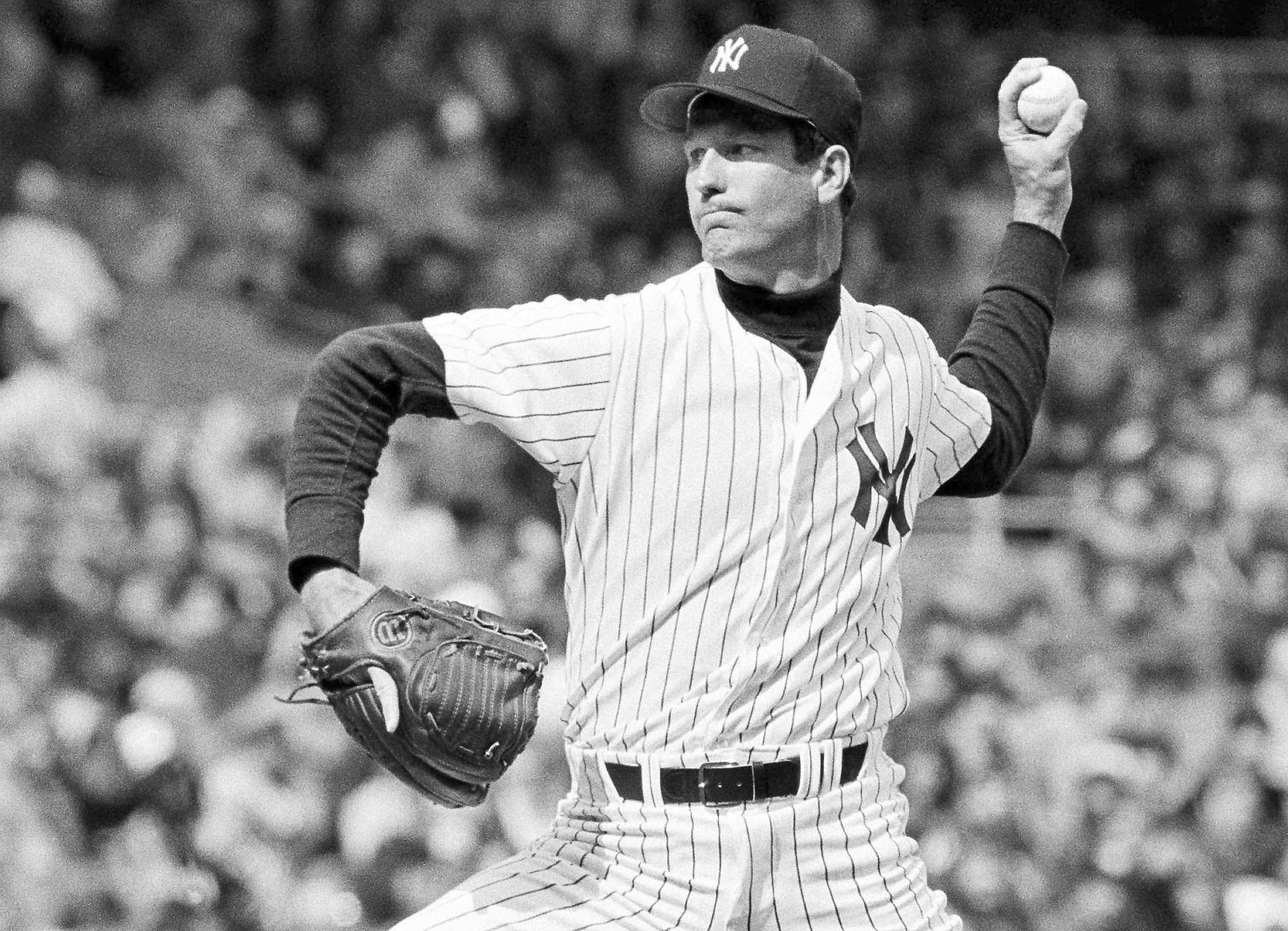
The lefty made four all-star teams while pitching for the White Sox, Dodgers and Yankees. An innovative procedure extended his career to 26 seasons.
Read more Trump says White House needs ‘military complex’ as courts block his ballroom
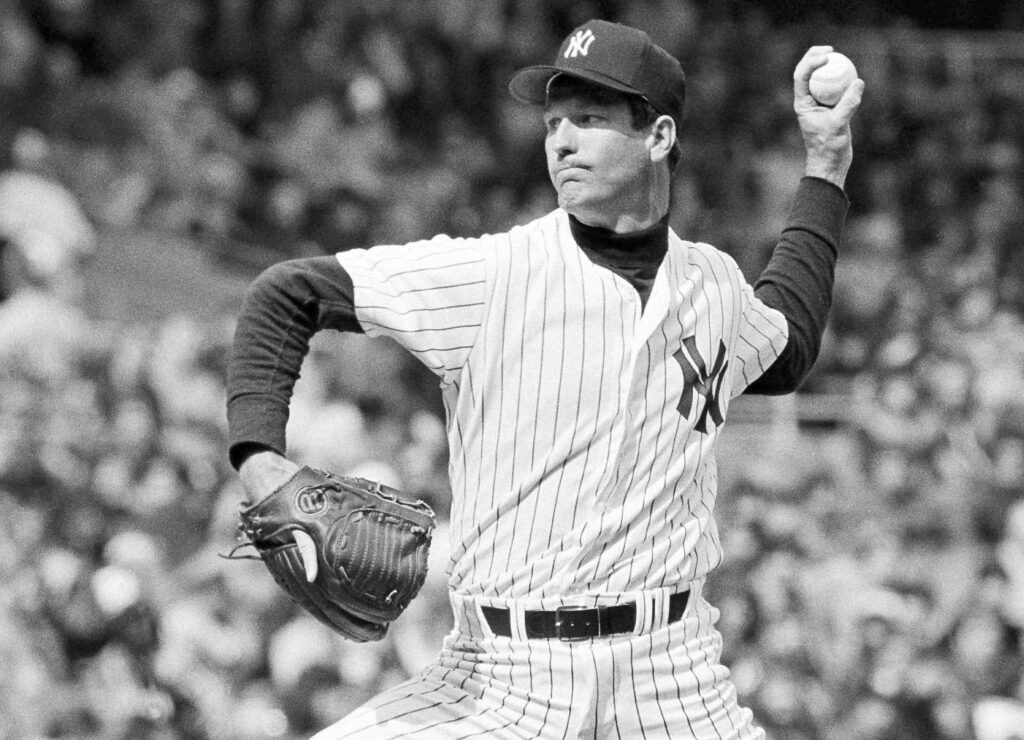
On July 17, 1974, when Tommy John took the mound for the Los Angeles Dodgers, he was having the best season of his career. The left-handed pitcher, then in his 12th year, was leading the National League with 13 wins as he faced the Montreal Expos.
As he delivered a pitch in the third inning, he felt his elbow snap.
“It felt as if I had left my arm someplace else,” he told Sports Illustrated. “It was as if my body continued to go forward and my left arm had just flown out to right field, independent of the rest of me. I heard this thudding sound in my elbow, then I felt a sharp pain. My fingers started to tingle.”
He attempted one more pitch before walking off the field. The Dodgers’ team doctor, Frank Jobe, determined that his ulnar collateral ligament had ruptured — an injury so severe that no one expected Mr. John to pitch again.
Jobe had previously performed surgeries on polio patients, replacing atrophied ligaments and tendons in their legs to help them walk. In September 1974, he transplanted a tendon from Mr. John’s right wrist to his left elbow, threading it through holes he drilled in the bone.
After a second surgery to realign the ulnar, and an arduous recovery that took more than a year, Mr. John returned to pitching and salvaged a career that had seemed lost.
The four-time all star was the first player to undergo what is now universally known as Tommy John surgery, which has enabled hundreds of baseball players, including pitchers Stephen Strasburg of the Washington Nationals and Hall of Famer John Smoltz, to prolong their careers.
Mr. John, who went on to pitch an additional 14 years after his elbow was rebuilt, died Saturday night at his home in Lakewood Ranch, Florida, with his wife and two sisters-in-law by his side. He was 83, his agent, Mike Maguire said in a statement.
The cause was bladder cancer, said Maguire. Mr. John, who finished his career with the New York Yankees, penned an emotional public letter thanking the team and his fans on Aug. 8 ahead of Old-Timers’ Day, an annual tradition honoring retired players at Yankee Stadium. He had recently undergone treatment for a recurrence of bladder cancer, according to Major League Baseball.
“The day I left for my first job as a pitcher,” Mr. John wrote, “my father looked at me & said, ‘Good luck, Tommy. Just remember one thing: whether you make it big in the big leagues or you don’t, you’ll always just be Tommy John from Terre Haute, Indiana.’”
If Tommy John surgery has become almost routine, with a success rate approaching 90 percent, it was a journey into the unknown for Mr. John and his surgeon.
“If you do your job, I will more than do my job,” Mr. John, speaking in a 2014 NPR interview, said he told Jobe. “And I said, if it takes one year, fine. If it takes two, if it takes three, whatever it takes to get back on the mound.”
Mr. John emerged from the operations with his left arm withered, and his fingers curled like a claw. He was unable to grip a baseball. The only medical advice Jobe could offer was “Listen to your body. Your body will tell you what it needs.”
Mr. John pushed his fingers open with his right hand, then began to lob a ball to his wife. He ran several miles a day to stay in shape. During spring training in 1975, he tossed baseballs at a wall, trying to regain his strength.
In time, the ulnar nerve regenerated, Mr. John’s fist unclenched and the numbness left his hand. He could hold the ball again, and the strength returned to his arm.
“Day after day, for six weeks, I threw against this wall,” he wrote in his 1991 memoir, “T.J.: My 26 Years in Baseball,” with co-author Dan Valenti. “It took on an almost symbolic aspect, representing the ‘wall’ that I was trying to break through. I’d take four or five balls, throw them against the wall, pick them up again, and continue until I felt tired.”
Mr. John rejoined the Dodgers in 1976, starting 31 games and finishing with a 10-10 record. He was named the National League’s comeback player of the year.
Read more Blanche on whether DOJ will be independent: ‘I’m not going to pledge that’
He was even better during the next four seasons. He helped the Dodgers reach two consecutive World Series and in 1977 finished second in voting for the National League Cy Young Award to Steve Carlton of the Philadelphia Phillies.
Mr. John then signed as a free agent with the Yankees and continued to baffle hitters with his sinkerball and curveball. He had another second-place finish in the Cy Young race in 1979, behind Baltimore’s Mike Flanagan, then won a career-high 22 games in 1980.
In August 1981, Mr. John was in Detroit with the Yankees when his wife frantically called to tell him their 2-year-old son, Travis, had sustained a serious head injury after falling out of an unsecured third-story screen window at a vacation home in New Jersey. Mr. John left the team to be with his son, who spent 17 days in a coma.
Travis was moved to a hospital in New York and made a full recovery, which his parents, born-again Christians, attributed in part to the power of prayer. Returning to the Yankees, Mr. John helped lead his team into the 1981 World Series.
“As Travis got better, my mental well-being did too,” he told People magazine. “It tended to take a little of the importance off wins and losses, and put things in their proper perspective. You go out and throw the ball and feel lucky just to be out there.”
With his reconstructed arm, Mr. John seemed ageless, and pitched for the California Angels and Oakland Athletics before returning to the Yankees in 1986. He retired three years later at 46, the oldest player in the game at the time. His 26-year career is the second-longest in baseball history, one year shorter than those of pitcher Nolan Ryan and 19th-century player Cap Anson.
Mr. John had a lifetime ERA of 3.34 and, according to MLB.com, forced opposing teams to hit into 605 double plays, a major league record. He won 124 games before his elbow surgery, and 164 games in the 14 years after it.
“I thought he was a lot better pitcher after the surgery,” Al Oliver, who played for the Pittsburgh Pirates and other teams, told the Pittsburgh Tribune-Review. “The thing that was amazing to me was the movement he had on the ball. His location was super. He threw the ball right where he wanted.”
Thomas Edward John Jr. was born May 22, 1943, in Terre Haute. His father was a lineman for a power company, his mother a homemaker.
An outstanding all-around athlete and student, the 6-foot-3 Mr. John once scored 47 points in a high school basketball game and was valedictorian of his class of 250. He briefly attended Indiana State University but decided to concentrate on baseball, making his big league debut with the Cleveland Indians in 1963. He was later traded to the Chicago White Sox and then the Dodgers.
After his playing career, Mr. John was a broadcaster and a minor league pitching coach and manager. He also led efforts to curb the overuse of young pitchers, believing that too much stress on the arm could lead to long-term damage. (He had no connection to the Tommy John underwear company.)
Mr. John’s marriage to the former Sally Simmons ended in divorce. After their son Taylor died in 2010 of an overdose of prescription drugs, Mr. John became an advocate for suicide prevention.
He later married Cheryl Zeldin, with whom he lived in Bradenton, Florida. He had three other children from his first marriage, Tamara, Tommy III and Travis. Complete information on survivors was not immediately available.
Mr. John’s 288 wins are the second most of any modern-era pitcher not enshrined in the National Baseball Hall of Fame. (The other is Roger Clemens, who has been tainted by allegations of using performance-enhancing drugs.)
But Mr. John’s most enduring legacy was the elbow operation that bears his name and has enabled countless players to stay in the game.
“There are only two players that have any medical things named after them — Lou Gehrig and Tommy John,” Mr. John said in 2007. “Gehrig’s is fatal and mine gives life.”
Read more Knee injury to sideline Marcus Mariota for rest of Commanders’ preseason
Matthew Choi contributed to this report.