In today’s edition … Kushner heads to Israel to talk Gaza peace plan … but first …
Read more Trump reduces military exercises with South Korea, citing good ties with Kim Jong Un
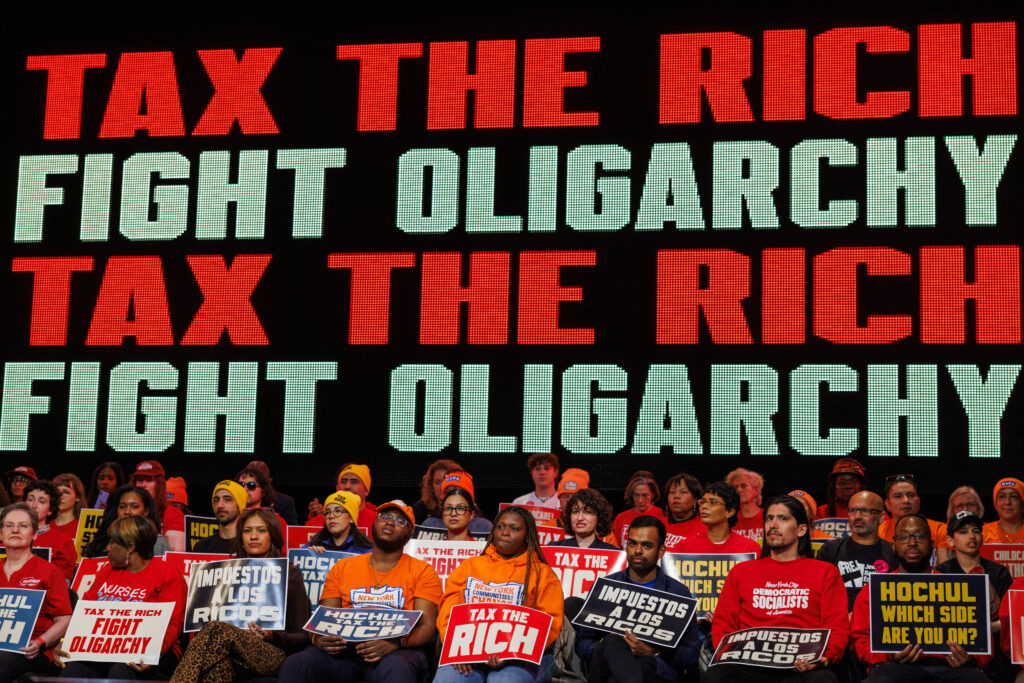
We’re in the final stretch of what has been deemed “Sexy Socialist Summer,” the alliterative moniker democratic socialists have been using to celebrate their electoral victories of the past few months.
Democratic Socialists of America-endorsed or aligned candidates have won a number of Democratic primaries up and down the ballot this cycle. The Democratic Party’s progressive wing scored a high-profile victory in Michigan’s U.S. Senate primary — won by Abdul El-Sayed, who has embraced positions popular with DSA activists though he does not consider himself a socialist.
DSA co-chair Megan Romer points to the election of New York Mayor Zohran Mamdani in December as a turning point.
“We’ve almost doubled in membership since the night Zohran got elected,” Romer said. “We were already sort of on an uptick. I think his campaign getting a lot of attention started that resurgence, but also Trump getting elected.”
The word “socialist” still carries baggage in American politics, but it’s no longer the campaign killer it used to be, and more voters, particularly younger ones, are open to supporting democratic socialist politicians. A Washington Post-Ipsos poll from July found 46 percent of Americans under age 30 would consider voting for a democratic socialist for president. Highly educated Americans showed even more openness to the idea, with 51 percent of those with postgraduate degrees saying they would consider it.
Sean Cassar is one such young voter, a longtime Democrat who once considered himself a “very staunch centrist Democrat,” but became a democratic socialist within the last few years and is now chair of the Richmond chapter of DSA.
“I had a deep-set belief that the systems were working the best that they could,” recalls Cassar. “And then I saw George Floyd get murdered.”
Floyd’s killing prompted Cassar to reevaluate his faith in America’s political systems, which he decided “work intentionally for specific people and not the majority of people.” He attended a DSA meeting and within six months was a member of his local chapter in Richmond. He was impressed by how they organized to push for change and their willingness to tackle what they see as systemic issues, such as racial and economic inequalities.
Cassar and Romer say new members and the democratic socialist-curious they interact with are similarly disillusioned.
“Cost of living is a huge part of it,” Romer said, adding that Gen X and Millennials were “kind of the first generation where it suddenly was not actually given that you would probably do better than your parents.”
Those economic concerns have risen in recent months, thanks to persistent inflation and higher gasoline prices resulting from the Iran war. In this economic environment, some Americans are more amenable to hearing democratic socialists’ calls for higher wages and redistribution of wealth.
“This idea that the working class, because they have this leverage over what makes the ruling class make their money or have their power, does give you a different perspective,” Romer said. “And so what’s the goal? The goal is to organize the working class to be able to use those levers.”
Even as democratic socialist candidates drive up enthusiasm on the left, some Democrats fear they won’t be able to prevail in swing states.
Last month’s Post-Ipsos poll found 55 percent of all Americans say they would not vote for a democratic socialist in a presidential race. More importantly, 54 percent of independents say they wouldn’t vote for a democratic socialist candidate, and only 12 percent of independents say they like political leaders who identify as democratic socialists.
Read more As the Nationals get swept, Abimelec Ortiz offers a silver lining
That doesn’t mean there’s no future for democratic socialists in America — increased visibility and persuasive communication could certainly move skeptics on the matter long-term, and younger voters are more likely to support democratic socialist candidates. (It should also be noted that losing 54 percent of the popular vote in 2016 didn’t stop Donald Trump from getting to the White House.)
But for the time being, arguably the biggest issue democratic socialist candidates are having to persuade primary voters about is their electability.
Take Wisconsin, where Francesca Hong, a democratic socialist state lawmaker, was the leading candidate in the Democratic gubernatorial primary. Despite large leads in poll after poll, Hong was narrowly beaten by Milwaukee County Executive David Crowley, a relative moderate buoyed to victory by concerns that Hong was too far left to win the general election in a state Trump has won twice.
“What we saw in the last week of the campaign was a lot of fear-based attacks on Francesca’s electability,” State Assembly member Ryan Clancy, a Hong supporter, told our colleagues Patrick Marley, Teo Armus and Clara Ence Morse.
Whether those fears are justified, they are real and, as Hong learned, can be a deciding factor in primaries.
“We are still pretty new to being a bigger player in congressional/federal races, and we know we have to prove ourselves, but we’re determined to do exactly that, and we believe that our method of using large numbers of organizers to reach large numbers of voters 1:1 works anywhere,” Romer said when asked about establishment Democrats’ electability concerns.
Trump’s son-in-law and adviser Jared Kushner is scheduled to meet with Israel’s Prime Minister Benjamin Netanyahu today, amid tensions between Netanyahu and Trump over the Israeli prime minister’s rejection of a Trump-backed Gaza peace plan.
The plan calls for Israel to withdraw its forces from Gaza and for Hamas to disarm. Hamas has agreed to the plan, and Kushner met Sunday with a Hamas delegation to talk about the plan and Israel’s opposition.
The sticking point seems to be which comes first — Israeli forces pulling out of Gaza or Hamas laying down its weapons. Trump has said the plan would involve Hamas disarming in stages, but Netanyahu said the Israel Defense Forces “will not carry out any withdrawal until Hamas is genuinely disarmed.”
An official from the Board of Peace, a group created by Trump that originated the plan, said Kushner will travel to Israel to “hear concerns that have been raised” and find a path forward.
Iowa Capital Dispatch: Iowa Senate candidate Josh Turek is urging his party to join Republicans in advancing the farm bill in the Senate, breaking with some Democrats who oppose the bill in its current form over cuts to SNAP, the federal food program formerly known as food stamps.
Michigan Advance: People who oppose data centers in their community are trying to get creative in how they stop them. One Michigan lawyer is urging town officials to deem a project ineligible for certain tax breaks.
WMUR: The Democratic National Committee officially voted to approve its nominating calendar for the party’s 2028 presidential primary. South Carolina will go first, followed by Nevada. New Hampshire is expected to buck the planned calendar.
What do you think of voters’ increasing openness to democratic socialism? Are you among the 54 percent of Americans who would oppose a democratic socialist candidate for president or would you consider supporting a democratic socialist president?
Read more Tommy John, whose elbow surgery transformed baseball, dies at 83
Let me and your fellow Early Brief readers know at [email protected].
Thanks for reading.