Debbie Wasserman Schultz is competing in a racially thorny primary in which everyone seems to think experience is important — but they don’t agree on what kind.
Read more So what is attracting voters to DSA’s ‘Sexy Socialist Summer’?
SUNRISE, Fla. — When Republicans cut up her mostly blue congressional district to boost their chances in the midterm elections, Rep. Debbie Wasserman Schultz (D) faced a choice.
The veteran lawmaker could have stuck to her home address and a new, predominantly White district that went for Donald Trump by 10 percentage points.
Instead, Wasserman Schultz jumped into the primary for a neighboring district in Broward County, where a handful of prominent African American leaders were already vying to represent an area that is more than 40 percent Black.
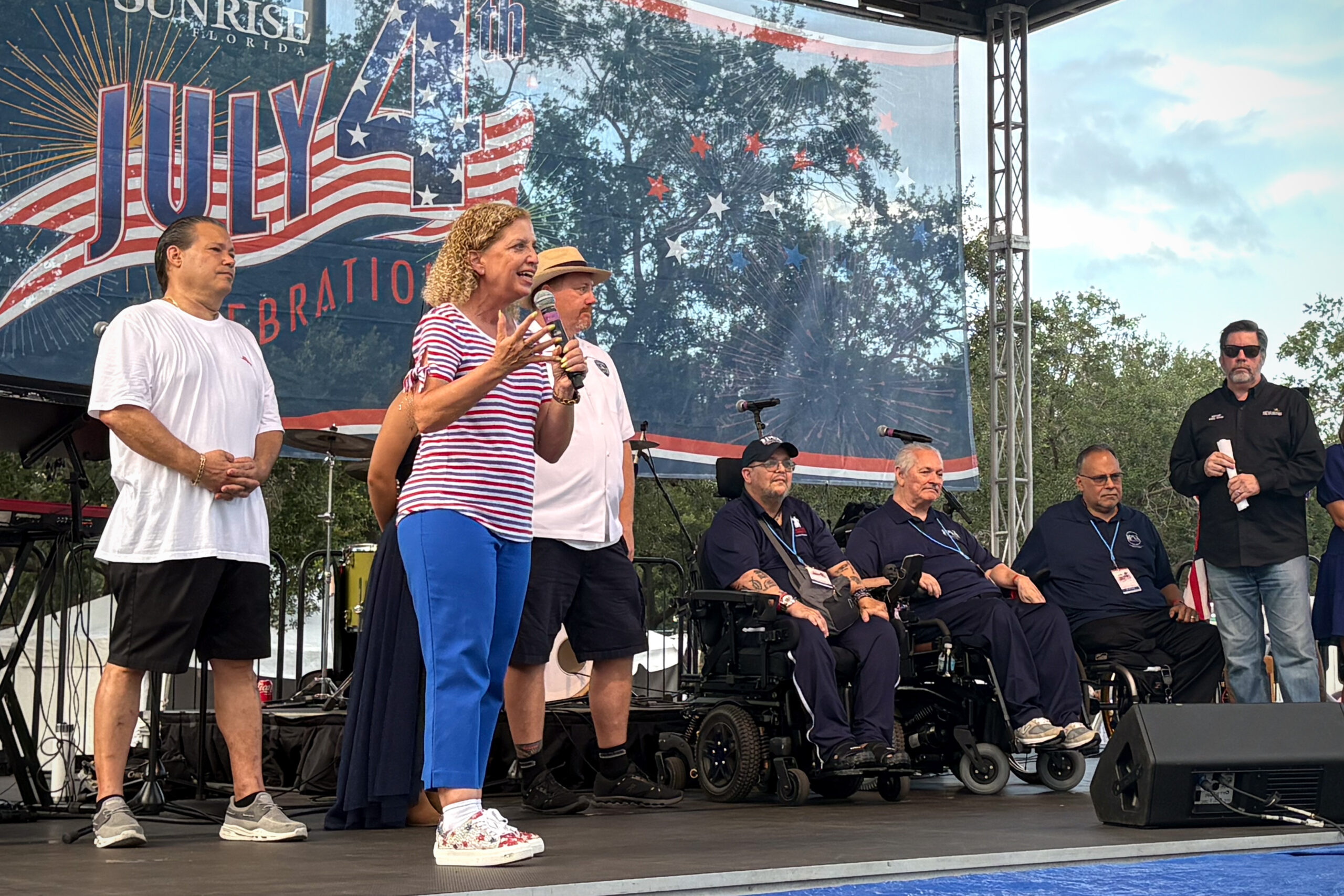
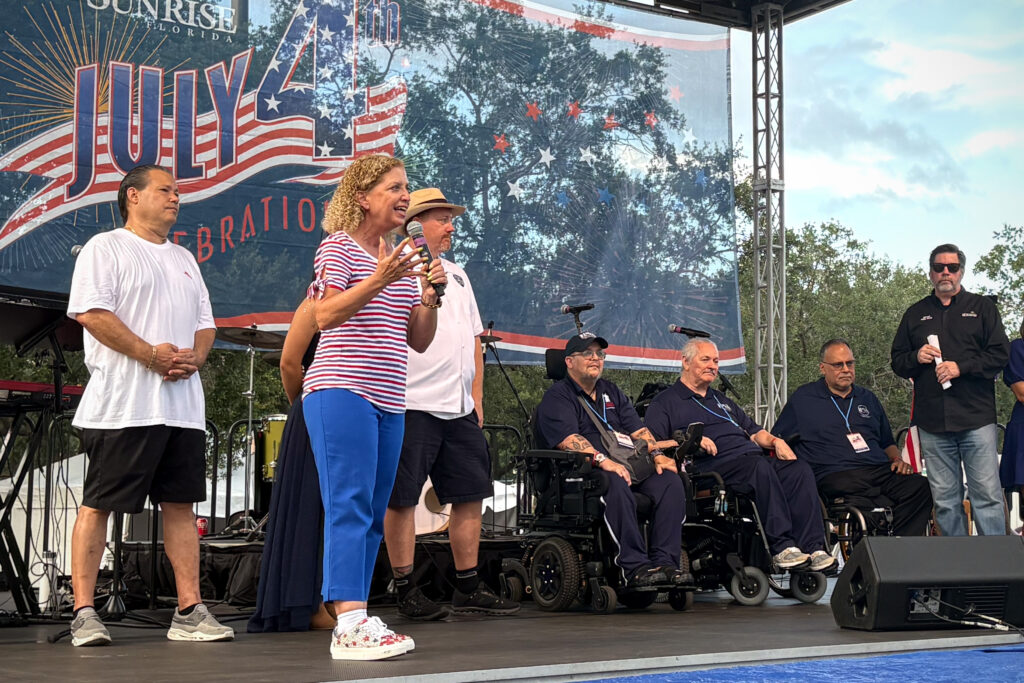
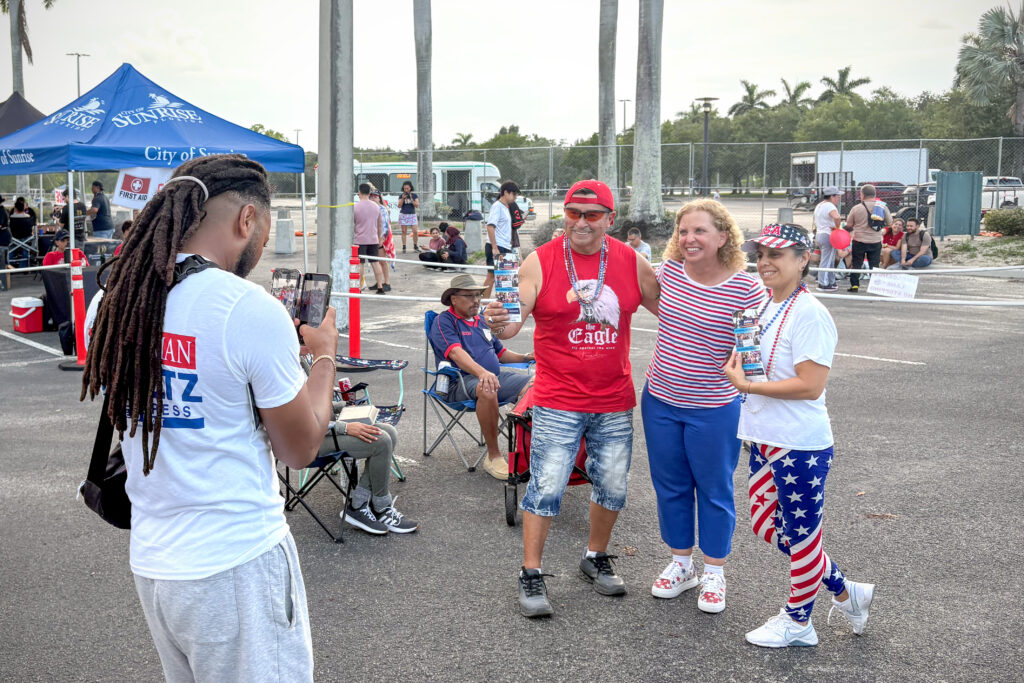
That’s how she ended up at a holiday concert in this sweltering suburb earlier this summer, passing out handshakes and pamphlets as she stressed the one thing that set her apart from her primary opponents — other than her race.
“We don’t want to lose the power and experience I have for Broward,” she said, pausing only briefly as she zipped through the crowd in her rhinestone-covered platform sneakers. “It’s essential we have people with enough experience to be able to fight.”
A 59-year-old former national party chair and frequent cable news presence, Wasserman Schultz is among the nation’s most prominent incumbents being forced to reintroduce themselves and make the case for seniority this year.
Yet more so than other contests, her primary race in Florida’s 20th District represents the often thorny trade-offs Democrats face as Trump and the GOP have sought to redraw maps across the country and eliminate deep-blue seats in Congress.
After the Supreme Court weakened the Voting Rights Act this year, some veteran Democrats across the South have been forced to choose between running on more politically competitive turf or bowing out entirely.
Wasserman Schultz chose a third option, turning her election into a contest that effectively pits congressional experience against racial representation.
It’s especially potent when the ranks of Black lawmakers in Congress are all but guaranteed to dwindle, said Corey Shearer, president of Broward’s Black Democratic Caucus, which has backed a rival candidate, Dale Holness.
“She’s been an ally, but suddenly it’s feeling more like she’s using the familiarity she’s built against us,” Shearer said. “With the landscape of all that, somebody who says they’re our friend decides: ‘Hey I’m in trouble, and I’m going to take yours.’”
Four other candidates are seeking the nomination: Holness, a former mayor of Broward County; a young progressive activist; the district’s disgraced former congresswoman; and a 1990s rapper perhaps best known for the song “Me So Horny.” But it may be difficult for any of them to edge out Wasserman Schultz, who has a massive advantage in fundraising and name recognition.
A former state lawmaker who made the jump to Congress in 2004, Wasserman Schultz is quick to point out that she has represented at least some of Broward County for more than 30 years in government.
She has spent most of that time in Washington, where over 11 terms she gained an influential spot on the Appropriations Committee — and served a controversial stint as chair of the Democratic National Committee.
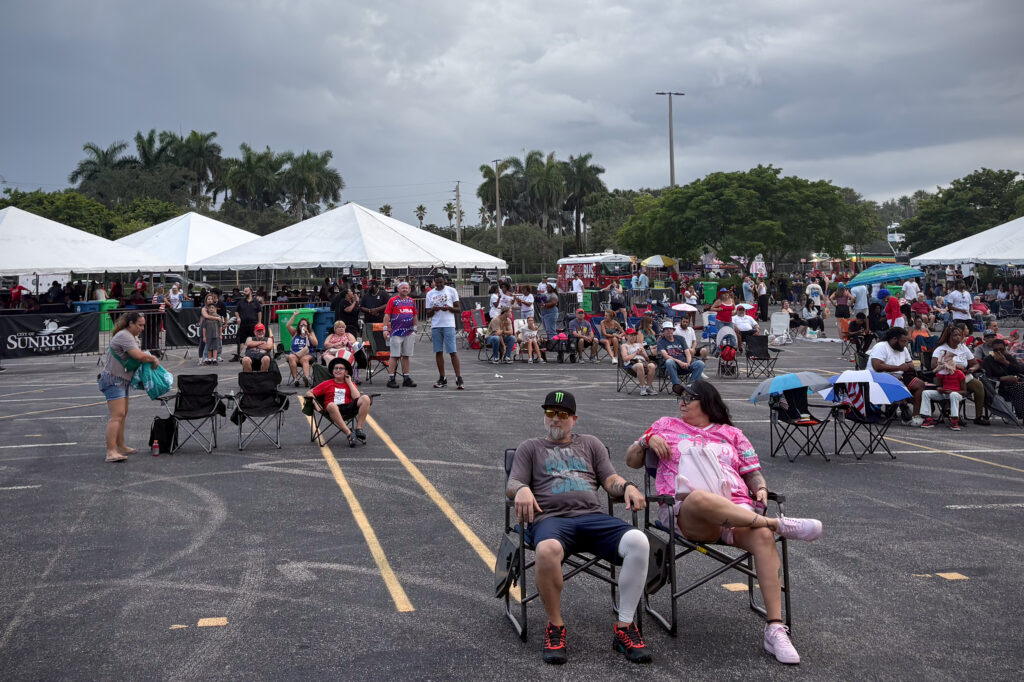
On weekends and holidays, though, she became a fixture at events like this Fourth of July concert, where she whizzed through carnival booths and lawn chairs faster than the cover band onstage could shuffle through its set list.
“Man, she is just phenomenal,” said Stacey Toppin, 54, who grabbed a selfie with the congresswoman in the crowd. “I always, always see her out in the community.”
The area’s representation in Congress is bound to change no matter what.
The new maps pushed by Republican Gov. Ron DeSantis redrew the lines in Broward, a diverse, populous area that includes Fort Lauderdale, to give his party much more of an edge.
Two congressional districts anchored in Broward keep small slices of this deep-blue county — including Wasserman Schultz’s home base in the city of Weston — while taking in more conservative areas to the south and west.
The other districts, however, remain easy holds for Democrats, even though their boundaries changed.
Read more Trump reduces military exercises with South Korea, citing good ties with Kim Jong Un
Where some saw an opportunity for Wasserman Schultz to fight back in a district designed to favor a Republican, she saw it differently.
In late May, she announced she would be running in one of the safe blue districts, which had been left without an incumbent after then-Rep. Sheila Cherfilus-McCormick (D) resigned amid federal money-laundering charges.
Cherfilus-McCormick had already announced she would be seeking the seat again. The ballot also includes progressive activist Elijah Manley, former county mayor Holness and rapper Luther Campbell, also known as “Uncle Luke.”
Wasserman Schultz said she spoke with dozens of Broward leaders in making her decision. Her long tenure and spot in Democratic leadership, she determined, were too important to risk losing.
“You want to make sure that you have someone who knows the communities and knows their values, who has delivered for them and knows how to fight for them,” she said in an interview, adding, “Lived experience is important, and [so is] experience in Congress.”
Yet, plenty of Democrats in and outside Florida are taking a different stance. Some pointed out to her directly that she would be the first non-Black representative to fill the seat since its creation in the early 1990s.
Ten of the state’s 15 elected Democratic National Committee members signed a statement saying that Wasserman Schultz was “treating one of Florida’s few remaining majority-Black districts as a political opportunity.”
House Majority Leader Hakeem Jeffries (D-New York) declined to endorse her, citing “the sensitivities of the moment in terms of an unprecedented Jim Crow-like assault on Black political representation.”
And Rep. Yvette D. Clarke (D-New York), chair of the Congressional Black Caucus, put it more diplomatically. “We had a conversation,” she said. “Encouragement was not a part of that conversation.”
Wasserman Schultz said “the primary playing out on Twitter” was different than the mood on the ground.
The criticism, she said, did not reflect how her constituents felt — including a far warmer reception at the holiday celebration in an arena parking lot.
Rose Dawes, a 63-year-old in a Jamaican flag shirt, leaped out of her lawn chair to greet Wasserman Schultz. “Thank you for your service,” she told the congresswoman, “because you’ve been in office for a long time.”
A few tents away, Amrita Balroop nodded as the congresswoman recounted her unannounced oversight visit earlier that week to a U.S. Immigration and Customs Enforcement facility nearby.
An assistant principal, Balroop said she has seen how a heightened ICE presence has spooked some students from coming to school.
“It matters that she’s been standing up for a big issue,” Balroop said after. “We need someone who can navigate that well. … In my mind, experience trumps color.”
But others were left with a different feeling.
The following day, Wasserman Schultz attended a Sunday service at a large Black Baptist church in Fort Lauderdale, where she and other candidates briefly greeted the congregation.
Von Howard, 47, walked out undecided. Going down the list of candidates, he had hesitations about each of them — Wasserman Schultz included.
“It’s not like she’s new to our community,” he said. “But I’m not sure she has the voice to speak for our community.”
Read more As the Nationals get swept, Abimelec Ortiz offers a silver lining
Clara Ence Morse in Washington contributed to this report.