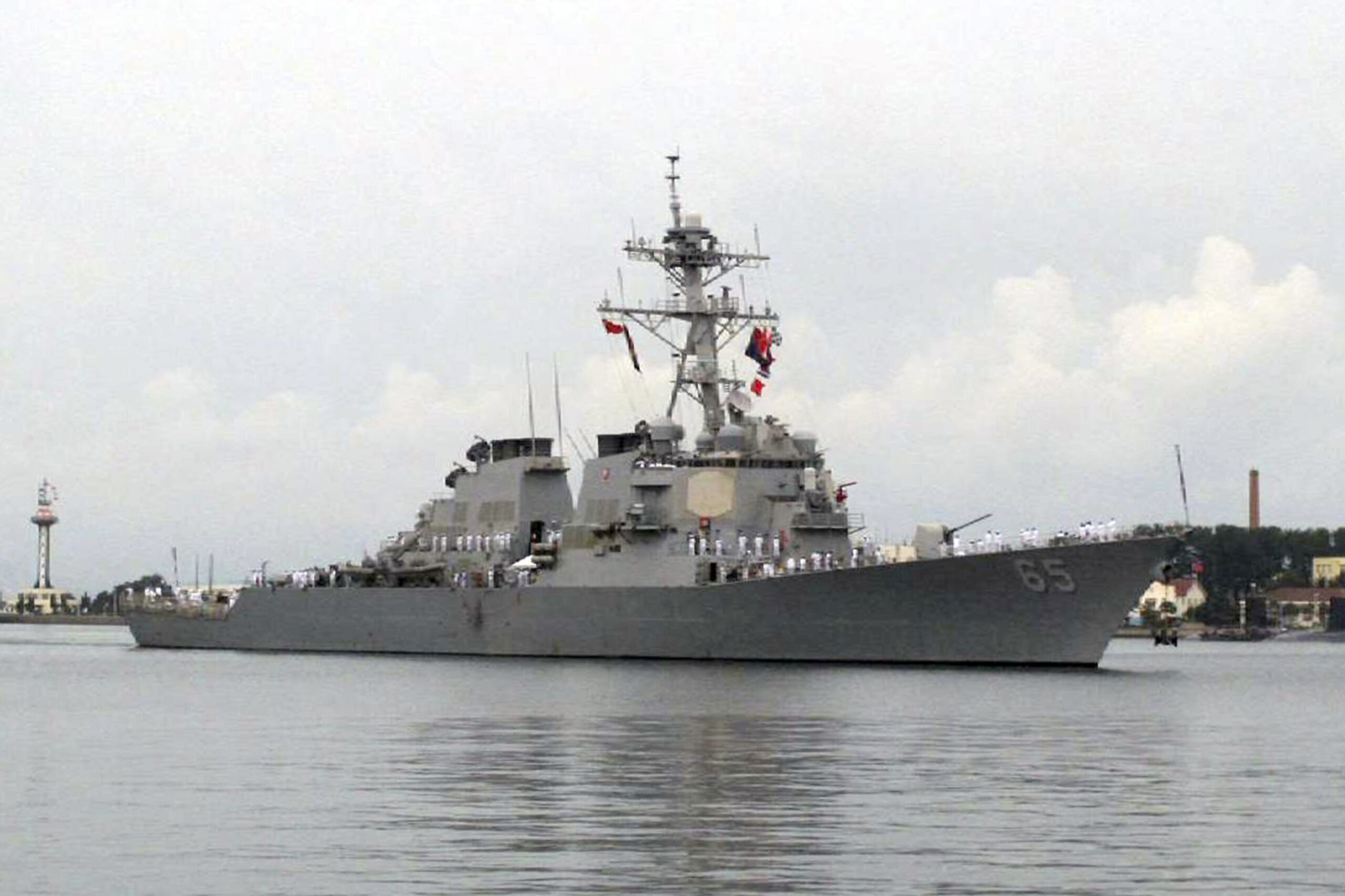
The ship’s crew lost access last month to drinkable water, running toilets and air conditioning, as the fleet sees heavy use by the Trump administration.
Read more House ethics panel investigates Rep. Jimmy Gomez over sexual misconduct allegations
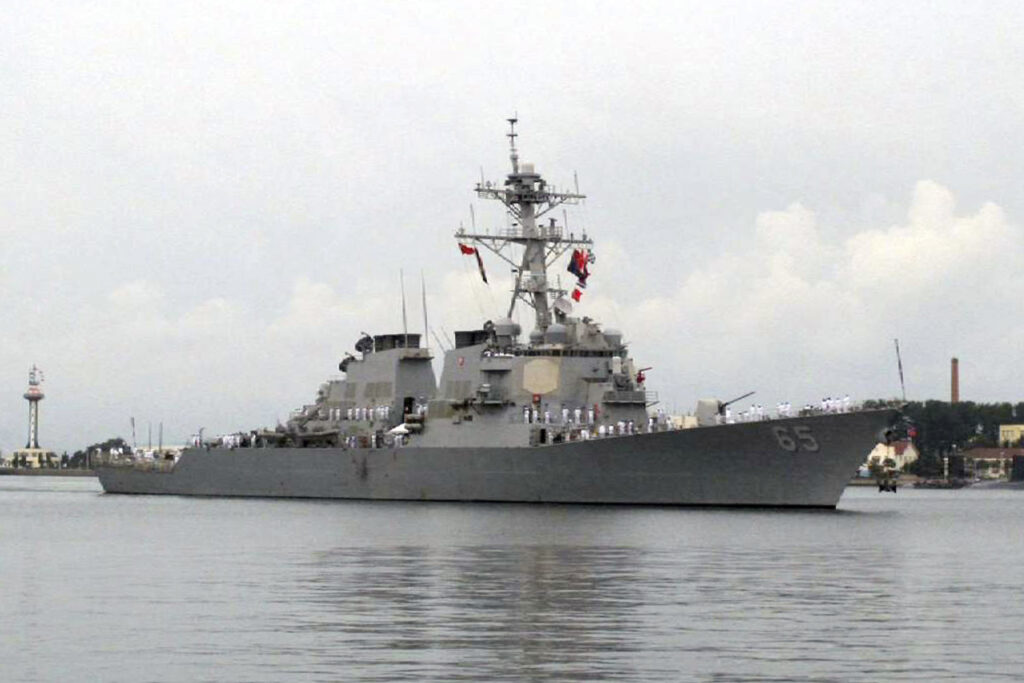
A U.S. Navy destroyer experienced a complete loss of power while deployed in the South China Sea last month, leaving sailors without drinkable water, meals, running toilets or air conditioning for four days.
The USS Benfold was sailing with the George Washington carrier strike group July 24 when an “engineering casualty involving its generators” caused a complete loss of power aboard the ship, a U.S. 7th Fleet spokesman, Cmdr. Matthew Comer, said in a statement.
The Navy did not immediately address questions about why it did not disclose the incident until now.
The ship’s power outage is another setback for the Navy, which has come under considerable strain during the Trump administration’s military campaigns in Latin America and the Middle East. Both operations have required U.S. commanders to extend some warships past the planned length of their deployments and maintenance schedules.
Other ships traveling in the carrier strike group, including the cruiser USS Robert Smalls, helped provide meals to the Benfold as the ship was towed into port in the Philippines. Once there, the crew was provided contracted housing and meals off the ship, Comer said.
“There were no injuries to the crew, who demonstrated resilience, grit, professionalism and unwavering steadiness,” Comer said.
Power was restored to the ship July 30, and it resumed operations a week later, the Navy said. It was not clear if the Benfold remained with the George Washington strike group or sailed back to its home port in Japan.
Read more Hegseth travels to Iowa in his ‘personal capacity’ amid 2028 speculation
The setback to the Benfold was reported earlier by USNI News.
The USS George Washington is headed for the Middle East to relieve the USS Abraham Lincoln, another aircraft carrier. The Lincoln has been a focus of recent news reports documenting poor crew morale, along with food and sanitation issues, after more than 200 days at sea.
The Trump administration has leaned heavily on the Navy over the last year to execute the president’s national security priorities.
A host of warships were deployed to the Caribbean last fall, when U.S. forces opened a military campaign against the Latin American drug trade and later staged a dramatic operation to capture Venezuelan President Nicolás Maduro. To support those missions, the Navy sent more than a dozen ships to carry out a blockade of Venezuela and conduct strikes against vessels suspected of transporting narcotics.
In the Middle East, dozens of warships have been used to prosecute the Trump administration’s war against Iran and enforce a blockade of Iranian ports as peace talks between Washington and Tehran remain stalled.
The Pentagon’s reliance on the Navy is taking a toll as needed maintenance for the vessels is deferred.
Two of the aircraft carriers that have seen record deployments in the Middle East have experienced issues.
The USS Gerald R. Ford experienced a fire and a breakdown of its toilet systems before it was sent home to Norfolk in May after more than 300 days deployed. The Lincoln just received a visit from the head of U.S. Central Command, Adm. Brad Cooper, after reports that crew members were struggling amid its prolonged time at sea.
Read more Planned Parenthood to spend more than $600,000 against Susan Collins in Maine