This story was reported by The Washington Post and ProPublica, a nonprofit newsroom that investigates abuses of power.
Read more Private equity’s billion-dollar scramble to own a piece of sports
THE FIRST TIME RYAN RICHARDSON was suspended from coaching volleyball, in early 2024, he gathered the parents of his teenage players in the back room of his gym in the border city of Pharr, Texas. It was a dark, cool space, one wall lined with shelves of trophies and dangling medals. The tinted windows looked out onto the courts where Richardson trained some of the best young female players in the Rio Grande Valley, but the glass was one-way, and from outside, nothing that happened in the room was visible.
For years, the room had also contained a twin-sized mattress that sat in the corner on a box spring, covered with dark sheets. By the 2024 season, though, the bed had disappeared.
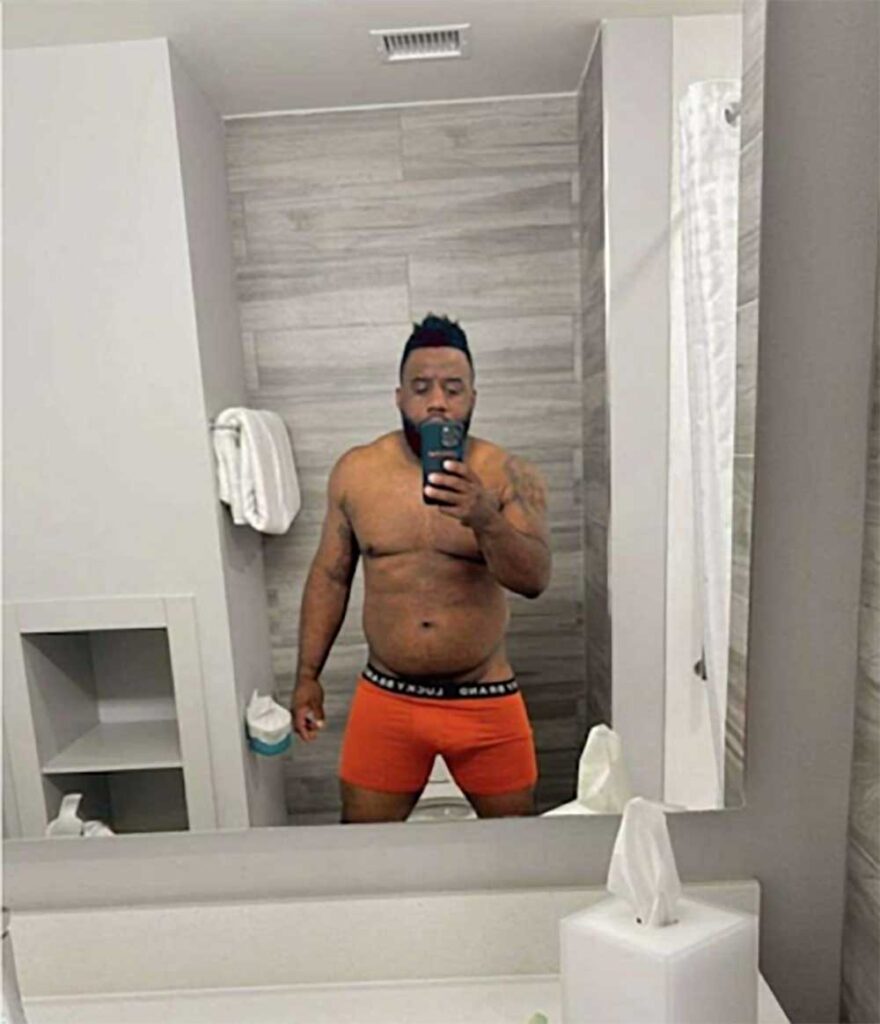
On that winter day, the parents of Richardson’s club, Texas Fierce Elite, were worried. Their 14- and 15-year-old daughters were bound for the Girls Junior National Championship that summer in Las Vegas, but now Richardson was barred from attending. The organization overseeing volleyball in the state, Lone Star Region Volleyball, had suspended him after complaints about Richardson’s Instagram posts, including a mirror selfie in which he posed in skin-tight orange boxer briefs. The case had quickly been escalated to USA Volleyball, the sport’s governing body and the host of the upcoming national championship.
There was much more at stake than a single tournament. For more than 15 years at the helm of Texas Fierce Elite, Richardson had been trading on a dream: girls who wanted to play college sports, and parents who wanted to get them there. In Pharr and the cities surrounding it, which are more than 90 percent Latino and have poverty rates more than double the national average, opportunities to go to college were rare, and paying for it was even harder. Richardson’s players said he often told them that he and Texas Fierce Elite were their only path to a scholarship.
Although they were barely in high school, the Texas Fierce Elite girls were entering the most important period of college recruiting. The sidelines of the national tournament would be flooded with college scouts from all corners of the country. If Richardson could no longer coach, the parents feared, all of that might be derailed.
On that day in the back room of his gym, Richardson did not acknowledge the Instagram posts at all, according to two parents present. Instead, the former football receiver claimed that the suspension was the result of vindictive parents with complaints about their kids’ playing time. He promised the suspension would go away in a matter of weeks. And even if it didn’t, Richardson told them, he would find a way to keep coaching.
The suspension didn’t go away. Instead, it surfaced a flood of allegations far more serious than Instagram photos: One mother would allege that Richardson had been having a sexual relationship with her daughter that began four years ago, when the girl was 16 and he was 36, she told ProPublica and The Washington Post. Other players would come forward to say Richardson had groomed and physically and emotionally abused them. USA Volleyball referred the case to the U.S. Center for SafeSport, an oversight body created to police abuse in youth and Olympic sports, which eventually suspended Richardson and put his name on its public disciplinary list.
Richardson was right about one thing, however: None of that mattered. Although he was barred from attending USA Volleyball events, including nationals, Richardson was able to keep coaching his teams of teenage girls. He attended daily practices and appeared on the sidelines of tournaments hosted by other volleyball groups for two years.
In February of this year, SafeSport listed Richardson as “permanently ineligible” to coach, saying it had substantiated a litany of allegations against him: that he had had an intimate relationship with a minor, committed sexual misconduct involving a minor, and engaged in physical misconduct and bullying.
But Richardson is still coaching teenage girls at his gym in Pharr. And that fact is not a secret. Nearly every day for the last two years, Richardson has posted videos in which he works with Texas Fierce Elite players, supervises practices and promotes the club — hundreds of posts in all, often visible to the public.
After his suspension in early 2024, Richardson said complaints against him were an effort to “retaliate and defame someone’s character,” telling the local news website MyRGV that he “would never do anything to risk the physical or mental wellbeing of these strong young ladies.” He called himself an “enthusiastic proponent” of SafeSport and the strict rules it has in place to protect children.
“I am extremely surprised by the suspension and disappointed that I have not been given any information regarding what I allegedly did wrong,” he said at the time. “The safety and security of the athletes that train with Texas Fierce Elite Volleyball is always my primary focus and concern.”
Richardson, who has not been charged with any crime, did not respond to multiple requests for comment for this story. Last week, after ProPublica and The Post sent him a detailed summary of our reporting, Richardson posted a video of a girl training at his gym on Instagram with the caption, “Say what you want but this work will be on display for as long as I live !! Not interested in answering to the narrative created by outsiders just invested into the next one who is looking for change!!”
For more than a year, ProPublica and The Post have been investigating failures in a system that is supposed to protect children from sexual abuse in youth sports. Those flaws, the investigation found, are putting a new generation of young athletes at risk.
The sexual abuse allegations against Richardson triggered that system, which was created by Congress in 2018 in the wake of revelations about sexual abuse in Olympic sports — among them the prolonged abuse of dozens of athletes by USA Gymnastics doctor Larry Nassar. The 2018 law charged the new Center for SafeSport with overseeing the country’s 50 national sports governing bodies, including USA Volleyball, which prepare and train young athletes in sports overseen by the U.S. Olympic and Paralympic Committee. SafeSport investigates allegations of abuse in these sports, especially sexual abuse. It has the power to suspend coaches as it investigates them, recording their names in a public database known as the SafeSport list, and can ban abusive coaches for life.
The SafeSport list was intended to address the decades-old problem of coaches who were accused of abuse but were able to continue working with young athletes for years, often as sports governing bodies looked the other way. But that system did not stop Ryan Richardson. SafeSport, USA Volleyball and its regional partner Lone Star all failed to keep Richardson from interacting with children, ProPublica and The Post found, even as allegations of inappropriate behavior and abuse piled up.
SafeSport delayed suspending Richardson for months despite the serious allegations, ProPublica and The Post found. Later, the organization failed to take action against a coach accused of “aiding and abetting” Richardson by allowing him to work with players after he was suspended. SafeSport said it could not comment on individual cases “to protect the integrity of our investigative process.”
Once Richardson was suspended by SafeSport, the law required USA Volleyball to ensure he was not working with its athletes. ProPublica and The Post found that both USA Volleyball and Lone Star had received multiple reports that Richardson was still coaching, but Lone Star allowed his club to remain a regional member, and USA Volleyball did not object. Richardson kept showing up to coach.
Hilary Nemchik, a SafeSport vice president, said in a statement that it was the job of national governing bodies like USA Volleyball to “enforce the U.S. Center for SafeSport’s sanctions” and that governing bodies had the ability “to make decisions regarding membership.”
“We recognize there are gaps in the system, whether it be coaches avoiding SafeSport sanctions by going to organizations outside of the Movement or a reluctance by some NGBs to do everything in their power to prohibit the participation of banned individuals,” Nemchik said. She cited a case in which another governing body, USA Gymnastics, had terminated the membership of a club for repeatedly violating SafeSport sanctions.
“This should be standard for any NGB that prioritizes protecting their members,” Nemchik said.
A spokesperson for USA Volleyball said in a statement that the organization had done an “internal review” of the incidents in ProPublica and The Post’s story and “confirmed that USA Volleyball has fully complied with all SafeSport requirements, U.S. Center for SafeSport regulations, and our own organizational policies and procedures.”
“USA Volleyball places the highest priority on the safety and well-being of all athletes, coaches, and staff,” the statement said.
Lone Star said in a statement that it “disputes the accuracy of several factual assertions, characterizations, and implications” in the story, but would not comment on individuals or internal processes. It declined to say what was inaccurate.
“The Region takes its responsibilities concerning athlete safety seriously,” the statement said, “and will continue to fulfill its obligations under applicable USA Volleyball and SafeSport requirements.”

WHEN RICHARDSON OPENED Elite Sports Performance, there was little like it in the Rio Grande Valley, a string of rapidly growing border cities isolated from the rest of Texas by miles of scrubland. There were sports teams and there were gyms, but what Richardson started selling was something else: a version of youth sports that went beyond practices and games. In 2013, they opened a gym in a warehouse-like green building on Feather Avenue in Pharr where expensive rigs hooked children up to elastic bands to improve their jumping height, a crane-like device served balls one after another so they could master technique, and trampolines and battle ropes made them strong.
Richardson had played football at Texas A&M University-Kingsville, but his coaching specialty was volleyball, soon to become the country’s fastest-growing sport for girls. Richardson told his young players that he became involved in volleyball after college, where he’d dated a libero, a defensive position held by the smallest players on the court.
Richardson demanded perfection. He wanted his players’ elbows at the right angle, their jumps timed exactly right. He was known to curse and scream, former players said, and even a small mistake could mean being called a “pussy” and a “piece of shit.” If a girl didn’t jump high enough, she was “fucking fat.”
“He would tear us down to the point where we needed validation from him because he was the only one to build us up,” said Madisyn Sosa, now 20, who played with Richardson from the age of 14.
His behavior was tolerated for one reason, another former Texas Fierce Elite athlete said: College “was always the end goal.” Richardson quickly established a track record of sending athletes to local and even Division I colleges, often with scholarships.
“We’re extremely limited on good training,” said one local volleyball club director, Rafael Castañeda Jr., who owns a rival gym several miles from Richardson’s. “He’s known to be one of the top ones, so these parents, they took the chance.”
On social media, Richardson chronicled the rise of his program with hundreds of videos of the group of teen girls he called his “family.” The back room at Elite Sports Performance began to fill with trophies and medals. In the summer of 2022, at the USA Volleyball national championship in Indianapolis, Richardson’s team of girls under 14 finished ninth in the country.
Richardson also spent hours with his teenage players outside of sports. He took them on fishing expeditions and to the beach. They accompanied him to church and hung out in his hotel room on trips to tournaments doing TikTok dances. He posted photos and videos of all of it online, with Instagram captions calling the girls pet names like “my fierce baby” and “my love.”
Richardson took particular interest, three former players said, in girls who played libero — the same position as his former girlfriend. In one Instagram story, a screenshot of which was viewed by ProPublica and The Post, Richardson described a “journey” with one libero, a girl he called his goddaughter.
“This little 11 year old redheaded girl laid her head on my shoulder and fell asleep, for some odd reason I couldn’t shake the feeling of a father,” Richardson wrote. “So I asked her mom if things were ok to really love this child … the relationship blossomed from coach to godfather to dad.” He added a photograph of himself holding the girl’s hand. The girl, who is now an adult, did not respond to a request for comment.
Richardson required his teenage players to hug him at the end of practice, four former players said, sometimes pulling girls down onto his lap and telling them, “I love you.” He required hugs even on days when prospective parents were touring his gym.
One parent recalled thinking it was odd, she said, but quickly doubted herself: Why would he do something like that in front of parents if it was inappropriate?
And then there was the bed. He kept it for years in the back room, five people said, telling parents it was for recovery and massages. Parents sometimes sat in the dark room, too, watching their daughters train through the windows from a set of lounge chairs that lined the wall.
THAT WAS THE ROOM where Maggie Gutierrez first found Richardson alone with her teenage daughter.
Gutierrez had brought her daughter to Elite Sports Performance nearly four years earlier, when she was a promising 13-year-old libero, for one reason: Richardson was supposed to be the best. He was “aggressive” with the girls, Gutierrez acknowledged, but under his vigilance her daughter grew to be one of the team’s best players — so good that Richardson had stopped charging her for expensive private sessions. Gutierrez often dropped her daughter off at the gym to practice, then returned a few hours later to bring her home.
When she arrived that day in 2022, Gutierrez told ProPublica and The Post, Richardson’s car was the only one in the parking lot. Inside, the gym was empty.
Gutierrez opened the door to the back room to find Richardson and her daughter, then 16, in the dark. Richardson turned his back to her and appeared to be tying up the string of his pants. (ProPublica and The Post, which do not name alleged victims of sexual abuse without their consent, are referring to Gutierrez by her maiden name to avoid identifying her daughter, who declined to be interviewed.)
“I was furious,” Gutierrez said. “I could tell my daughter was nervous, and didn’t know how to react.” Gutierrez confronted Richardson, she said, but he denied anything had happened, following up with a flurry of WhatsApp messages that she said he later deleted.
“He convinced me not to say anything,” Gutierrez said. “And I didn’t say anything.”
Gutierrez’s daughter also insisted there was nothing romantic between them, Gutierrez said. And her daughter wanted to keep playing; she had a scholarship offer to a Division I school out of state.
“I was just like, okay, I’m going to keep an eye, make sure I’m there all the time,” Gutierrez said.
For a while, Gutierrez believed she was able to keep her daughter from being alone with Richardson. But her daughter began to turn off her location on her phone, she said.
The relationship between Richardson and the girl continued for more than a year after the incident, according to Snapchat messages included in the SafeSport investigation and reviewed by ProPublica and The Post.
In August 2022, several months after Gutierrez found Richardson and her daughter alone, Richardson and Gutierrez’s 16-year-old daughter exchanged messages saying, “I love you,” to each other and planning when they would next be able to meet up.
Throughout the spring of 2023, when the girl was 17, Richardson wrote, “I want to camp in you love.” A day later, he wrote, “I love my girlfriend.” He sent the girl a video that he’d filmed of her sleeping on his chest, saying, “We look so peaceful together. It’s beautiful.”
That May, Richardson wrote, “I don’t like that we are only sex right now so I really would love to get past this high school Shit when you are on your own pretty much,” he wrote. “I love you very much and I’ll be that man for you!!”
Gutierrez had no idea that any of it was happening, she said. When her daughter got an opportunity to start college a semester early so that she could train with the team, Richardson encouraged it.
In January 2024, at 18, she left for college in another state. Richardson quickly started a WhatsApp group with Gutierrez that he named her daughter’s “support group,” asking what kind of things her daughter would want in a gift box he said he was sending to her campus from the club.
Then, in February, Gutierrez said, she got a call from her daughter’s college volleyball coach. He told Gutierrez that Richardson had met up with her daughter for a weekend out of state and that other players on the team had spoken about her daughter’s “older boyfriend” — a man they identified as Richardson. The college coach believed they were having a relationship, he told her. Gutierrez said she was frozen in shock.
By the spring, when her daughter returned to the Rio Grande Valley from college, Gutierrez decided she had to act to protect her daughter. She went to police in McAllen and Pharr to report that Richardson had had a relationship with her daughter that she believed began when the girl was under 17, the age of consent in Texas.
Police in both jurisdictions denied records requests from ProPublica and The Post by citing an exemption under state privacy statutes, but the news organizations obtained excerpts from the police report in McAllen. In the text, an officer describes meeting with Gutierrez at the McAllen police station.
Gutierrez left the station with a promise to return with her daughter, the officer wrote. But she never did. When the officer called back, Gutierrez said her daughter did not want to speak. The officer closed the case, noting that her daughter was now 18 and legally an adult. Pharr police also declined to investigate, Gutierrez said. She felt stuck.
So she turned to Lone Star, the regional volleyball arm of USA Volleyball. If she could not get police to investigate, she thought, at least she could stop Richardson from coaching.
Read more Darline Graham’s ‘oops’ moment and the pitfalls of acknowledging ignorance

By the time Gutierrez went to Lone Star, Richardson had already been suspended for several months over his social media posts, drawing coverage from local news outlets.
When he was first suspended that February, Richardson told MyRGV that he was innocent and planned to file a grievance with USA Volleyball. But weeks later, MyRGV reported that USA Volleyball had upheld the suspension, keeping Richardson from coaching or training for at least six months. Richardson told the website he was “shocked.”
USA Volleyball had previously sent the report about Richardson’s behavior on social media to the U.S. Center for SafeSport, as required by law, according to one person familiar with the case. But SafeSport initially declined to investigate because it said the allegations were not sexual and referred the case back to USA Volleyball, that person said.
Only when Gutierrez reached out to Lone Star in May, the person familiar with the case said, did SafeSport accept the case.
Over the course of its investigation, SafeSport would receive other reports about Richardson, ProPublica and The Post found. Two former players, two parents and Castañeda, the rival club owner, all said they had spoken to SafeSport investigators.
Sosa, a former teammate of Gutierrez’s daughter, said she had also experienced inappropriate behavior from Richardson, which she eventually described to a SafeSport investigator. Richardson had sometimes FaceTimed her while he showered, she said, and often brought up sex and boys, once telling Sosa that a teammate was gaining weight because she was “having sex with that boyfriend all the time.”
At one training session, she said, Richardson embraced her and laid his body on top of hers, saying, “Why don’t you love me?”
Another player who witnessed the incident, who spoke on the condition of anonymity because she is still involved in volleyball in the region, said she remembered Richardson remaining on top of Sosa for an uncomfortably long time. “I remember thinking she must be out of breath right now,” the player said.
In a video Richardson posted to his Instagram, he is lying on the floor of the back room gym with Sosa, who said she was 17 at the time. He is gripping her arm, which is lying across Richardson’s chest. They both squeeze each other and laugh. Richardson captioned it, “The love is unreal … .”
“That was the normal for us,” Sosa said.
Beliza Longoria, another former player, said she spoke to SafeSport about what she believed was grooming by Richardson. As her coach, Richardson was obsessed with her teenage sex life, she said, and had once called her a “fucking slut” when he found out from a teammate that she’d had a sexual relationship with a boy.
Once, Richardson told her and a teammate to rest their heads on his shoulder, and she had woken up, she said, to him filming them as they slept. On trips for out-of-town tournaments, she said, he often encouraged the girls to spend time in his hotel room, where he sometimes wore only a pair of shorts.
Longoria recalled one night when Richardson sat shirtless in bed drinking green apple Crown Royal until she and her teammates grew uncomfortable and left. Sosa and another teammate also recalled the incident.
This was not the first time Longoria had tried to report Richardson. In 2021, she said, when she was 14, Richardson slapped her face and cursed at her during a training session. She and her parents went to the Pharr police, her mother said, but no action was taken, and Longoria left the club immediately after. Police acknowledged there were records related to the incident but declined to provide them under state privacy statutes. Richardson denied any wrongdoing at the time, and Sosa said when he told the team that Longoria was lying, they believed him.
A SafeSport investigator eventually told Longoria that a report had been filed about the incident in 2021, she said. She had told many people about what happened, she said, but she was not sure who had filed the report. A person familiar with USA Volleyball’s operations confirmed the existence of a report about the incident in 2021 and said that Lone Star had appeared not to discipline Richardson.
Three years later, Longoria said, she hoped that this time would be different.
THE SAFESPORT INVESTIGATOR assigned to Richardson’s case was Jason Krasley, a former police officer. Krasley could have immediately placed the coach on SafeSport’s public disciplinary list, temporarily suspending him from coaching while the investigation continued. SafeSport says it uses such suspensions to keep people safe in the case of “severe” allegations, including “allegations of child sexual abuse regarding a coach with current/ongoing access to minor athletes.”
But months passed without Richardson’s name appearing in the database. Richardson told parents at Texas Fierce Elite that this was a sign he had done nothing wrong.
And although Richardson remained suspended by Lone Star and USA Volleyball, he found a way to keep coaching.
Richardson gave control of Texas Fierce Elite’s teams to an employee, Gavin Rudder, according to a social media post that June. Richardson and Rudder had been close for years. Rudder posted photographs of them together, giving their duo a nickname — “Ebony and Ivory,” a reference to their races — and praising Richardson’s “incredible legacy.” Richardson’s Instagram username for a time was “Mr_ESP,” a reference to Elite Sports Performance. Rudder’s is “Mr_ESPvolleyball.” Rudder did not respond to multiple requests for comment, including a detailed list of questions.
Under Rudder, Texas Fierce Elite could remain registered with Lone Star. Rudder’s name appeared on the club paperwork, and he took the girls to USA Volleyball-sanctioned tournaments. But ProPublica and The Post found that Richardson was, for all intents and purposes, still in charge of the club, a violation of his suspension. He set practice schedules and arranged tournaments, collected fees and ordered jerseys, according to team WhatsApp messages and interviews with a former coach at the club and two parents of former players.
Richardson was also the main coach of the oldest team of girls at Texas Fierce Elite, these people said. Richardson’s social media posts show him running drills at practices, and online streams of games show Richardson coaching on the sidelines.
“He was the only one that touched the team,” the former coach said. The coach, who left the club in early 2025, asked not to be named because she is still involved in volleyball in the region. Richardson allowed Rudder and other coaches to instruct younger teams, but he was still present at most practices and would frequently step in to coach, she said.
One mother, whose daughter played on Texas Fierce Elite’s team for girls 15 and under at the time, shared a series of WhatsApp messages that showed Richardson remained heavily involved in that team following the suspension. In the messages, he also required girls to book “at least one private session a week” with him ahead of USA Volleyball’s national tournament. Rudder was part of the WhatsApp group and had watched it all happen, the mother said.
The mother sent the messages showing Richardson’s involvement — and what she said was Rudder’s enabling of Richardson’s coaching — to Lone Star in July 2024, emails show. But with the new season set to begin in September, Lone Star renewed Rudder’s membership, and Texas Fierce Elite remained in good standing.
As Longoria watched Richardson’s social media posts, she grew increasingly desperate — and furious. In January 2025 she emailed Krasley, the SafeSport investigator. It had been eight months since SafeSport’s investigation began.
“WE NEED TO SCHEDULE A MEETING,” she wrote. “I am so worried for these kids who are under [h]is program and I am so angered that he is still coaching.”
Longoria attached a photo that she had just been sent: Richardson in a Texas Fierce Elite zip-up at a tournament in New Orleans, his arms around a young volleyball player, pulling her against his chest.
Krasley didn’t respond. It turned out he no longer worked for SafeSport; he had been fired in November after he was arraigned on allegations that, as a police officer, he had stolen money seized in a drug bust. And three days before Longoria reached out, Krasley had been arrested again, this time on charges of felony rape and involuntary sexual servitude.
He is awaiting trial on multiple sex crime charges, although the theft and other charges were eventually dropped. Krasley has yet to enter a plea, and his attorney has argued the case should be dropped because of “egregious” prosecutorial misconduct. The attorney did not respond to requests for comment.
SafeSport’s CEO at the time, Ju’Riese Colón, said in a statement after firing him that she was “appalled that a former staff member has been accused of such heinous acts in his previous role as a police officer.” SafeSport conducted an audit of Krasley’s 114 cases and said that it had reopened three of them, without providing details.

IN FEBRUARY 2025, one year after Richardson’s social media posts were sent to SafeSport, Richardson’s name appeared in the center’s disciplinary database. He was temporarily suspended from coaching under USA Volleyball and all other sports organizations covered by SafeSport’s mandate while the investigation ran its course.
Longoria was hopeful: Maybe SafeSport would make sure that Richardson no longer had access to young volleyball players.
In reality, ProPublica and The Post found, the SafeSport suspension made almost no difference.
Shortly after being placed on the SafeSport list, on March 8, Richardson was at the Adidas Bluegrass Tournament in Louisville, coaching the Texas Fierce Elite team that another coach had said “no one else touched.” Richardson was registered as the coach.
Richardson was taking advantage of a gap in the SafeSport law. While national governing bodies like USA Volleyball are required to ban coaches on the SafeSport list, the law does not apply to private nonprofit groups. The Junior Volleyball Association, a nonprofit that says it has more than 250,000 participants, had allowed Richardson to join while he was suspended by USA Volleyball. The Louisville tournament was not affiliated with JVA, but it allowed coaches to use JVA memberships to register.
In late April 2025, Richardson and the girls attended a tournament in Tennessee called Showdown in the Smokies. In an online stream of the event, he can be seen pacing in front of the team bench in gray shorts and a black T-shirt. After the tournament, which took place on his birthday, Richardson posted a video on Instagram of himself at a restaurant, having dinner with five of his teenage players. There are no other adults visible at the table.
In July 2025, four months after Richardson was suspended by SafeSport, JVA renewed his membership.
Like some other independent youth sports nonprofits, JVA has a policy banning coaches on the SafeSport list from working with kids, and a representative, Taylor Jakubowski, told ProPublica and The Post that JVA conducted monthly audits of the list against its membership roster. She acknowledged that JVA had not done so in Richardson’s case.
“That would be my colleague, the one that checks the list,” she said, but did not provide a name. Jakubowski said JVA “canceled” Richardson’s membership in December 2025, the same month that a reporter reached out with questions about him.
JVA’s executive director, Lisa Wielebnicki, said in a statement that JVA did not “operate or administer” either of the tournaments or determine who would be allowed to participate. “Any suggestion that JVA permitted or enabled Mr. Richardson to participate in those events … based on his JVA membership status would therefore be inaccurate.” (Richardson later reapplied, she said, and JVA denied his membership.)
Richardson’s gym had also been able to gain affiliation with another outside organization: the Amateur Athletic Union, a massive youth sports nonprofit with some 760,000 athletes, which an investigation from ProPublica and The Post found has developed a reputation as a refuge for coaches who have been accused of abuse. The AAU does not have a policy barring coaches who are suspended or banned by SafeSport or other sports organizations.
The AAU said it had “permanently banned” Richardson back in November 2024, after Gutierrez and the other Texas Fierce Elite mother said they reached out to the organization to express fears that Richardson would try to move his gym there. The AAU declined to comment further, but in a previous statement, the AAU said that it is “committed to protecting its athletes through comprehensive protection policies overseen by our Compliance Department.”
But the following summer, Richardson, Rudder and Texas Fierce Elite began advertising a sleek new brand: “The Complex, est. 2025.” On social media, a video from Richardson called it “a new chapter.” He also included a new slogan: “DEFY THE OPPS” — slang for “the opposition.”
In the AAU’s member directory, there is a girls’ volleyball club at the address of Richardson’s gym. It is called The Complex. The AAU did not answer questions about who owned the club.
For all of Richardson’s maneuvering with other sports groups, though, he still needed USA Volleyball. To players and parents determined to secure college scholarships, USA Volleyball memberships are vital. While the AAU and JVA host their own tournaments, USA Volleyball remains the gateway to the sport’s regional and national championships, where hundreds of college scouts gather every year to recruit a new class of athletes.
With a new season set to begin in September 2025, Lone Star allowed Texas Fierce Elite to remain in good standing. And it approved Rudder, who was listed as the club’s director, for another year of membership.
Richardson celebrated the start of the season with a video of a Texas Fierce Elite practice with the caption, “TAKING BACK EVERYTHING THAT WAS TAKEN FROM THESE KIDS !! GOD SEE ME THRU IT ! Let’s work!!”
Rudder was violating the SafeSport code just by allowing Richardson to work with his athletes. As a USA Volleyball member — and the registered owner of Texas Fierce Elite — he was prohibited from allowing people banned or suspended by SafeSport to be “in any way associated with” a registered club or to “coach or instruct Participants.” On social media, months of public posts by Richardson showed that Rudder had been standing by as Richardson coached his teams, sometimes literally. In one video, Richardson and Rudder stood on opposite sides of a volleyball net feeding balls to players. Public registration forms online show Richardson had listed Rudder as his assistant coach at tournaments.
Under the SafeSport code, USA Volleyball is “responsible for enforcing” the center’s bans and suspensions. But a senior official with USA Volleyball said it leaves enforcement to regional affiliates like Lone Star.
Karen Tarmon, the SafeSport coordinator for Lone Star, said in November 2025 that the organization had been unable to take action against Rudder or Texas Fierce Elite for violating Richardson’s suspension because “a club director or parent of an athlete is required to submit complaints and video documentation.”
In Richardson and Rudder’s case, Tarmon said, “The Lone Star Region has not received documentation of this possible violation.”
But by then, Lone Star had received reports from three people alleging that Richardson was violating his suspension, ProPublica and The Post found. Castañeda, Longoria and the other Texas Fierce Elite mother had all reported that he was still coaching, emails they provided show. The emails included videos, text messages and photos.
In addition, Tarmon said that Lone Star did not have “authority over a club” until the start of what she called the “sanctioned season” on Nov. 23. SafeSport says its rules apply at all times, and Lone Star’s handbook at the time said the region is allowed to govern teams for as long as they are registered.
Frustrated with inaction by Lone Star, Castañeda said he contacted USA Volleyball’s SafeSport office that November with photographs and videos pulled from Richardson’s public Instagram page.
By January, Rudder and Texas Fierce Elite were back at USA Volleyball-sanctioned tournaments.

RICHARDSON HAS MADE NO EFFORT to hide that he is still coaching.
He posts videos of himself working with the girls almost every day, sometimes accompanied by Rudder. He filmed himself spending time alone with players in the darkened back room of his gym, where the twin bed once sat, and performing cupping therapy on a girl who is lying face-down on a table wearing only a sports bra and shorts.
On Feb. 13, 2026, Richardson posted a video of himself training Texas Fierce Elite’s under-14 team. He captioned it with “TFE14” and stamped the video with the Texas Fierce Elite logo and the brand of a new training center named after one of his former players.
On Feb. 19, the Center for SafeSport ruled that Richardson was banned from coaching. His name now appears in the SafeSport database under a new category: “permanently ineligible.”
On Feb. 20, Richardson was back to training Texas Fierce Elite players, and he was back to posting. He has not stopped since.
Read more Democrats are moving past the resistance. They want a new kind of fighter.