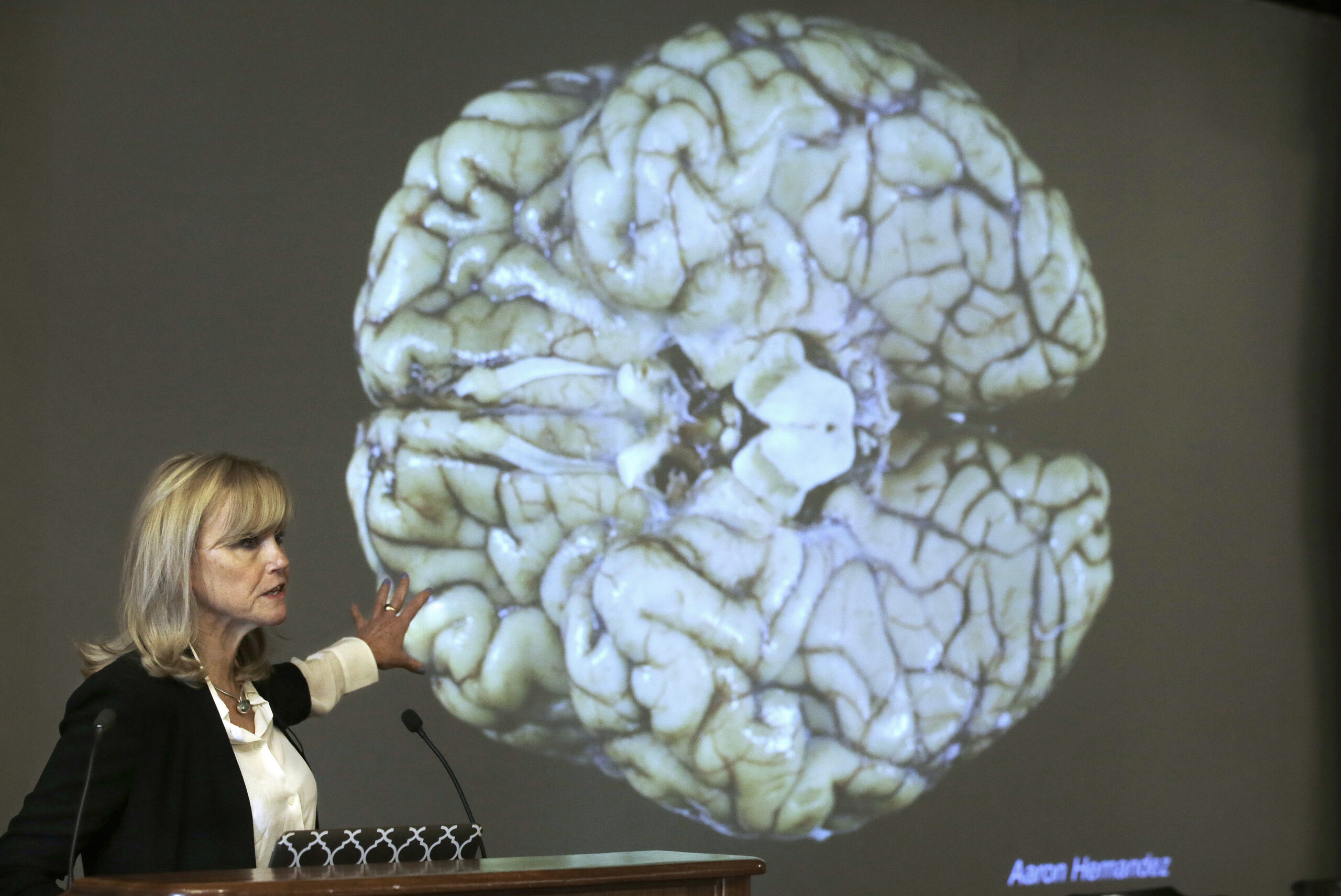
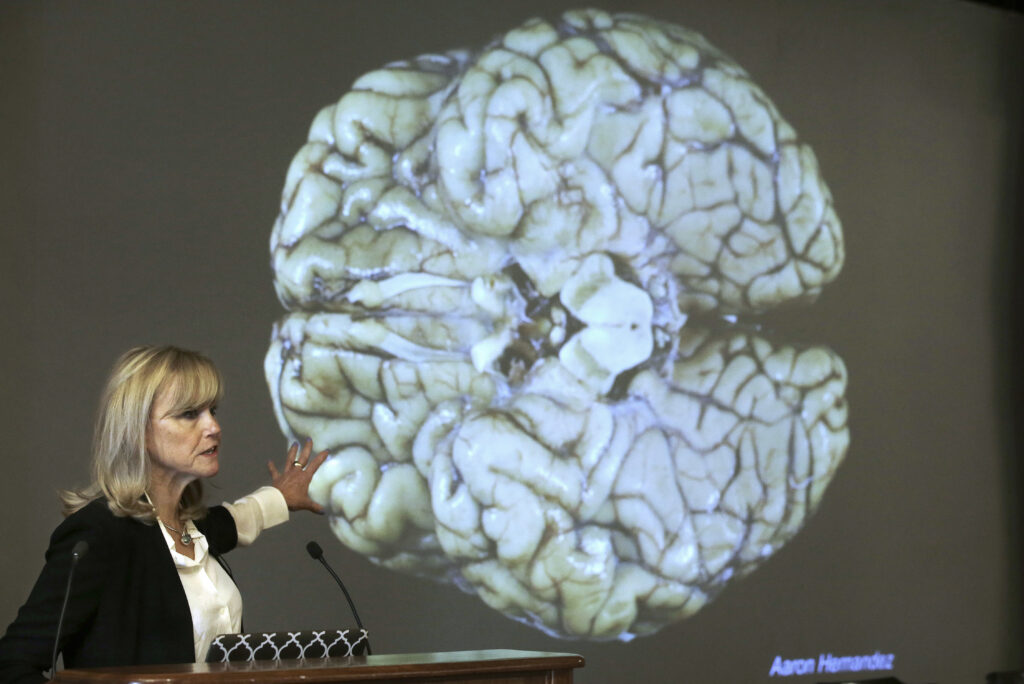
At least 1 in 4 former NFL players who died in recent years had chronic traumatic encephalopathy, the degenerative brain disease linked to repeated head impacts, according to the largest-ever study to estimate the disease’s prevalence among deceased professional football players.
Read more Third-string QB, final wideouts and more Commanders roster battles to watch
The 25 percent figure represents a conservative floor, researchers said, and the true prevalence of CTE at death was probably higher. Because the disease can be diagnosed only after death, the research did not reveal how common the disease is among active players or living retirees.
The study, published Tuesday in the British Medical Journal, tracked 878 former players who appeared in at least one NFL game, debuted after 1949 and died between 2016 and 2021. Researchers examined the brains of 235 of them, and 215 — more than 91 percent of the donors — had CTE.
Because players and families concerned about brain disease are more likely to donate a brain for research, the researchers did not treat that 91 percent figure as representative of all former players. Instead, they established a range.
For the most conservative estimate, they assumed none of the 643 players whose brains were not examined had CTE. Even then, 24.5 percent of the entire group — nearly 1 in 4 — had the disease. If every unexamined player had CTE, the prevalence would have been 97.7 percent, a mathematical ceiling rather than a likely estimate.
“The true number is somewhere in that range,” said Daniel Daneshvar, the study’s lead author and chief of brain injury rehabilitation at Spaulding Rehabilitation Hospital, said in an interview.
Daneshvar, who is also an associate professor at Harvard Medical School, said the lower estimate eliminates the usual brain-bank selection bias by making the most conservative possible assumption: that researchers identified every CTE case and that every player whose brain was not examined did not have the disease.
Still, Daneshvar cautioned against applying that number to living players.
“This isn’t looking at active players,” he said. “This is people at the end of their lives. And so we can’t directly extrapolate from this to living current players or even living retired players.”
CTE is associated with exposure to repeated head impacts and marked by an abnormal buildup of tau protein around small blood vessels deep in the folds of the brain.
Rachel Grashow, a neuroepidemiologist at the Harvard T.H. Chan School of Public Health who was not involved in the research, said the study’s important contribution was its attempt to estimate the prevalence of CTE pathology rather than simply reporting the percentage found in a brain bank.
But Grashow, who studies football player health, cautioned against assuming that everyone with CTE pathology necessarily experienced the psychiatric, behavioral or cognitive symptoms commonly associated with the disease.
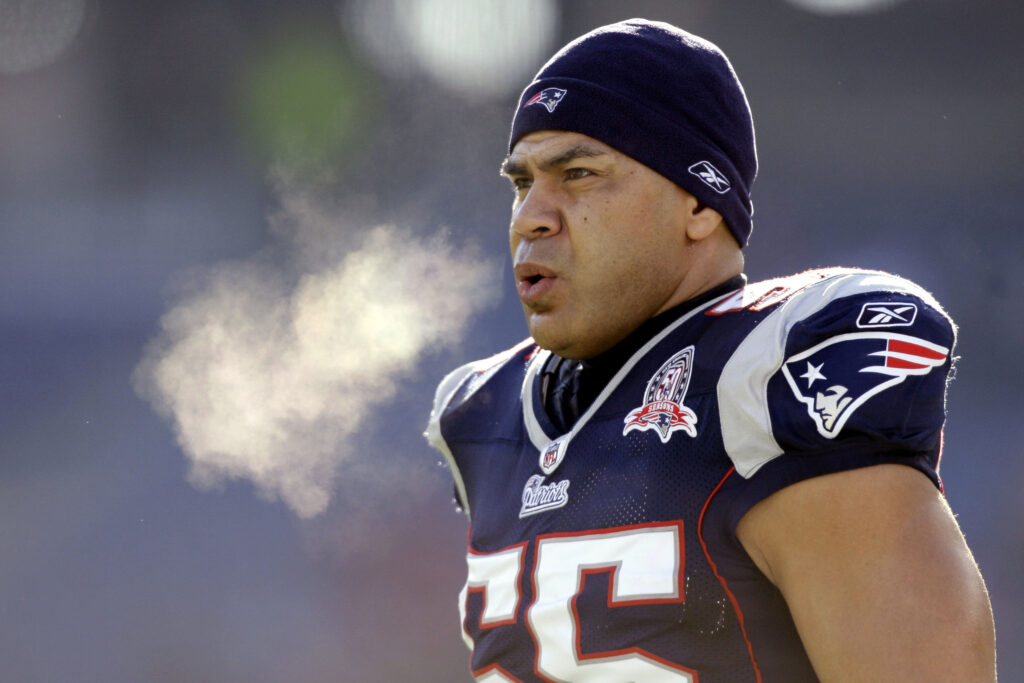
“What this paper doesn’t show — this thing that we’re waiting for — is a really strong connection between the symptoms that people are attributing to CTE and this neuropathologic postmortem diagnosis,” she said.
Read more Lile stays in a groove, but Nationals are silenced by Rockies
The association between the most advanced CTE and dementia is important, Grashow said, but the study still cannot predict the health or future of an individual living player. Her research on living former football players is funded in part by the NFL Players Association, which she said has no authority over the research or its publication. She does not receive NFL funding.
Most of the players in the latest study who had CTE had an advanced form of the disease. About 70 percent were diagnosed with Stage 3 or Stage 4 CTE, the two most severe of its four stages, Daneshvar said. The average age at death among the brain donors was about 66.
More than 60 percent of the players with CTE were determined to have had dementia, based on family interviews and medical records. Among the 104 players with Stage 4 CTE, more than 90 percent had dementia. After adjusting for age and other factors, researchers found that Stage 4 CTE was associated with a 44 percent higher prevalence of dementia.
The study was conducted by researchers from Mass General Brigham, Boston University and other institutions. Ann McKee, director of Boston University’s CTE Center, was a co-author. Most of the examined brains came through Boston University’s UNITE Brain Bank, with additional cases from Mount Sinai and the University of California at San Francisco.
The study’s authors acknowledged several limitations. Brain donors tended to have played longer, achieved greater prominence in the sport and died younger than the other former players. Their families also were more likely to have observed cognitive, behavioral or mood symptoms. Clinical histories were reconstructed after death through family interviews and medical records, making them susceptible to imperfect recall.
The study also largely reflects players from earlier eras of professional football. It cannot determine whether more recent changes in equipment, practice rules, tackling instruction and concussion management have altered the risk faced by players today.
In a statement, an NFL spokesperson said the league “continuously strives to make the game of football safer, including by implementing strategies to reduce concussions and head impacts.”
“The NFL remains committed to ensuring that the NFL community has access to a robust — and expanding — set of resources to enhance their physical and mental well-being,” the spokesperson said. “We encourage former players to utilize these resources to identify and seek treatment when they are concerned about their health.”
Researchers say the studies add to evidence that football’s neurological risks are not limited to diagnosed concussions. CTE has been linked more closely to cumulative exposure to repeated head impacts, including hits that do not produce immediate concussion symptoms.
The former NFL players did not accumulate all of that exposure in professional football, Daneshvar said.
“They got it at the collegiate level, in many cases the high school level, and oftentimes the youth level as well,” he said. “And all of those cumulative hits, the cumulative force associated with those hits, added up to increase the individual’s risk for developing the disease process later.”
Read more A billionaire’s sports team sell-off could complicate MLB’s salary-cap push