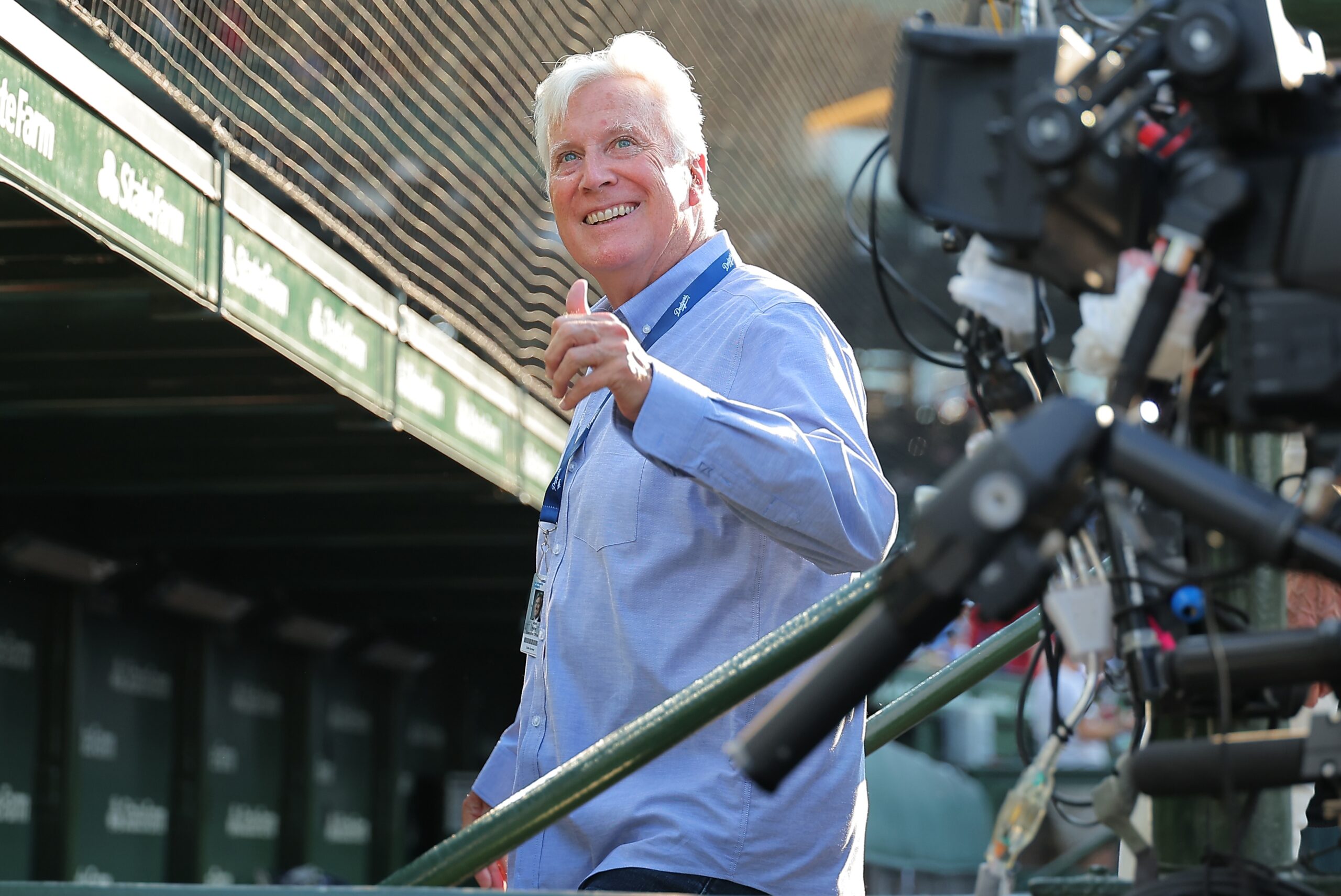
Mark Walter’s unwinding of sports portfolio has added intrigue to Major League Baseball’s looming labor battle and opened a window into the experience of being a fan in an era of private-equity ownership.
Read more In Texas Senate race, Talarico seeks depositions that could damage Paxton
Last Sept. 18, a Thursday, was a pretty typical day for the Los Angeles Dodgers, who beat the San Francisco Giants, 2–1, en route to their 12th National League West title in 13 years and second consecutive World Series championship, a dynastic run that has called into question whether the sport in its current form can survive their dominance.
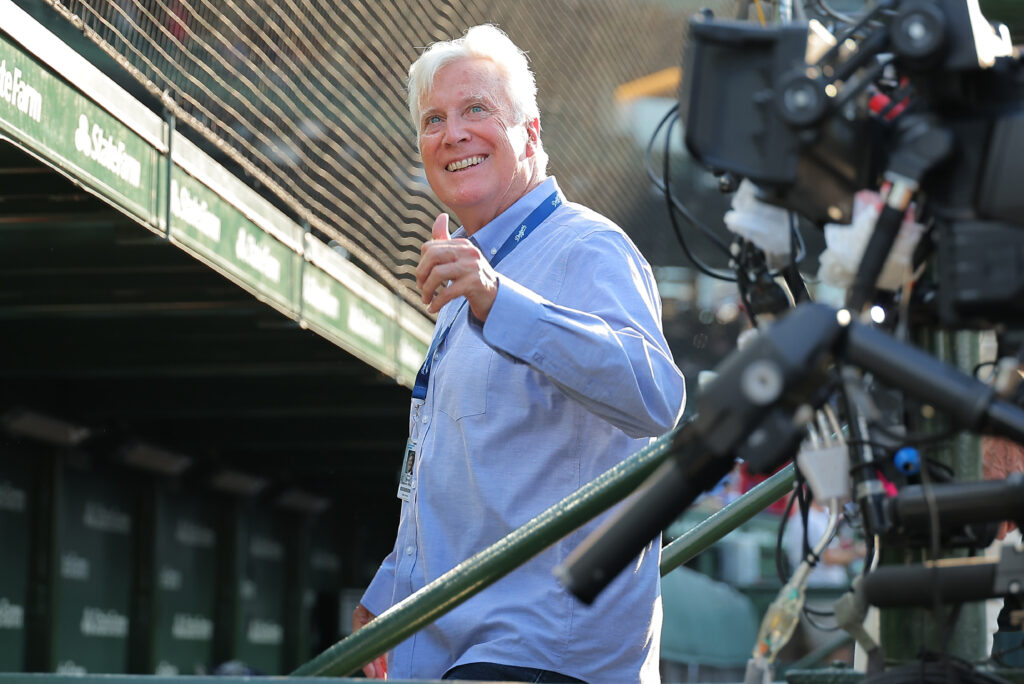
The day was a bit more memorable for the team’s owner, Mark Walter, who reportedly surrendered his phone and laptop when federal agents boarded his private plane at Chicago’s Midway International Airport. The seizure marked the most dramatic moment in an investigation that has spilled into public view this summer and called into question the stability of Walter’s sporting empire.
“I don’t know what was happening under the hood,” said Daniel Schwarcz, a professor of insurance law and financial regulation at the University of Minnesota. “But it’s deeply concerning.”
Long considered something approaching the ideal of a franchise owner, Walter and his Guggenheim Partners investment firm have guided the Dodgers, one of the sport’s most historic organizations, through a period of success that their leadership group has dubbed the “Golden Era.” Now the U.S. attorney’s office for the Southern District of New York and the Securities and Exchange Commission are investigating whether Walter engaged in what amounts to self-dealing, improperly loaning money from policyholders at his life-insurance companies to his private-equity clients.
Walter’s firms have denied wrongdoing. But as he tries to compile cash, he has begun unwinding his sports portfolio, selling his controlling stake in the Los Angeles Lakers at a record $12 billion valuation, reportedly exploring selling his stake in Chelsea Football Club and trying to extract the Dodgers and the Lakers from their TV deals in exchange for a lump sum. The rapid series of attempted transactions has in turn raised questions about Walter’s ownership of the jewel of his empire. It has also added intrigue to Major League Baseball’s looming labor battle and opened a window into the experience of being a fan in an era of private-equity ownership, in which your team’s transactions are as likely to show up in the business section as in the sports section.
Dodgers officials could address only one of those concerns over the weekend.
“The Dodgers are not being sold,” team president Stan Kasten said during a contentious session with reporters on Friday. (A representative for Walter did not respond to a request for comment.) “They’re not for sale. There’s no process that has been started to sell it, period.”
For Major League Baseball, the investigation only intensifies the spotlight on the team’s balance sheets. With the league and players’ collective bargaining agreement set to expire in December, MLB has spent the last year-plus brandishing the Dodgers’ success — and financial might — as one of the main reasons the 30 owners will push for a salary cap like the ones that govern spending in the NFL, NBA and NHL. The Major League Baseball Players Association has said it will not accept one.
The Dodgers have spent lavishly in recent years, beginning with $700 million for two-way star Shohei Ohtani before the 2024 season. Since then, they have added nearly another billion dollars in salary, much of it in deferred money. At this year’s All-Star Game, Commissioner Rob Manfred pointed to the more than $300 million that separates the Dodgers’ payroll, when accounting for luxury tax penalties, from the bottom-rung spenders, the Miami Marlins.
“It defies human experience to ask a fan to think that the bottom end of that gap has the same opportunity to win as the top end,” Manfred said.
With the Dodgers as their poster child of excess, owners are expected to initiate a lockout when the CBA expires on Dec. 1. Both sides worry about the length of a work stoppage that could cost games for the first time since the players went on strike in 1994, which led to the cancellation of the World Series. In short, the sport may shut down in part because of a man who could be forced to sell his team by the time the sides begin bargaining in earnest. The union and the league declined to comment on the situation.
Read more Democrats target vulnerable Republicans who voted for SNAP cuts
“He’s scrambling to get money back,” said Bruce Dubinsky, a forensic accountant who consults for the Department of Justice on similar cases but is not involved with this one. “Because those [teams] are not liquid investments. So he needs the money to put back into the insurance companies so those don’t collapse.”
Two of those insurance companies, Delaware Life Insurance Company and Clear Spring Life and Annuity, loaned policyholders’ money to other companies and planned to collect the interest, a legitimate form of investing. But when authorities investigated a 2025 whistleblower complaint, they found that many more of those other companies than disclosed were tied to Walter, presenting a potential conflict of interest. Regulators scrutinize such transactions closely to ensure the private-equity clients are not taking advantage of policyholders — but only if they know they are happening. If authorities find wrongdoing, Walter could face criminal charges, Dubinsky said.
“The government is going after people like this to make a point,” he added.
Delaware Life has said the misclassifications were a mistake and are being corrected. In some cases, the related companies might have been hard to spot. In one case, the borrower was listed as Dodgers Tickets LLC, an affiliate of the team. Delaware Life had initially reported that 3 percent of the loans went to affiliated entities; after an internal investigation, it admitted that number was actually 42 percent, which amounts to $17 billion and is orders of magnitude beyond industry standard.
Confused? So is the guy listed as CEO of Dodger Tickets LLC.
“Guys, there’s so much about finance, right?” Kasten said this weekend. “I’m out there with my Ivy League degree; I don’t understand all of it. I promise you, you don’t understand how all of that works. But these things happen routinely with all businesses, right? Money comes in, money goes out. Debt is taken. Debt can be an advantage in many cases. Let’s not have a finance class here, because I’m unqualified to teach it.”
Andrew Granato, an assistant professor at the University of Texas at Austin School of Law, is qualified. Five days before the Walter news broke, Granato co-wrote a paper explaining this very financial maneuver. His take was less ambivalent.
“There’s a tremendous amount of law on the books that is meant to prevent the controller of a life insurance company from using it as a piggy bank for their other projects and their other businesses,” he said. “And Mark Walter seems to have run a freight train through at least some of those provisions.”
This all matters to the public because all insurance policyholders backstop one another’s policies. If an insurance company goes under, the other insurance companies work together to make its policyholders whole — by charging their own policyholders more.
And it matters to baseball because one way or another, Walter is going to have to come up with enough cash to get the improper loans off the books by the end of the year or face downgrading by credit agencies. Kasten insisted that none of the money in question has come from the Dodgers, and that the team is not going anywhere.
“Money’s fungible, I guess, but I do know what we have coming in and what we have going out,” he said. “The Dodgers stand on their own pretty well.”
That may be true. But if the finance experts decide that Walter has to sell the team after all, that transaction could dent MLB’s public-relations strategy as it tries to overhaul the economic foundation of the sport.
Read more Before Hegseth fired him, top general was advised to drop Kid Rock probe