More than 600 organizations urge Congress to block an administration plan to rewrite federal law and to resist Trump’s unilateral moves to change historic sites.
Read more World’s nuclear watchdog endorses Trump’s push for Kim Jong Un meeting
A coalition of more than 600 historic preservation groups, architectural associations, Tribal governments and other organizations is urging Congress to block President Donald Trump’s efforts to weaken or evade laws intended to protect historic sites.
Members of the new coalition say they are seeking to safeguard sites in every congressional district — and that they intend to pursue legal action if Congress does not act.
“Our coalition did not exist six weeks ago. Today it brings together constituencies who have rarely spoken with one voice,” the groups write, in letters set to be sent to all members of Congress today.
The signatories want lawmakers to reject the administration’s revisions to a 60-year-old federal law that governs changes to landmarks such as the National Mall, sites that are significant to Indian tribes and other properties eligible for listing on the National Register of Historic Places.
The proposed changes would allow federal agencies to undertake their own projects or permit construction by private developers without public input, breaking with long-standing requirements for public participation.
Some members of Congress are also considering similar changes to the review process, which is required under Section 106 of the National Historic Preservation Act.
The administration can enact regulatory revisions to Section 106 without congressional approval, but the coalition is asking lawmakers to help oppose such changes. The coalition also wants Congress to block legislation that would separately allow similar revisions to take effect.
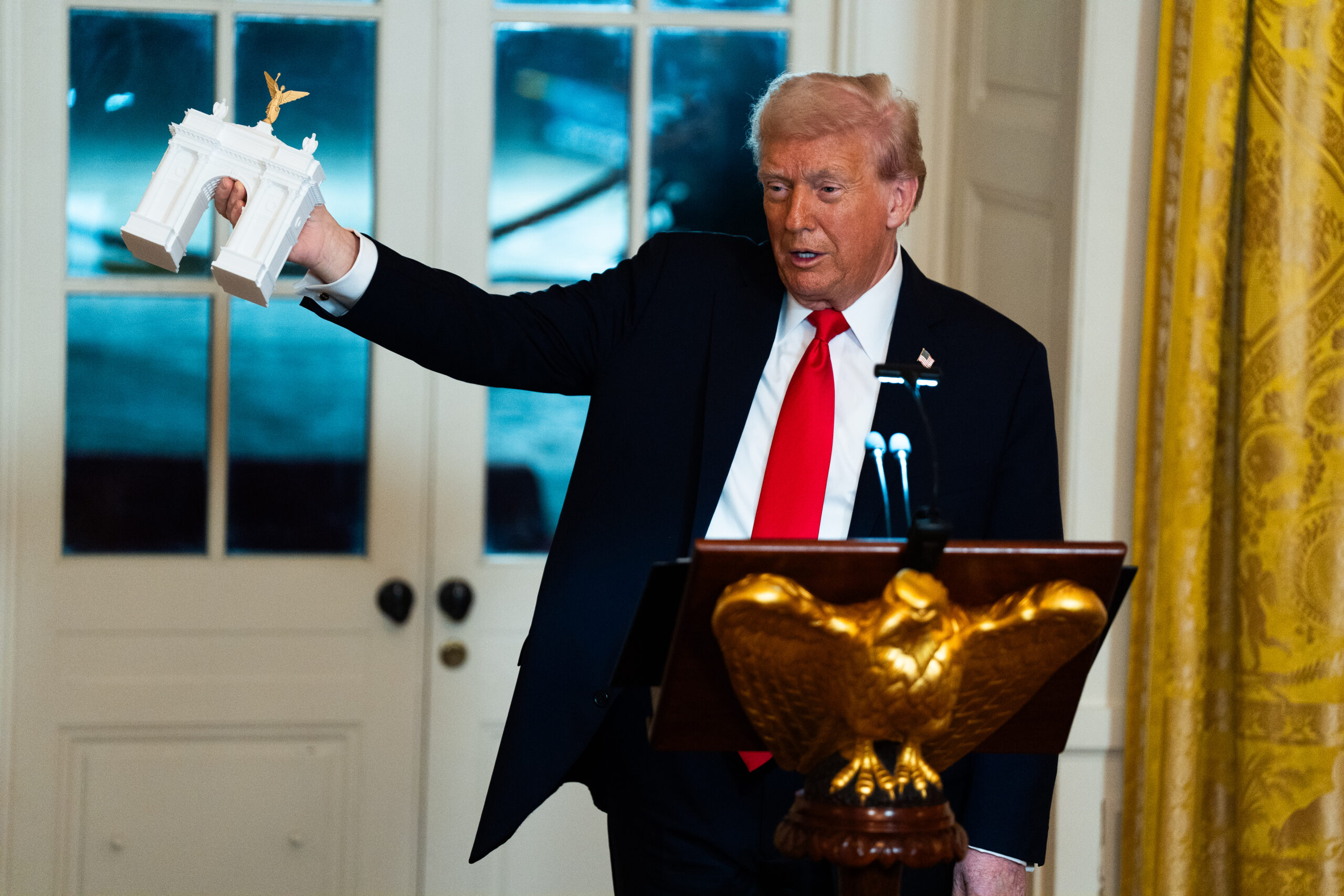
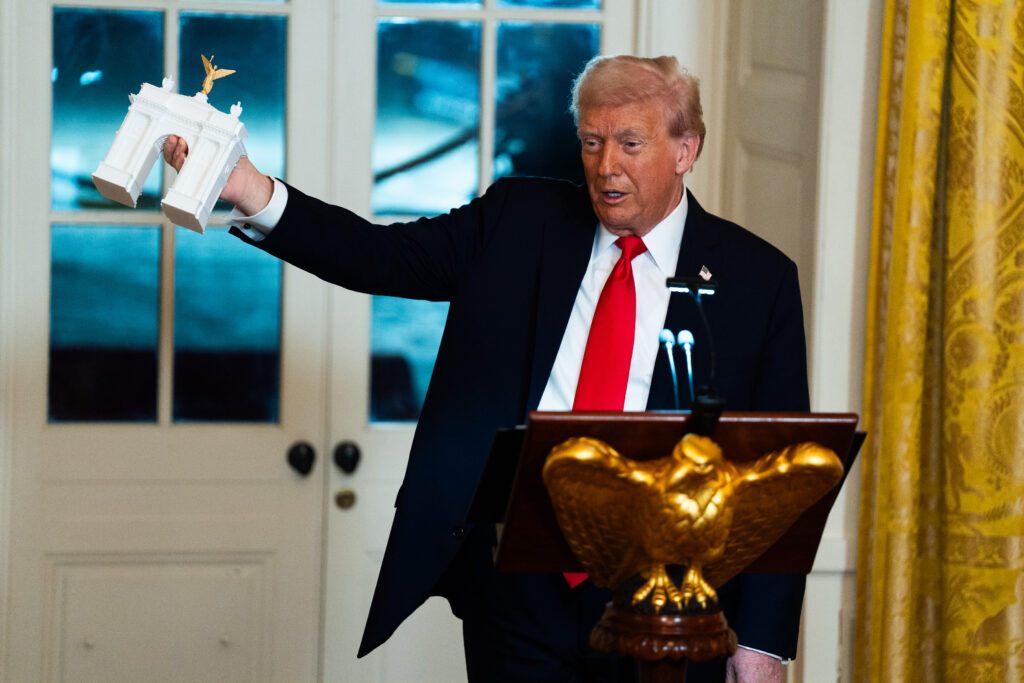
The coalition says it is also responding to Trump’s attempts to unilaterally change historic sites, such as demolishing the White House’s East Wing to build a planned ballroom. Administration lawyers have argued in court that they do not need to seek congressional approval for Trump’s projects, such as the ballroom and his planned triumphal arch.
“The burden of standing up for congressional authority is falling heavily to civil society organizations, law firms, and individual Americans when Congress itself should be taking the lead,” the coalition writes in a letter shared with The Washington Post.
The White House did not immediately respond to questions about the campaign.
Trump and his deputies have defended their efforts to sidestep preservation rules and congressional approval for his projects, at times describing regulations as outdated and cumbersome.
They initially argued that Trump’s changes to the Lincoln Memorial’s Reflecting Pool were an example of the value of moving quickly — touting their six-week process to drain the pool and apply a new liner — before the basin’s new coating began to peel and chunks of the pool’s liner littered the surface. The pool has been undergoing additional repairs for nearly seven weeks.
Justice Department lawyers have also argued that the president has broad authority to make changes to the White House grounds under existing law.
The changes to Section 106 were put forward by the Advisory Council on Historic Preservation, a low-profile federal agency that oversees preservation reviews and advises the president and Congress. Twenty of the 24 seats on the council are either directly appointed by the president or are reserved for the heads of federal agencies, such as the Interior Department, which are controlled by Trump.
The Trump administration has rebuffed prior criticism of its planned changes to the process. GOP leaders in Congress have not publicly opposed Trump’s changes to Section 106.
Read more Democrats at odds in Michigan over El-Sayed’s ties to controversial streamer
Sen. Mike Lee (R-Utah), a Trump ally who is the chairman of the Senate Energy and Natural Resources Committee, has separately advocated for overhauling the process. The current rules are like “a maze without a map,” Lee said in a hearing on Section 106 last year, arguing that the process could be revised by changing federal rules about permitting.
Sen. Shelley Moore Capito (R-West Virginia), who chairs the Senate Environment and Public Works Committee, has also questioned whether the existing process is too cumbersome.
Under the current rules, federal agencies must undertake a multistep Section 106 review assessing the potential effects of construction projects and soliciting public input, among other requirements.
The loosened protections would make it easier to pursue construction projects that are on federal land or receive federal funding, as well as private projects that require any type of federal approval.
The coalition says it is particularly concerned that the administration’s rewriting of Section 106 will eliminate the role of the public and of local governments, allowing federal agencies to quickly move forward with changes that could affect historic buildings, neighborhoods and other site. In its letter, the coalition vows to sue to halt the regulatory changes if Congress does not work to stop them.
“These defects cannot be cured through tinkering at the margins. Our coalition opposes the rewrite at its foundation,” the signatories wrote. “If not nullified by Congress, we intend to defeat this effort in the courts.”
Group members include professional associations such as the American Institute of Architects, preservation and cultural groups such as the National Parks Conservation Association, and Tribal nations such as the Osage Nation.
“Were it not for Section 106, our ancient capital of Rassawek would be gone,” Chief Diane Shields of the Monacan Indian Nation said in a statement, referring to a recent planned project in Virginia. “Instead, the county water pumping station that would have destroyed it was built just a little farther down the river.”
The coalition was assembled by Cultural Heritage Partners, a law firm that hosted hundreds of people for a hastily scheduled webinar after the Trump administration proposed changes to the Section 106 process. Greg Werkheiser, the firm’s co-founder, said interest in an organized effort to resist the administration’s changes grew out of that meeting.
“We’re not here to negotiate over which fundamental protections Americans should lose,” Werkheiser said in a statement. “We’re here to make the case for strengthening a law that works.”
In its letter to Congress, the coalition pushes back on Trump officials’ characterization of the review process as prolonged, citing data compiled by state historic preservation officers that the required reviews under the current historic preservation rules are usually resolved in several weeks. The coalition argues that preserving historic sites leads to economic benefits such as additional tourism and tax revenue.
The coalition also points to thousands of sites that fall under the current preservation rules, highlighting a handful — such as Temple Square in Salt Lake City, and Harpers Ferry National Historical Park in West Virginia — that hold special significance for key lawmakers. Lee represents Utah and Capito represents West Virginia.
“The places Section 106 protects are not isolated landmarks or museum pieces. They are the physical fabric of America itself,” the coalition writes.
Read more Senate hopeful’s ex-staffer shared KKK and Nazi imagery, adding to concerns about his associates