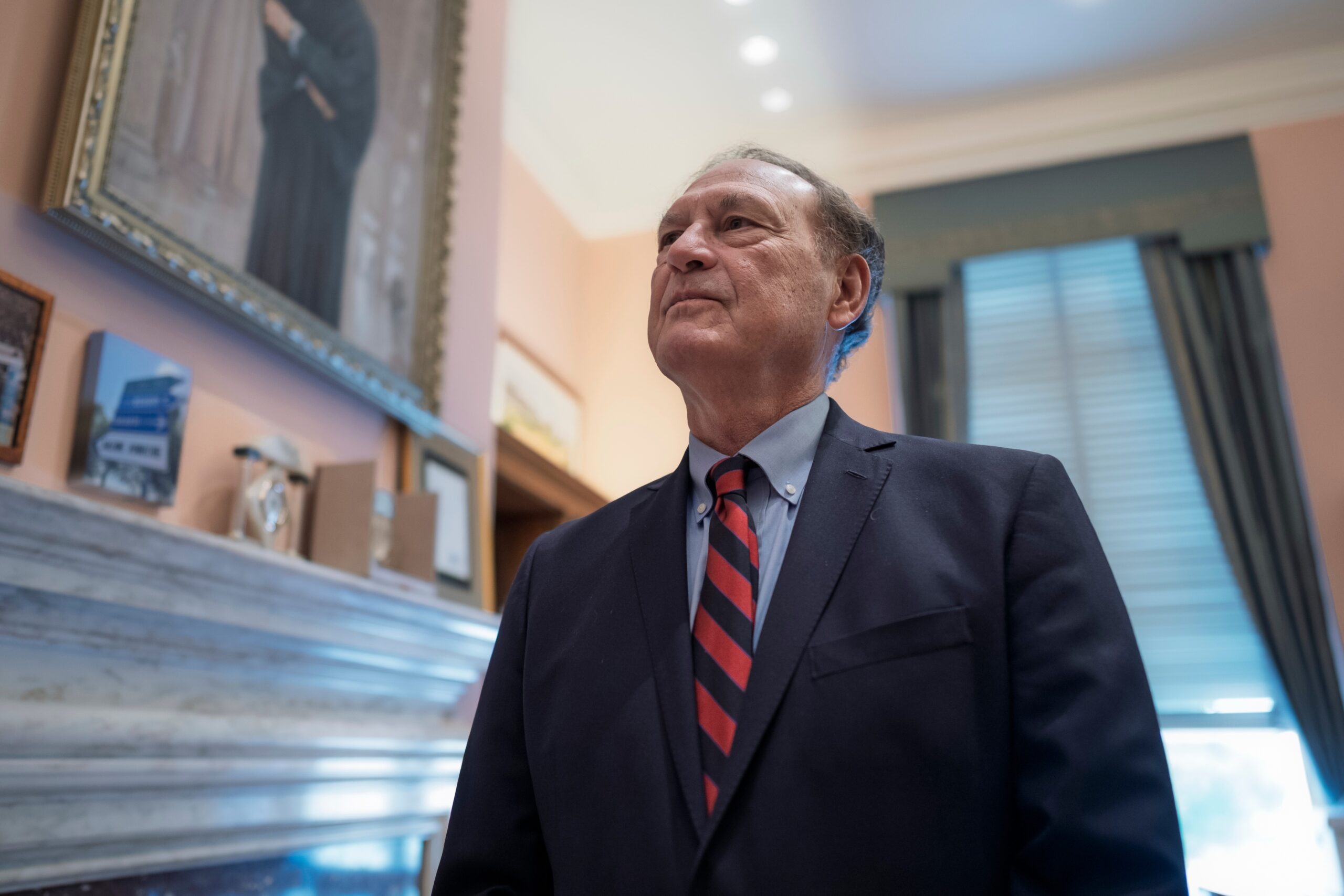
Samuel A. Alito Jr., who has often been in the shadow of other conservative justices, has taken on new prominence as a champion for the president’s policies.
Read more The midterm polls that caught our eye this week
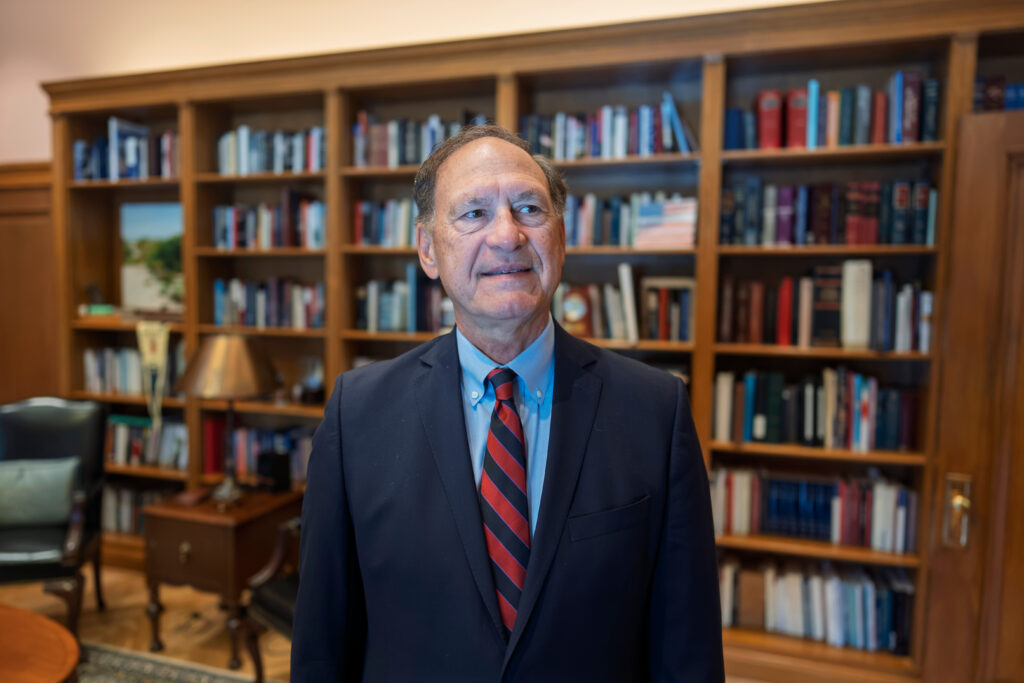
President Donald Trump has had no shortage of sharp words for the Supreme Court, including his own three picks. But he’s offered effusive praise for a justice he had no role in elevating: Samuel A. Alito Jr.
Trump recently fumed that the justices he nominated were “a shell of their original selves” after Brett M. Kavanaugh, Neil M. Gorsuch and Amy Coney Barrett appeared to side with the majority in blocking the administration’s sweeping restrictions on mail ballots for November’s midterm elections.
In the same message, he called Alito and Justice Clarence Thomas “legends” for dissenting. Weeks earlier, Trump gushed that Alito was “one of the Greatest of All Time.”
Alito, 76, has achieved new prominence on the court in the Trump era, after spending years in the shadow of conservative colleagues with more star power like Thomas and Antonin Scalia.
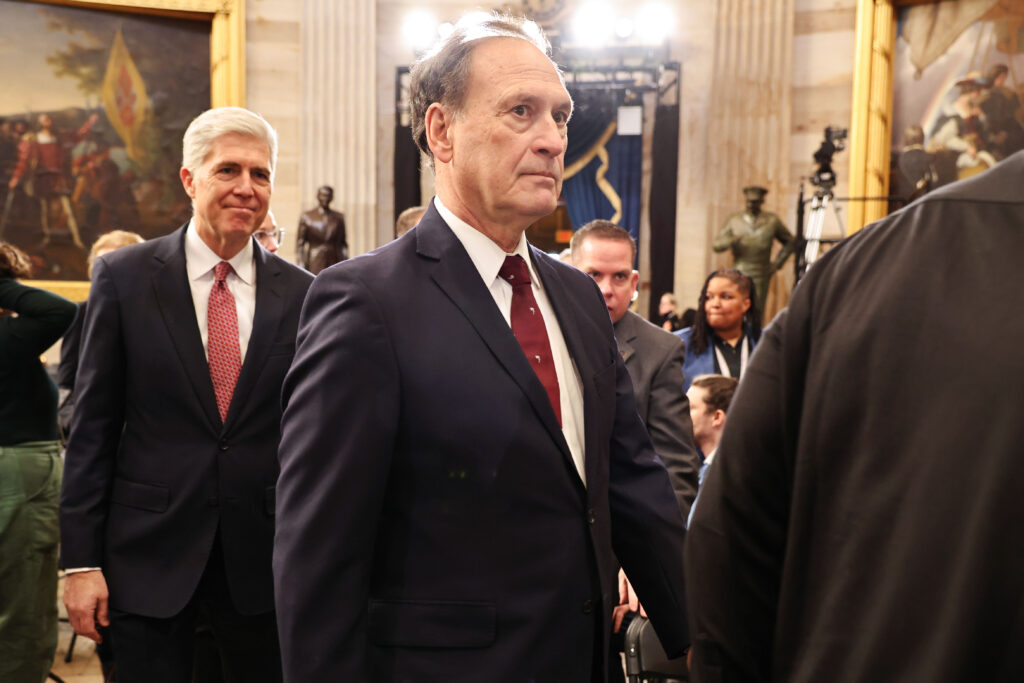
As the president’s agenda has come to dominate the court’s docket, Alito has boosted his profile as its most unwavering supporter. His unabashed conservative voice on race, transgender rights and other culture war issues resonates with Trump and his base.
The growing spotlight was underscored by the intense speculation that has swirled around whether he will retire and a series of media appearances with the recent release of his first book, “So Ordered: An Originalist’s View of the Constitution, the Court, and Our Country.”
If Alito decided to retire soon, it would open a window for what would be Trump’s best chance to pick a conservative successor. But the justice has said that, at least for now, he intends to stay.
“I’ve been bemused by the retirement speculation; it’s not too pleasant to look up and see the vultures circling,” Alito said in an interview with “Fox News Sunday.”
And after more than two decades on the bench, Alito’s seniority has given him the opportunity to write some of the court’s most consequential — and controversial — opinions. The court’s rightward shift has also given him more influence.
Peter Canellos, who has written a book about Alito called “Revenge for the Sixties,” said “this is his moment.”
“He is at the peak of his powers,” Canellos said. “Many of the battles on the court are among conservatives between a more traditionalist approach with Chief Justice Roberts, and Alito’s approach, which is to move the law in a more conservative direction. Alito feels like he can win a lot of those battles.”
Last spring, Alito wrote a major opinion that sharply weakened a key provision of the landmark Voting Rights Act, a ruling that limits the consideration of race in drawing voting maps.
In 2022, he wrote for the majority in the seismic Dobbs v. Jackson Women’s Health Organization, which ended nearly 50 years of federally protected access to abortion for women and returned the question of how to regulate the procedure to the states.
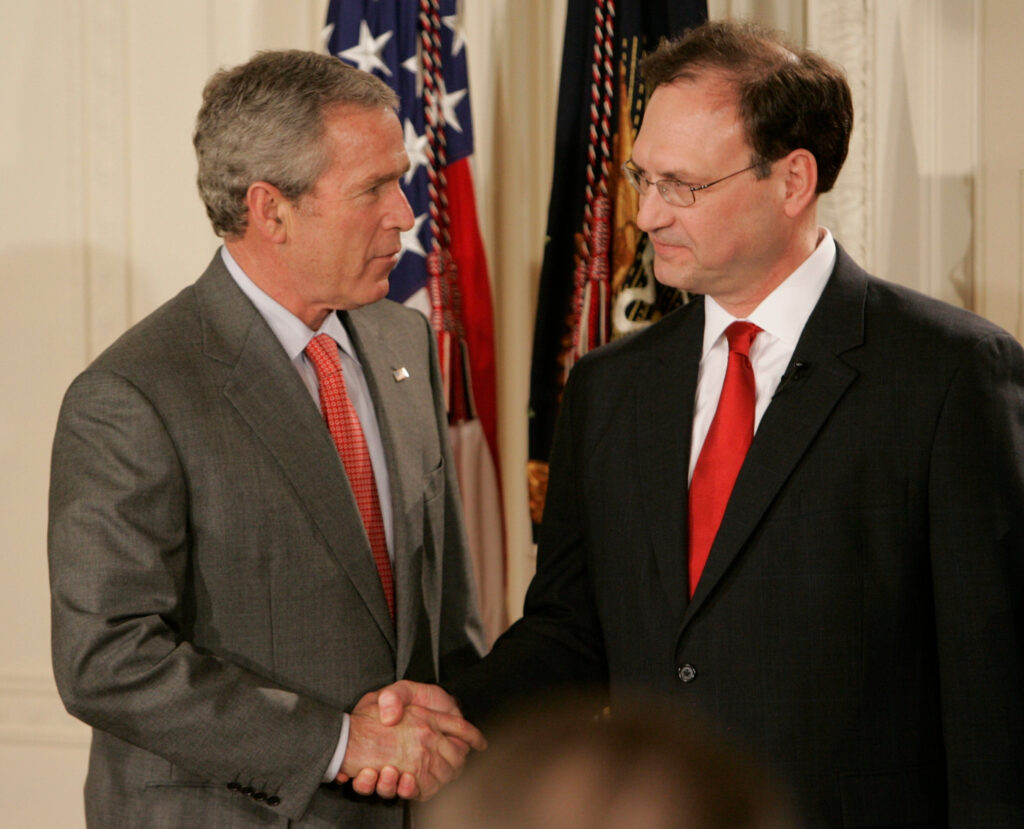
Alito was nominated by George W. Bush in 2005 and had served in the Reagan administration. As Trump’s three appointees joined the court, he became part of a new and powerful conservative supermajority.
Alito has backed the Trump administration in every major case it has brought before the high court during the president’s second term. That included breaking with the majority when the court blocked Trump’s sweeping tariffs and his proposed ban on birthright citizenship.
That staunch support also was on particular display in Alito’s dissent in the recent mail-in ballot case.
The Trump administration in September asked the high court to temporarily allow an executive order requiring states to send mail ballots in envelopes with barcodes to prevent fraud and to submit lists of eligible mail voters to the federal government. The policy would have gone forward while litigation over it played out in the courts.
The executive order barred the U.S. Postal Service from delivering ballots in states that didn’t hand over lists.
A number of Democratic and Republican election administrators said it would be challenging — even impossible — to implement the rules so close to the election without major disruptions. A federal whistleblower warned that large numbers of Americans could be disenfranchised. Those assertions went largely unchallenged by the Trump administration.
In weighing whether to uphold a stay on the order, the court considers who is most likely to win the case, as well as which side would face greater harm by allowing the order to go forward while litigation continues.
Alito, joined by Thomas, found it would be the Trump administration that would suffer the greater harm from having its policy blocked rather than states and voting groups. He quickly dispatched the issues raised by administrators and the whistleblower.
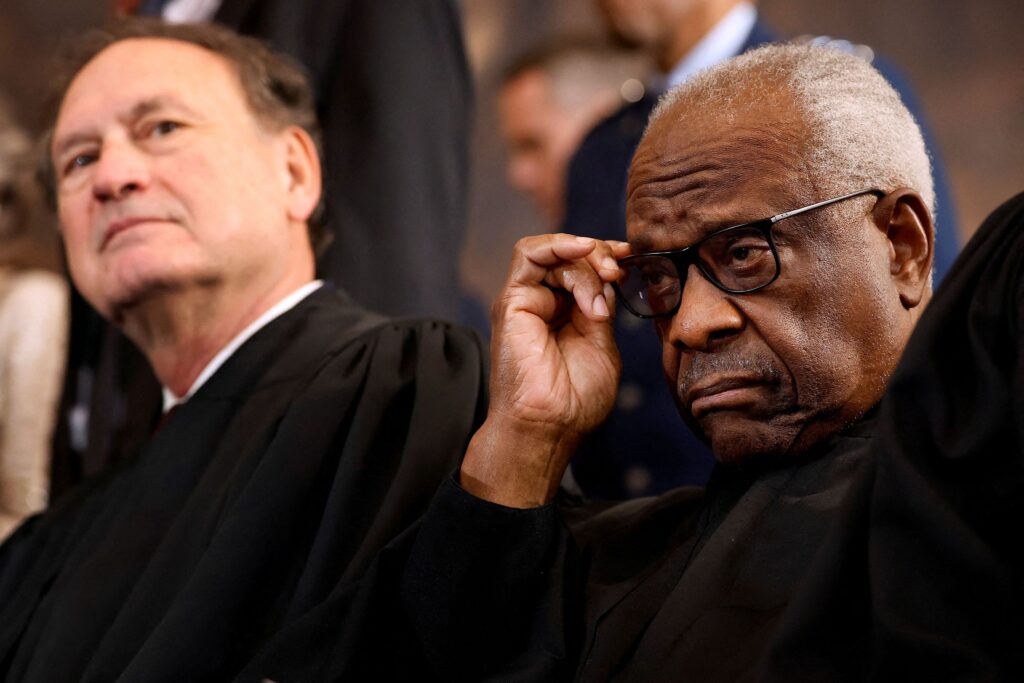
“I take that problem very seriously, but it is not enough to convince me to deny the application,” Alito wrote.
For liberal critics, the dissent demonstrated Alito’s willingness to embrace Trump’s policies at virtually any cost. Jay Willis, the editor of the legal publication Balls and Strikes, said Alito has become a “mouthpiece for Trump.”
“Alito is emblematic of this tranche of Republicans that whatever being a Republican once meant to them, it now means doing what Donald Trump wants,” Willis said.
But Leonard Leo, the conservative legal leader who helped push Alito’s nomination, said it’s simplistic to view the justice as blindly backing Trump. Leo said Alito is making decisions in keeping with his legal philosophy and has long been a supporter of a strong executive, a theme of many of Trump’s actions in his second term that have come before the court.
Read more Vance, Rubio brush off questions about claim that Guilfoyle asked donor to pay $100K Amex bill
“He’s someone that seeks the right answers to legal questions,” Leo said. “Sometimes it’s going to align with the goals of a presidential administration, sometimes it will not.”
Alito, who declined to comment, made a similar point in a recent interview with the Wall Street Journal.
“I vote in every case the way I think the case should be decided,” Alito said. “If that means a high correlation with what Trump wants, fine. If it means zero correlation with what Trump wants, fine as well.”
In his new book, Alito describes himself as a “working judicial originalist,” which he describes as a “judge who tries to achieve originalist aims while working within the framework of our judicial system.”
Originalism is the method of judicial interpretation that holds the Constitution and laws should be understood by their meaning at the time they were adopted.
Some originalists advocate for judicial restraint, and Alito’s mentor, Scalia, who pioneered originalism, said the theory should sometimes lead to results that cut against a judge’s personal beliefs.
Alito calls for a different type of originalism that “sometimes calls for bold action” in his book. He also counsels that originalist judges shed “this insecure mind set” about arriving at preferred policy outcomes.
In the book, which is a collection of speeches over the course of his career as a justice, Alito also offers his views on the emergency docket, Gettysburg Address, baseball and the Catholic intellectual tradition. Alito is a Catholic. He mentions Trump only in passing.
Richard Lazarus, a law professor at Harvard University, said Alito has evolved in a way that has brought him more in concert with the Trump wing of the Republican Party, adding “he is a very different Alito than he was a few decades ago.”
Lazarus said Alito had a reputation as unassuming and not overly ideological during his years as U.S. attorney for New Jersey and then as a judge on U.S. Circuit Court of Appeals for the 3rd Circuit before his nomination to the high court.
Alito was always reliably conservative, but in a Reagan mold, Lazarus said.
“Alito has, in my view, moved far to the right and with a very different personality,” Lazarus said. “His voice, his opinions and his votes are now loud, they’re mocking and they’re contentious.”
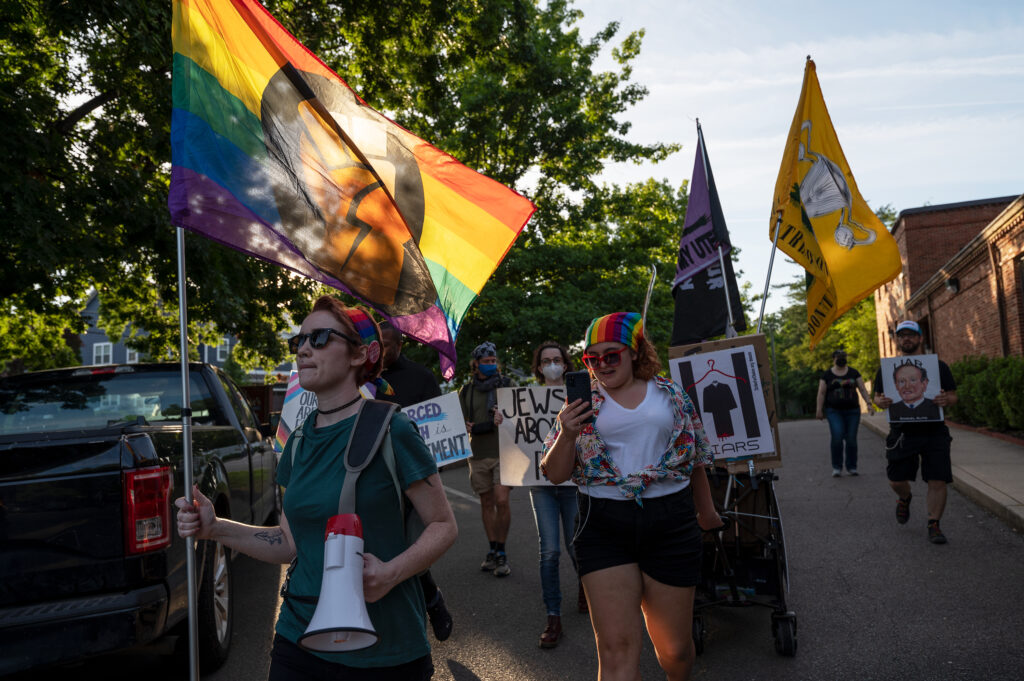
In one example from 2020 that drew condemnation from gay rights advocates, Alito took aim at same-sex marriage, which the Supreme Court sanctioned in a 2015 decision called Obergefell v. Hodges.
“You can’t say that marriage is a union between one man and one woman. Until recently, that’s what the vast majority of Americans thought. Now, it’s considered bigotry,” Alito said in a speech to the Federalist Society. “That this would happen after our decision in Obergefell should not have come as a surprise.”
Alito returned to the theme in the book in a reprint of a 2018 speech at Catholic University that was not open to the public. He called the gay marriage decision the “decisive point in our nation’s turn against religious liberty.” He also suggested he was right to predict it would “drive believers out of public life.”
In a Wall Street Journal podcast, Alito said he is wrongly caricatured as ill-tempered in the media. “I think that’s very unfair. … Nothing similar is written about some of my colleagues who have issued blistering dissents,” he said.
Legal experts said Alito’s sentiments, which are sometimes couched in grievance, share a similar style with Trump. As does the sense that an older America is slipping away. In his book, Alito portrays traditional values as under siege.
“Many of the central ideas of what was regarded as the counterculture in the 1960s and 1970s are now mainstream — for example, the change in sexual mores, use of at least some type of drugs, and the repudiation of much of our country’s past and what used to be called Western civilization,” Alito writes.
Alito’s rising stature is also due to the length of time he has spent on the court, since justices typically get to write more important opinions as they gain seniority, legal experts said.
Trump’s reordering of the court with three conservative appointees is also a factor, they said. Trump’s picks gave conservatives a 6-3 majority, shifting the court’s center of gravity rightward toward the flank occupied by Alito and Thomas. It has also given him more originalist compatriots.
J. Joel Alicea, a Catholic University law professor and former Alito clerk, said Alito has become adept at writing opinions that are extremely conservative while still bringing along other justices.
“[Alito] doesn’t produce opinions that get five votes that kind of feel like a political compromise,” Alicea said. “He writes opinions that get five votes, and each justice feels their own originalist and conservative principles are respected.”
If the Democrats take the Senate in November, it could put fresh pressure on Alito to resign. The lame-duck period between November and January would be Trump’s last chance to get a nominee through a Republican-controlled Senate.
Alito said in a CBS News interview that he thinks about retiring every term given his age but still has more to contribute to the court. He also recently told Bloomberg he doesn’t plan to retire during the lame-duck period.
“I intend to stick around through this term,” Alito told Bloomberg before the Supreme Court’s new term began Monday. “I made that decision many months ago.”
Read more Takeaways from Georgia Senate debate between Jon Ossoff, Mike Collins