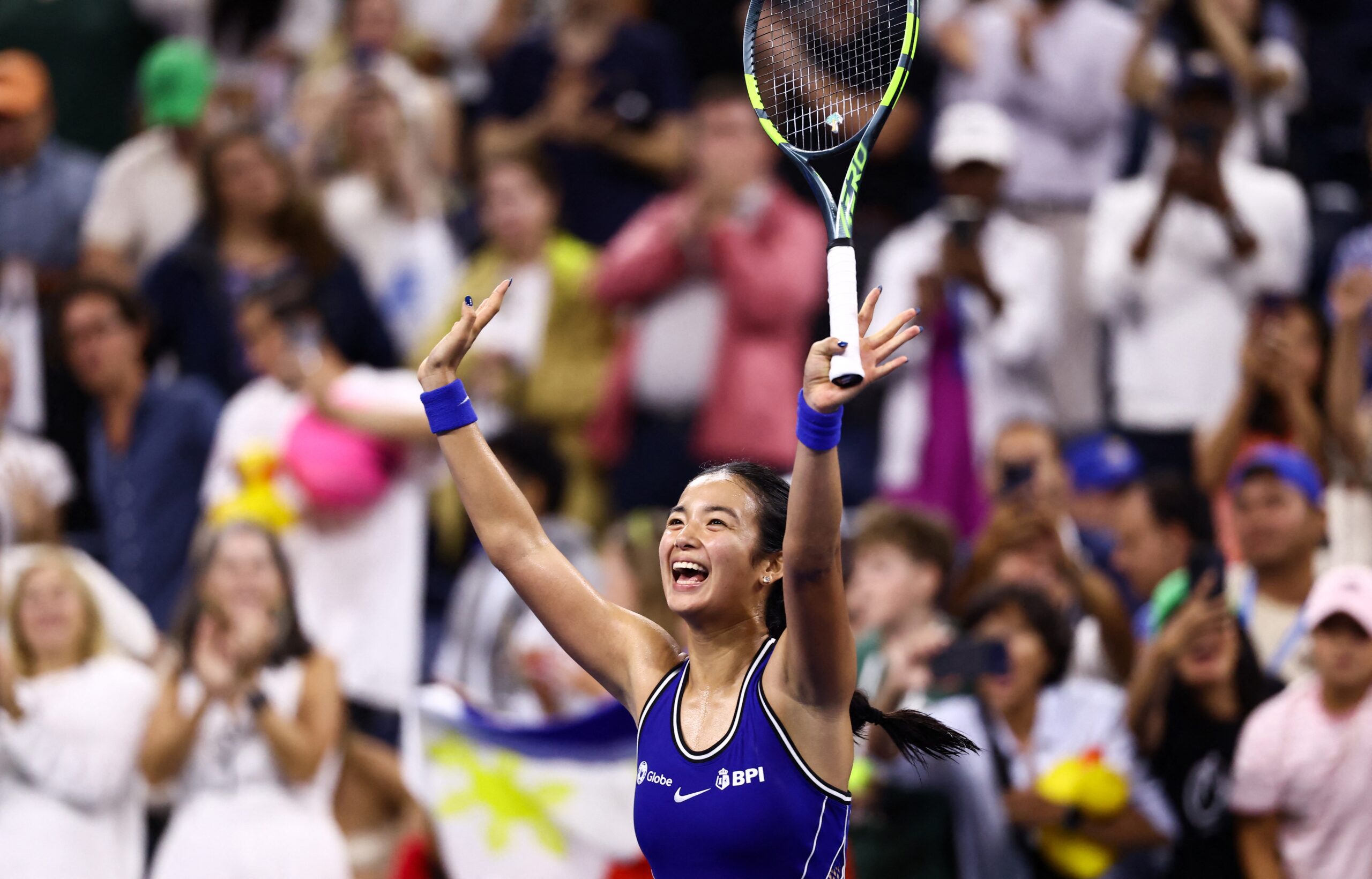
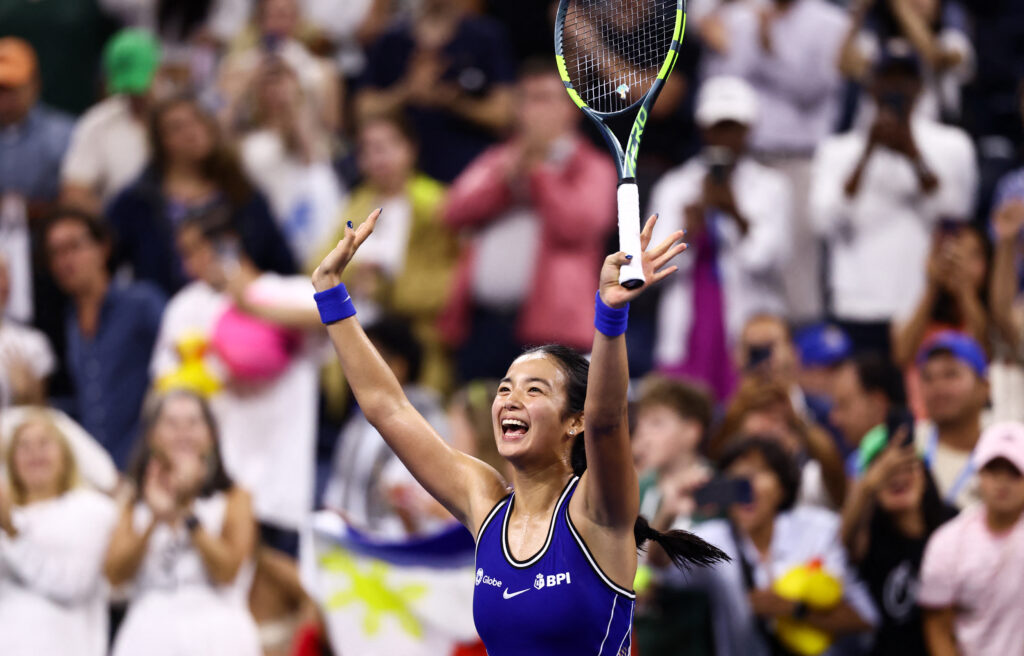
Alexandra Eala, the first player from the Philippines to advance past the opening round of a Grand Slam, has been drawing Filipinos to her matches around the world.
Read more Golfer Tiger Woods reaches plea deal in DUI arrest
NEW YORK — The first real test in the match came in the first game of the first set, the score 30-30.
Alexandra Eala, the 21-year-old sensation from the Philippines, ranked 18th in the world, awaited a second serve from Mary Stoiana, a 23-year-old American underdog. It was the first round of the U.S. Open, and Eala’s famous legion of fans filled Louis Armstrong Stadium on Tuesday, waving Philippine flags and cheering every point like a championship victory.
Eala, the first player from the Philippines to win a Women’s Tennis Association Tournament and advance past the opening round of a Grand Slam, has been drawing Filipinos to her matches around the world, a wave of new tennis fans flocking to tournaments in Melbourne, Dubai, Abu Dhabi, Washington, Toronto and elsewhere, part of a sprawling diaspora eager to rally around her.
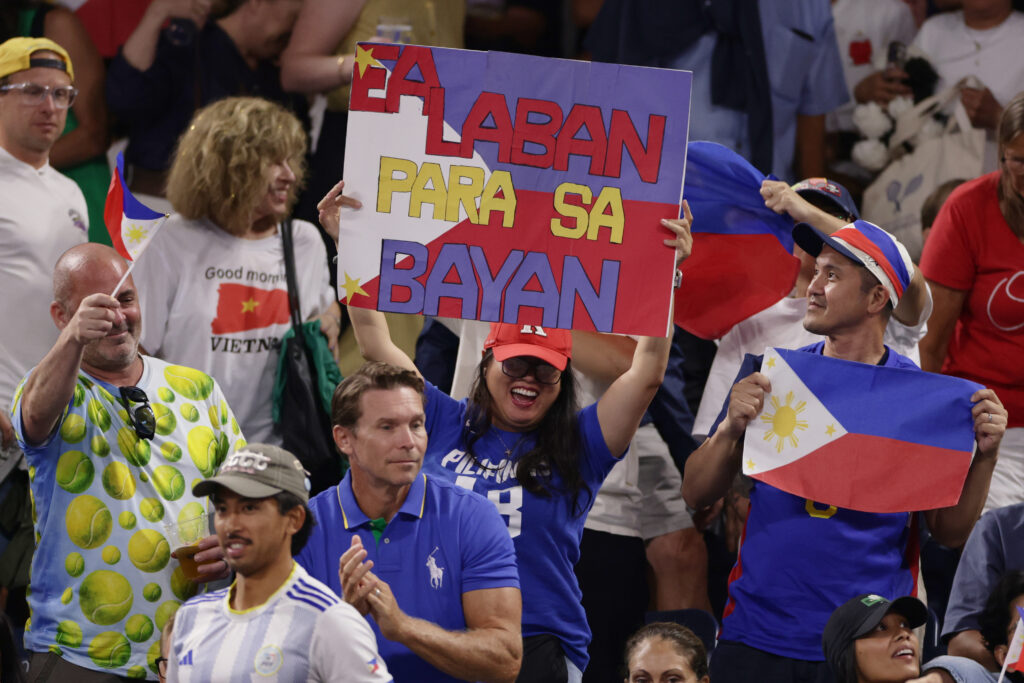
New fans aren’t always familiar with tennis etiquette, which frowns upon celebrating a player’s mistake, or shouting during serves and rallies. At last year’s U.S. Open, as Eala’s opponent pleaded with spectators to quiet down during her serve, the Tennis Channel announcer observed “people coming out who are enthusiastic and supportive but not perhaps knowledgeable about tennis protocol.” An umpire’s demands for silence, typically delivered through a curt “thank you,” stand no match against their exuberance, an unstoppable force of joy blasting into an immovable wall of tradition. “Sorry we’re loud,” read a sign at this year’s U.S. Open. “We’re Filipino.”
At the most prestigious tournaments, such as Wimbledon and the French Open, the whole crowd cheers displays of excellence and groans in sympathy for both players, even if some fans might express themselves more loudly for their favorites. Eala crowds often sound more like they’re watching basketball, the most popular sport in the Philippines, booing an opponent for complaining about an umpire’s call, cheering a double fault like a missed free throw. In recent months, as Eala surged up the rankings and drew growing crowds, Philippine news outlets and longtime tennis fans have posted etiquette tutorials online.
“We’re getting there,” said Christian Battung, a 32-year-old Filipino American from New Jersey. “We’re really prideful, but at the same time you’ve got to respect the game.”
Now Eala and her fans were on their biggest stage yet: live on ESPN, a main-event night match in Flushing Meadows, Queens, home to one of the biggest Filipino communities outside the Philippines. How would the crowd react to a double fault?
Just as Stoiana lobbed the ball into the air and cocked back her racket, a loud noise jolted her. A train horn from the rail yard outside the stadium. Double fault. Too stunned to cheer, the crowd could only laugh.
A hostile environment is part of the U.S. Open’s charm. In a sport that cherishes silence and order, the Billie Jean King National Tennis Center’s outdoor courts lay just over the fence from a busy road. Airplanes flying in and out of nearby LaGuardia roar overhead. If there’s anywhere Eala’s fans can let loose, it’s at Flushing Meadows Corona Park, a radical outpost on the frontier of tennis culture.
The tennis center is named after a feminist icon, the oldest stadium after a jazz legend and the world’s biggest tennis stadium after Arthur Ashe, the first Black man to win a Grand Slam title. John McEnroe and Andre Agassi built their rebellious reputations here, riling up crowds with brash swagger. Americans flocked to see Serena Williams, lending their vocal support through methods they had learned on the tribal battlefield of American team sports. The U.S. Open is where new tennis traditions take root.
Eala’s opponents have thanked her for bringing enthusiastic crowds to tournaments that usually draw sparse attendance. Tournament organizers have moved her matches to the main courts, with the most seats, to try to meet demand. Armstrong, the U.S. Open’s second-biggest stadium, has a capacity of 14,000, and more than an hour before the match start time, hundreds of fans lined up outside the gates, many decked out in Philippine colors.
Sarah and Nani Hilario, along with their teenage son, flew in from Manila to watch Eala at Flushing Meadows. Match schedules aren’t released more than a day or two in advance, so they bought tickets for all three days of first-round matches, at around $188 each, before ultimately reselling the spare ones at a loss. Their strategy worked out: Once the schedule was announced, the cheapest resale ticket for Eala’s opening round match soared to $400 within hours.
The Hilarios are serious tennis fans. They’ve been to Wimbledon and hope one day to see a match at Roland-Garros. They had known about Eala since her early interviews as a tennis phenom in elementary school, before she went off to Spain to train at the renowned Rafa Nadal Tennis Academy when she was 13. They followed her rise on the junior circuit as a teenager, winning doubles titles at the junior Australian and French Opens, then in 2022 the singles junior U.S. Open title.
That was when Ben Fortich, a 51-year-old Filipino American accountant who flew in from North Carolina with his wife and their two friends, first heard about Eala. A longtime tennis fan who plays recreationally, Fortich said his interest in the sport had begun to dim as his two favorite players, Nadal and Roger Federer, approached retirement — until Eala hit the scene.
Read more Watch Ontario, New York, residents sound off on the Lake America name change
“Now I’m back in,” he said. “It’s helping tennis.”
He took a selfie with Eala at a 2024 tournament in North Carolina, then saw her again this summer in Cincinnati, with Eala fresh off a deep Wimbledon run and a tournament title in D.C. In Cincinnati, when he ended up next to a group of fellow Eala fans who were “cheering at the wrong time, like double faults,” he moved to a different seat. “It’s very important just to know the etiquette of tennis. You have to be mindful of others.”
On Tuesday, Eala’s match was the second of the night slate at Armstrong, following a men’s match that lasted around 2½ hours. It was nearly 10 p.m. when Eala’s started. Some people in the front rows who hadn’t come for Eala left, presumably to get home at a reasonable hour. Eala fans trickled down to fill the vacated seats. They held up signs in Tagalog. One waved a cutout of Eala’s face as a baby. More than a few wore Philippine national team basketball jerseys. Everybody danced for the jumbotron.
Jaja Constantino, a 44-year-old nurse who attended the U.S. Open with her family earlier in the week, attributed Eala’s fervent support to kapwa, a spirit of shared responsibility deeply rooted in Filipino tradition and cultivated through centuries of colonialism, bonding a diaspora that stretches around the world.
“Culturally, it’s just ingrained in us to be there for our countrymen,” she said. “We know what it took for her to get here.”
A longtime tennis fan, Constantino had come to previous U.S. Opens to see Coco Gauff, Novak Djokovic and Carlos Alcaraz. She started hearing about Eala on social media this year.
“Now it’s more meaningful because we’re cheering for one of our own,” she said. “We can be loud at times, but it’s just the excitement we have for her.”
Around the U.S. Open grounds, longtime tennis fans who aren’t Filipino expressed an appreciation for Eala’s crowds. Abdoul Kane, a 71-year-old from Brooklyn who had been attending the U.S. Open since the mid-1990s, found Eala mania “quite refreshing,” he said. “I love it. Have fun, do your thing.”
His 22-year-old son, Salim, who has joined his father every year since 2012, prefers when audiences are “a bit rowdier,” he said. “That’s what makes the U.S. Open the U.S. Open.”
At other late-night matches this week, parts of the lower bowl and many of the suites empty out as midnight approaches. During Naomi Osaka’s opening match, the umpire had to shush a suite of loud spectators who didn’t seem to be paying any attention to the court. At Eala’s Tuesday-night match, the umpire’s concern was fans getting too into the action.
Eala started sharp, winning the first five games, her serve faster than ever, repeatedly hitting 100 mph for the first time in her career. Her fans were thrilled. Three times in the first set, the umpire asked the crowd for quiet after a joyful outburst. “If you can please, out of respect for both players, keep your voices down during play,” the umpire said.
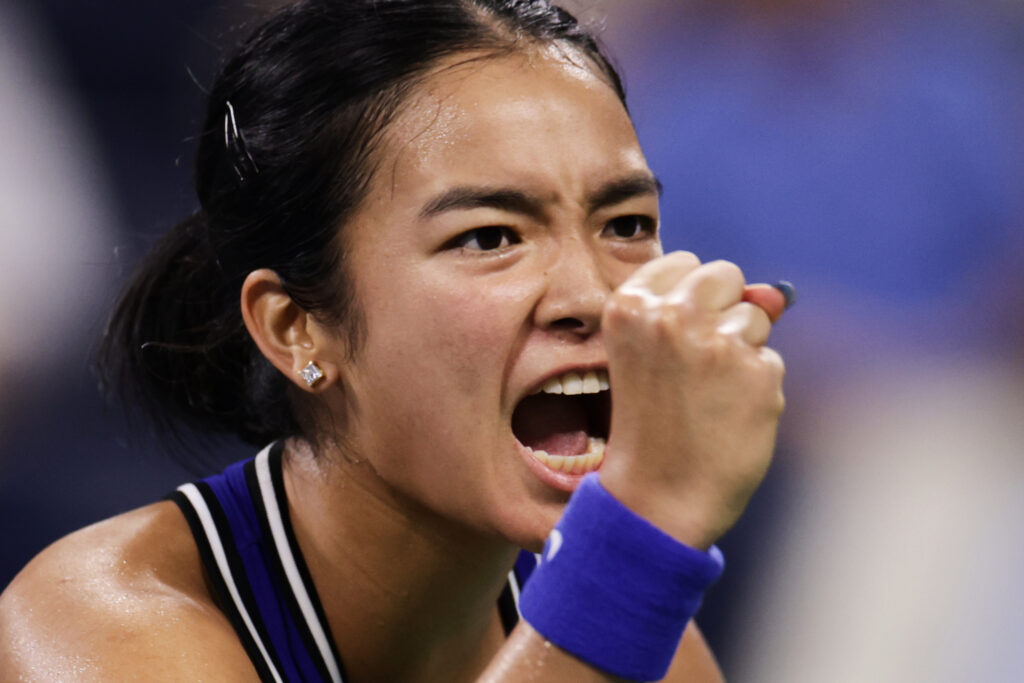
After taking the first set in a rout, Eala started slow in the second, dropping two of the first four games. The nervous crowd, as restrained as could be, gasped during tense rallies and murmured before serves.
“Ay nako!”
“Sayang!”
“Grabe!”
On a pivotal point in the fifth game of the second set, Stoiana double-faulted. Some in the crowd clapped, a few cheered, the joy too immense to contain. Eala went on a run, winning the next two games, on the brink of victory. At deuce in the seventh set, Stoiana double-faulted again, drawing louder cheers, though the loudest came a little bit later, when Eala sealed the win.
“Thank you everybody for being part of my journey and making it such a pleasure to do my job,” Eala said in her on-court interview.
The Hilarios from Manila planned to stay long enough to catch the next round. They started looking up tickets. They expected even more fans to show up.
Read more Advocacy groups, fearing federal intimidation, plan to deploy poll watchers