The NFL tryouts weren’t leading to opportunities. D.J. Williams continued to train coming off his final season playing quarterback at Grambling State in 2014, but he needed to make ends meet.
Read more Congress is getting older, and Americans aren’t happy
Baton Rouge is filled with swamps and marshes, making it a dream habitat for mosquitos. So Williams got a job as a driver who sprayed homes, businesses and public areas with chemicals that killed mosquito larvae.
As an athlete, Williams had lived in a bubble. Transitioning into less glamorous work and interacting with people from a wide range of backgrounds reminded him of the realities and challenges that came with living in the “real world.”
“That was not for me,” Williams told The Washington Post with a laugh. “But I will tell you: That was a job that I learned some great perspective from.”
In 2016, Williams landed a scouting internship with the then-Washington Redskins that briefly pulled him back under the shield of football. He then returned to Baton Rouge and started working as a physical education teacher at McKinley High School. His time there came with another broadening of his outlook.
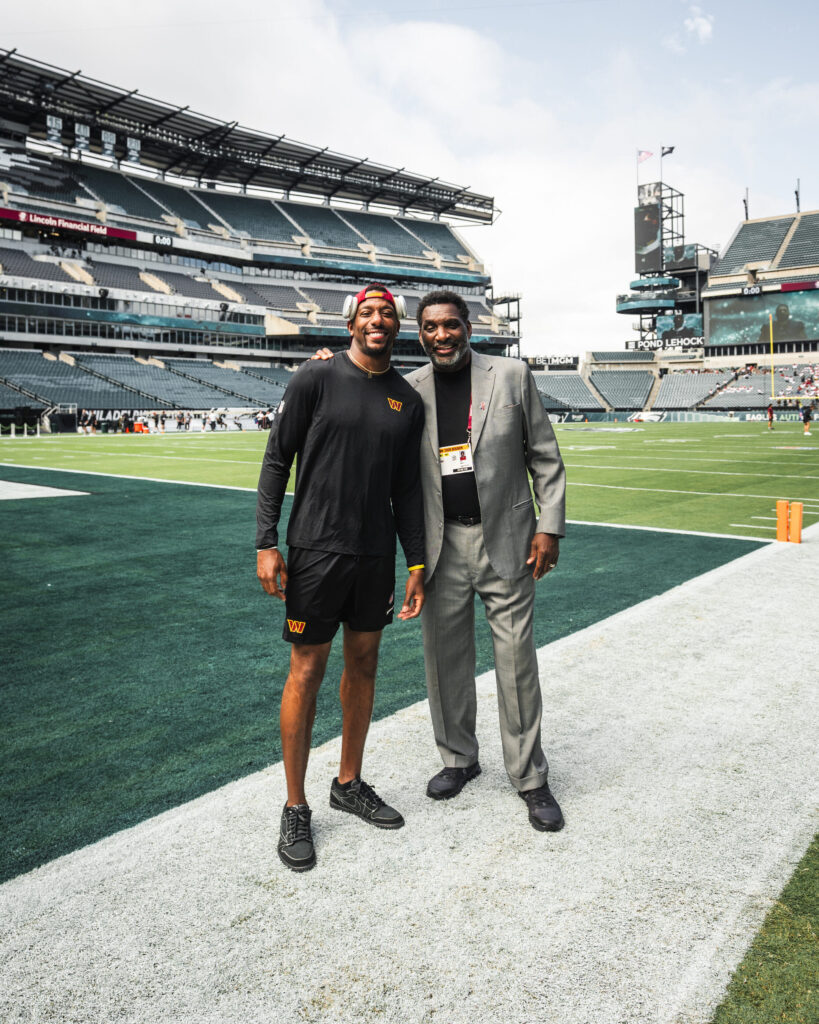
“It’s predominantly Black, and it’s a very poverty-stricken neighborhood right off the campus of LSU,” Williams said. “I mean, you had kids who really didn’t care about going to school, right? And so, you start to build a relationship with them and understand once school ends, they are in survival mode. They’re going to their home where they might not eat, where dad or mom might not be present. … Or they might be on the streets all night. You see kids that come to school and they’re wearing the same thing that they wore yesterday.
“When you go in the outside world, man, you understand that it’s always issues that’s bigger than yourself.”
Williams landed successive coaching and scouting internships with the New Orleans Saints in 2017 and 2018 before landing his big break as an offensive assistant in 2019. Along the way, the Saints taught him more about how teams work. And McKinley helped him learn how to connect with anyone.
That combination of backgrounds struck Washington Commanders offensive coordinator David Blough when interviewing Williams for their quarterbacks coach vacancy this past offseason. Their conversation lasted for hours.
“We connected right away, man,” Williams said. “We talked about football but also about the life part of it. We talked about everything under the sun. … And then once I got off, they literally gave me a call right back and said, ‘Hey, man, we’re going to cancel all the other interviews if you accept this job right now.’”
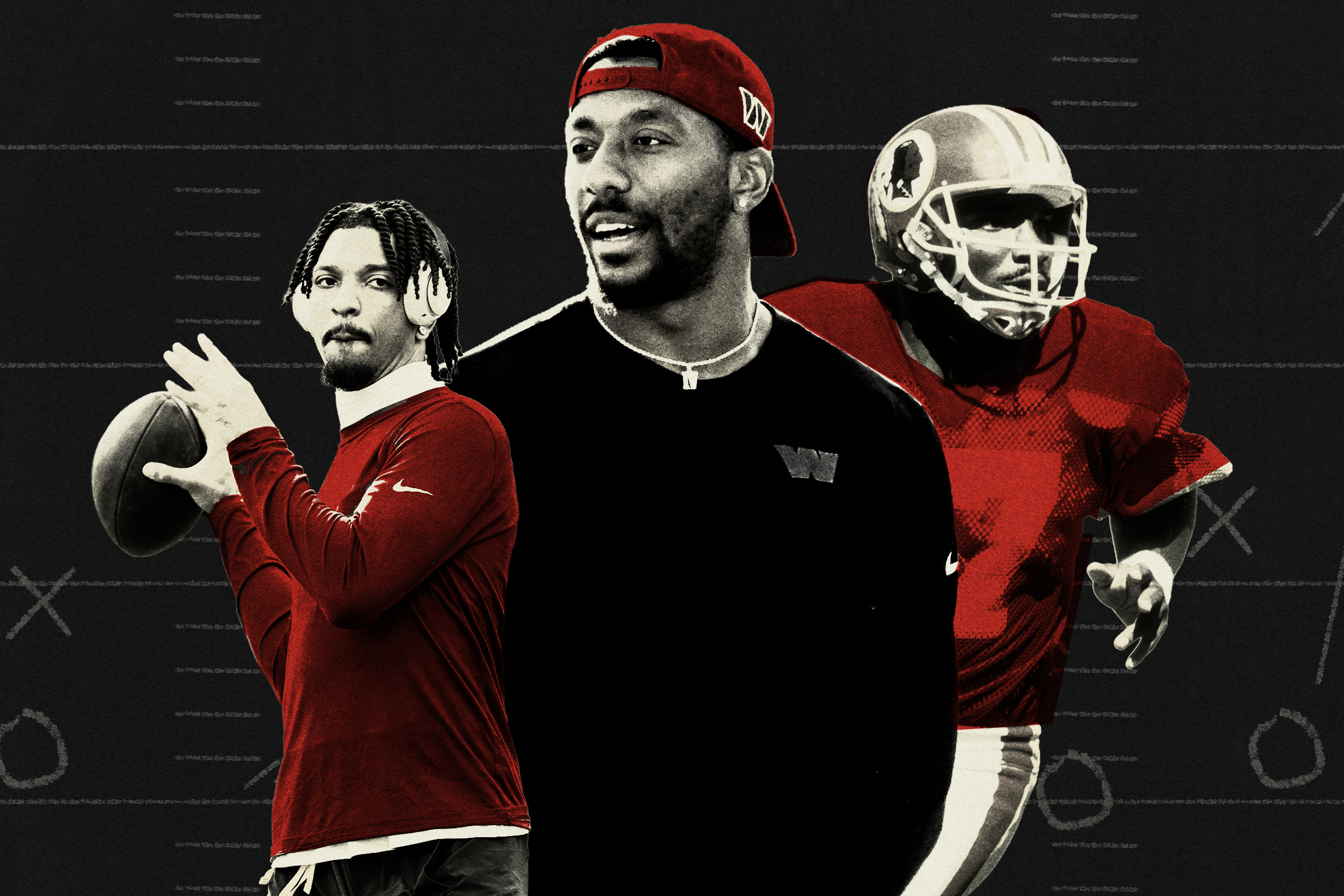
Williams now has one of the most important jobs in the franchise: guiding quarterback Jayden Daniels. This is why they trusted him with that responsibility.
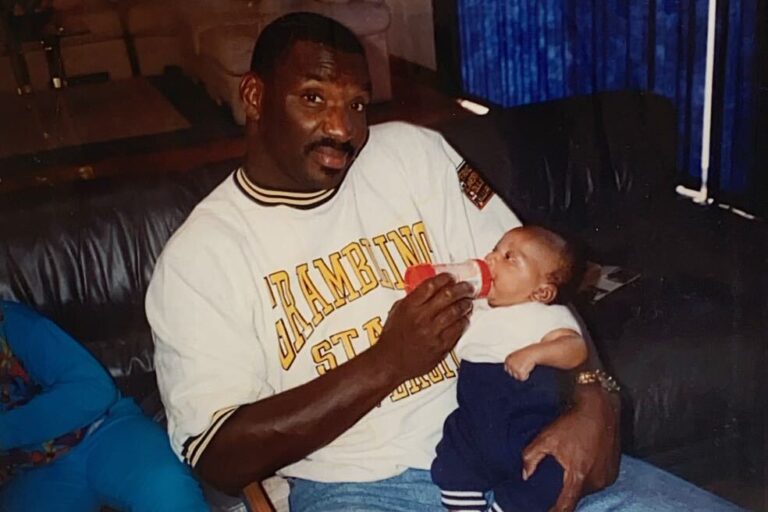
Doug Williams Jr. was born Sept. 9, 1992, almost three years after his father, Doug Williams, had retired from the NFL. Instead of the Super Bowl XXII MVP and Washington legend, D.J. — short for Doug Jr. — got to know his fatheras a coach. Many of D.J.’s formative memories are of Doug working as the Grambling State head coach in the late 1990s and early 2000s.
“I tell everybody: My day care was the locker room,” D.J. said. “That really ignited my love and my fire for football.”
D.J. went on to play quarterback under his father at Grambling State until Doug was fired following the 2013 season. A torn ACL ended his final year there in 2014. Ultimately, that would be his last time playing in a football game.
The subsequent search to find another way to work in football led him to the scouting internship in Washington. Then-general manager Bruce Allen offered him a full-time role as a scout, but he turned it down.
“I just had a desire to get closer to the game and have more of an impact on the game,” D.J. said. “I talked to a couple of guys who I trust, and they all told me the next best thing to playing is coaching.”
D.J. went to the 2017 scouting combine to network with coaches, including then-Saints head coach Sean Payton. Following a call from Doug, Payton hired D.J. for a training camp internship. After two years, Payton hired D.J. as an offensive quality control coach.
“Sean Payton told me this,” Doug said. “‘You might have had a hand in him getting in, but nobody works harder than he does.’”
That was the beginning of what D.J. dubbed his “law school” years. He did all the grunt work — helping make cut-ups of film, write practice scripts, create schedules and draw the playbook — but it provided an invaluable learning opportunity.
Among players, Williams got to work with Hall of Fame quarterback Drew Brees and a loaded Saints squad that was a perennial playoff contender. On the coaching staff, he pulled knowledge from the likes of Joe Brady (now the Buffalo Bills’ head coach), Declan Doyle (now the Baltimore Ravens’ offensive coordinator) and, of course, Payton.
“He leaves no stone unturned, right?” Williams said of Payton. “On every single concept that was on that call sheet, it was a conversation that was had amongst all the coaches. … We sat in that room and we did it old school: [Payton] was at the head of the table and we just talked about football and game planning.
“[Doyle] was a [quality control coach] with me there. And I told him, ‘Bro, I’m so appreciative of those years.’ While we were in it, it was hell, but now we lean on those experiences more than ever.”
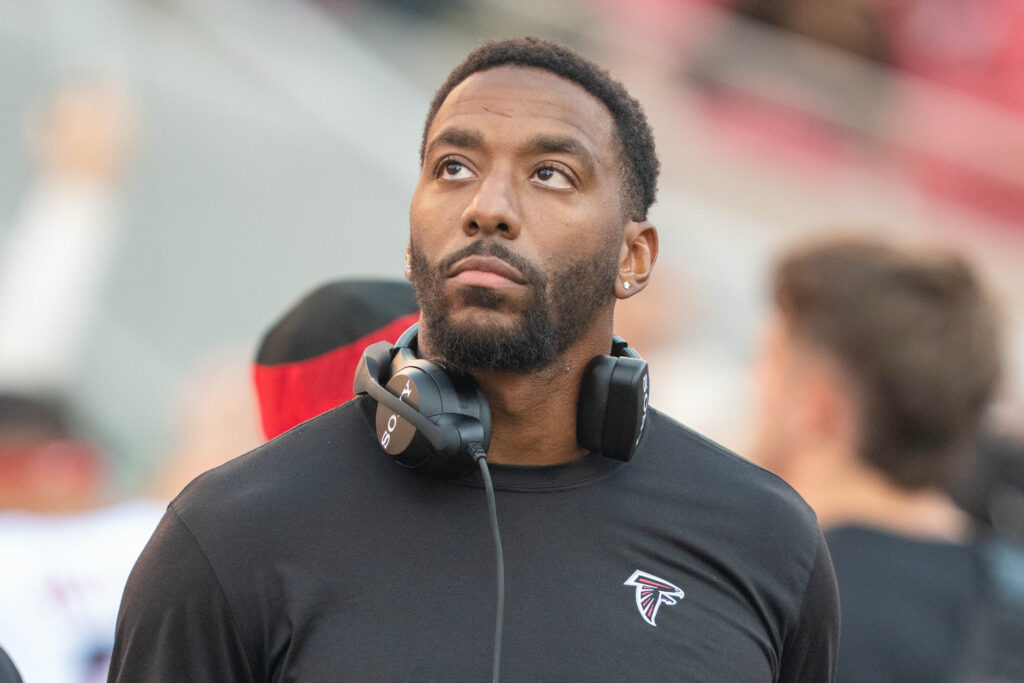
D.J. knew he was ready to coach quarterbacks full time. When the Atlanta Falcons requested to interview him for their assistant quarterbacks coach vacancy in 2024, he jumped at the opportunity. When he finished his interview with then-Falcons head coach Raheem Morris, however, he was asked if he wanted to talk about the wide receivers coaching job. He hopped back on the Zoom call but subsequently turned down Atlanta’s offer.
Read more Most Michigan voters disapprove of Trump’s tariffs on Canada, poll shows
“I told them, ‘Hey, with all due respect, I’m a quarterback coach and that’s what I want to be. And so, I won’t take anything less,’” D.J. said. The position would offer more money than the assistant quarterbacks coach role, but he was thinking about his long-term aspirations.
There are only three Black head coaches in the NFL. One primary reason: There aren’t many Black coaches in prominent offensive roles. There are only three offensive coordinators of color. In a league that increasingly skews toward hiring head coaches with an offensive background — specifically those who worked directly with quarterbacks — that makes it difficult for Black coaches to rise through the ranks.
“Just being honest, being Black as a coach in the NFL, sometimes you get pigeonholed,” D.J. said. “I took a chance on myself.”
The Falcons had just signed Kirk Cousins to a massive contract and drafted Michael Penix Jr. in the first round, which led to a delicate dynamic in the quarterback room. That season, D.J. was tasked with leading Penix and the backup quarterbacks during practices.
Penix ultimately replaced Cousins as the starter. After the season, D.J. was promoted to quarterbacks coach. Last season was a tumultuous one in which both Penix and Cousins started games but neither played well. The team struggled mightily, and Morris was fired after the season. But D.J. looks back on his time in Atlanta favorably.
“I thought that was really good for me to be able to not only handle that, but also teach those guys in different ways,” D.J. said. “Just being adaptable as a coach is one of the biggest things you have to be.”
After promoting Blough to offensive coordinator, Commanders head coach Dan Quinn requested to interview D.J. Before hiring him, he called Doug, who works for the team as a senior adviser.
“It got a little emotional for me,” Doug said. “Not so much that he’s my son — it’s that a Black guy got a chance to be a quarterback coach in the National Football League.”
D.J. is just one of five quarterbacks coaches of color in the NFL. He’s close with former Black quarterbacks coaches such as Tee Martin and Ronald Curry — who helped coach Lamar Jackson and Josh Allen, respectively, to MVP seasons — but didn’t get the nod to become offensive coordinators.
“I don’t take it lightly. I understand the plight and what we go through, especially on the offensive side,” D.J. said. “For everybody — except for us — the next step is always offensive coordinator as soon as your guy is successful or your team is successful. … Even not — if you’re not Black — sometimes you get promoted to that next thing.
“Obviously, it’s discouraging being a young guy in this position because that’s what you want to do. You just got to always understand what you carry in that role and that it’s something bigger than yourself. Those guys want to see you make it so they can feel justified for going through what they might have gone through.”
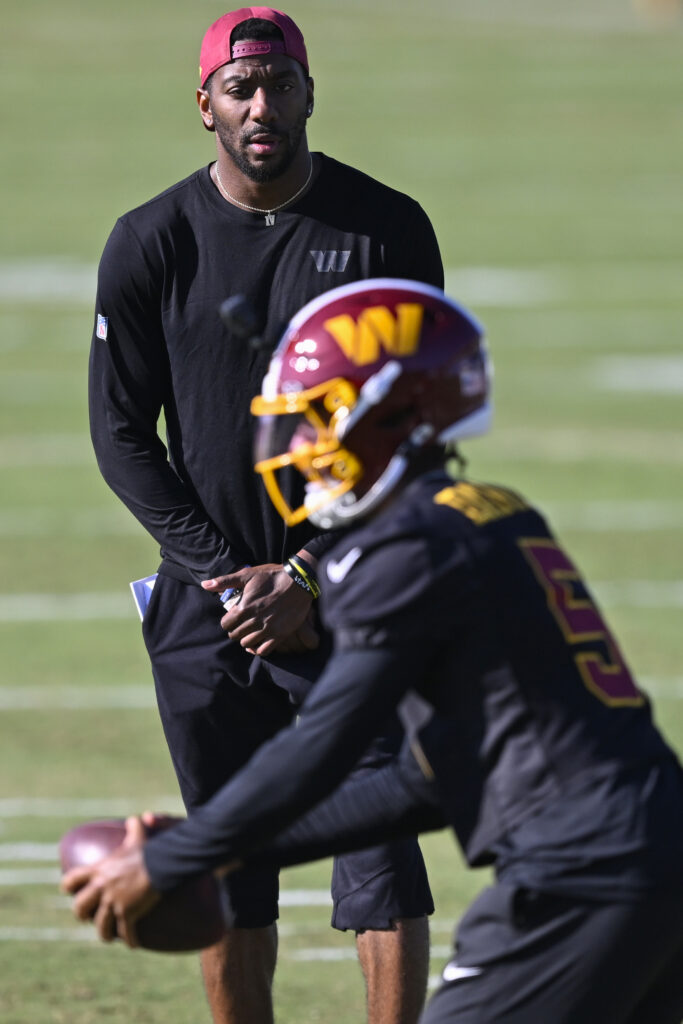
D.J. and Daniels don’t always see eye-to-eye, but they’re both okay with that. D.J.’s job isn’t to be Daniels’s friend; it’s to make him the best quarterback possible.
“It’s like a big brother, little brother type of thing,” Daniels said last month. “So, you can only imagine what that’s like. We butt heads and stuff like that, but he knows it’s all out of love. I know he wants the best for me, and he wants the best for everybody in that room.”
As a coach, D.J.’s mantra is consistency. He set three non-negotiables for the quarterback room: accuracy, playing on time and protecting the football. But he’s flexible in other aspects.
“You don’t want to put guys in a box,” D.J. said. “When you talk about footwork and all these things, it’s a million different ways to skin a cat.”
D.J. holds the entire room to a high standard, but it’s obvious that Daniels’s development is the priority. With that in mind, he doesn’t hesitate to test him.
Daniels showed some progress in Sunday’s season-opening loss to the Philadelphia Eagles. He largely avoided unnecessary hits. He did a better job of throwing the ball away or sliding. He took just one sack and didn’t commit a turnover.
“It’s just protecting the team,” Daniels said Sunday. “And when the plays are there to be made, I’ll be scrambling and using my legs. … If there’s nothing there, don’t try to force anything. … And I’m kind of proud of myself for that, but there’s still a long way to go.”
Looking ahead to the Commanders’ matchup at the Dallas Cowboys on Sunday, there’s still room for Daniels to improve. He had an average time to throw of 3.41 seconds, according to Next Gen Stats, which was the longest among all quarterbacks in Week 1. He also completed just 52.9 percent of his passes.
Those areas will surely be points of emphasis with Williams.
“He don’t always like what I have to say,” D.J. said. “I always tell him, ‘At the end of the day, bro, I tell you this because I love you. The day I stop coaching you and nitpicking and looking for the small stuff, then that’s the day you should be worried.’
“That dude has all the potential in the world to be whatever he wants to be, and I know everybody tells him that. But I want to also hold him to that.”
Read more She’s survived four gerrymanders and a car crash. Can her luck hold?