The investigation appears focused on whether officials are adequately supervising children in and out of school, with scrutiny on attendance and social worker visits.
Read more Trump is running out of time as he tries to restrict mail voting
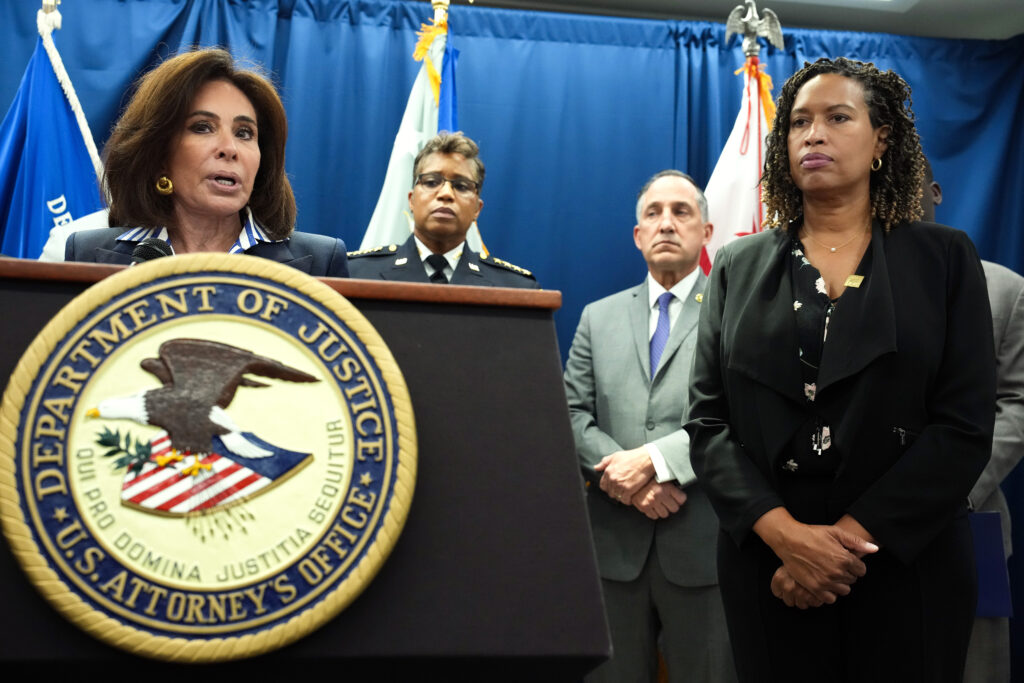
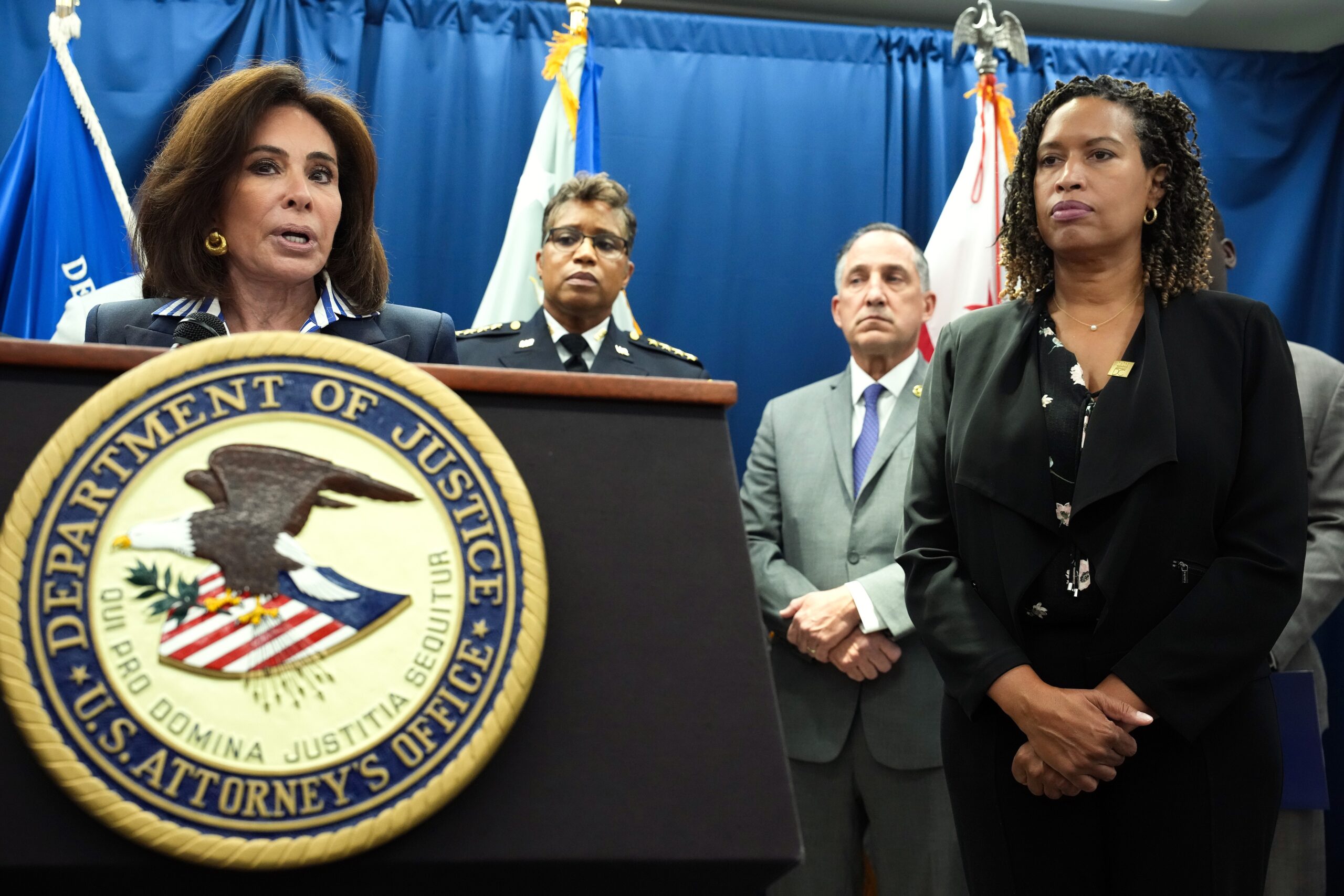
Federal prosecutors in D.C. have intensified their scrutiny of city agencies that supervise children and teenagers, subpoenaing a trove of documents that includes data on how social workers monitor vulnerable youth and interviewing police officers about the deaths of children as part of a broad and fast-moving special grand jury investigation, according to people familiar with the probe.
The investigation appears focused on whether city officials are adequately supervising children in and out of classrooms, echoing complaints from Trump administration officials, including U.S. Attorney for D.C. Jeanine Pirro, that the D.C. government is failing to hold young people accountable for crimes. Prosecutors appear to be examining how the city addresses truancy and whether officials are taking sufficient steps to protect children from abuse or neglect.
In recent weeks, D.C. police officers have testified in front of the jurors, describing instances in which they believe there was inadequate monitoring of children by the Child and Family Services Agency (CFSA) and sharing details about the deaths of babies. The Washington Post was not able to learn what deaths the officers testified about and if those families were under the city’s supervision, or should have been. The officers were not subpoenaed, though they were asked by prosecutors to testify.
Multiple D.C. public school employees, including teachers and principals, have also been subpoenaed, with some already testifying before the special grand jury about attendance policies and graduation requirements.
This report is based on interviews with a half-dozen people familiar with the probe, all of whom spoke on the condition of anonymity to discuss an ongoing criminal investigation.
The special grand jury has also issued subpoenas for data from the Office of the State Superintendent of Education, which oversees the city’s public, charter and private schools; and to CFSA, which determines whether children are being neglected or abused and oversees the city’s foster care system.
The investigation appears to be in its early stages and is expected to probe additional agencies that deal with children. The administration of Mayor Muriel E. Bowser (D) seems to be cooperating with the investigation, allowing school staff to testify on their scheduled dates and preparing requested data to give to prosecutors.
CFSA, DC Public Schools and D.C. police declined to comment and referred comment to the mayor’s office. Bowser and Lewis George declined to comment for this article.
“The investigation is far from political. Schools are just one part of this,” said a federal law enforcement official, who spoke on the condition of anonymity to discuss an ongoing investigation. “It’s about safeguarding the youth of the District. The genesis of this is the loss of children.”
Since taking over the U.S. attorney’s office for D.C. in May 2025, Pirro has contended that youth play an outsize role in the city’s violent crime, casting blame on parents and high truancy rates.
In most cases, prosecuting juveniles falls to the locally elected D.C. attorney general. Pirro has called for the ability to prosecute more teens in her office at a younger age.
Last year, Bowser and Pirro met frequently with local and White House officials who were part of the executive branch’s D.C. Safe and Beautiful Task Force. In at least one of those meetings, Pirro complained that she was being hamstrung when it came to prosecuting juvenile crime, according to two people familiar with the meeting.
More recently, Pirro threatened to prosecute parents whose teenagers are truant, break city curfew or violate the law.
Pirro has said she is both seeking to improve public safety and protect children from becoming victims of crime.
Murder rates and violent crime in the District have dropped in the last two years after a sharp increase in 2023. Still in 2026, there have been 19 homicides of people 21 and under, down from the 24 young people killed at this time last year.
While overall crime has dropped, the D.C. government has long struggled to stem chronic absenteeism. Several D.C. officials and activists, who spoke on the condition on anonymity because the probe is ongoing, said they believe it’s possible the investigation could expose problems in city services that need to be addressed.
At the same time, they said they worry that the Trump administration and local residents could use the probe as a political weapon to undermine D.C.’s autonomy. The relationship between the White House and local residents deteriorated after Trump took temporary control of the police department last year, and deployed National Guard troops to the city’s streets.
Read more These are the most important House races to watch in November
D.C. is not a state, giving the federal government unusual authority over local city affairs. In 1973, Congress passed legislation that granted D.C. home rule, which allowed the city to elect its own mayor and council and gave the leaders limited self-governance.
“That’s the dilemma of any good government reformer in the District when a hostile administration picks up their issues,” said G. Derek Musgrove, a history professor at the University of Maryland at Baltimore County who has written extensively about the history of the city. “They want changes. But most of them are not willing to damage home rule to get there.”
Special grand juries are rare and there is no known precedent for convening one in D.C., according to legal experts. The move comes as Pirro’s office has failed to secure indictments in high-profile cases, which is unusual in federal courts. Legal experts theorized that the special grand jury could allow Pirro to circumvent some of the challenges she has faced with standard grand jurors.
In a special grand jury, jurors sit for up to 18 months focused on just one investigation, instead of being presented with evidence in multiple cases over a short period of time. And even if the special grand jurors do not find evidence to indict someone, they may be more amenable to issue a damning report about the city’s governance, the legal experts said.
Such a report requires a lower threshold of evidence than is needed to charge someone with a crime.
During her tenure as district attorney in Westchester County, New York, Pirro impaneled special grand juries to advocate for policy changes. In 2002, for example, she used the maneuver to investigate allegations of youth sexual abuse by clergy members of the Archdiocese of New York. The report called on lawmakers to get rid of the statute of limitations on sex-abuse cases.
She also assembled a special grand jury to investigate the deaths of multiple children on their school bus commutes. That report urged Westchester County to install trained safety monitors on every school bus in the county, according to the local media reports at the time.
Neither of those special grand juries resulted in criminal indictments.
The D.C. U.S. attorney’s office has prosecuted fraud and wrongdoing by individual actors in local government, but has not — at least in recent memory — conducted anything similar to what appears to be an investigation by Pirro into potential systemic failures of the D.C. government.
“USAO leadership determines how to allocate resources and investigating D.C. government officials for potential crime falls within the office’s purview,” said Liz Aloi, a longtime D.C. federal prosecutor who left the office last year.
Earlier this year, Pirro said she wanted the school records of students who were truant and violating curfew. Lewis D. Ferebee, who was chancellor of D.C. Public Schools at the time, told local media that he would not give up the student records without a court order.
So far, federal prosecutors have not asked for personal information about individual students, but rather broad datasets, many of which are already public.
The prosecutors issued a subpoena to Office of the State Superintendent of Education (OSSE), seeking data on graduation rates, the percentage of instructors who have standard teaching credentials, average class sizes and student to faculty ratios, as well as the names, titles and salaries of administrators in the central office, one of the people familiar with the probe said.
The subpoena to CFSA, according to that person, requested the number of home visits per social worker; staff retention rates; the number of children removed following home visits; the number of children in foster care; a list of child fatalities; the number of reports made through the agency’s hotline; and the decisions made on each report.
The school staff subpoenaed so far appear to be predominantly clustered in schools with high truancy and poverty rates. At least two top leaders from schools in Southeast Washington have been subpoenaed to testify, people familiar with the probe said. At least one former principal has also been subpoenaed.
Prosecutors appear to be questioning them about attendance, graduation and makeup class policies.
“They are agents of the school district. they don’t develop policy,” said Richard Jackson, president of the Council of School Officers, the union for D.C. principals and assistant principals. “I am not sure what Pirro is up to and what angle they are working. But I would infer it is a negative angle and that the goal is to disparage someone.”
Read more Trump removes White House shrouds as he prepares for Xi visit
Ben Conarck contributed to this report.