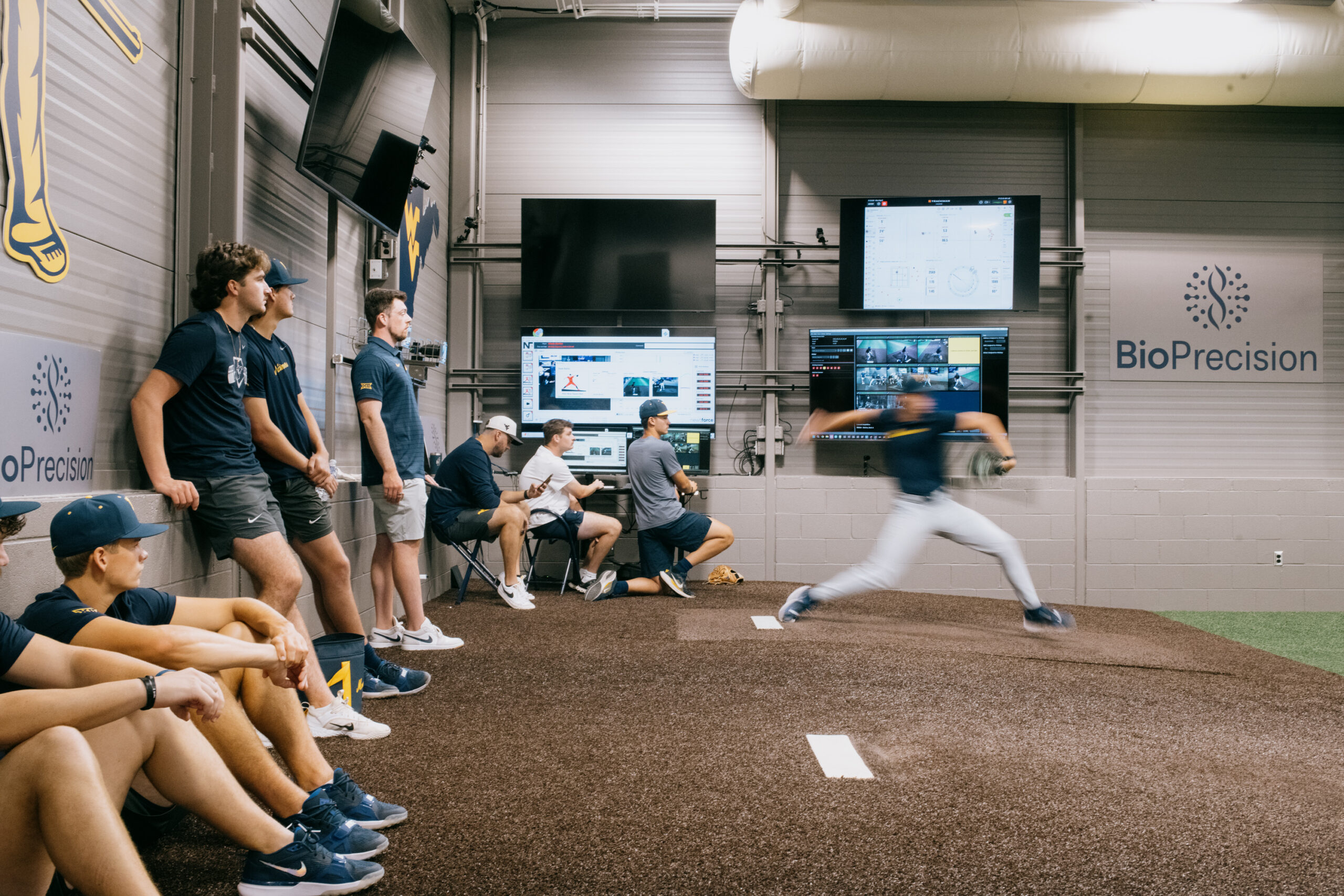
A cutting-edge baseball biomechanics lab at West Virginia University has caught the eye of some of the game’s best. It’s staffed by students.
Read more Jayden Daniels’s durability, Dan Quinn’s job security and more Commanders storylines to watch
MORGANTOWN, W.Va. — It’s the middle of the baseball calendar, and one of MLB’s youngest-ever Cy Young winners is here, in the mountains of West Virginia, staring at a computer screen.
Paul Skenes exchanges a few thoughts with four sweatpants-clad onlookers, then walks toward a small marker on the ground, white LED lights reflecting off his sweat. He steadies and, after a breath, lifts his left leg as his right arm drops. In a few fractions of a second, the ball travels just over 60 feet.
Skenes has thrown tens of thousands of pitches. Many occur in front of the TV cameras and grandstands. The vast majority splatter into gloves scattered throughout the underbellies of MLB stadiums.
But in rare instances, after a 90-minute drive from Pittsburgh, it’s just Skenes, the ball and four “mad scientists” who tune his form under a hard light inside a small warehouse.
“Move your arm a touch to the right,” Courtney Semkewyc recalls telling him. “That should help.”
Understandably. Among peak performers in all sports, pursuit of greatness is a journey through the minutiae. In baseball, one-tenth of a mph on a pitcher’s fastball can be the difference between a strikeout and a home run. One rpm too few, and a curveball makes itself a lifelong memory in Section 338. Players will try nearly anything, go nearly anywhere, as they circle the drain of perfection.
Increasingly, that includes college campuses. As athletic departments’ annual budgets balloon to well over $100 million — West Virginia’s is $130 million — a facilities arms race has architects and engineers dueling for the 18-year-old’s eye and attracting pros in the process.
That’s why, over the last two years, MLB stars have descended on West Virginia University, where a $5 million investment in baseball has yielded a country-leading biomechanics performance center. The Mountaineers baseball team has reaped benefits: a first-time College World Series berth in 2026. But several pros, in their never-ending pursuit of an edge, sniffed it out, too, soon after its 2024 inception. Dozens of players — including Skenes, James Wood and Trey Lipscomb — make regular appearances between games and during the offseason.
The lab’s doppler radars, cameras and force plates allow researchers to track every minuscule bit of pressure a player experiences while moving. If Skenes’s elbow is half a centimeter lower upon his release, his ulnar collateral ligament takes on a greater kinetic load. If he puts more weight on his front leg, tendinitis and meniscus tears could be the next topic at his yearly checkup. (To be clear, Skenes hasn’t faced these issues. He also doesn’t want to. That’s why he’s here.)
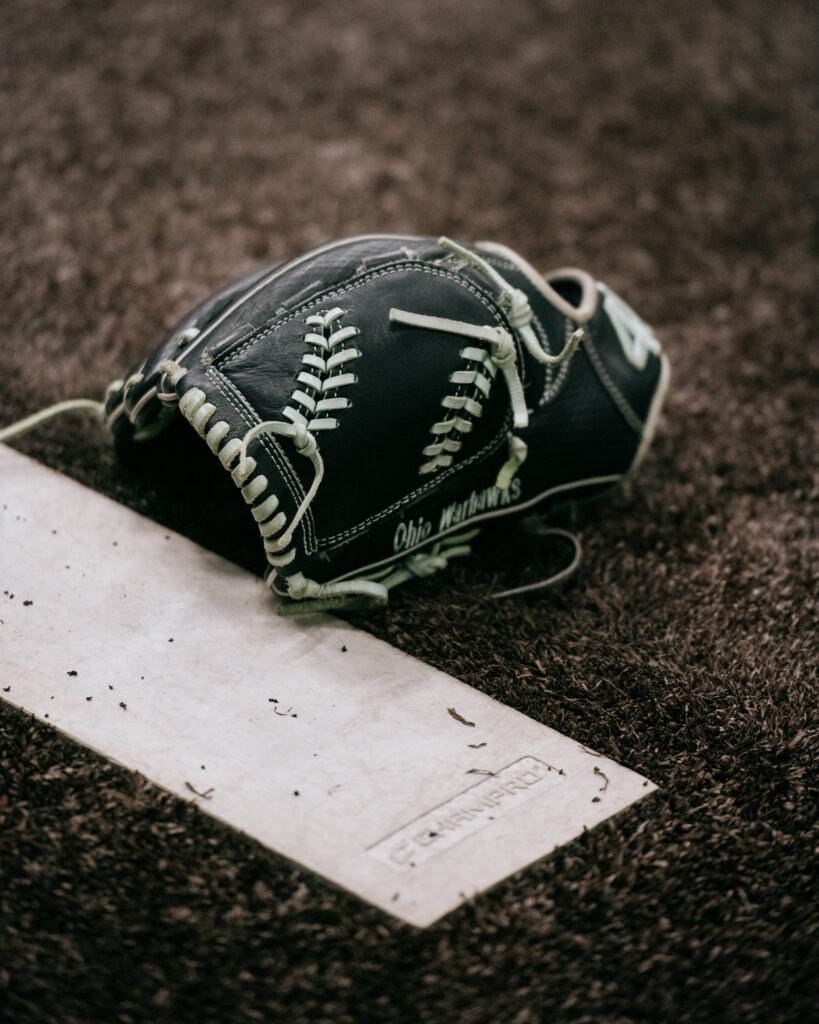
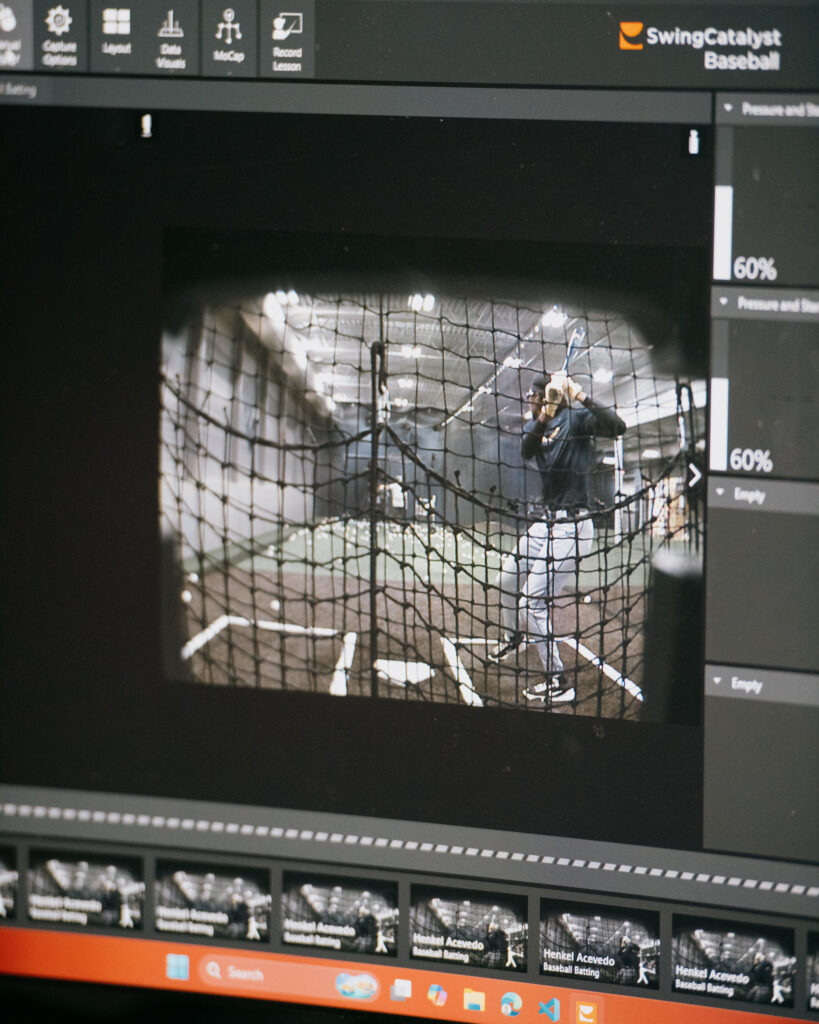
West Virginia’s staff leverages measurements tracking nearly every inch of their subjects to suggest slight tweaks to their form, often redirecting energy away from the parts of their body experiencing the most stress. In turn, pitch and swing velocities increase more controllably, ideally lowering cases requiring the sport’s bogeyman, Tommy John surgery. While other schools’ interests lie entirely in improving performance, the Mountaineers want to carve out a niche in sustainability.
“Our [lab] is just better,” jokes Steve Sabins, West Virginia’s 39-year-old baseball coach and the maestro of this experiment. “Everyone can present data; not nearly as many people can tell you what it means. And we translate it for players better than anyone else. We have mad scientists.”
Which brings you to Semkewyc and the crew. They have already grown a year-round, daily schedule with sessions serving Little Leaguers to MLB Gold Card members, all in the span of two years, and they expect even more MLB stars if the 2027 season is delayed or scuttled because of a labor dispute.
“If you want to get better, those are tools that are going to help you get better,” Skenes says. “[They] invested in facilities and coaching. It’s the real deal.”
There’s just a bit of data West Virginia doesn’t share with everyone. The “mad scientists” tweaking pro players’ swings and fixing Skenes’s arm?
They’re college undergrads.

When Sabins took a job as an assistant on West Virginia’s staff in 2016, baseball was entering its modern age of innovation. Advanced analytics were spreading through MLB, and college teams were rapidly trying to grasp what was happening in the ranks above them.
“No one knew exactly what was coming next,” Sabins recalls. “You just wanted to be the first. That’s how you won.”
In the 2010s, analytics-driven cages had become the hot commodity among college programs. Wake Forest and LSU pioneered it all, the latter attracting Skenes with its new system and the data it could provide, even if it couldn’t translate it.
Sabins was keen to join the arms race when he took over as coach in 2024. But the year prior, West Virginia had made one of the largest academic cuts among major U.S. state schools ever, shedding 28 majors to battle a $45 million budget shortfall. So selling the school on an investment in baseball tech required ingenuity. He framed what it could offer: a marketing opportunity — a way to push the Mountaineers into the national frame on the back of MLB legitimacy.
Soon he had a warehouse outfitted with multiple pitching lanes and batting cages, each with Trackman setups (a form of motion-measurement technology frequently used across multiple sports) and those force plates.
None of that, though, would matter without something different.
“We had to find what separated us,” Sabins says, “while also fitting with West Virginia, what we do around here.”
That fall, Sabins strolled into West Virginia’s College of Applied Human Sciences and knocked on the door of Dana Voelker, the director of the university’s School of Sport Sciences. The pair talked for well over an hour. And then again a week later. Once more before Christmas.
Read more Nationals continue West Coast swoon with loss at Padres
“It made extraordinary sense for our school to be working with them,” Voelker says. “The students get an amazing learning opportunity. It would be good for West Virginia at a necessary time. The baseball team would benefit. All good things.”
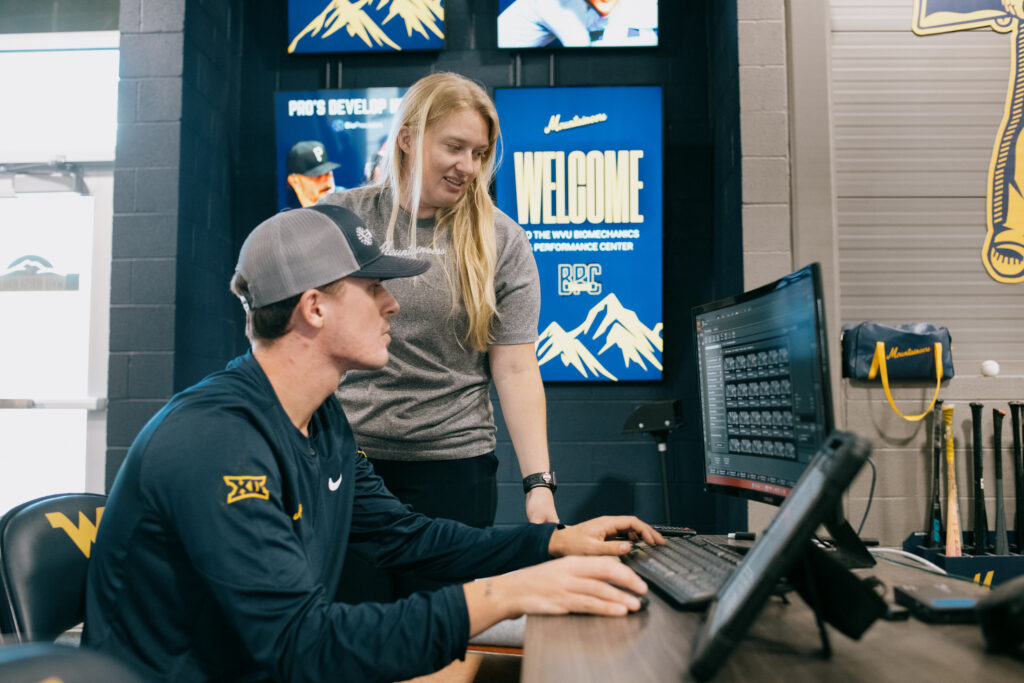
Their plan was simple. They would veer the lab’s resources toward baseball’s newest fad, biomechanics, and staff a biomechanist, Semkewyc, who would lead the center’s data analysis while also teaching on campus, an easier sell to the university’s higher-ups. Classes, soon, would be structured to have students work with players in the lab, giving them hands-on practice no other school offers with technology some MLB franchises are still chasing.
Unlike its college competitors, West Virginia believes its advantage lies in transitioning data from rigs to actualized training. Semkewyc leads that charge, teaching her students to challenge the metrics they receive to see “the root causes.”
The students come from a range of majors. One who signed up for the fall is said to be interested in biology; this was a chance to learn more about physics. Most, though, are studying sport management or sport and performance psychology, among a few similar degree areas, and each wants to carve out a performance-focused role in the ever-competitive business of sports.
They often work with players for more than five hours each day. This is a learn-on-the-job business, but the athletes are frequently just as distant from rpms and “joint contact pressure,” a common term around here. The group grows together.
“You learn so much more here than you really can anywhere else,” says Michael Smith, the first student involved in the biomechanics program. “Yes, it’s not perfect, and you have to figure it out with the players at the beginning. But the best way to understand this stuff is to be doing it. In weeks, you’re genuinely helping top-tier athletes.
“Nowhere else does that.”
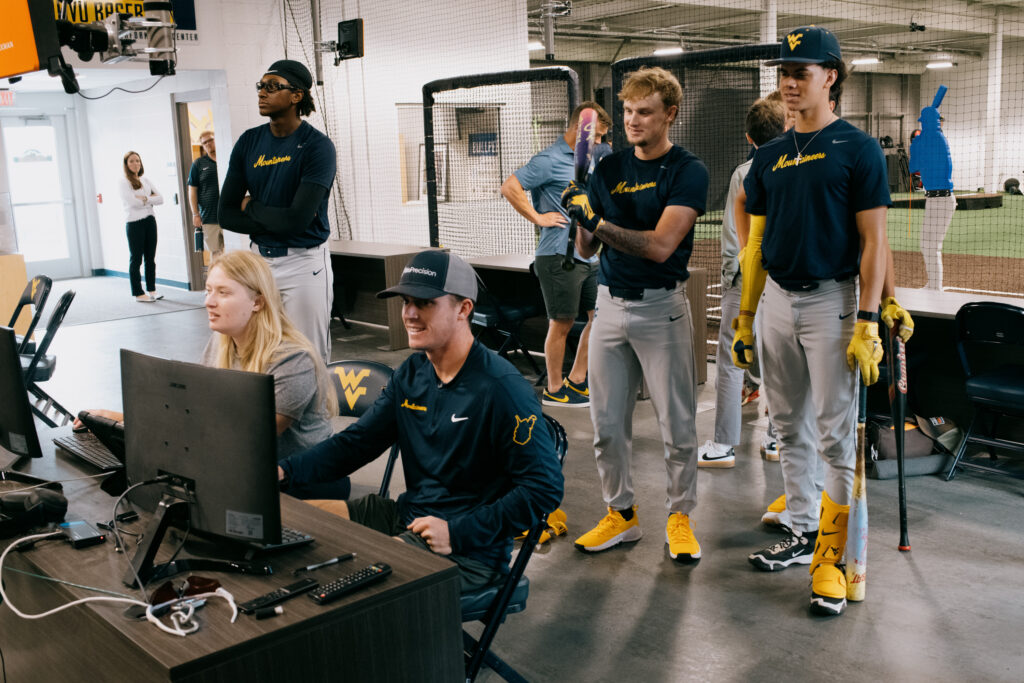
With 162 games, hundreds of plate appearances and far more pitches, MLB players fail a lot. And all that failure fosters a difficult-to-define chase for improvement.
In recent years, players have turned to technology and analytics to label what’s wrong. Loaded to the gills, MLB teams invest in whatever the current cutting-edge system is in pursuit of the metric of the month. For a variety of reasons, though, players rarely view every digit at their disposal.
The Washington Post spoke with more than a dozen players across five franchises who said they have gone to independent analytics labs. Some teams, to maintain control over players’ training habits, don’t provide them with all their measurements. Other franchises don’t allow players to see every number because they think it will overwhelm them. West Virginia students are trained to distill information for that very reason.
“You just want to have everything at your disposal,” says Wood, the Washington Nationals’ all-star outfielder, who examined his hitting stance in West Virginia last year. The Nationals share more hitting and pitching metrics with players than most, including the sport’s ever-evolving advanced projective metrics, Wood said. But there’s something to knowing you’re consuming the latest stats folks have cooked up. “It’s always beneficial to see more,” he says. “Even if you need to sort through it.”
A year ago, he heard of the Mountaineers’ start-up from a teammate, Lipscomb, who had heard of it from a teammate. Players talk among themselves. Training facilities and practice quirks rarely remain underground for long. So Wood and Lipscomb acted quickly and made the three-hour drive.
Once players arrive, the teenagers and Semkewyc walk them through a session. After a couple of hours of training, West Virginia’s staff prepares each a couple-page report, as is ritual for anyone who practices in the facility, not just major leaguers.
“Often, though, players don’t even know exactly what they’re looking for,” Smith says. “We try to pick and choose to explain what they could be looking at, but they almost just want to feel in control.”
Their pursuit is, more than anything else, an undefined quest for something more. Yes, advanced analytics can inform a player’s training. But the difference it provides at this level of play is infrequently noticeable.
Still, players want to believe they’re improving, even if they can’t see it. So they keep coming back.
“And we’ll keep showing them what they can work on,” Smith says. “But, at the end of the day, a biomechanist is only going to change so much about a player.”
Yet?
“More data is never a bad thing, as long as you digest it properly,” Skenes contends. Three all-star nods in three years doesn’t hurt his point. “It’s going to make me better.”
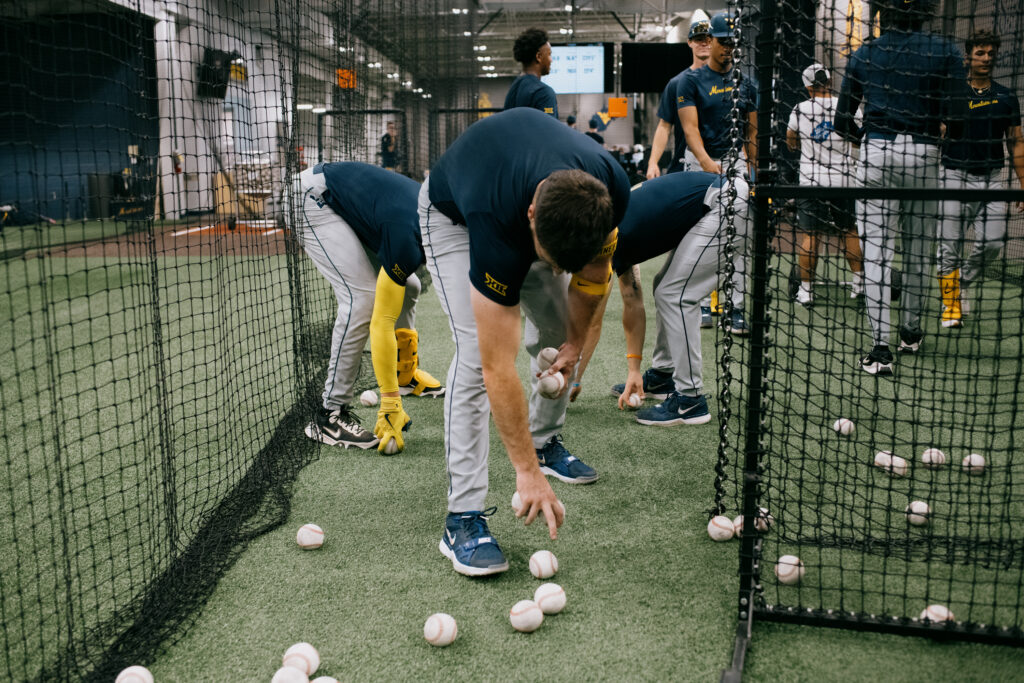
The bubbling semblance of a baseball biomechanics industry will only continue to expand as that duality persists. This fall, West Virginia will have its largest class of student participants — 10 working with players in the lab, along with two graduate assistants. The school welcomes the attention.
As the offseason commences, players will roll in for their yearly checkups, bringing buddies to the quiet warehouse in the mountains. Then their buddies will bring buddies, barely batting an eye at the biology major who just ran from an American federal government class, the one now explaining why this righty’s elbow is positioned incorrectly.
They’ll just be searching for whatever the next edge is — and it happens that these “mad scientists” might have the best guess.
Read more Armed man charged after confronting Ohio governor candidate at county fair