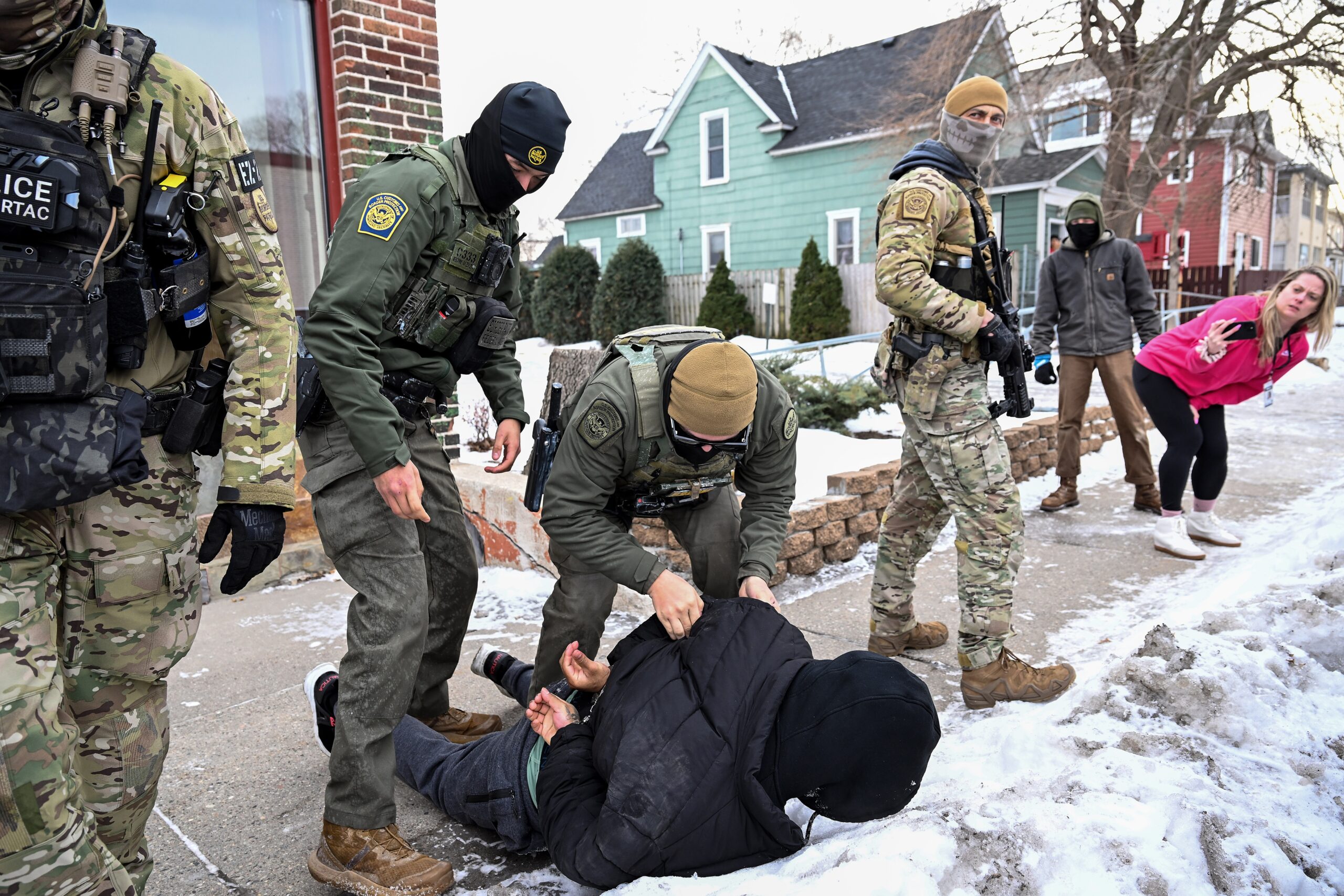
The case against Christian Castro is unprecedented in President Donald Trump’s second term, as ICE agents face little fallout from shootings of protesters and others.
Read more After Charlie Kirk’s death, Turning Point forges ahead, with eyes on JD Vance
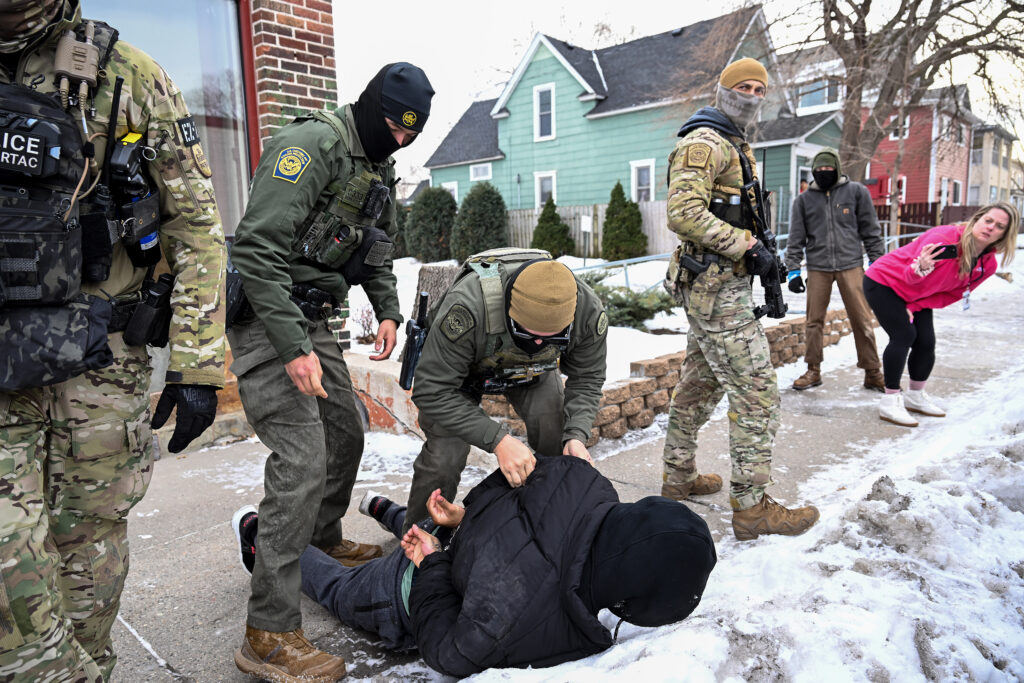
The Justice Department took an unprecedented step last week, more than a year into the Trump administration’s nationwide immigration enforcement crackdown: charging an officer deployed as part of that mission with a felony.
But the rarity of the case filed against U.S. Immigration and Customs Enforcement officer Christian Castro on Wednesday — for allegedly lying to investigators about the shooting of a Venezuelan migrant in Minneapolis — highlights what legal experts and victim advocates describe as the department’s broader record under President Donald Trump of stepping back from the role it has traditionally played in high-profile shootings involving federal agents.
To date, the agency has taken few visible steps to investigate the dozens of documented shootings involving Department of Homeland Security personnel as the Trump administration has aggressively expanded its immigration enforcement across the country. More often, it has deferred leadership of those probes to offices within DHS, which oversees ICE — creating a situation in which that department is essentially policing its own.
“When there’s a situation where there’s extreme public concern over the actions of law enforcement, it’s really important that it be looked at … and if there’s any question if there was an alleged criminal investigation, then the FBI and DOJ should be involved,” said Daniel Altman, a former executive director for U.S. Customs and Border Protection’s Office of Professional Responsibility.
Justice Department officials have repeatedly resisted calls from critics demanding they more actively probe the circumstances behind high-profile killings, including the fatal shootings in Minneapolis of U.S. citizens Alex Pretti and Renée Good in January.
“We don’t just go out and investigate every time an officer is forced to defend himself against somebody putting his life in danger,” then-Deputy Attorney General Todd Blanche told Fox News that month.
Meanwhile, the department has charged hundreds of migrants and demonstrators protesting the crackdown with assaulting federal agents. And administration officials have been quick to label those injured or killed in confrontations with ICE agents “domestic terrorists,” “insurrectionists,” attempted killers or worse.
Many of the cases against protesters and migrants — including one against the Venezuelan man whom Castro was accused of shooting — have stumbled because of acquittals or prosecutors withdrawing the charges for lack of evidence.
Justice Department officials, speaking on the condition of anonymity to discuss ongoing probes, said prosecutors continue to step in where appropriate to scrutinize use-of-force incidents involving federal personnel and will continue “to follow the facts and the law.”
Department officials cite their case filed last week against Castro, one of hundreds of agents deployed to Minneapolis as part of the administration’s surge in immigration officers to the city earlier this year, as evidence that they take action against immigration agents when warranted.
In the indictment unsealed Friday, federal prosecutors said Castro misled investigators about the circumstances of a Jan. 14 shooting in which he fired his service weapon through the door of a duplex, hitting 24-year-old Julio Cesar Sosa-Celis in the leg. Castro, who also faces state charges tied to the incident, has denied the allegations.
Lawyers for Sosa-Celis argue that the federal case, while welcome, does not go far enough. They demand a more intensive investigation into whether Castro violated Sosa-Celis’s civil rights, a charge that would double the agent’s maximum prison term should he be convicted at trial.
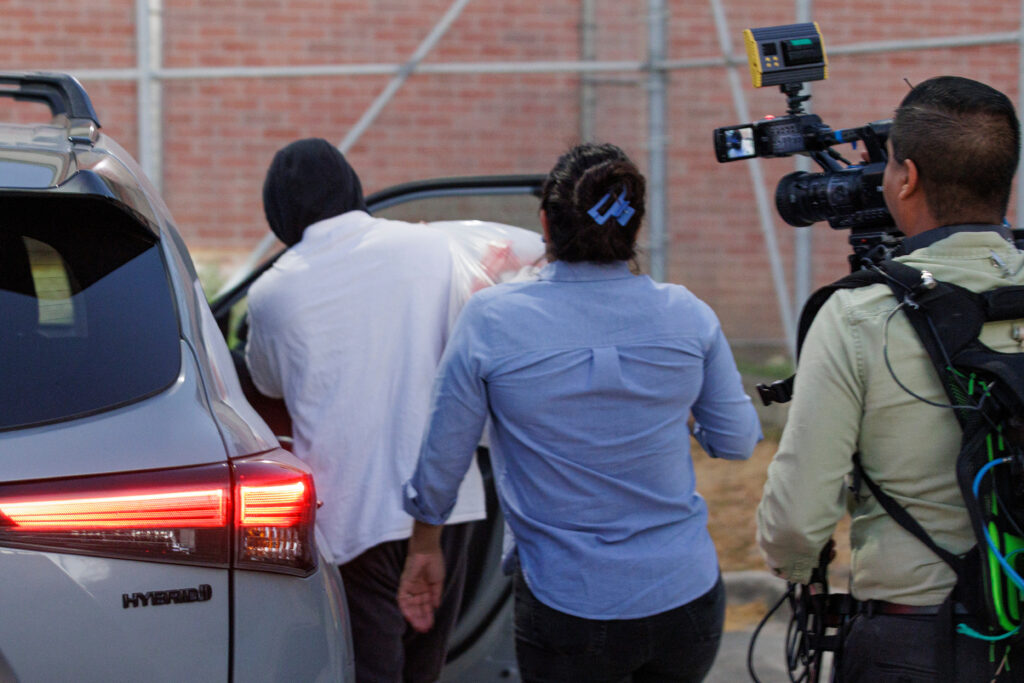
“Although the evidence strongly supports civil rights charges, the federal government has grossly undercharged this case,” said Robin Wolpert, an attorney for Sosa-Celis.
One of Castro’s own defense attorneys described the charge of lying to investigators as “relatively minor” in the broad swath of charges the federal government has in its arsenal. He made that point to argue that the charges should not have been filed against Castro at all.
“The people who killed Renée Good were not prosecuted, the people who killed [Alex Pretti] were not prosecuted,” defense lawyer David Lindenmuth said in an interview. “And yet my guy is prosecuted?”
Before the Trump administration, shootings such as those involving Good, Pretti or Sosa-Celis probably would have prompted intense scrutiny from the criminal section of the Justice Department’s Civil Rights Division, several veterans of the division said.
Department guidelines call for the division’s criminal section to take an active role in monitoring matters of “national public interest,” such as those that draw an intense public outcry or involve allegations of potential constitutional violations. Typically, those investigations would be carried out in coordination with U.S. attorney’s offices and local authorities, to demonstrate to the public that a thorough probe has been conducted, even if investigators ultimately determine criminal charges are not warranted.
But months after her son was fatally shot in a confrontation with immigration officers in Minneapolis that sparked a national outrage, Susan Pretti lamented the apparent lack of government action over his death.
“No-one has been held accountable, no apologies, not a single phone call from any governmental official,” she wrote in a July social media post, adding: “Six-months of pain, a roller-coaster of trauma over and over. Every time another death, another mention, a picture, a tribute, a sorrow so deep. I wonder how to move forward.”
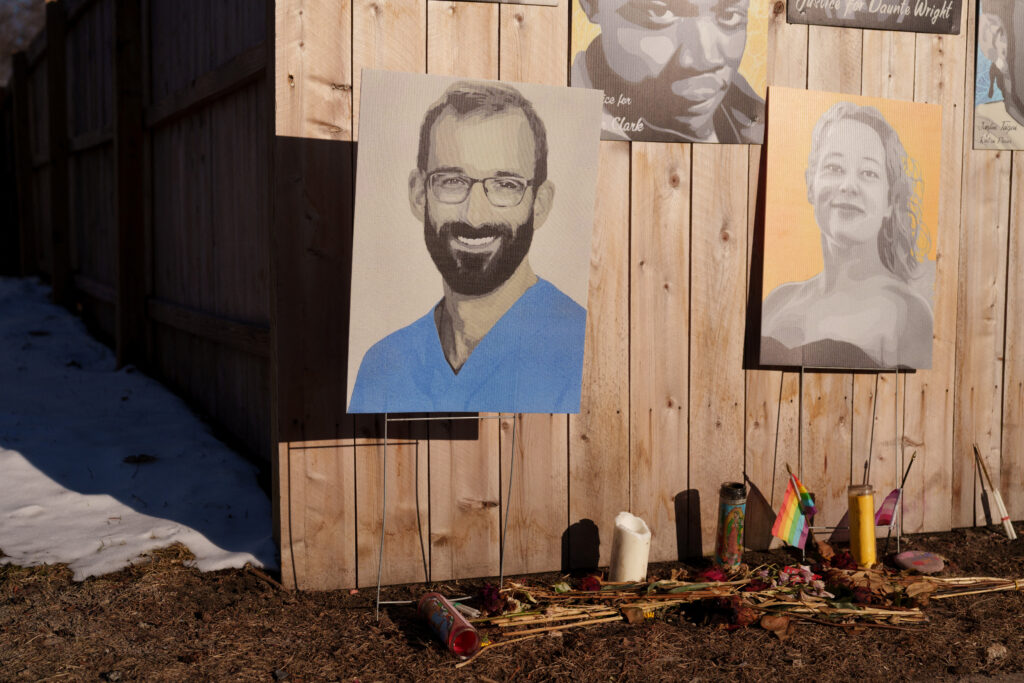
Blanche said in January that the Justice Department had opened a civil rights investigation into the circumstances of Pretti’s death, reversing earlier assessments from Trump officials that such a probe was unwarranted. But even as he did so, the then-deputy attorney general sought to downplay its significance, saying he did not want to “overstate what’s happening.”
Since then, there have been few outward signs of progress. In a July letter to Blanche obtained by The Washington Post, Steven L. Schleicher, a lawyer for Pretti’s family, said that Daniel Rosen, the U.S. attorney in Minnesota, had met with the family earlier that month but that the meeting “raised more questions than answers.”
Schleicher later said in an interview that there has been almost no communication about the investigation from Justice Department investigators.
“I don’t think they’re doing their job,” he said. “This is the problem. What we’ve asked them is to be kept apprised of the case, tell us the names of the shooters, to tell us what are you going to be doing.”
He added: “Why has it taken this long? What is the initial resistance to a man shot dead in the streets in front of many witnesses, in broad daylight and caught on video tape?”
The Justice Department declined to comment last week about the current state of the Pretti probe, except to say it remained ongoing and was being conducted with the help of law enforcement partners. It has previously said it will continue to update Pretti’s family on the investigation as appropriate.
Asked by senators about the status of the Pretti investigation this summer during his confirmation hearing to become attorney general, Blanche said it would be inappropriate to discuss details while the inquiry proceeds.
Still, the investigation into whether DHS officers violated Pretti’s rights is more than the Justice Department has done after many recent shootings involving immigration agents.
Read more The last test of dynastic politics in an antiestablishment primary season
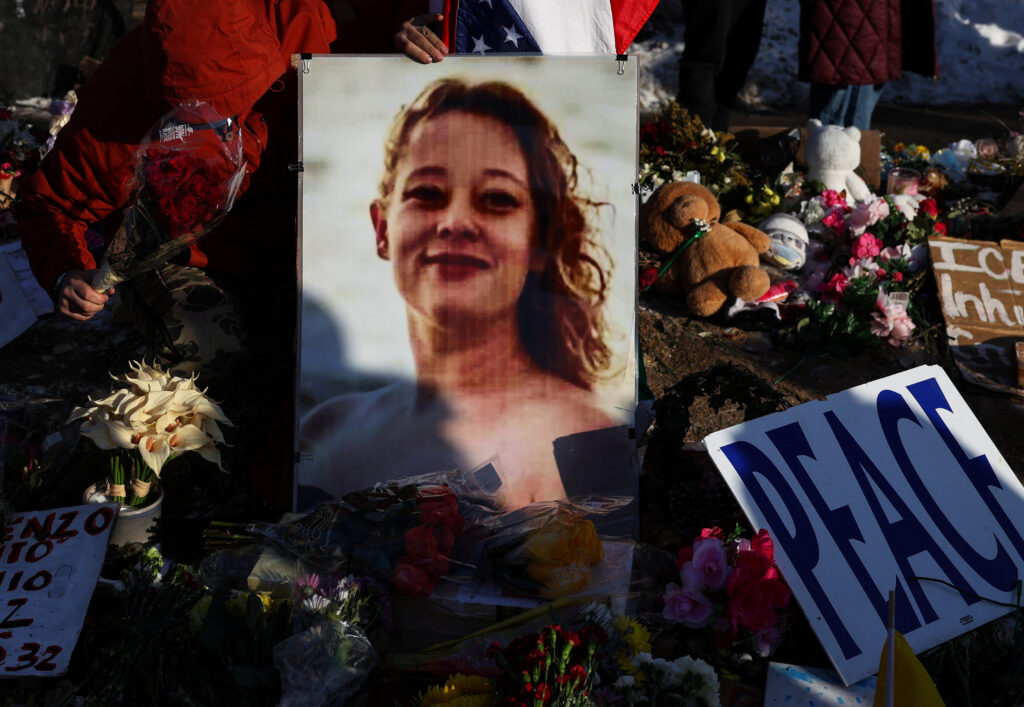
After Good, a 37-year-old U.S. citizen, was fatally shot by ICE officer Jonathan Ross in Minneapolis in January, federal prosecutors in Minneapolis and in the department’s Civil Rights Division in Washington believed there was enough initial evidence to open a civil rights probe, The Post has reported.
But the prosecutors were ordered to stand down and instead scrutinize Good’s widow, who was with her at the time of the shooting, and treat the matter as a potential assault on a federal officer. That decision prompted the resignations of the lead FBI investigator in Minneapolis, several prosecutors there and some of their counterparts in DOJ’s Civil Rights Division.
Then-Attorney General Pam Bondi framed the departures at the time as her decision and a move to dismiss insubordinate officials. “We had six prosecutors who suddenly decided they didn’t want to support the men and women in ICE,” she told Fox News. “I fired them all. They’re fired from the office.”
In July, immigration officers fatally shot Lorenzo Salgado Araujo, a Mexican national who authorities have said lacked legal status to be in the country, during a traffic stop in Houston.
Aaron Reitz — the U.S. attorney in South Texas who previously served as head of the Justice Department’s Office of Legal Policy — has said he had not completely ruled out an investigation of the immigration officer who pulled the trigger. But he told Houston Public Media in an interview last month, speaking about the prospect of investigating the shooting, that “I back the blue.”
“I support DHS and ICE and Border Patrol, Customs and Border Protection,” Reitz said. “These are our federal law enforcement officers doing their best to advance law, in order to do justice and to make America safe again. And I think that they should be free to police as the law allows them to do.”
In Maine, the FBI has taken on a supporting role in the investigation of the shooting in July of Johan Sebastián Durán Guerrero, a Columbian national, by a federal immigration official. The shooting occurred during a traffic stop, and the official later said he feared for his safety.
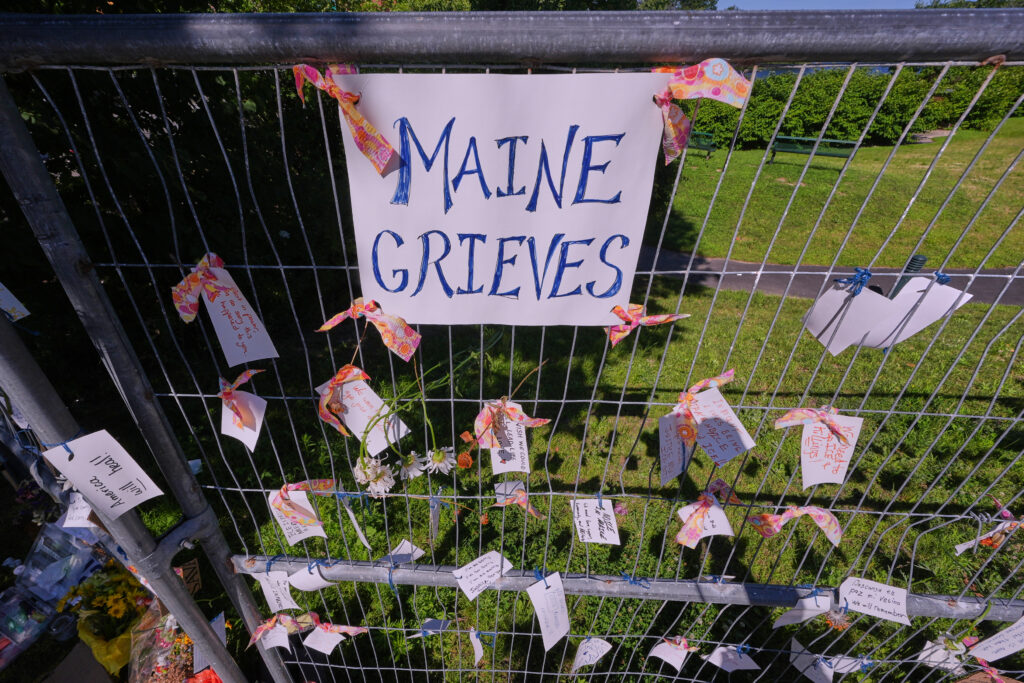
At the time, a spokesperson for the FBI’s Boston field office, which would normally have jurisdiction over criminal investigations in Maine, referred all questions to the offices of DHS’s inspector general and the Maine attorney general. A DHS spokesperson did not respond Friday to requests for updates on investigations into Durán’s shooting.
Even in the case against Castro, the agent charged last week, debate over what to charge him with sparked dissension between some federal prosecutors in the U.S. attorney’s office in Minnesota and top Justice Department officials, according to multiple people familiar with the conflict.
That discord spilled into public view last Tuesday when a top prosecutor on the case conveyed his dismay at the decision to move forward with lesser charges against Castro of lying to federal investigators, rather than a more serious civil rights case.
“This is being directed by the Main Justice and the US Attorney,” Matt Evans wrote in an email to others, according to ProPublica. “I objected in the strongest possible terms and fought it as hard as I could. It wasn’t enough.”
The Justice Department fired Evans the next day, and officials are now weighing whether to charge him with a crime for leaking details of the investigation, The Post has reported. Department officials also maintain they are continuing to weigh additional charges against Castro.
“Obviously, the civil rights charge is the heart and soul of the case,” said one former federal official, who spoke on the condition of anonymity to offer a frank assessment of the case. “If they’re not doing that, then they might as well do nothing.”
Several former DHS officials said the Trump administration’s sluggish handling of the shootings by federal personnel highlights the risk of leaving those probes primarily in the hands of investigators within the same department.
DHS’s inspector general’s office and various offices of professional responsibility in its component agencies have routinely partnered with the Justice Department to prosecute DHS employees accused of wrongdoing in the past.
But those offices are ill-equipped to take the lead on complex investigations of national interest, said Altman, the former executive director of CBP’s Office of Professional Responsibility. They are primarily focused on whether agents have violated DHS’s administrative policies, not criminal law
Since Trump took office in 2025, it has not always been clear which agency is leading probes involving shootings by department personnel. CBP previously would provide the investigating agency on its website, Altman said, and release body-camera footage, along with other detailed information about the incident. That practice stopped in early 2026 after the fatal shootings in Minnesota, he said.
“If somebody wanted to earn my confidence, I would want a level of transparency about who’s investigating, what agencies are investigating, and then also a clear explanation of what occurred to the best of their understanding,” Altman said. “And then I would like those agents and officers to be equipped with body-worn cameras so they can release the video, which provides a higher level of transparency.”
He added, “Given everything that’s happened the past [several] months, I don’t have any confidence at this point.”
Peter Mina, a former top official at DHS’s Office for Civil Rights and Civil Liberties, said the inspector general’s office, which can suffer from a lack of resources, often moves slowly.
“In terms of meaningful and timely investigations, they don’t exactly have the greatest track record for turning stuff around quickly,” Mina said. “If you’re thinking about overall accountability in the system, relying solely on the IG is probably not the best idea.”
In the absence of stronger federal action, many state and local prosecutors have opened their own probes in a bid to ensure timely accountability.
Democrat Sean Teare, the district attorney in Houston, recently said his office is preparing to present evidence to a grand jury about the circumstances surrounding Salgado Araujo’s shooting in July.
State authorities in Minnesota have launched probes into the killings of Good and Pretti and say federal authorities have cooperated reluctantly, if at all. It took a federal lawsuit filed earlier this year to push the FBI into releasing key evidence, such as the car Good was driving at the time she was shot, to local investigators.
In the Sosa-Celis shooting, Mary Moriarty, the top prosecutor in Hennepin County, home to Minneapolis, filed assault charges against Castro in May — a crime that carries a greater penalty under Minnesota law than the more modest federal charges filed last week.
“The level of trust right now in the federal government is just not there,” Moriarty, a Democrat, said in an interview. “If they can’t allow the U.S. attorney’s office to indict [Castro] on civil rights violations, I don’t know why anyone would have any confidence that they would be doing a thorough and competent investigation of the shootings of Renée Good and Alex Pretti.”
Read more This House candidate wants you to know she helped imprison a fellow Democrat
Joyce Sohyun Lee, Perry Stein and Maria Sacchetti contributed to this report.