The White House already has a nuclear-proof facility buried deep underground and built in secret after 9/11.
Read more Pence says U.S.-Canada trade fight adds to affordability concerns for economy
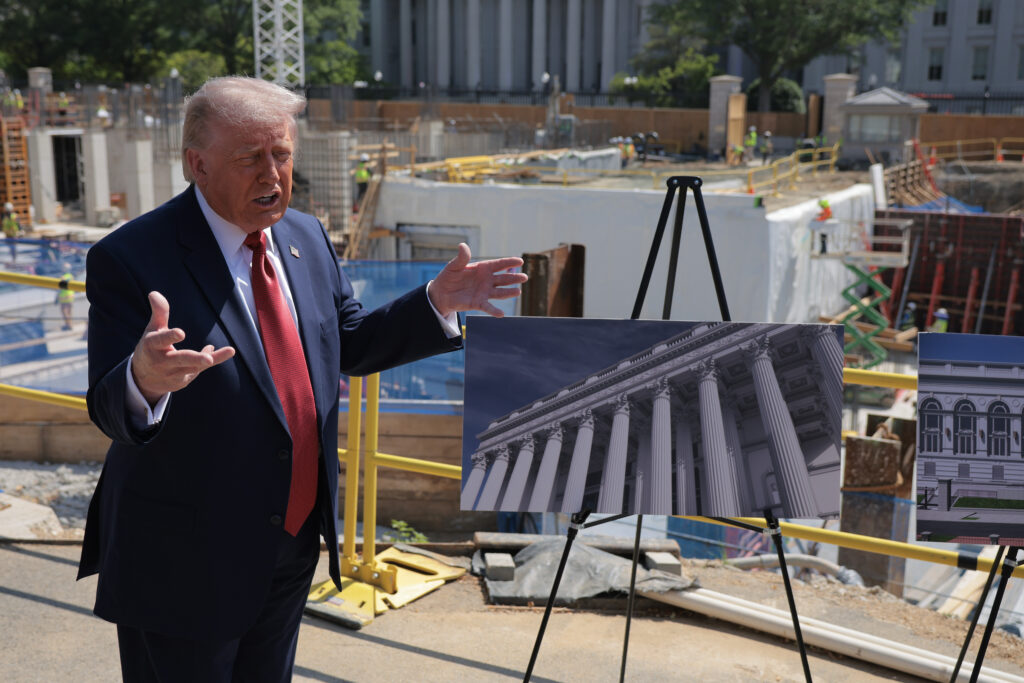
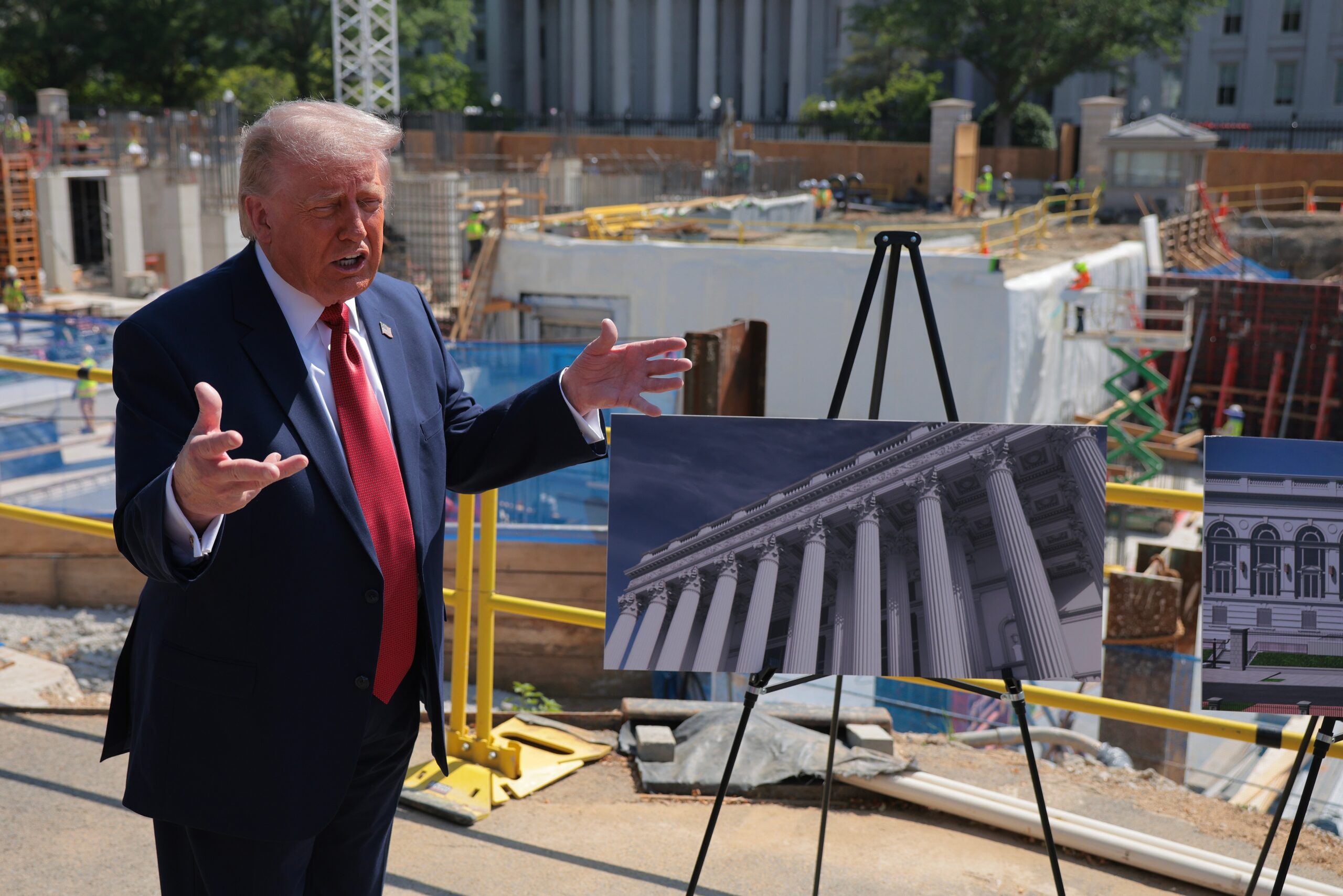
President Donald Trump has claimed that the White House needs a massive new ballroom because it would provide him and future presidents with a secure, hardened facility. But former officials say the argument fails to acknowledge that the presidential complex already has one.
More than a decade ago, federal officials built a highly protected bunker, embedded deep underground, that can shelter the president and his top aides in a national security emergency, according to three former officials.
The facility, which was secretly completed during the Obama administration, can house dozens of people for up to multiple weeks, two former officials said. It’s buried more than 60 feet underneath the White House complex and built to withstand a nuclear blast, two of the officials said, ensuring the president and his team have a secure command center to run the country in times of extreme duress.
The bunker’s existence, the former officials said, undercuts the Trump administration’s emerging legal argument in the ongoing lawsuit over the $600 million ballroom complex’s construction: that the facility must be completed due to its significance for U.S. national security.
The people spoke on the condition of anonymity to discuss elements of the secretive facility, some of which have not been previously reported.
The Washington Post is withholding some details of the bunker and its construction in order to not compromise sensitive White House security protocols.
Asked about Trump’s assertions about the need for a new military complex, the White House defended the project and criticized past officials for discussing existing security structures.
“The East Wing Modernization Project is inextricably tied to the security of the President, the White House grounds and the certain security infrastructure assets,” said White House spokesman Davis Ingle in a statement.
“Recent events such as the foiled attack on the historic UFC Freedom 250 event at the White House proves exactly why the East Wing Modernization Project is severely needed for large scale events, which include drone proof structures and drone ports among other critical security enhancements,” Ingle added.
Chief Justice John G. Roberts Jr. issued an order Friday allowing the Trump administration to continue ballroom work in the short term as the Supreme Court weighs an emergency appeal in a lawsuit challenging whether the construction requires the approval of Congress.
A U.S. district judge and a federal appeals panel have both ordered the administration to stop building the ballroom until lawmakers authorize the project. But the judges carved out an exception: construction on national security needs, such as a planned military complex underneath the ballroom, can continue.
In August court filings supporting the White House’s case, Trump’s top national security team urged the Supreme Court to allow the project to proceed. The construction, they said, comes as the president faces rising threats from foreign adversaries and terrorists, alongside advances in commercial drone technology that could more effectively target White House grounds.
Trump officials argued the ballroom complex would provide essential security upgrades to the president’s residence and help guarantee the U.S. government could continue functioning during a crisis.
White House Deputy Chief of Staff Stephen Miller wrote in his filing that the facility “serves continuity-of-government interests by ensuring that the President and senior national security staff are able to operate from a protected facility during any attack on the nation’s capital.”
Army Secretary Dan Driscoll has repeatedly asserted the ballroom’s construction would help resolve an “emergency” in the White House’s “defensive posture” posed by the spread of military-grade drones.
Driscoll told the Supreme Court in an Aug. 13 filing that completing the ballroom complex was necessary so Trump could run the country in a crisis.
“Securing this reinforced subterranean node guarantees uninterrupted command and control in place,” Driscoll wrote, calling the project “a nondiscretionary prerequisite to ensure the President can maintain continuity of government, uninterrupted operations, and effectively exercise National Command Authority during an attack or global crisis.”
The arguments echoed the Trump administration’s increasing effort to rely on national security as a way to justify the ballroom’s completion.
Trump has taken to calling the project a “military complex” in his public comments and social media posts, and has repeatedly posted AI renderings of drones, troops and even fuel tanker trucks stationed on the future East Wing roof to press his case.
“The ballroom is so much a military component with the drones and the bomb shelters,” Trump told reporters on the South Lawn on Wednesday.
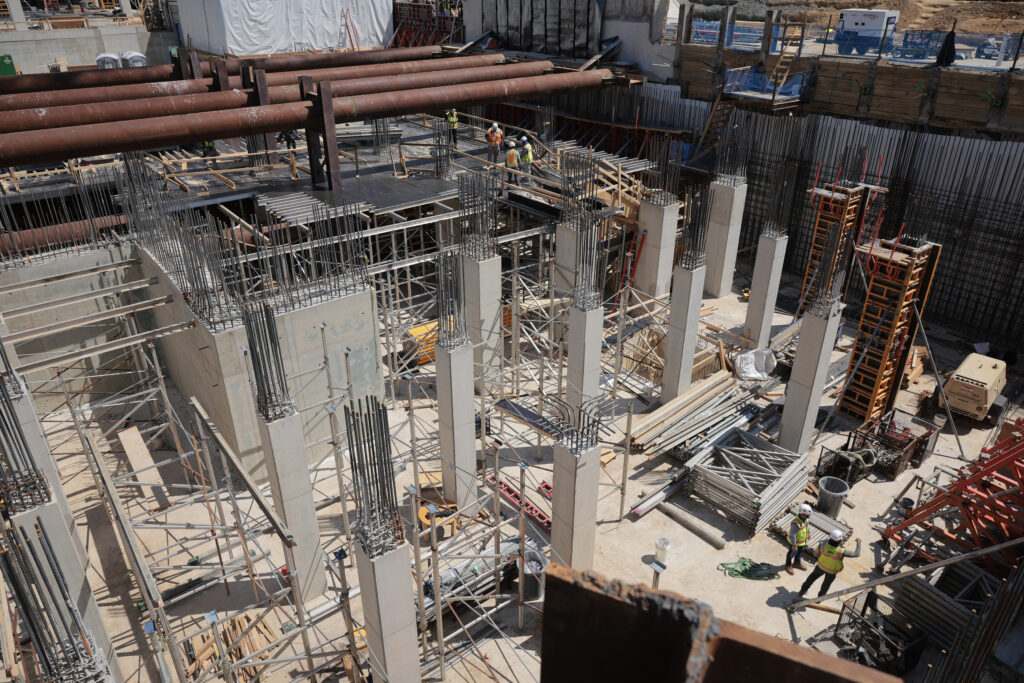
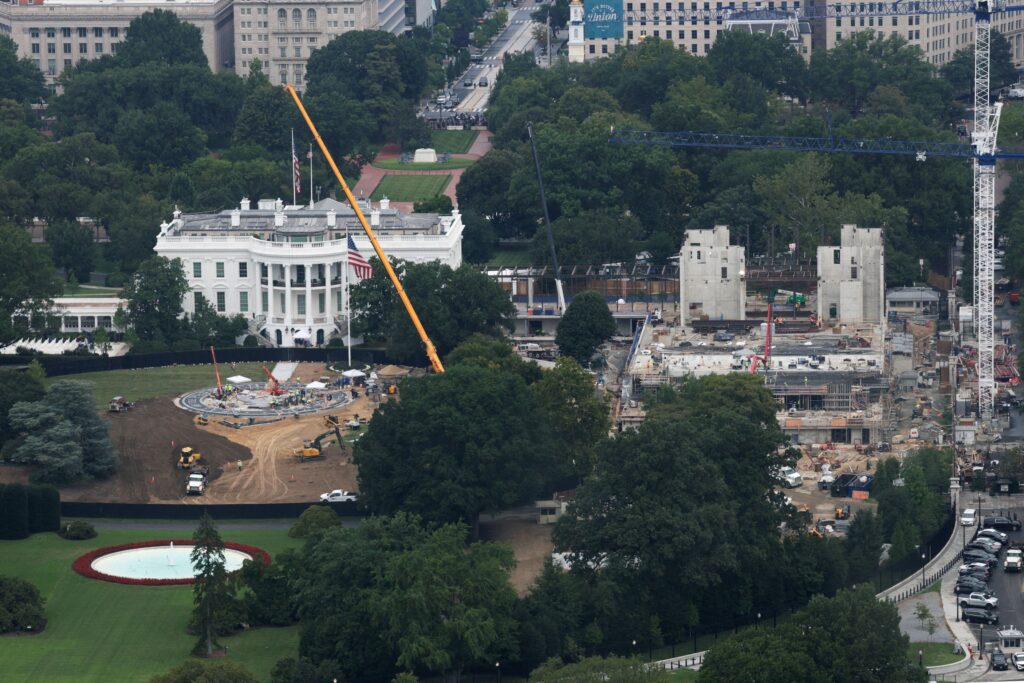
The White House has been racing to complete the project before any court-ordered halt takes effect. Officials told the Supreme Court earlier this month that construction was about “65% complete” and that about 250 workers are working 20 hours per day, seven days a week to quickly finish it.
The structure goes five stories deep into the ground, and much of the underground work has been completed, the administration said. The project is already 70 feet above ground in some places, officials told the Supreme Court.
After asserting in court last year that the secure portion of the project could be carried out independently of the ballroom, the administration has reversed its argument.
Read more Trump has long wanted to lose 15 pounds. Physicians wish he would.
Maj. Gen. Garrett R. Hoffman, director of the White House Military Office, told the Supreme Court that the aboveground ballroom and belowground military facility are “inextricably intertwined elements” and that the new construction “provides extraordinary protection to these spaces that has not been available in the past.”
Officials have also stressed that the concrete, steel and other materials used for both parts of the project are being chosen for national security reasons. In court filings, they detailed how the ballroom’s construction materials are intended to stop bombs, rockets, missiles and even nuclear blasts.
“It is, in a very large way, a ‘safe room’ for the Presidency and the continuity of government,” wrote Joshua Fisher, a senior White House official who is managing the project, in his Supreme Court filing.
The two former officials noted this same argument had been invoked two decades ago to construct the White House’s existing subterranean bunker that is hardened against nuclear blasts and other threats. They questioned why the administration has suggested that the White House lacks such a secure location, including one that could help ensure a functioning government in national security crises.
They also contrasted secretive efforts to build the existing bunker to the current project. Details about the secure White House facility are among the most closely guarded secrets in the U.S. government, the former officials said, and its construction was concealed from many lawmakers, administration officials and the public.
During the new ballroom’s construction, Trump has repeatedly revealed private aspects of the planned East Wing military complex, such as its medical capabilities and “drone port.” And the renovation has occurred in public view, potentially allowing foreign adversaries to spy once-hidden elements of the White House complex — a threat Trump officials invoked in their court filings to urge that construction continue.
Trump has separately accused the National Trust for Historic Preservation, the organization that sued to halt the ballroom’s construction, of being “treasonists.” He has claimed that the nonprofit group, which Congress charged with helping preserve historic buildings, was asked not to file a lawsuit for national security reasons.
“I said the problem with the suit — I told them this — is that we have many military things in this ballroom, and ideally, they shouldn’t be revealed,” Trump said in the Oval Office on Aug. 17. “But now they are revealed, so the world knows about it.”
The National Trust’s filings have not revealed any new information about the ballroom project that Trump or the administration did not previously disclose.
National Trust officials also told The Post that they were never briefed on the bunker, that they were not asked by Trump or the White House to not file a lawsuit, and that they sued to halt the ballroom because they believe the president does not have the authority to unilaterally make wholesale changes to the historic White House grounds.
Trump officials did share classified information directly with U.S. District Judge Richard J. Leon as he weighed the National Trust’s arguments, beginning last year. Leon ultimately ordered a halt to ballroom construction but said the administration could keep working on the underground military complex.
The White House’s protections for presidents have evolved as threats have increased.
For decades, the White House bunker was limited to a small facility located in the basement of the East Wing, built during World War II to help protect President Franklin D. Roosevelt in case of an emergency. That site — known as the Presidential Emergency Operations Center, or PEOC — is where the Secret Service hurried Vice President Dick Cheney and first lady Laura Bush during the 9/11 terrorist attacks.
The attacks of Sept. 11 prompted the White House to begin work on a much more secure facility, said journalist Ronald Kessler, who referenced construction of the bunker in his 2018 book, “The Trump White House: Changing the Rules of the Game.” The upgraded facility, he wrote, was completed during the Obama administration, had a months-long food supply and was equipped with its own self-contained airflow system.
“It’s a serious issue. What could be more important than maintaining continuity of government?” said Kessler, who supports the Trump administration’s efforts to expand the White House’s secure facilities through the ballroom project.
Kessler and the former officials who spoke with The Post acknowledged the necessity of providing the president with a secure facility amid ongoing serious threats. Trump has faced multiple assassination attempts, the latest of which — from Iran earlier in the summer — prompted the Secret Service to stage an elaborate ruse that ended with the president flying back from the NATO summit in Ankara on a separate aircraft, apart from Air Force One.
Still, the two former officials questioned the White House’s public case that the existing architecture is insufficiently hardened. The existing site, the two people said, is buried deep into the Washington bedrock, accessible by a private elevator and built specifically to protect the president from a vast array of threats, including an attack from a weapon of mass destruction.
Its specifications, the former officials said, include many of the safety protocols the White House is describing in an attempt to justify the new ballroom complex.
The former officials also warned that the administration’s abrupt decision to demolish the East Wing, and expose what sat underneath it, could have itself created national security risks. The PEOC, two former officials said, sat only about 20 feet under the East Wing and may have been destroyed or damaged in the construction process.
Fisher, the White House official managing the project, said that he was worried that halting construction now could unwind nearly a year of work.
“Pausing work now, as the district court has ordered, will jeopardize everything we have done so far,” Fisher told the Supreme Court. “Depending on how long that freeze persists, it might force us to tear down everything we have done as a degraded mass, to allow for whatever comes next — something that would be disruptive and extremely dangerous.”
Similar arguments have not swayed lower-court judges.
Leon, the district judge who first ordered the administration in March to halt its ballroom construction, chastised Trump officials for arguing that they needed to complete the project for safety and security reasons.
“Here is the bottom line,” Leon wrote in a follow-up ruling in April. “Defendants themselves forged ahead and created this ‘coordinated and managed safety hazard’ on White House grounds.”
Read more IndyCar drivers prepare to zoom 185 mph on D.C. streets in Trump-hosted race