An eerie silence, empty halls and security guards marked the end, at least for now, of a once-vibrant public space.
Read more Jayden Daniels’s rhythm and more X-factors for Commanders vs. Cowboys
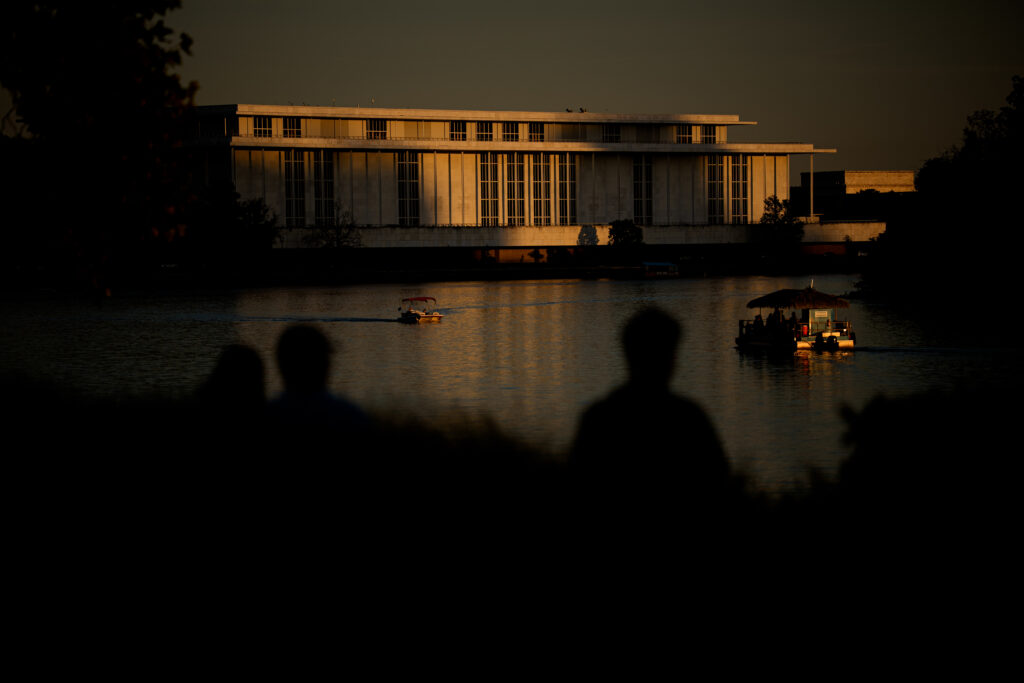
On the last day the public was allowed into the John F. Kennedy Center for the Performing Arts, its board of trustees was meeting over its closing, President Donald Trump was blasting the federal judge who had blocked his demands again, and a group of young students were shuffling through one last tour.
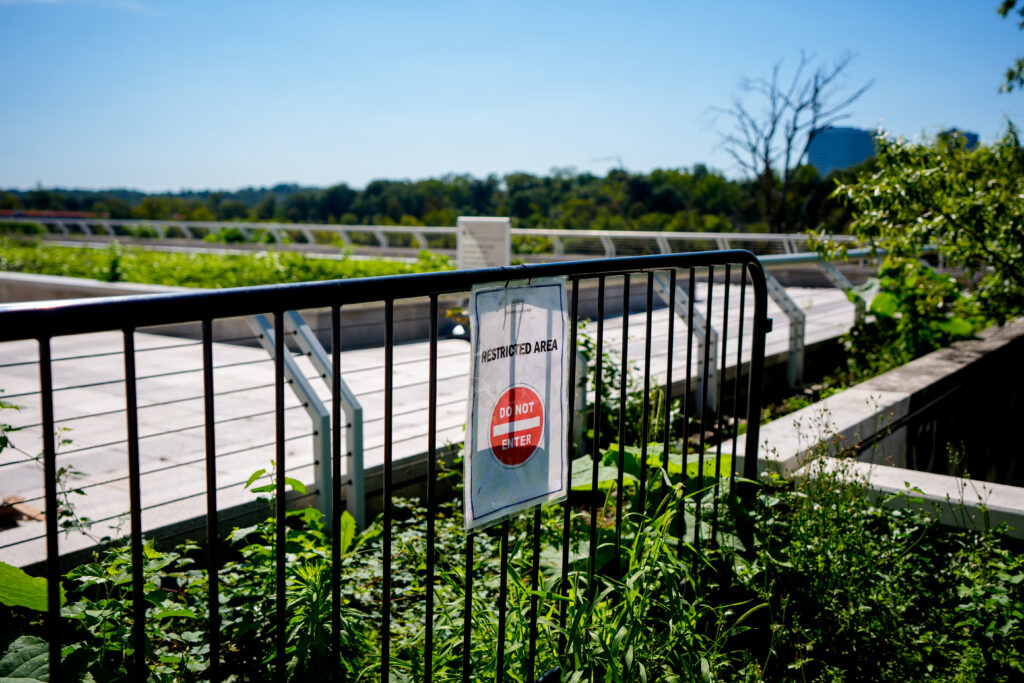
The cavernous complex was nearly empty on Tuesday. Security guards were stationed by areas already cordoned off with red tape and “Do Not Enter” signs, including near where center officials said a portion of ceiling had fallen during storms and scattered debris on the floor. The guards restricted the area as if it were an exhibit, which officials have said it is — proof that the public must be protected from the Kennedy Center and its disrepair.
When a photographer tried to shoot the area where the plaster fell, and where dressed-up crowds had milled for years until the tinkling chimes signaled the orchestra was about to begin, a guard yelled: “No photos! Step away.”
More than half of each floor had been closed. The gift shop was papered over. The box office was open, but there were no tickets to upcoming performances to sell.
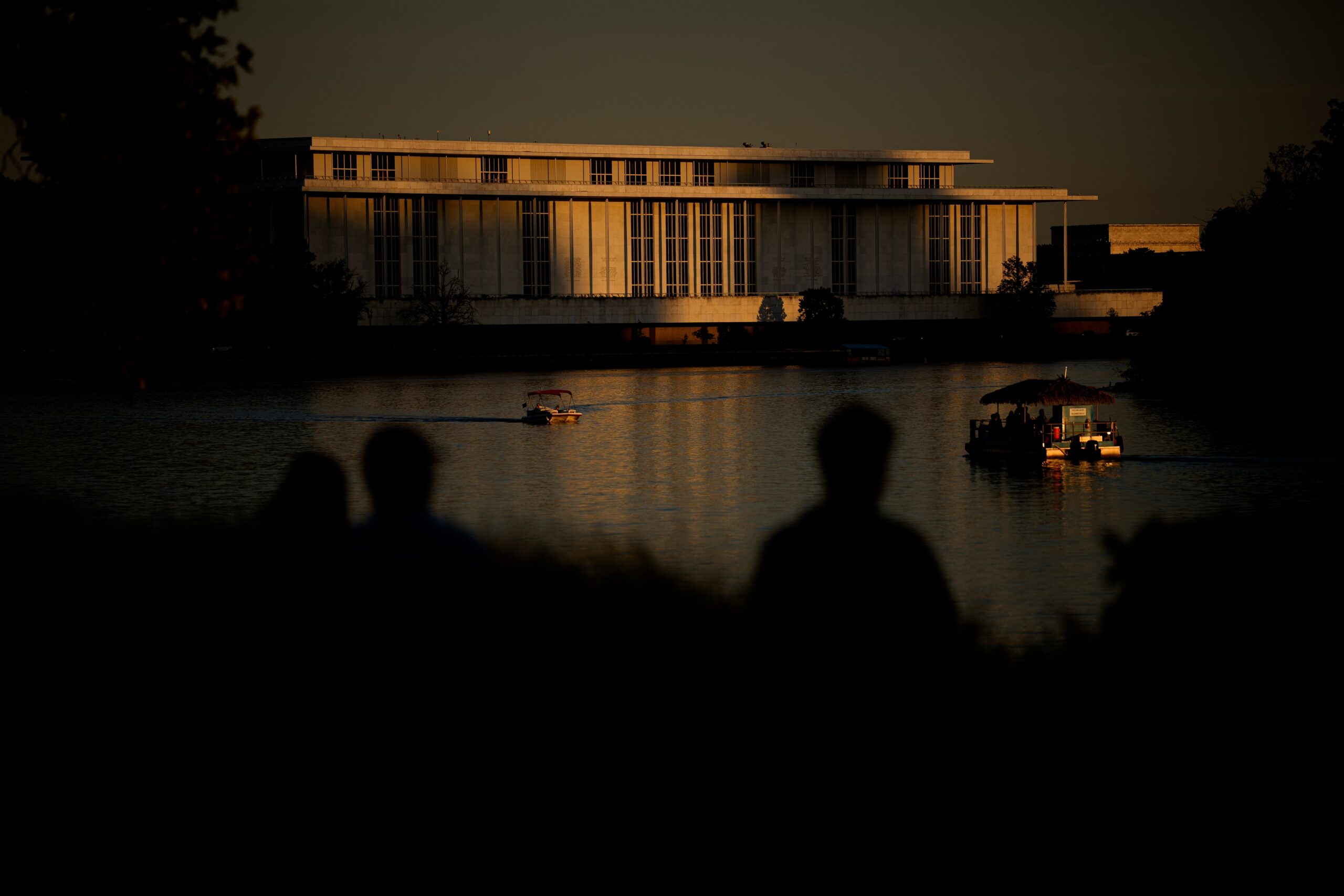
The center’s slow demise has continued since Trump and his handpicked board took over operations last year, and audiences and revenue precipitously declined. Yesterday, the president threatened that the center’s renovation will not happen at all unless his name goes onto the building created as a living memorial to President John F. Kennedy, who was assassinated in 1963. That change has been continually blocked in court.
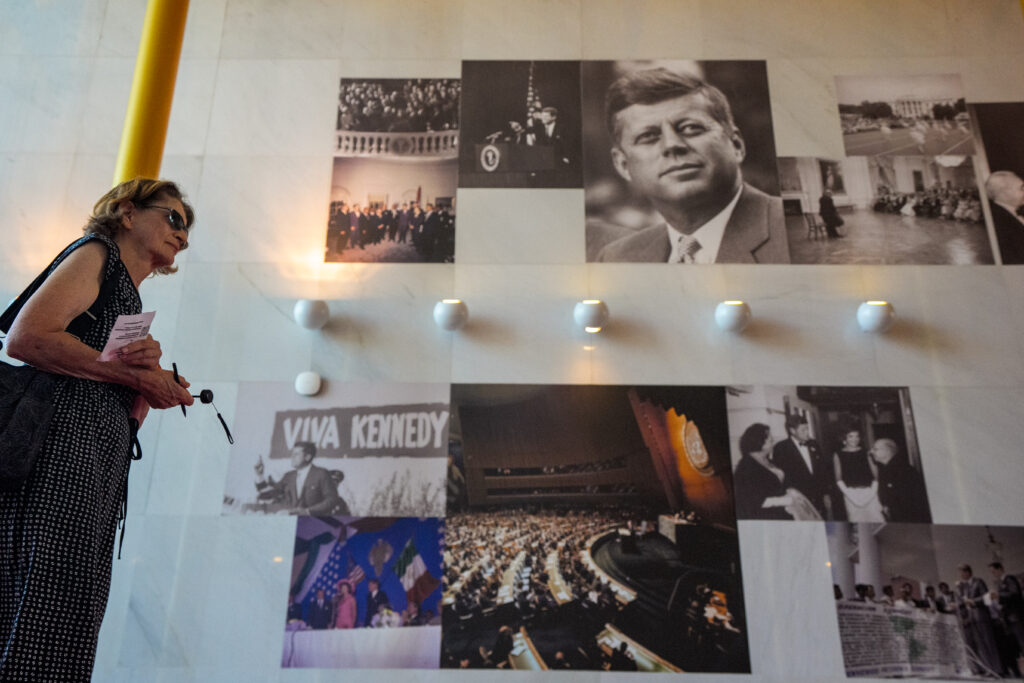
In the dwindling open areas, art was missing, presumably removed. A series of seven John Coburn tapestries were gone, just their short descriptive placards left on the bare walls. At the “John F. Kennedy: Arts and Ideals” exhibit, a screen malfunctioned until it finally settled into a flickering set of red and green rectangles. The reproductions of Norman Rockwell’s “Peace Corps” and Robert Rauschenberg’s “Retroactive I” were still hanging at the exhibit’s entrance and exit.
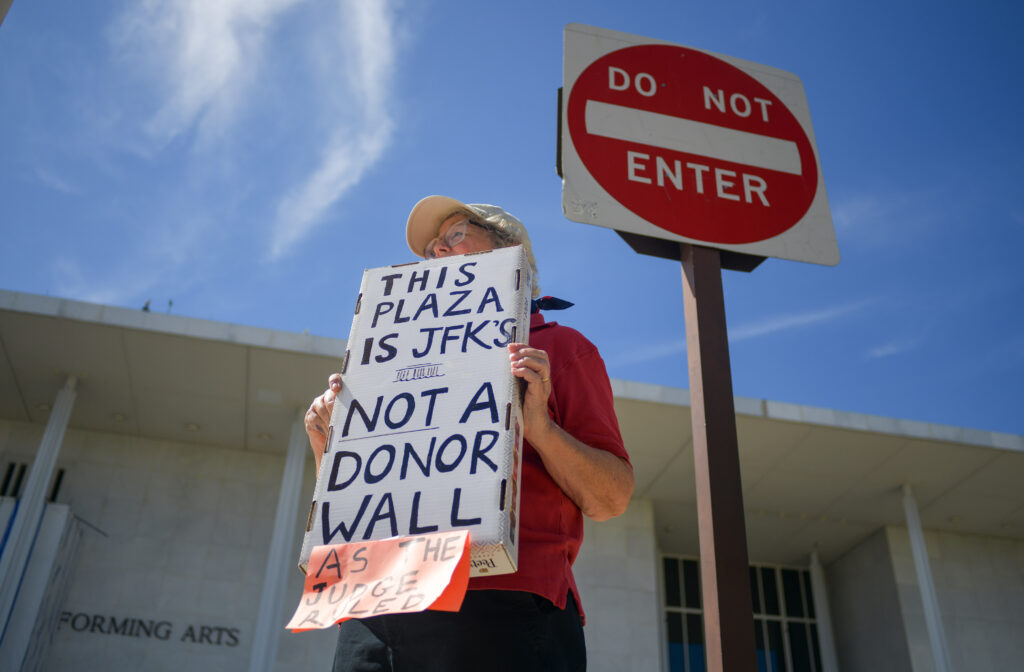
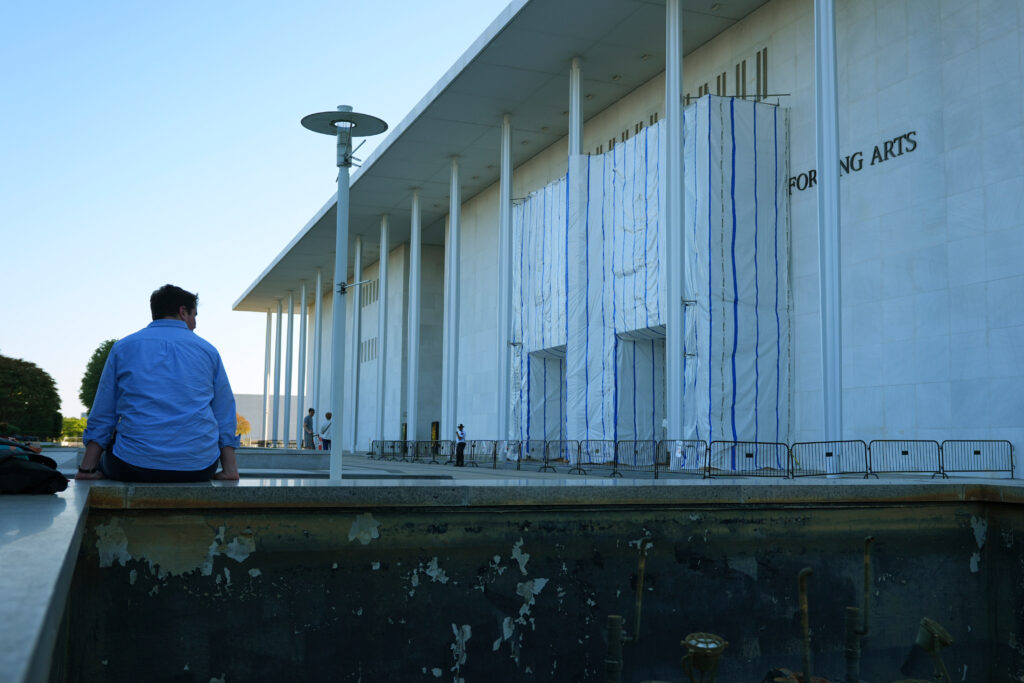
Outside, the fountains were dry. Stacked sandbags covered the hole where the 24-foot sculpture “Blue” once was. Laura Bligh was outside with her sign, keeping vigil as usual. She is a retired arts administrator for the Kennedy Center, and when Hands Off the Arts began organizing protests in the fall, she joined in.
“It seems like the least you can do is show up,” she said.
The tour guides, usually full of enthusiasm for the center’s history, its purpose and its reach, seemed solemn. One wandered outside and sat down on a bench. She said she wasn’t allowed to speak to the press, but acknowledged, as she got up and walked away, that she was very sad.
The students who had gotten the last tour shuffled back out of the building, boarded their school buses and left.
Read more Senate Republicans manage to advance farm bill with McConnell’s return
Back inside, at the visitors center, two volunteers said they could not talk to the only visitors, who were journalists. They asked, however, if the journalists would let them know what the board decided about closing the center. They bent back over their phones.
A few minutes later, around 2:15 p.m., the cluster of journalists started to buzz. The decision was out. The Kennedy Center would shut down.
Meanwhile, Kennedy’s “We choose to go to the Moon” speech was still playing on loop upstairs. “We meet in an hour of change and challenge, in a decade of hope and fear, in an age of both knowledge and ignorance,” his voice rang through the deserted second floor, preserved from the commotion outside.
It was 4:30 p.m. when an emergency alert sounded across the building, announcing the center was now closed. Security guards sprang into action, escorting remaining guests to the exits. They walked past the photographs of the president, first lady, vice president, and second lady and out the sliding doors. Digital signs, which usually showcase upcoming shows, displayed the same closure message against dark red.
Through the glass, staff members could be seen hugging.
Soon, all non-security personnel were also told to leave. Staff carried out boxes and reusable grocery bags of belongings.
A half-hour later, there was a bout of confusion. Security guards at the Hall of Nations opened the doors back up, while security at the Hall of States were still blocking doors at the other entrance. “We didn’t close, we just had something happen,” one guard said. “We’re open.” Another security guard asked into his walkie-talkie whether the doors could be opened. He received no response. “We’ve had some conflicting orders,” he said.
But it didn’t seem to matter whether the center was officially open or closed. All the visitors had left, and so had many of the volunteers. The building itself was coming undone. And by 6 p.m., the doors were finally locked.
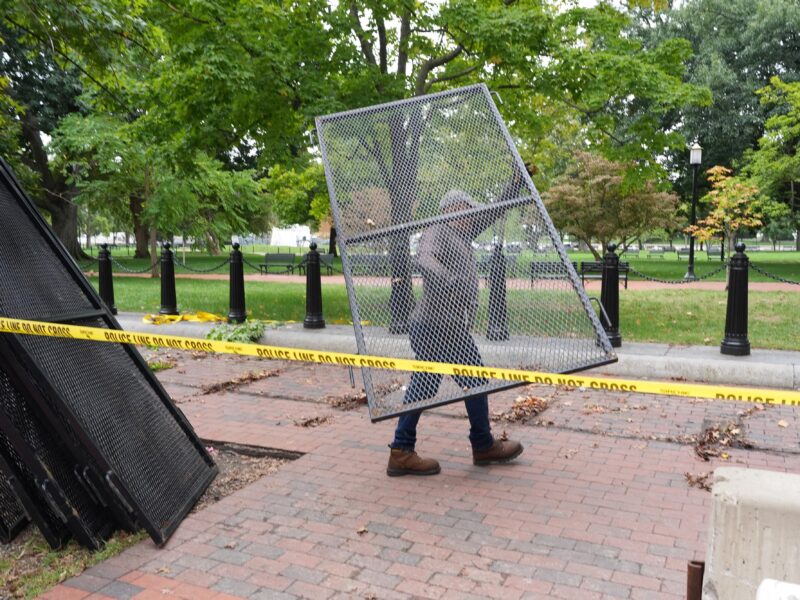
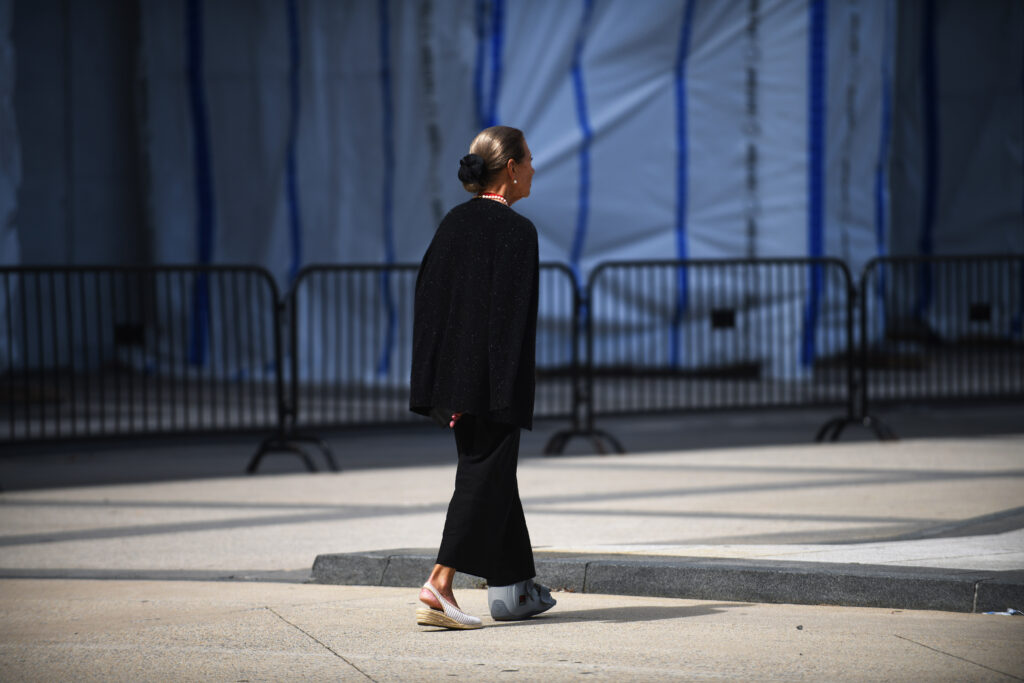
Bligh went home, and on Wednesday, she returned with her signs and resumed her vigil. Guard rails went up all around the exterior.
“The building was closed in spite of the fact that there’s a court order forbidding them to close,” she said. “They are so flagrantly defying the law, and I’m very sad that something precious is being destroyed.”
Read more Iowa’s Republican Senate candidate not attending JD Vance event