Democrats’ chances of flipping the Senate have grown in recent months as President Donald Trump’s unpopularity, as well as frustration with the economy, push voters away from Republicans.
Read more A past FBI inquiry complicates Susan Collins’s campaign message in Maine
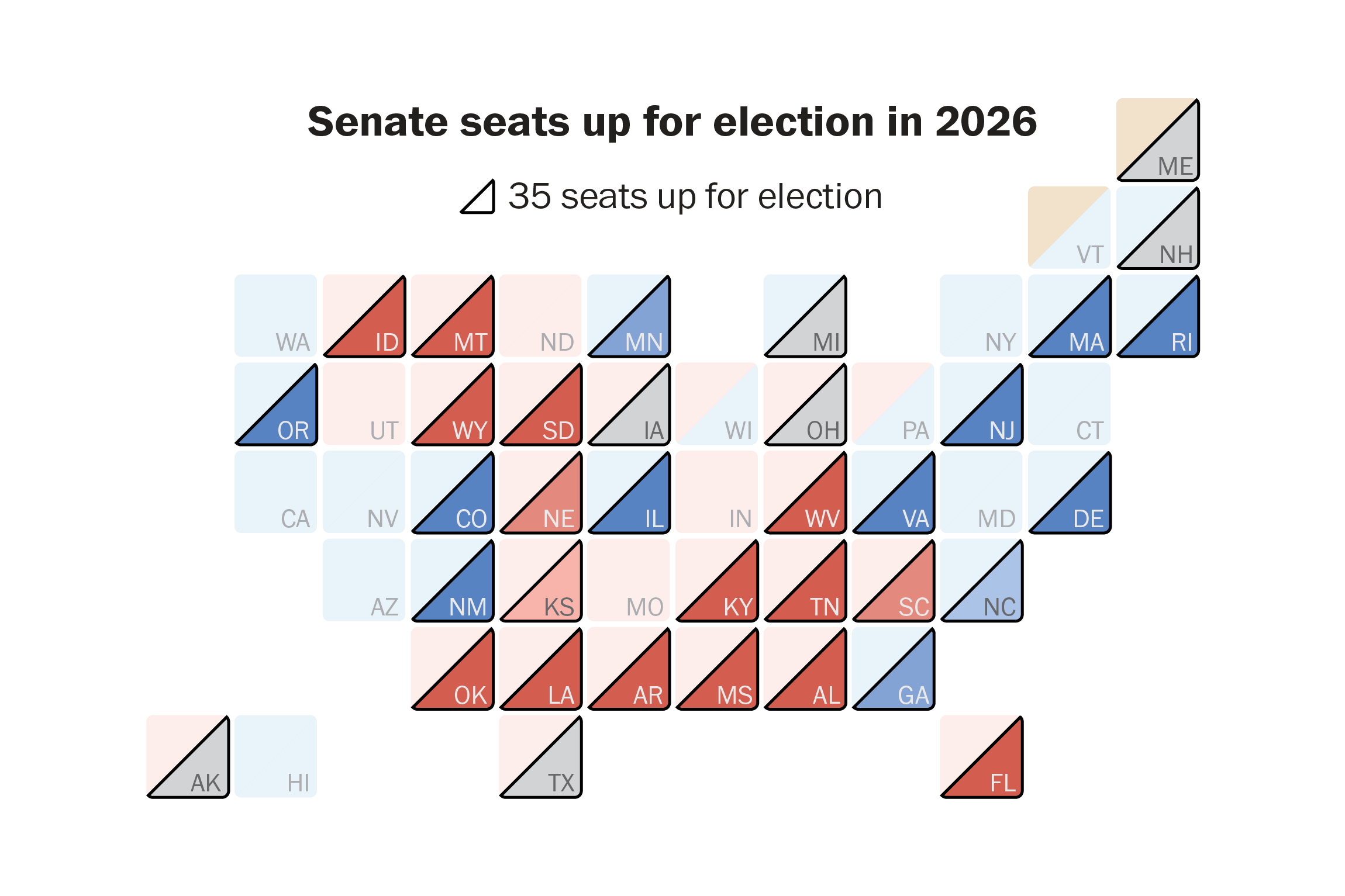
Democrats have been favored to seize control of the House, which has a narrow Republican majority. The math in the Senate is more daunting: Democrats control 47 seats to Republicans’ 53.
The clearest path to a majority requires Democrats to retain all of their seats and win four GOP-controlled seats, including at least two in states President Donald Trump won by double digits in 2024. That path, which once felt like a long shot, now seems feasible.
A Wednesday update from the Cook Political Report, a nonpartisan election analysis site, described control of the Senate as “a true coin flip, with viable paths for both parties to win or keep a majority.” Some other analysts have concluded the map is even more favorable to Democrats.
The political environment has shifted enough in recent months that some Republicans have suggested that the GOP should scale back spending in Georgia and North Carolina, where Trump won in 2024 but the party’s nominees have lagged in polls.
Here are the races to watch as the battle for the Senate grows increasingly competitive.
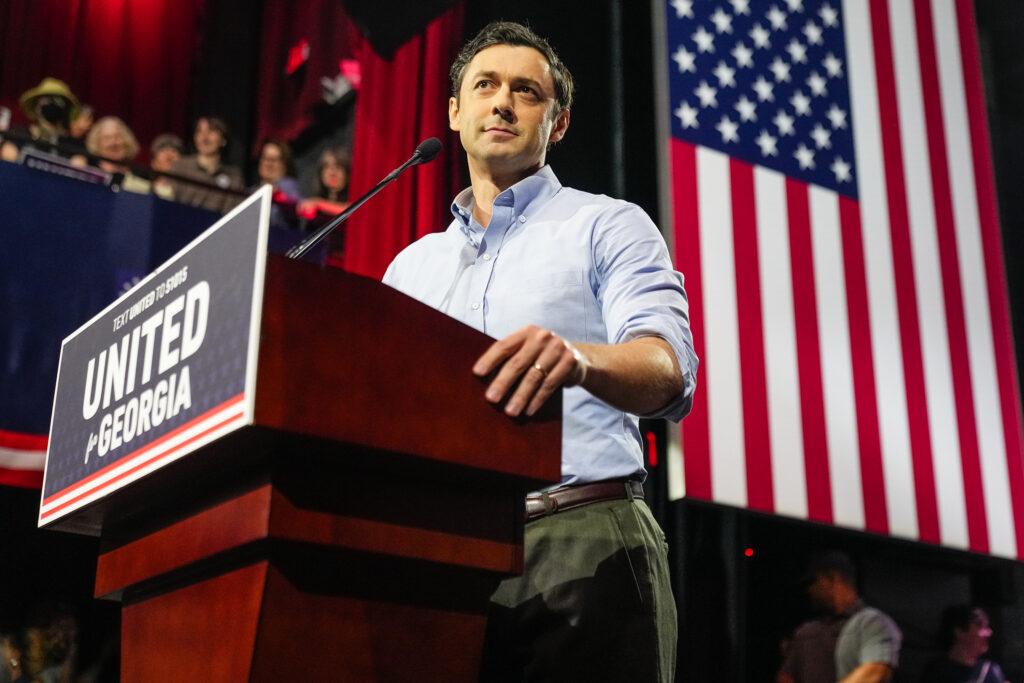
Sen. Jon Ossoff is now heavily favored to win reelection in Georgia in a race which Cook rates as “Likely Democratic.” Republicans initially viewed the race as one of their leading opportunities to gain a seat, but controversies involving the GOP nominee, Rep. Mike Collins, have helped Ossoff pull away.
Iowa and Texas, two states that backed Trump by a double-digit margin in 2024, are now in the toss-up column.
James Talarico, a state representative, has led Texas Attorney General Ken Paxton in many polls as he tries to become the first Democrat to win a statewide election in Texas this century. After Paxton defeated Sen. John Cornyn in the Republican primary, the race exploded into an expensive, high-profile contest. Scandals have eroded Paxton’s popularity, while Democrats hope that Talarico’s faith-based politics has broad appeal and can overcome criticism that he’s too socially liberal.

Josh Turek, an Iowa state representative and former Paralympic athlete, is tapping voters’ frustrations with the effects of Trump’s tariffs to try to win crossover support. He faces Rep. Ashley Hinson, a former television anchor viewed by national Republicans as a strong candidate, for the seat being vacated by retiring Republican Joni Ernst.
Kansas, a state which Trump won by 16 percentage points in 2024, has emerged as a surprising Democratic target in recent months. Although incumbent Sen. Roger Marshall is still favored, the challenge from Adam Hamilton, a political outsider and prominent pastor, has concerned some Republicans.
In South Carolina, Republican Sen. Darline Graham, who was appointed after her brother, Lindsey Graham, died in July, is favored to defeat Democratic pediatrician Annie Andrews. Graham’s weaknesses include a lack of political experience and skepticism about her right-wing credentials from some conservatives who preferred her opponents in the Republican primary.
Read more Inside the alleged plot to attack Trump’s birthday UFC fight
New Hampshire, a state Kamala Harris won in 2024, is one of Republicans’ best chances of flipping a Democratic seat. Polls have shown a close race between Democratic Rep. Chris Pappas and Republican John Sununu, who served in the Senate from 2003 to 2009 and is the son of former governor John H. Sununu and brother to popular former governor Chris Sununu. They are competing to succeed retiring Sen. Jeanne Shaheen (D).
Republicans plan to spend heavily in the state to support Sununu, who has distanced himself from Trump.
Michigan’s race presents another opportunity for Republicans to flip a Democratic-controlled seat, as Republicans have criticized the Democratic nominee, Abdul El-Sayed, as being too far to the left. El-Sayed has sought to unify Michigan Democrats since winning a bruising primary against Rep. Haley Stevens. A recent Washington Post-Schar School poll showed him with a narrow edge but lagging the Democratic nominee for governor among Black voters, independents and voters who say they are unwilling to support a Muslim for president.
Republicans describe their nominee, former eight-term congressman Mike Rogers, as a formidable candidate who outperformed Trump when he narrowly lost a 2024 campaign for Senate. Democrats have sought to tie him to Trump, whose popularity remains low in the state.
In North Carolina, Gov. Roy Cooper, a popular Democrat, is favored over former Republican National Committee chair Michael Whatley in a race that looks to be Democrats’ likeliest flip. The swing state’s race has been a top target of Democrats since incumbent Sen. Thom Tillis (R) announced his retirement in 2025. Both parties have spent heavily on the race, but Cooper has consistently led in public polling.
In Alaska, Democrats are hopeful that former congresswoman Mary Peltola, a moderate, can oust Sen. Dan S. Sullivan (R). Peltola’s path to victory in the deep red state might rely upon frustration with high diesel prices and the presence of three other Republicans, including retired teacher Dan J. Sullivan, on the state’s ranked-choice election ballot.
Maine’s race has undergone a significant shake-up in recent months after former nominee Graham Platner withdrew following an allegation of sexual assault. Troy Jackson, a progressive logger and former state Senate president who was nominated to replace Platner at a convention, is hoping to unseat longtime Sen. Susan Collins (R), who has long cultivated a moderate image to garner crossover support.
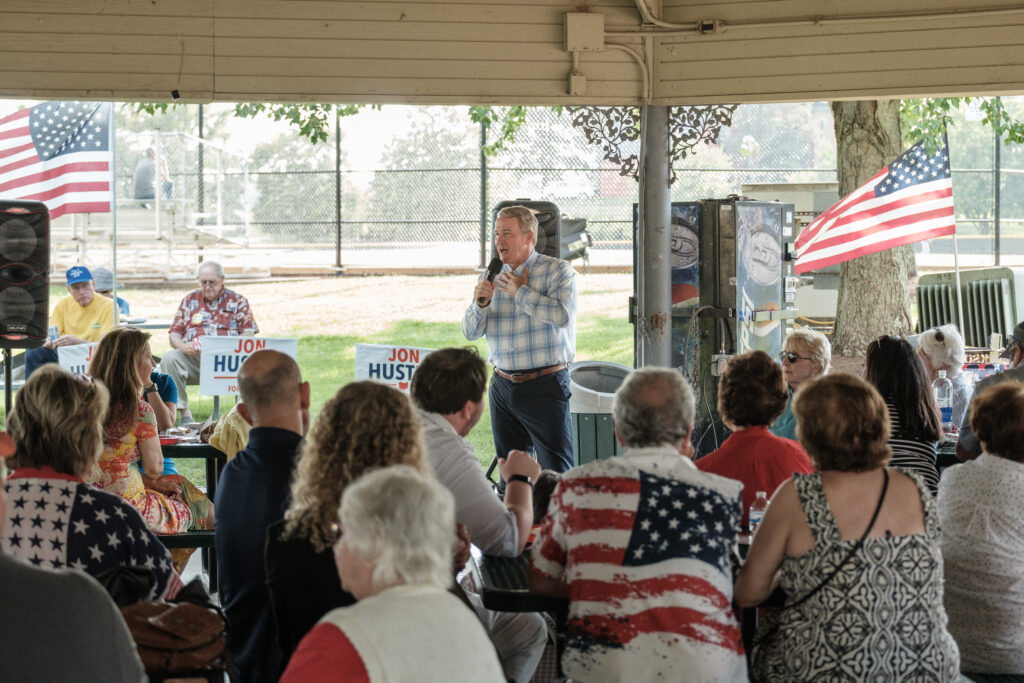
In Ohio, former longtime senator Sherrod Brown (D) faces Republican incumbent Sen. Jon Husted, who was appointed in 2025 after his predecessor, JD Vance, became vice president. Although Brown lost reelection by four percentage points in 2024 while Trump won the state by a double-digit margin, analysts believe that Trump’s lagging popularity could fuel Brown’s comeback.
Cook rates Democrats and Republicans, respectively, as “likely” to hold their seats in Minnesota and Nebraska, but their victories are not assured.
In Nebraska, independent Dan Osborn, a union leader who says he would not caucus with either Democrats or Republicans in the Senate, faces Sen. Pete Ricketts (R), the son of billionaire TD Ameritrade founder Joe Ricketts. Osborn ran for Senate in 2024 and overperformed in losing by seven percentage points while Trump won by 20 percentage points. Democrats are not fielding a candidate, and the state party endorsed Osborn.
Minnesota Lt. Gov. Peggy Flanagan (D) faces former football journalist Michele Tafoya, a Republican, in a state Harris won by four percentage points. Flanagan defeated a more moderate candidate in a bruising primary. Republicans hope that voters unhappy with the outgoing Democratic governor, Tim Walz, will punish Flanagan and that Tafoya will benefit from her high-profile career as a sideline reporter.
Read more Trump heads to Texas-Tennessee football game as midterm rallies slide
Theodoric Meyer contributed reporting to this article.