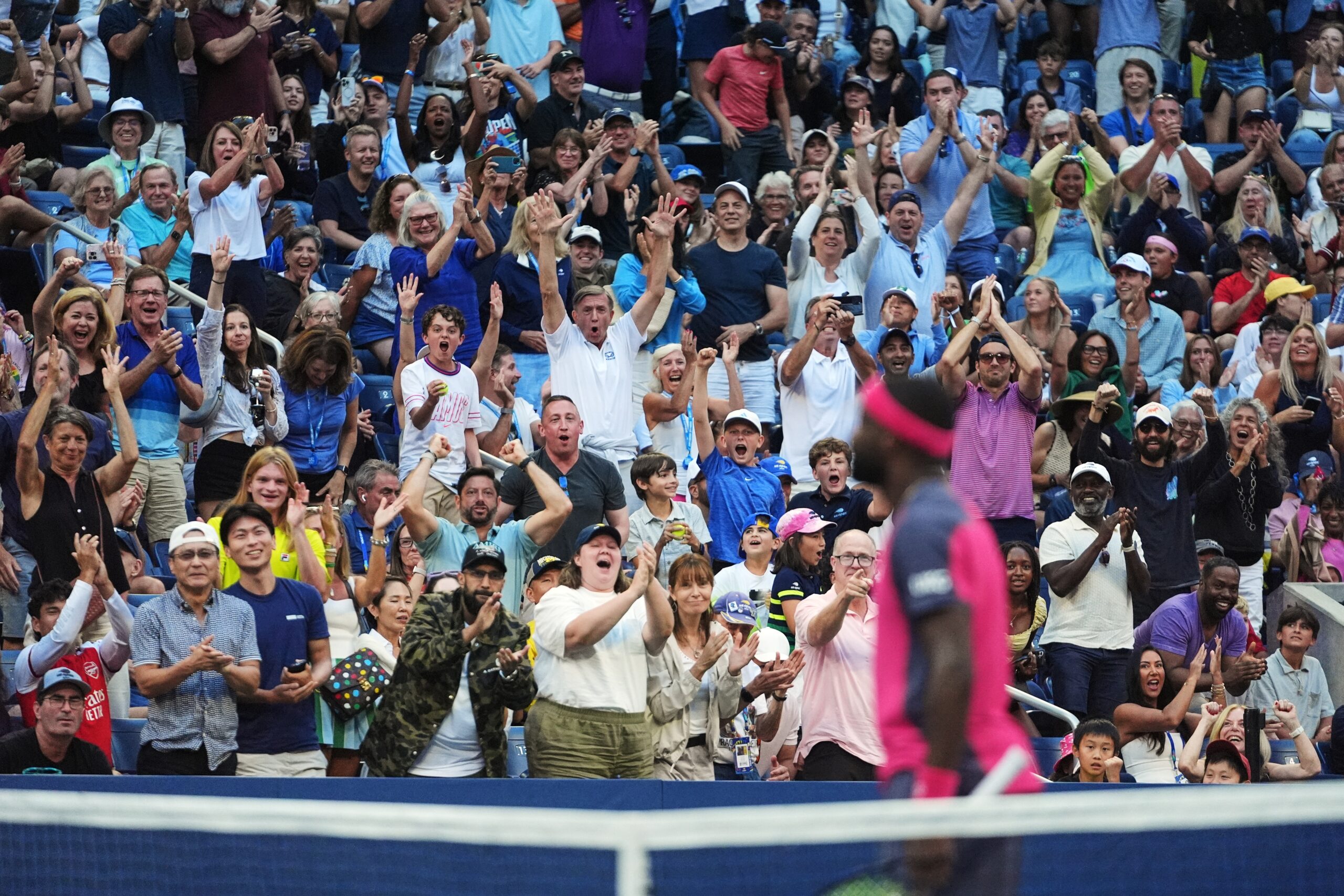
NEW YORK — One night last week, Gael Monfils, a 40-year-old showman of a tennis player from Paris, was holding court at Louis Armstrong Stadium, enthralling a raucous crowd on the U.S. Open’s second-biggest but first-coolest stage.
Read more A marathon U.S. Open day capped by an epic finish … at 3:30 a.m.
Closing in on retirement, Monfils was probably competing at his last Grand Slam. Two nights earlier, he had dazzled Armstrong with a comeback that featured his signature leaping backhand. After that match, the crowd serenaded him with “Happy Birthday.”
Now, playing Learner Tien, a rising 20-year-old American, Monfils amped up the crowd, howling with glee before his strikes even landed, coaxing the roars with a finger to his ear. They chanted his name before serves, gasped in unison during tense rallies and groaned with collective deflation at every thrilling near miss — player and fan unified in savoring a shared joy for the last time. Only as the server toed the line did the fans fall into a reverential hush.
Most of them, anyway.
Sounds are essential to tennis. The rhythmic thumps mesmerize fans and give players critical information to track an opponent’s shot. A player’s exertion comes through in grunts, their personality laid bare in shouts of triumph or despair. Umpires ask crowds to be quiet during serves and rallies.
But at the U.S. Open, the closest you can hope for is a steady murmur. And every year, the murmur seems to get louder.
Monfils bounced the ball.
“What are you investing in?” A trio of men in their 40s carried on their discussion in the lower bowl, audible from rows away.
Monfils lobbed the ball.
“All sorts of s—, man.”
Monfils smashed the ball over the net.
“Did you ski this year?”
They talked through the rally, paused to let the crowd’s roar pass, then picked back up once the next hush fell. With Monfils down three games to five, staring down his final few points, one of the men stood to go to the bathroom, inching down the row while necks craned to follow one of the last rallies of Monfils’s career.
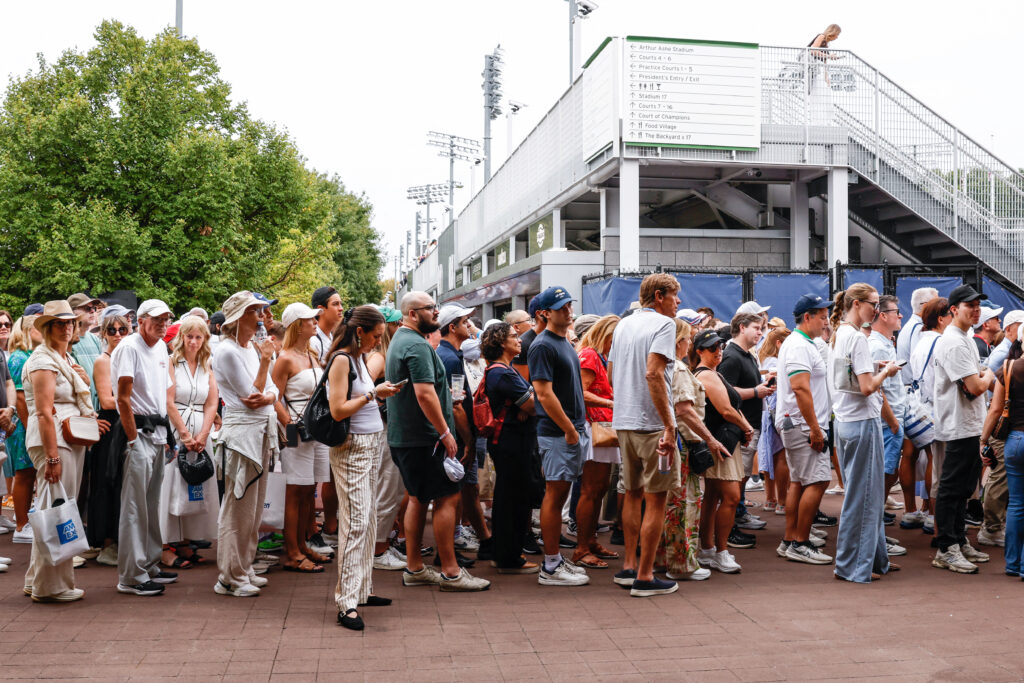
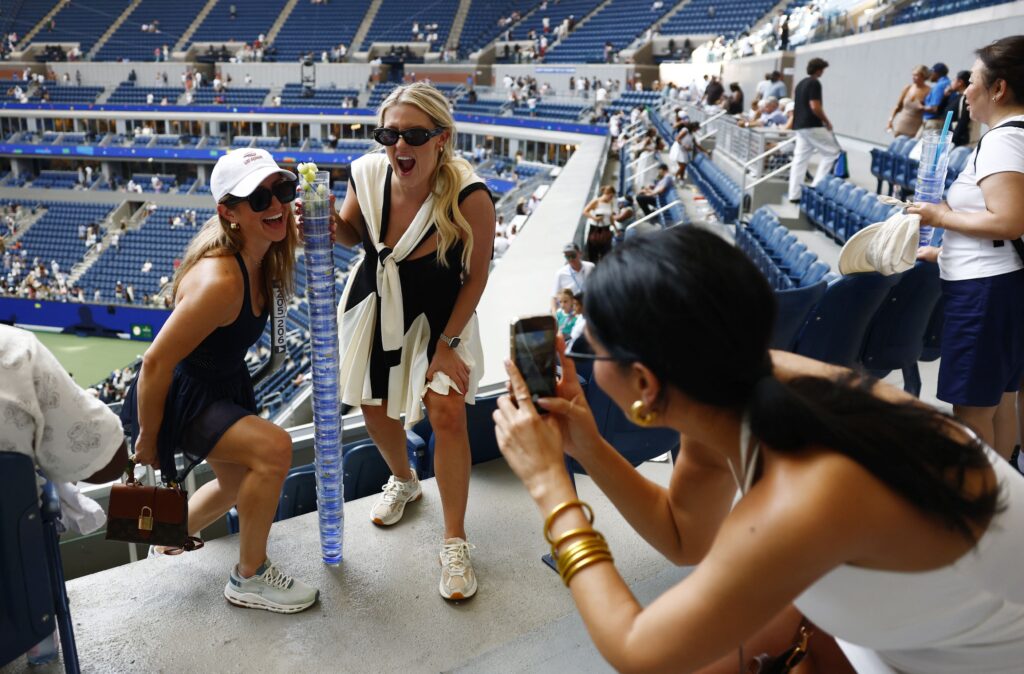
As the U.S. Open has soared in popularity, a once-niche event for tennis die-hards has transformed into New York’s hottest summer festival, where even people uninterested in sports can enjoy a few hours with friends eating high-end food from Fuku or Red Hook Lobster Pound, shopping for exclusive merchandise at Lululemon and Nike, and signing up for brand-activation giveaways from La Roche-Posay and JPMorgan Chase.
Entire days are sponsored: HBCU Day and Pride Day sharing a week with Emirates Day and Ticketmaster Day. The U.S. Open sends notifications for match previews brought to you by Kalshi, the tournament’s official prediction-market partner. Countless social media posts offer tips on how to dress and what to eat.
The result is a swirl of noisy culture clashes that often test a chair umpire’s patience, spurring stern orders to quiet down or find your seat.
Three friends from Texas made their first trip to the U.S. Open this summer after hearing about it on social media for years. “The sport, the people, the outfits,” said Ashley Gomez, a 27-year-old nurse. Her friend, Mina Idris, a 27-year-old who grew up playing tennis and watching it with her dad, was hoping to try the famous $100 chicken nuggets with caviar, but the shop had sold out by midafternoon. She had the lobster roll instead.
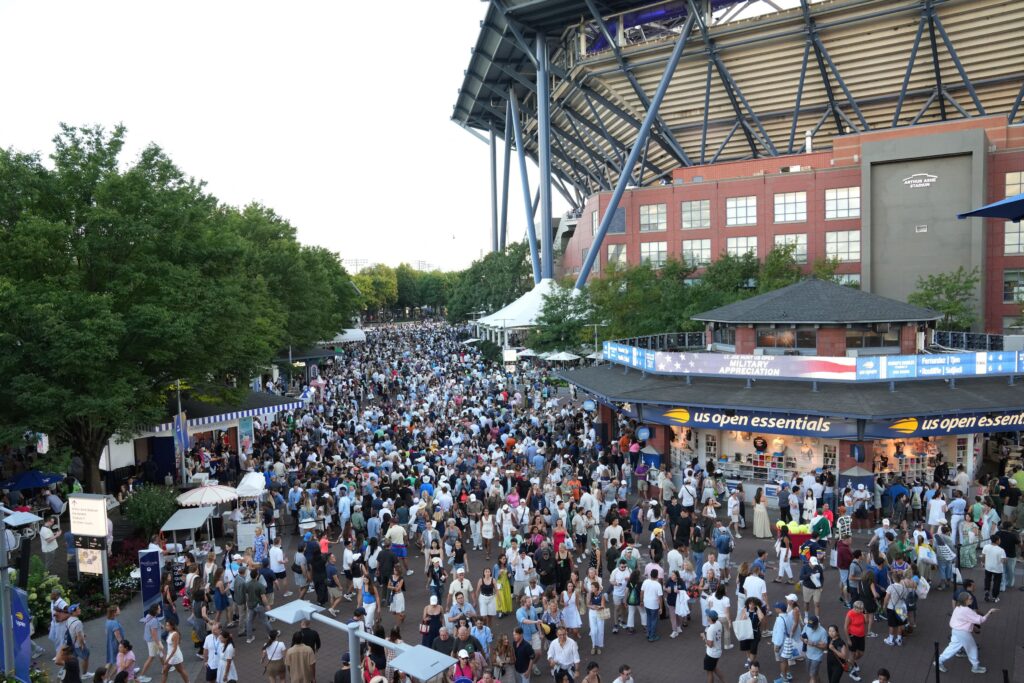
Abdoul Kane, a 71-year-old retired United Nations translator from Brooklyn, started attending the U.S. Open in the late 1990s, back when “half the people on the grounds today were not here,” he said. He noticed the tournament crowd changing about four years ago. Tennis (and golf, and Pokémon, and …) had grown in popularity during the pandemic. After the world opened back up, people converged at the U.S. Open in rising numbers. Tournament attendance reached a record high in 2022, at around 776,000, following two decades hovering between 600,000 and 750,000. By 2025, that number was above 900,000.
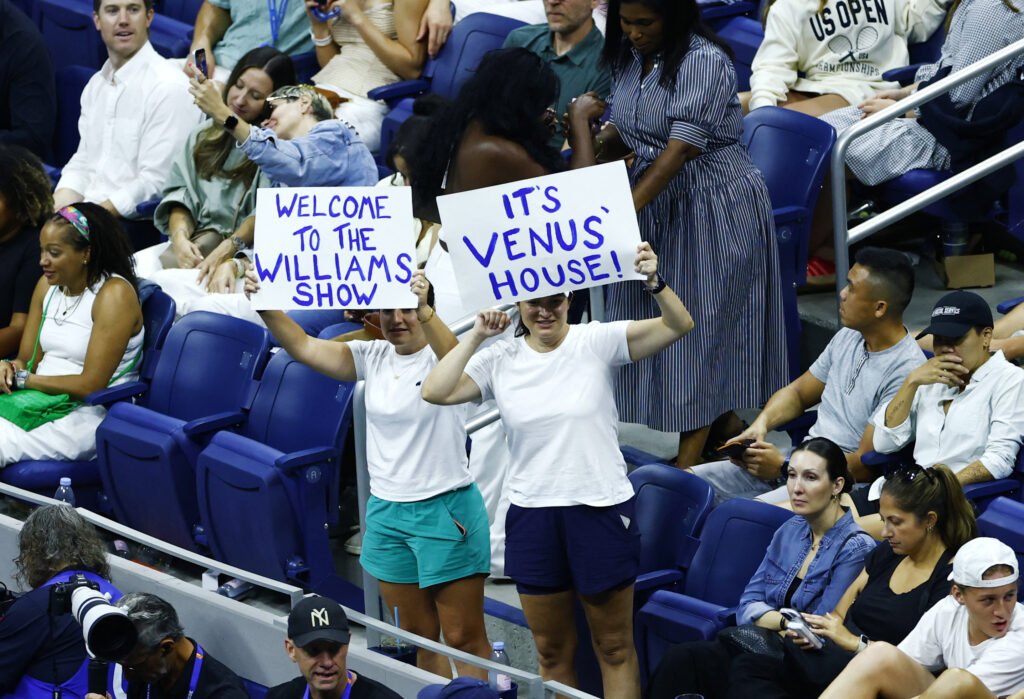
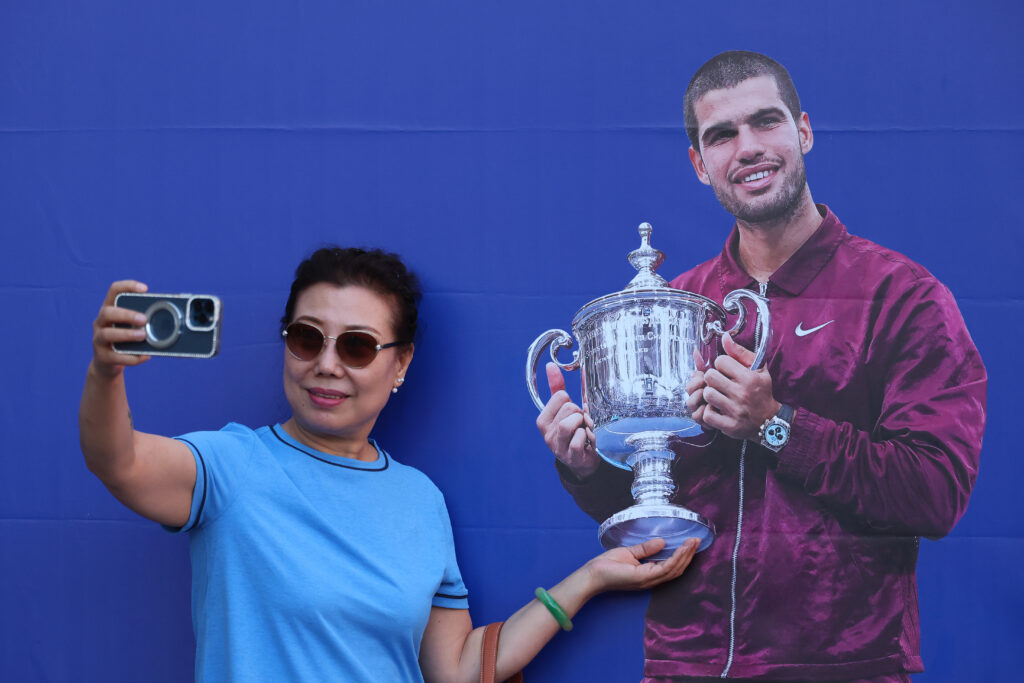
Serena Williams’s (allegedly) final years on the tour fueled interest, too, pulling in fans who didn’t watch much tennis but adored the 23-time Grand Slam champion. Celebrities showed up. Social media feeds filled with young people in chic streetwear sipping Honey Deuces, posing in front of the blue hardcourt in one of the tournament’s signature caps, available in nearly a dozen colors.
Kane’s son, Salim, 22, has been to the U.S. Open every year since he was 8 and remembers when the crowd was mostly “people happy to see the tennis,” he said. He and his father said they welcomed the surge of excitement for the sport, though they don’t love that the rising costs keep them from going as often.
“The advent of TikTok and these influencers that just come here for the vibes,” the elder Kane said, “that has contributed to prices starting to skyrocket.”
Unlike at the other Grand Slams, in countries that limit ticket resale, U.S. Open prices rise with demand on the tournament’s official resale partner, Ticketmaster, where a ticket that costs $65 at face value can go for more than $300 or as little as $40, depending on which matches end up on which courts.
The veterans know how to make the most of their time on the grounds, drawing on years of experience navigating the sprawling tournament’s complexities. Armstrong is often at the center of their plans.
The tournament’s main court, Arthur Ashe Stadium, the world’s biggest tennis venue, with a capacity of 23,000, hosts the biggest stars for the highest ticket prices. It often draws casual spectators who show up late, talk during rallies and seem more interested in taking photos than understanding the sport. Recent renovations at Ashe only exacerbated this, expanding the suite level and lower bowl and shrinking the upper deck.
Armstrong has no suites. The upper deck is open to anyone with a grounds pass, and a lower-deck ticket sometimes costs half the price of a nosebleed at Ashe. So Armstrong tends to host the rising stars competing for a place at Ashe, and this year it has featured Filipino phenom Alex Eala and American fan-favorite Frances Tiafoe, who has won all 10 of his matches at Armstrong, including four this year. Tiafoe calls it “the People’s Court.” Monfils was on that court when he called the New York crowd his favorite outside Paris. It’s a crowd passionate enough to withstand a few bros swapping ski stories.
Read more Republicans gather for two-day ‘Trumpalooza’ with midterms approaching
One group of old high school tennis teammates from Vermont said they preferred the outdoor courts, where they can easily find front-row seats behind the baseline. All in their mid-20s and now living in different parts of the country, they were attending their third straight U.S. Open together, a budding tradition.
“It’s expensive, but it’s awesome,” said Isaiah Litchfield, 25, whose meals that week included a $28 bulgogi bowl. “If you worry too much about your budget, you’re taking away from your experience.”
In the late afternoon, when morning and night fans converge, the crowd swells to its peak, turning the grounds into a lively maze of bottlenecks, streams of people in every direction. The outdoor courts overflow with excited fans, giving even the most obscure draws the atmosphere of a final. As the afternoon matches crescendo, roars ripple across the grounds. Some fans follow the noise, clustering around the most thrilling matches on the menu, often on the largest outdoor courts, Taylor Townsend in Stadium 17 or Stan Wawrinka at the Grandstand. Others wander, dipping in and out of matches, perusing the shops, sampling food. The longest lines one recent afternoon stretched on for free sunscreen, the $23 signature cocktail, the $38 French dip and official U.S. Open apparel.
The friends from Vermont saw benefits to their favorite sport’s surging popularity: “Maybe,” Litchfield said, “it’ll keep tennis courts from getting replaced by pickleball.”
One thing that bothered them was all those wasted tickets: empty seats inside Ashe while thousands of tennis fans roamed the grounds outside. It happened nearly every night through the tournament’s first week: empty seats at the start of the first evening match, and more empty seats at the end of the second, even for the most popular players. Not every spectator is willing to stay through a full five or six hours of tennis before dragging themselves into a train or car long past midnight for the commute home.
One advertising executivebrought a group of clients and colleagues to Ashe on Wednesday night. Sipping a beer in the concourse while top-ranked Aryna Sabalenka played her second-round match, the executive — speaking on the condition of anonymity, for obvious reasons — said he wasn’t much of a tennis fan, didn’t know who was playing and hoped the next opportunity to entertain clients came “after the Knicks season starts.” He said he didn’t plan to stay too late.
One night last week, after a men’s match lasted nearly five hours, Venus Williams didn’t take the court until after midnight. With the lower bowl mostly vacant, ushers gave fans in the upper deck passes to move to the front. The Vermont friends wondered: Why not open up the vacated seats to all grounds pass holders?
“They’re making too much money,” Andy Phelan, 25, said. “At the end of the day, that’s what they care about.”
At Thursday night’s prime-time showcase at Ashe, Coco Gauff, maybe the world’s biggest tennis star, entered to loud cheers from half-empty stands. Whole swaths of the lower bowl stayed barren through most of the first set. In several suites, people clustered around the buffet tables.
As the seats started to fill halfway through the match, the early arrivals found themselves joined by casuals skipping down the steps during serves and squeezing through their row during rallies, balancing drinks. Ushers repeatedly corralled people who snuck down the aisle to get better photos.
“They stand right in front of the ‘no standing’ sign,” one usher said. “Then they get mad at me.”
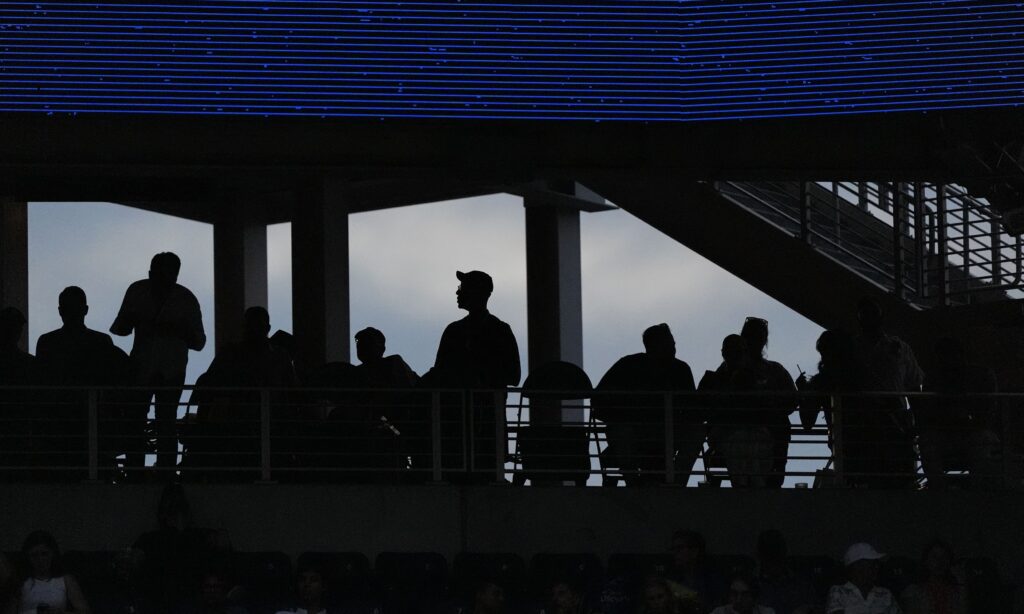
When the cavernous Ashe packs to capacity after dark, fans settle into the experience they signed up for. Airplanes fly out of nearby LaGuardia. Trains enter the adjacent rail yard. Trucks rumble down roads just over the fence. The first Grand Slam to be hosted in a public park and to award equal prize money for men and women, the U.S. Open isn’t as strict about the Old World tennis traditions exemplified at Wimbledon. The crowds are rowdier and increasingly contain new fans unfamiliar with tennis etiquette.
“You want the New York energy,” said Arika Bobb, a 45-year-old from California who has attended the U.S. Open since she was a teenager. “It’s raw, it’s real.”
At its liveliest, the chatter inside Ashe can get loud enough to drown out the sounds on the court but also to swallow up all the sounds around it, like a blanket of white noise. On Wednesday, though, Naomi Osaka didn’t take the court at Ashe until after 10 p.m. The crowd thinned as midnight approached, evaporating much of the chatter. Late in the match, with Osaka battling to hold her lead, a group of people in a suite apparently filming a TikTok pierced the pre-serve hush, loud enough that the umpire demanded silence. The incident went viral, igniting condemnation of the corporate brands sponsoring influencers to create content at the Open, contributing to what seemed to be a rising tide of casual spectators disrupting the match.
“You want people to continue to grow the sport,” Osaka said in a news conference. “I just think it has to be in a way that everyone knows the rules and the etiquette.”
Gauff suggested that suite sponsors place signs educating guests on tennis etiquette. “Sometimes it’s their first tennis match, and they don’t know,” she said at a news conference. “Ashe is a very loud court, so I’m used to it.”
On Thursday, three longtime friends from New York in their 40s said they paid around $380 each for lower-bowl seats at Armstrong — not to cut costs or see any particular player but simply because they preferred the atmosphere there. “It’s a better stadium,” one said. He had been coming to the U.S. Open for 10 straight years.
They were longtime tennis fans and had seen so many matches that they didn’t mind getting lost in conversation while Monfils’s legendary run at the tournament wound to a close. Raising their voices to compete with the crowd’s chants, they talked about their jobs and travel plans and even about their next tennis trip. They were still talking as Monfils basked in one last U.S. Open ovation and vacated the court so the late-night match could begin.
Read more Establishment wins and other takeaways from the New Hampshire primaries