The Supreme Court gave President Donald Trump a preliminary victory this week when it lifted some legal hurdles to his plan to limit who can vote by mail.
Read more Trump is having trouble changing how Americans vote
The decision was narrow, and Trump’s proposal remains blocked by a lower-court order. But the Supreme Court win gave the president momentum as he seeks to change voting rules less than a month before election officials start mailing ballots to voters.
Overlapping litigation continues in lower courts and soon could wind up before the Supreme Court again. Here’s a look at where things stand.
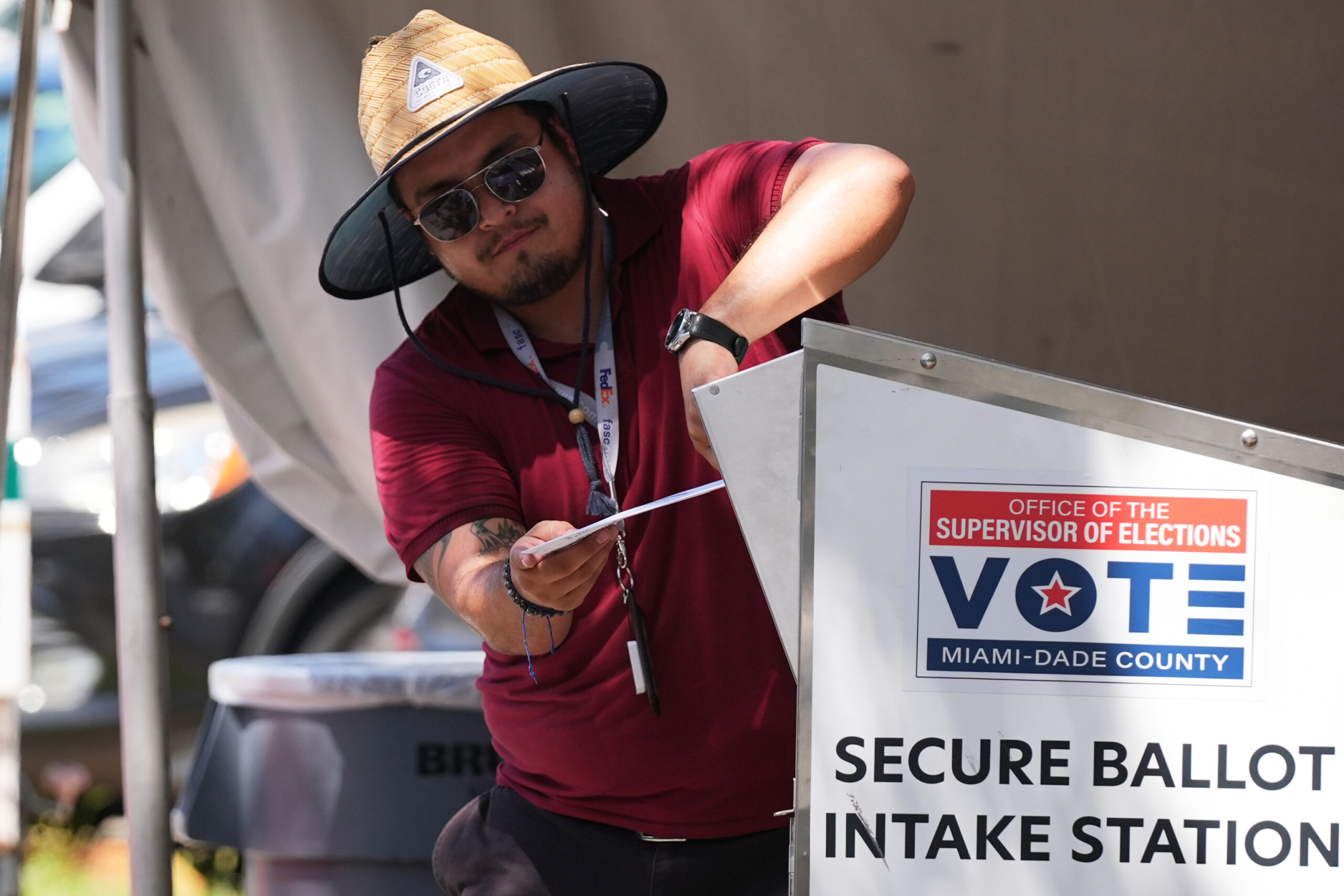
Trump has often voted by mail — including in last week’s primary in Florida — but has long railed against mail ballots and questioned their validity. In a social media post last year, he said he would “lead a movement to get rid of MAIL-IN BALLOTS.”
Seven months later, Trump signed an executive order aimed at imposing new federal requirements on who can get mail ballots. Election officials from across the country have said mail voting is safe, and states and voting rights groups have sued to block the executive order.
For now, yes.
Nothing in Monday’s ruling changed voters’ current options. A separate lower-court order still blocks the mail-ballot provisions of Trump’s executive order for the 2026 elections, and the Supreme Court has not ruled on whether those provisions are legal.
For years, Trump without evidence has insisted that voting by noncitizens is rampant, and he has pushed Congress to adopt legislation that would require people to provide proof of citizenship to register to vote. That legislation remains stalled, and Trump has tried to get at the issue with his executive order, which he says would ensure that noncitizens don’t receive mail ballots.
Noncitizens are not allowed to vote in federal elections. Court records and independent studies show that noncitizens rarely vote, but it does happen in uncommon instances. New Jersey officials recently disclosed that, because of a software glitch, they had registered thousands of noncitizens, including about 340 who cast ballots.
Trump’s order directed the Department of Homeland Security to compile and send each state a list of citizens drawn from federal records. Those lists, along with information from the states, could be used to determine who can receive mail ballots. Critics say the federal records can be incomplete or outdated, potentially omitting eligible voters, including some naturalized citizens.
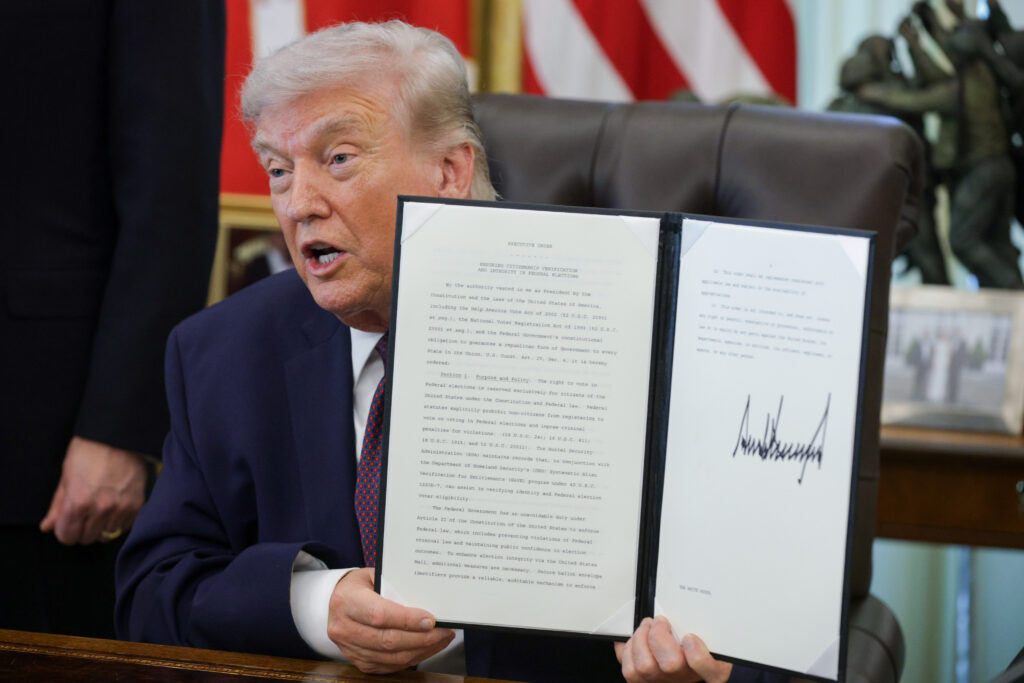
The executive order also directed the U.S. Postal Service to review ballot envelopes to ensure they are secure and are using unique barcodes for processing. And it told the Justice Department to prioritize investigations of officials who give ballots to ineligible voters.
Read more Court halts Ohio proof-of-citizenship requirement at motor vehicle offices
U.S. District Judge Indira Talwani in Massachusetts has handled two sets of cases over the executive order — one brought by Democratic-led states and one brought by voting rights groups. She blocked major provisions of the executive order in both cases.
The case brought by the states made its way to the Supreme Court on the narrow question of whether the states had the right to sue at this stage. Over the dissent of the court’s three liberals, the conservative majority ruled for Trump, saying the states couldn’t sue until the administration had finalized its plans.
The Supreme Court ruling did not address Talwani’s injunction in the other case, so the Postal Service is still barred from implementing the mail-ballot section of Trump’s order.
The case that the Supreme Court ruled on this week now returns to lower courts.
And either or both sets of cases could quickly go back to the Supreme Court. Many on both sides of the issue are pressing for final decisions as soon as possible because election officials are required to start sending mail ballots in mid-September.
The Postal Service took the unusual step of issuing its new rule at 9 p.m. Friday — before the Supreme Court released its ruling. The agency acknowledged the injunctions and said it would not implement the requirements for the 2026 elections unless the courts lifted them.
Voting rights groups then asked Talwani to enforce her injunction, arguing that by finalizing the rule, the Postal Service had violated her order. They asked her to declare that the rule would have no legal effect for the 2026 elections and bar the Postal Service from further steps.
Talwani is expected to rule soon.
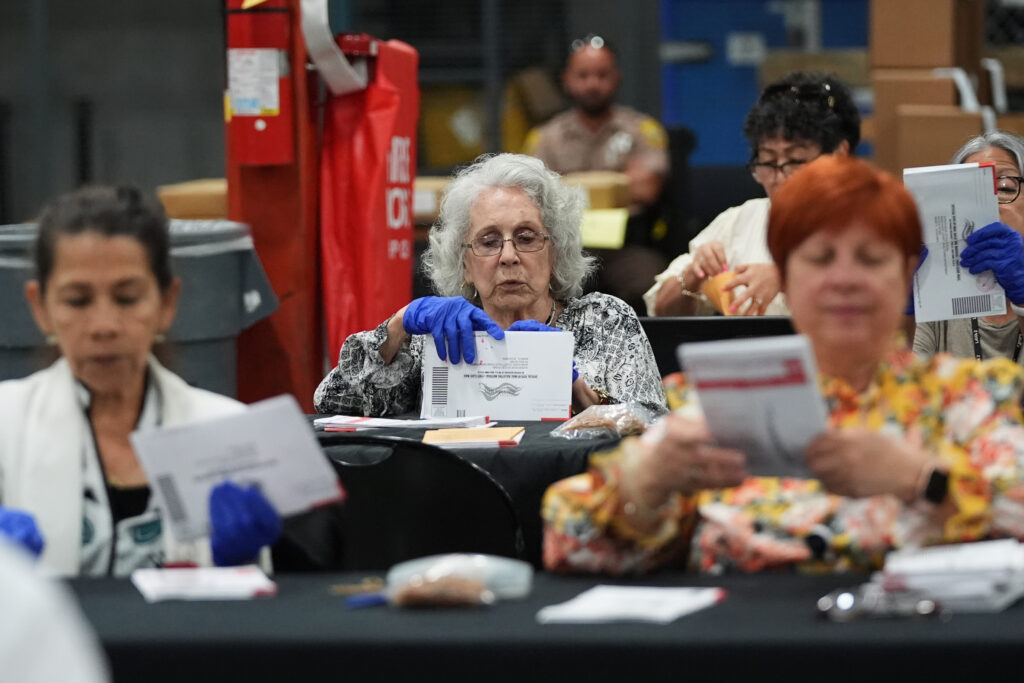
Under the postal rule, election officials would have to use barcodes to track mail ballot envelopes and would have to get approval from the Postal Service for the design of the envelopes.
That would create challenges for the midterm elections because postal officials would need to review envelope designs for thousands of voting jurisdictions across the country. If they rejected any designs, election officials would be in a bind because they would have little time to design, order and receive new envelopes. Many jurisdictions buy their envelopes months in advance.
Read more Wisconsin prosecutor declines to charge Musk in election bribery investigation