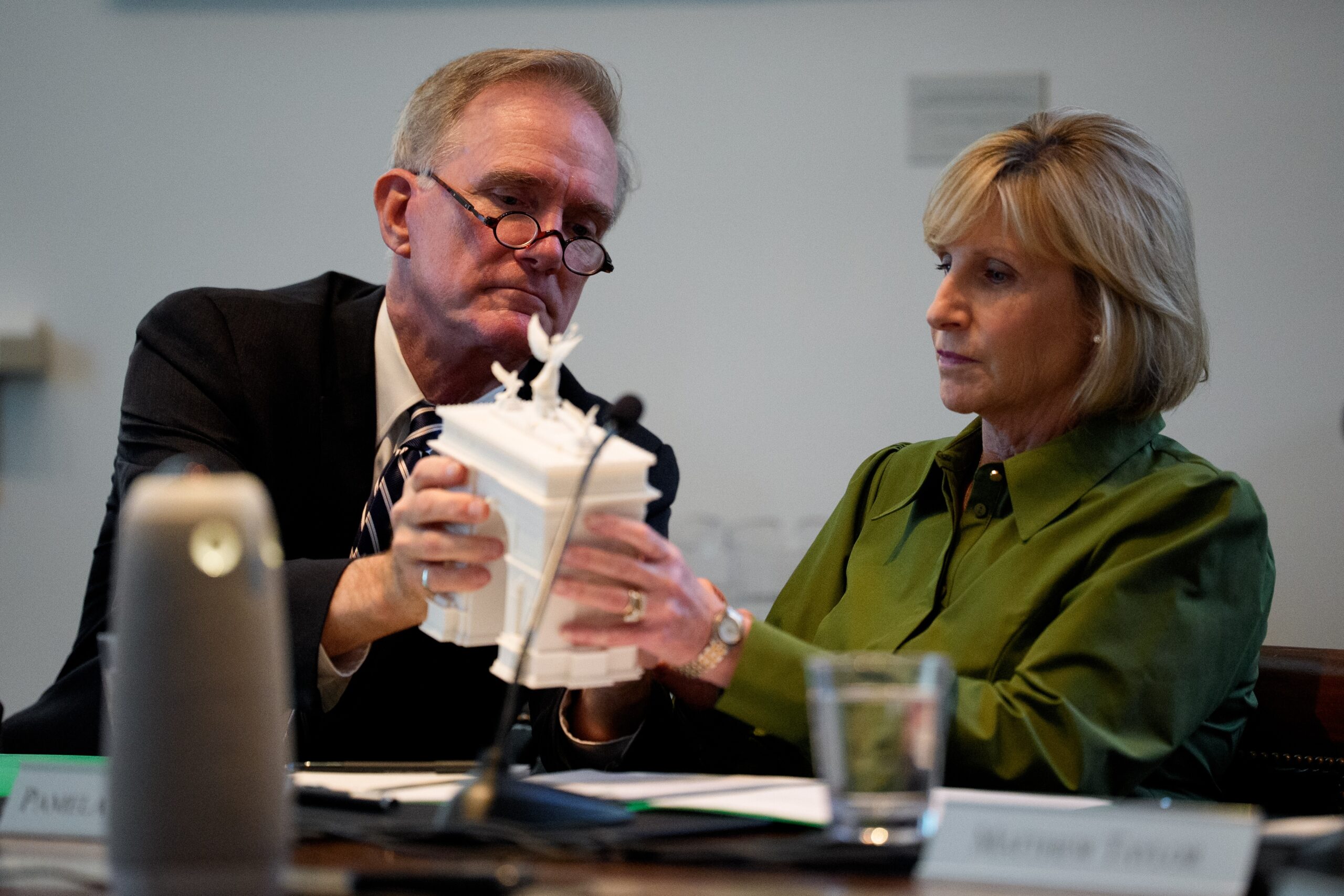
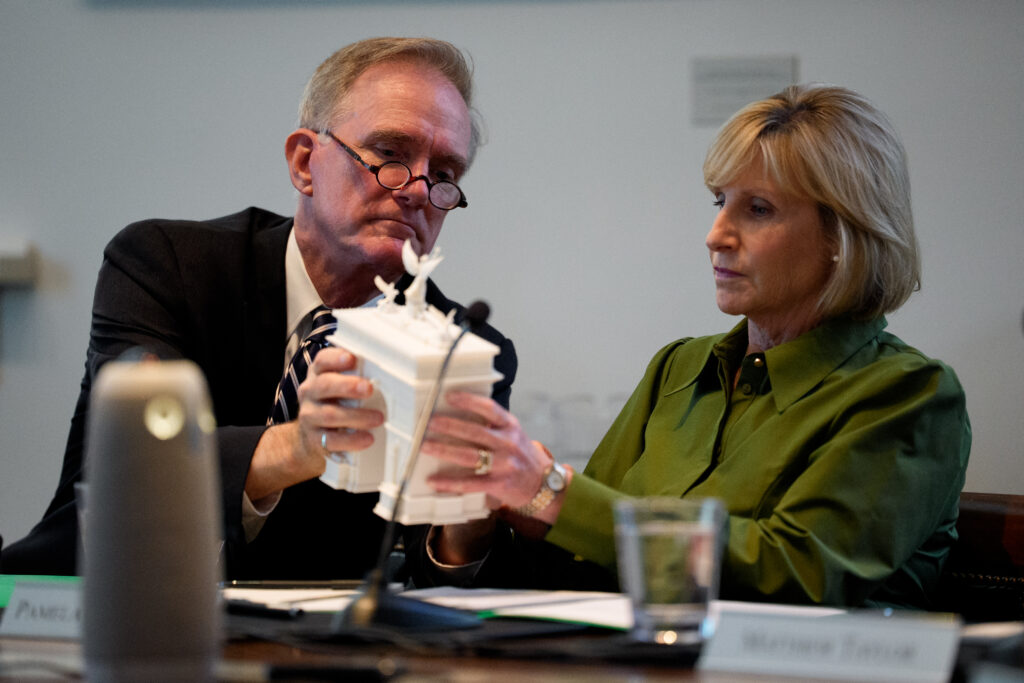
The president rejected the idea of lowering the structure’s height, an architect said. Military veterans have sued to stop the project.
Read more Supreme Court dismisses death penalty case on people with mental disabilities
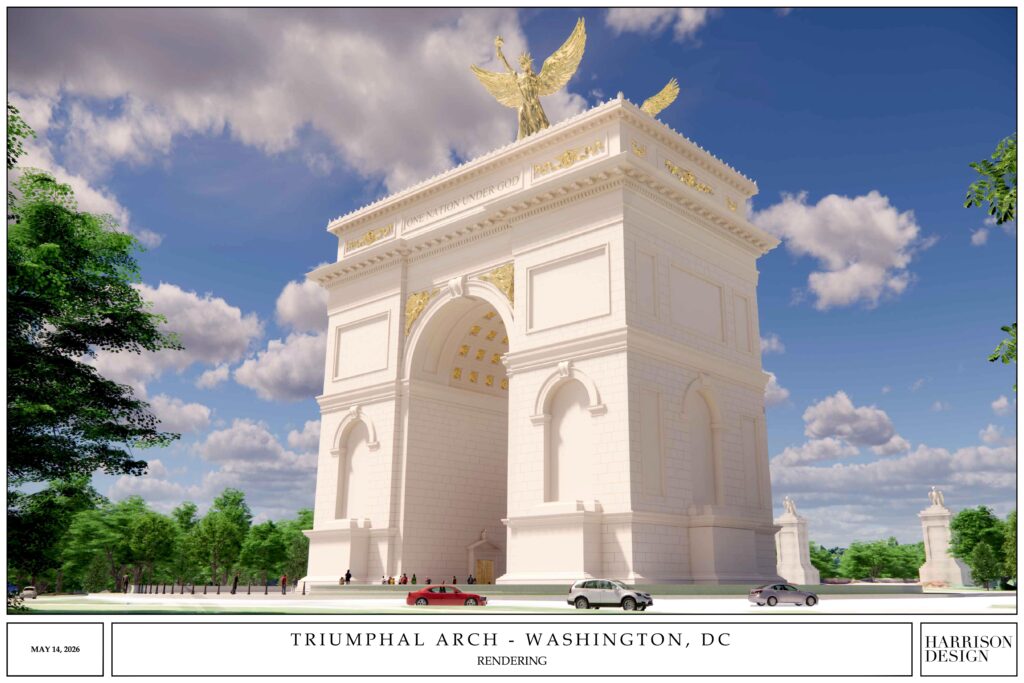
A federal arts commission Thursday voted to approve designs for President Donald Trump’s planned 250-foot triumphal arch, advancing the project amid public opposition.
Thursday’s vote by the Commission of Fine Arts, whose job is to vet the design of monuments and other major projects in the capital, represents a key approval as the White House seeks to begin construction. Another panel that oversees federal construction projects, the National Capital Planning Commission, is set to review the proposed design for the arch June 4.
Trump has packed both panels with allies, putting his executive assistant and other political appointees on the fine-arts commission and installing his staff secretary as leader of the planning commission.
He personally rejected suggestions to lower the height of the proposed arch by more than 80 feet, the project’s main architect told the arts commission Thursday.
Trump has eyed Memorial Circle, a traffic roundabout near Arlington National Cemetery, for the structure, which he says will be the largest triumphal arch in the world and is intended to commemorate America’s 250th anniversary.
Arts commissioners Thursday praised the arch’s proposed design, calling it a fitting addition to the capital’s monumental core. The arch would be built on land controlled by the National Park Service that sits at the Virginia end of the Memorial Bridge but is inside Washington’s boundaries.
“This is a very elegant building,” said Rodney Mims Cook Jr., the fine-arts commission’s chairman and a longtime proponent of constructing an arch in Memorial Circle. Cook and other commissioners said they wanted to see more details on potential sculptures added to the arch.
Members of the public and historical preservationists said the proposed structure is too large and warned it would tower over the nearby cemetery, reshape the historical relationship between the Lincoln Memorial and the military cemetery, and obstruct pedestrians’ views.
“The arch, as proposed, would dominate the National Cemetery and would be inconsistent with its solemn and hallowed character,” Elizabeth Merritt, a lawyer for the National Trust for Historic Preservation, told the commission.
Read more Read the Democrats’ 2024 campaign autopsy
The fine-arts commission received about 600 public comments on the project ahead of Thursday’s hearing, with “99.5 percent” of them opposed to the planned arch, according to a staff review presented by the commission’s secretary.
The planned 250-foot arch represents Trump’s most significant effort to remake D.C.’s skyline as he works to transform the city in his second term.
The president’s project has also been opposed by some military veterans and an architectural historian, who say that a towering structure in Memorial Circle would harm views of the cemetery. They have sued to prevent its construction. Democrats have said that any new monument must obtain authorization from Congress.
Trump officials have argued that they do not need congressional approval because Congress more than a century ago authorized a somewhat similar structure in the same site.
The fine-arts commission last month approved early designs for the arch but encouraged Nicolas Charbonneau, an architect at the firm Harrison Design who is leading the project, to make some revisions. Charbonneau said Thursday that his team had scrapped a planned platform for the arch, removed some planned adornments and abandoned the idea of an underground tunnel to access the site.
Charbonneau presented a revised design that would overhaul pedestrian routes around the traffic circle.
But Charbonneau said Trump rejected a recommendation by arts commissioner James C. McCrery II — who served as the first architect for Trump’s planned White House ballroom before wrangling with the president over its size — to remove three golden statues atop the arch that add more than 80 feet to its height. Removing those statues would have shrunk the arch’s height from 250 feet tall to 166 feet.
“The president considered the commission’s suggestion to look at the arch without the sculptural figures on the roof but elected not to pursue such an option,” Charbonneau said.
Read more Democrats release contentious autopsy of 2024 presidential campaign
This is a developing story and will be updated.