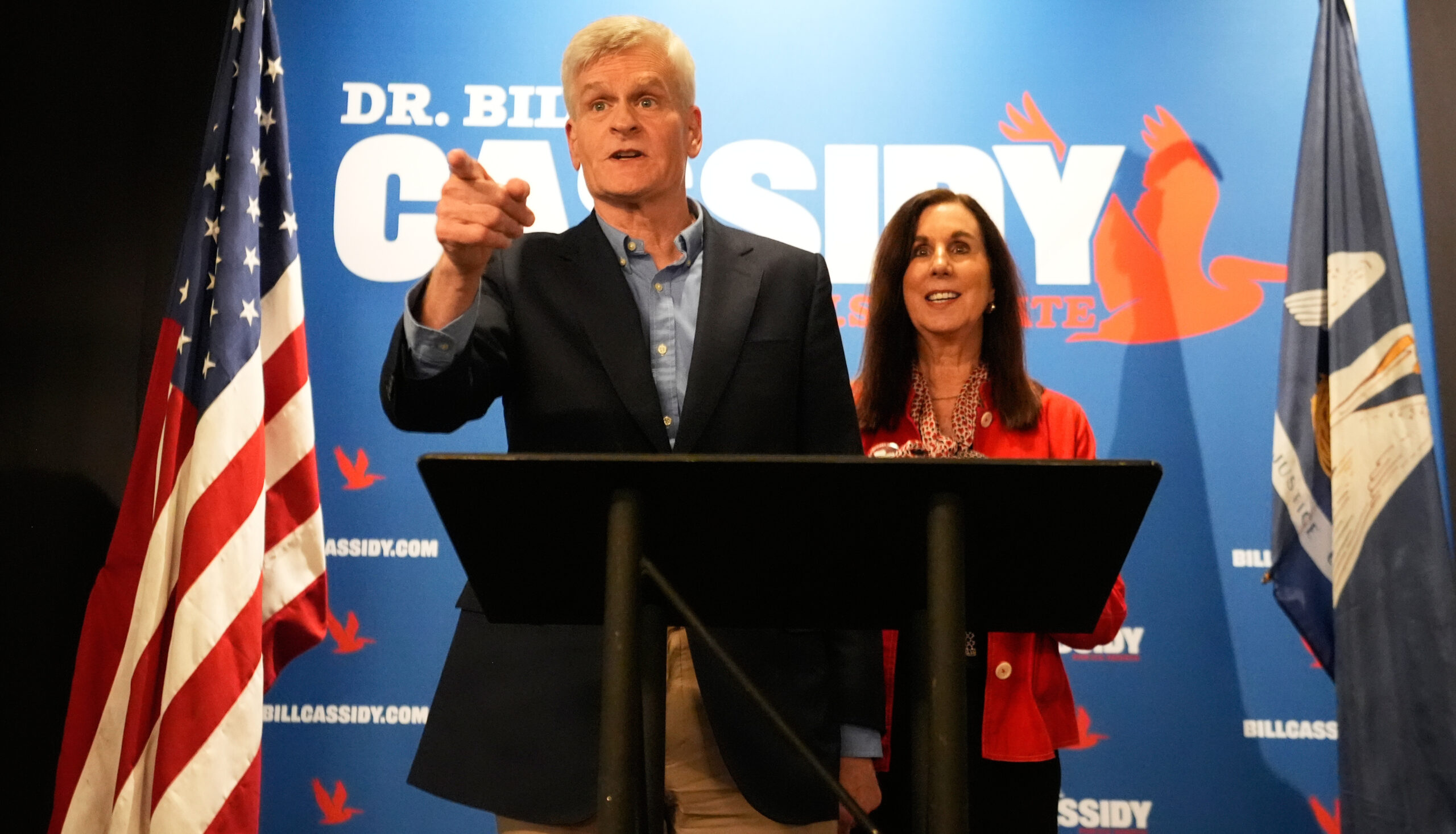
Sen. Bill Cassidy of Louisiana faces two challengers — one endorsed by the president — in Saturday’s primary, five years after voting to convict Trump.
Read more Trump administration unveils new design for East Potomac golf course
BATON ROUGE, La. — Sen. Bill Cassidy (R-Louisiana) had just easily won reelection when he broke with his party and voted to convict President Donald Trump at his 2021 impeachment trial for his role in inciting the Jan. 6 attack on the Capitol.
Now Cassidy’s six-year term is almost up — and that vote could cost him his seat.
Trump has urged voters to oust Cassidy in Saturday’s Republican primary and endorsed Rep. Julia Letlow, who is running against him. But the president’s endorsement has not cleared the field, testing his power to exact revenge on Republicans who dare to cross him.
Cassidy is locked in a competitive three-way race with Letlow and John Fleming, Louisiana’s state treasurer and a former congressman, who has cast himself as the true conservative in the contest. The top two candidates will advance to a runoff next month if no one wins a majority of the vote Saturday.
“Each of them claim that they’re ahead in the polls, and guess what that means?” said Rep. Clay Higgins (R-Louisiana). “Nobody knows.”
Cassidy was one of seven Republican senators who joined Democrats in voting to convict Trump in his 2021 impeachment trial. Trump was acquitted after 57 senators voted guilty, short of the two-thirds threshold needed to convict him. Just three of the Republicans who voted to convict remain in the Senate: Lisa Murkowski (Alaska), who fought off a primary challenge in 2022; Susan Collins (Maine); and Cassidy.
Unlike Collins or Murkowski, Cassidy has rarely bucked Trump since he returned to the White House. Cassidy even voted to confirm Health Secretary Robert F. Kennedy Jr. last year despite concerns about Kennedy’s criticisms of vaccines — a deeply personal issue to the senator, a physician who has described watching patients die from diseases that vaccination can prevent.
While Cassidy has avoided antagonizing Trump, he has not disavowed his vote to convict him. Instead, he is trying to persuade voters to overlook it, campaigning on his record delivering for one of the poorest states in the country. He has emphasized his defense of the state’s oil and gas industry and his work to make sure a law Trump signed last year that eliminated taxes on tips applied to barbers.
“If you want somebody who works well with President Trump, you vote for Bill Cassidy,” Cassidy said in an interview in a Baton Rouge barber shop. “He may not like me, but he has signed into law four bills that I either wrote or negotiated in the last four months.”
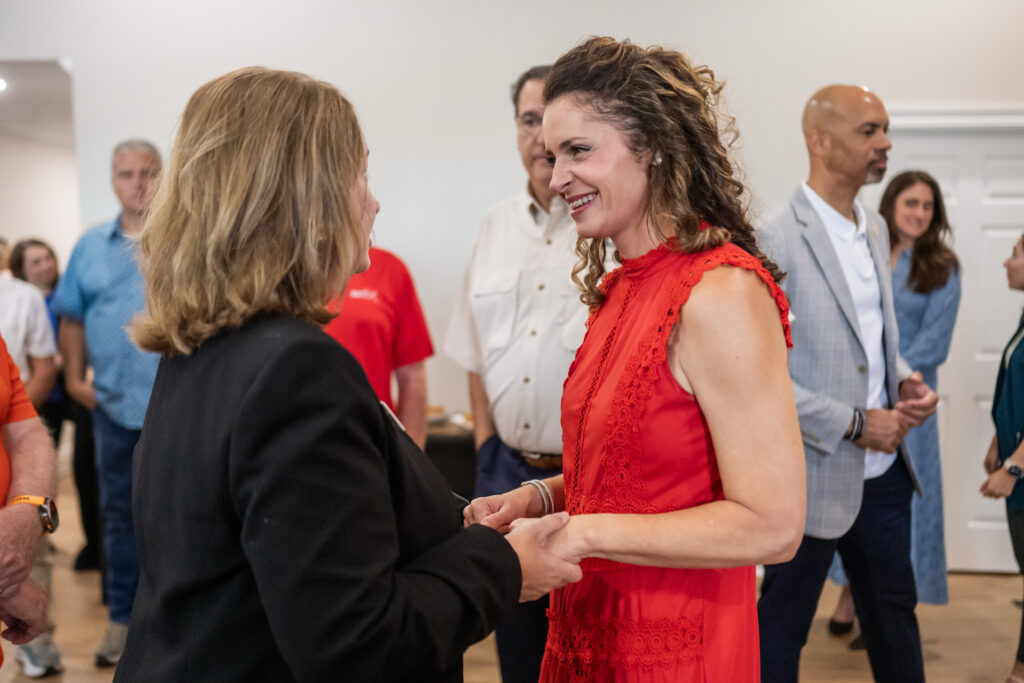
Letlow, 45, is in some ways an unlikely candidate to topple Cassidy, 68. She won her House seat in a special election in 2021 after the death of her husband, Luke Letlow, who had been elected to the same seat but died days before he was set to be sworn in. While campaigning last week, she said she never imagined she would run for the Senate.
As Cassidy has campaigned on his record, Letlow has sought to turn it against him. She has criticized the senator for voting for the bipartisan infrastructure law that President Joe Biden signed in 2021 and that Cassidy has hailed as an accomplishment.
“He’s continued to partner and author bills with the Democrats, and that’s just not something I would have done,” Letlow said in an interview.
Cassidy, the chair of the Senate Health Committee, would be the first sitting senator to lose a primary in nearly a decade.
He has raised millions of dollars as he fights to hang on to his seat, allowing him to outspend his rivals. Cassidy’s campaign and an allied super PAC, Louisiana Freedom Fund, have spent nearly $22 million on ads, according to AdImpact, which tracks campaign ad spending — more than what Letlow, Fleming and their allies have spent combined.
Roger F. Villere Jr., a Republican National Committee member and former state party chairman who has not endorsed a candidate in the race, said Cassidy’s financial advantage could help him survive despite the fallout from his vote to convict Trump.
“I think he has a shot, because he has so much money,” Villere said. “He is constantly on TV, radio and social media, where everybody else is only on sporadically.”
Cassidy and his allies have suffused the airwaves with ads knocking Letlow for supporting diversity, equity and inclusion programs while working for the University of Louisiana at Monroe, among other criticisms.
Letlow said she initially viewed such programs as “a tool to encourage students to go achieve the American Dream,” but she disavowed them after they were “hijacked by the radical left.” She told supporters at a campaign event in Hammond last week that she had asked her mother to pray that the deluge of attack ads does not seep into the hearts and minds of voters.
Read more Nationals’ bats go quiet at tail end of series against Reds
Jeff Pollard, 69, a real estate agent in Baton Rouge, said he thought some of the attacks were over the top. He lives in Letlow’s district and knew her late husband. He said he became disillusioned with Cassidy after his vote to convict Trump and his support for the infrastructure bill.
“Supporting Julia was not a real stretch for us,” Pollard said. ”When President Trump endorsed her, that was really one of the keys.”
Other Republicans said they were troubled by Letlow’s past support for DEI initiatives.
“Cassidy took himself out of the race by voting to impeach Trump,” said Larry Rath, 69, a retired chemical engineer who lives not far from Cassidy in Baton Rouge. “I consider him a traitor. And I don’t really trust Letlow. So it’s pretty much a process of elimination that then we would support Fleming.”
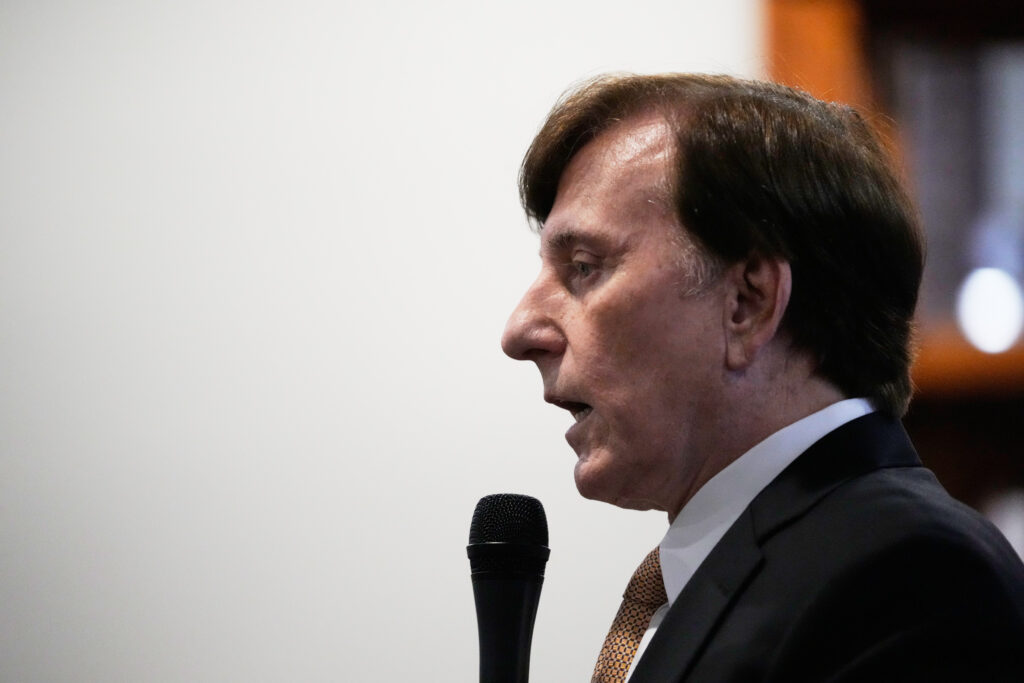
Fleming, a former White House deputy chief of staff during Trump’s first term, has run only $1.5 million in ads, according to AdImpact — a small fraction of what his rivals have spent. He has tried to make up for the disparity by arguing that his record in Congress was more conservative than Cassidy’s or Letlow’s.
Fleming, 74, said he tried to reach Trump to seek his endorsement but was blocked by the president’s aides. He finally spoke with Trump in February after Trump endorsed Letlow.
“I said to him, ‘Why don’t you let me be your Plan B?’” Fleming said in an interview in Minden, his hometown.
Fleming has become enough of a threat that a super PAC supporting Letlow is running ads attacking him. One of them features an old clip of Fleming saying: “We don’t have enough illegal aliens. Why not provide a transportation program where they’re bused across the border?” (Fleming said that he misspoke while running for Congress in 2008 and that he meant to propose busing migrant farmworkers into the country.)
The conservative radio host Moon Griffon last week faulted Letlow and Fleming for attacking each other instead of Cassidy during a debate he moderated. (Cassidy skipped the debate, perhaps deterred by Griffon’s habit of referring to him as “psycho Bill.”)
“This guy right here is the target, but he never looks like he’s the target,” Griffon said of Cassidy during the debate.
Some Cassidy skeptics have come around.
Lane Grigsby, an industrial construction contractor and Republican donor who supported Cassidy in the past, was unhappy with his impeachment trial vote, which he called “a dumb political move.” Grigsby said he initially supported another challenger, state Sen. Blake Miguez, because he thought Cassidy could not win.
But Grigsby reevaluated the race after Letlow announced her campaign in January and Miguez dropped out — and he decided the senator could prevail after all. He said he thinks Letlow will finish in third, with Cassidy and Fleming advancing to a runoff.
“I believe that she’s lost all her glamour to the heavy campaigning,” Grigsby said.
Scott Jones was also disappointed in Cassidy’s vote to convict Trump. But Jones, 50, who works for his family’s sign business in Denham Springs, said he plans to vote for Cassidy, citing his staff’s efforts to help one of Jones’s friends deal with the Department of Veterans Affairs as he was dying.
“The senator and I vehemently disagreed on that vote and a few others,” he said. “But I’ve also seen so much good that he’s done behind the scenes.”
Cassidy said he recognizes that some voters in his deeply conservative state will not support him because of his impeachment trial vote. But he said he is convinced there are enough Republicans like Jones for him to win.
“If you want to get hung up on five years ago, that’s fine,” Cassidy said in the interview, sitting in a barber’s chair. “I can’t overcome that. But if you’re saying: ‘What’s my present? What’s my future? Who’s been working for my state? Who has delivered for my state? Who makes it more likely that my family prospers here safely?’ Then you’re going to vote Bill Cassidy.”
Read more When Trump met Xi as peers