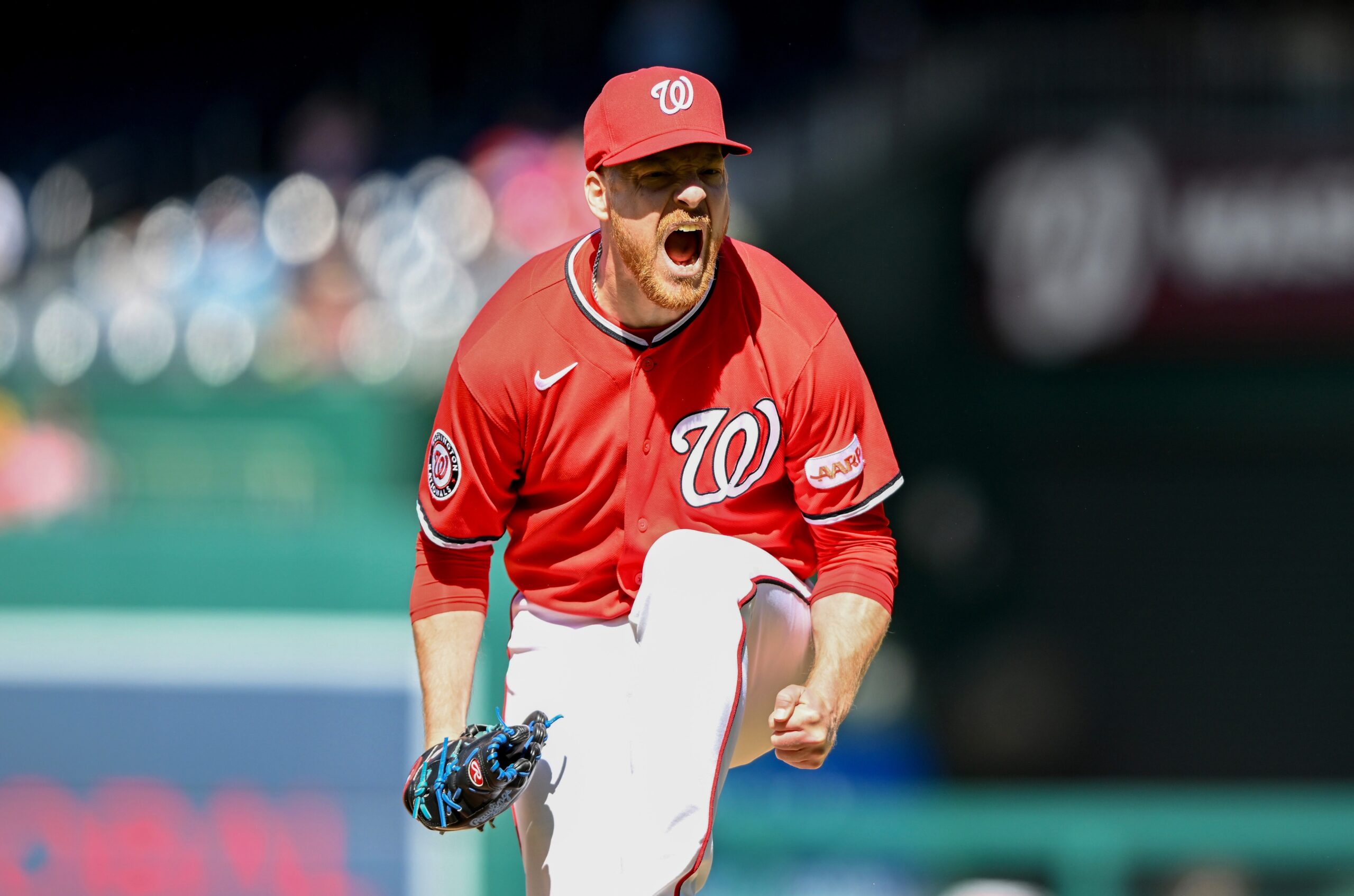
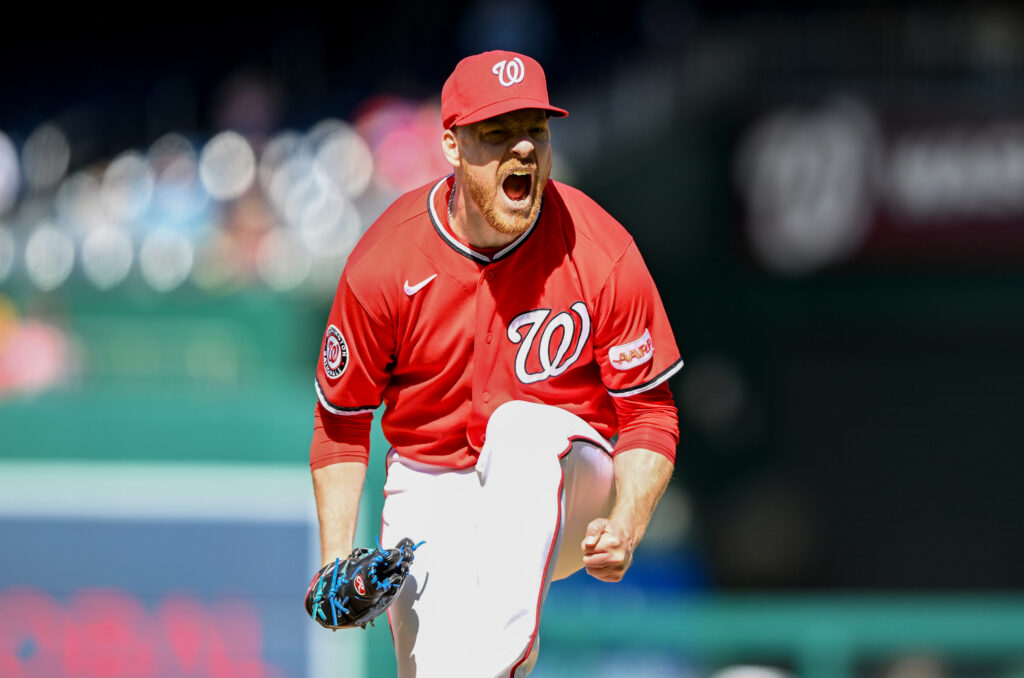
After pitching a scoreless ninth inning against the Chicago White Sox last month, Richard Lovelady’s eyes welled up and his voice got shaky when he was asked what drives him to keep going in a sport that has tossed him aside multiple times.
Read more Injury-hit Romelu Lukaku included in Belgium’s World Cup squad for the fourth time
“My son,” he replied, an unexpected wave of emotion rolling over him.
It hasn’t been an easy three years for the left-handed reliever. He’s been traded, released or designated for assignment nine times, not pitching in more than 28 games in a uniform before being asked to pack up and head somewhere new.
It’s the typical life of a fringe reliever. They are on thin ice once they run out of options — which allow organizations to shuttle players between the minors and the big leagues — and begin getting discarded at the first sign of trouble or when their team needs a fresh arm. But with the Nationals, Lovelady, at age 30, seems to be finding his footing, allowing just one run in 9⅔ innings since being acquired in a cash trade with the Mets on April 16.
He credits two things to his recent success: his new preparation routine and his toddler son, JT, who has put everything in perspective for him over the last two years. Now, Lovelady said, the uncertainty of the baseball world isn’t quite as scary, knowing his son is waiting for him at home in Arizona in between stops.
“When you first have a kid, you don’t really think it’ll change your life,” he said. “You don’t really think about it as more like, ‘Oh, okay, someone I have to take care of now.’ And then when he’s born, he’s literally a mini you. … A lot of people just figure, ‘Oh, your family is with you all the time,’ but no, that’s really not the case.”
Lovelady was picked by the Royals in the 10th round of the 2016 draft. He debuted in 2019 and flopped between Triple-A and the majors over the next three years, posting a 5.62 ERA in 41⅔ innings before undergoing Tommy John surgery. In 2023, finally healthy again, he was traded to the Braves, setting off his whirlwind journey around the league. Over the next three years, he spent time with the Braves, Athletics, Cubs, Rays, Blue Jays, Twins and Mets.
As a minor leaguer, he succeeded at every level. As a major leaguer, he’s had to learn how to fight for everything.
“Every day you go out there, you’re on like a day-to-day contract kind of feel,” he said. “You take every game like it’s your last.”
He spent most of spring training with the Nationals and was designated for assignment on March 10 only to be reclaimed by the Mets, then designated for assignment again on April 11.
Read more The NFL keeps spotlight on Sunday broadcasts as it creates more windows on other days
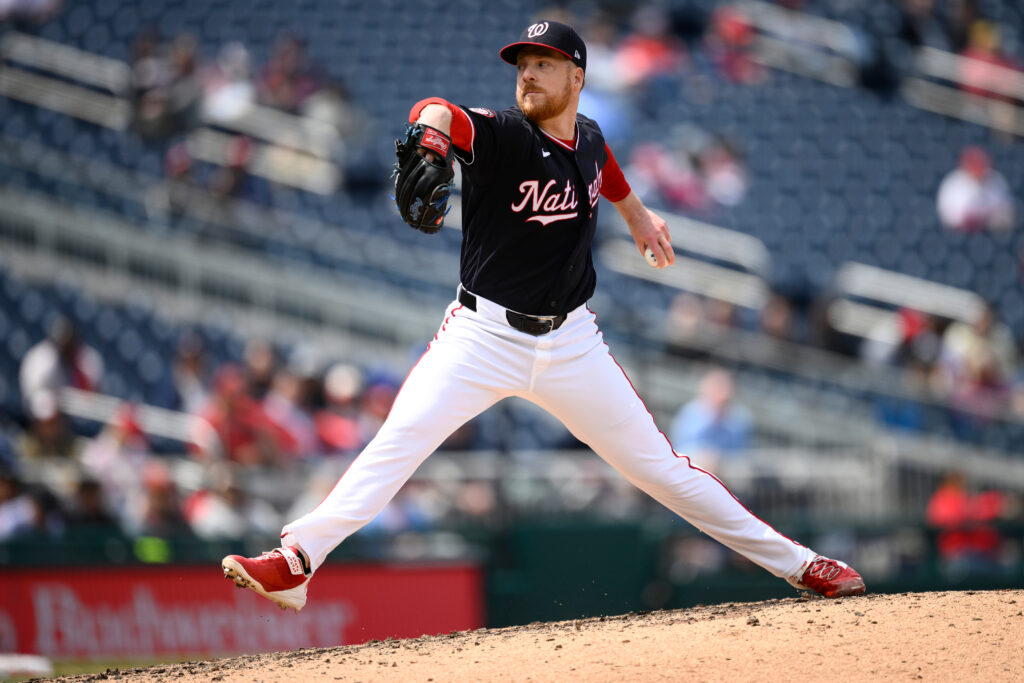
This time, unlike previous occurrences, he decided to go home to Arizona to spend time with JT. He was pitching well and knew that he would get a call soon, so he wanted to take advantage of any time he could with his son. When he’s on an East Coast team, he’s only able to see him about once a month.
On April 16, the phone rang with the news that the Nationals had acquired him. This time, he took a new approach to his preparation, drawing on what he learned in his last stint with the Mets.
The night before the game, he’ll typically be told what role he’ll be in the next day, whether it’ll be as a long man, set-up guy, high-leverage reliever or opener. The day of, he’ll be told what part of the lineup he’ll face. That’s when he’ll pull out his black-bounded notebook with the phrase “1 percent better every day” on it and make a detailed report of the hitters he expects to face, plus anyone who might pinch-hit for them.
Afterward, he’ll make his scouting cards, an index-sized cheat sheet that he puts in a protective sleeve and keeps in his pocket. On the card, he writes down the hitter’s name, then jots down what pitch he should throw with two strikes and another safe pitch. Then he bubbles in whether they are aggressive when the bases are empty and how that changes when someone is on base.
In the past, he tried to rely solely on memory on the mound. Now, he takes a breath between hitters to check his card and see what he needs to do. It’s not a revolutionary tactic; other players carry similar cards. But for Lovelady, doing so gives him back a sense of control.
“There’s time you get on the mound when you get sidetracked,” he said. “You go, why did I do that? Why did I do this? I didn’t have an excuse for it, right? … You can trust Ruiz, you can trust Millie, [but] at the end of the day, you are doing your own scouting report.”
Since Lovelady’s addition, the Nationals bullpen has pitched to a 3.76 ERA, compared with 6.17 prior, as the whole unit has taken steps forward. Lovelady has been used in just about every spot, even earning his first save in nearly two years on May 3.
He’s been through enough now to know this may not last. But he’s fighting for his life every day, and if things go south again, he has a toddler at home waiting for him with open arms.
Read more Trump misses deadline to disclose tens of millions of dollars in stock trades