In today’s edition … Trump picks a new intel chief … We ask you about Trump’s role in the World Cup … but first …
Read more Algae forms in the Reflecting Pool. It’s ‘residual,’ Trump officials say.
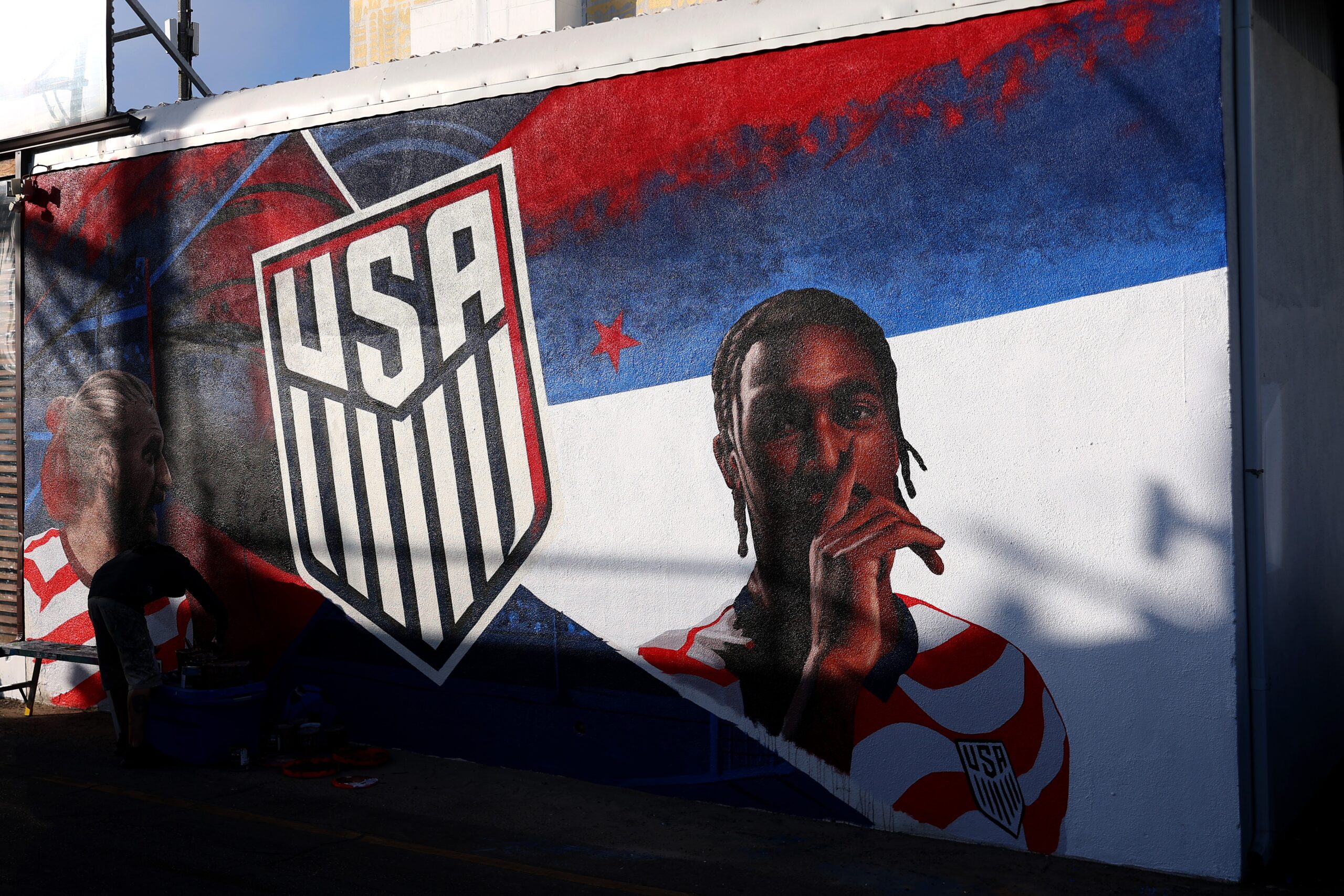
The World Cup has always been political. Benito Mussolini used Italy’s 1934 tournament as a propaganda showcase. Argentina’s military junta used the 1978 World Cup to launder its image. And the past two tournaments — in Russia and Qatar — were plagued by geopolitical tensions and corruption allegations.
But this year’s World Cup, which kicked off yesterday with two matches in Mexico, is unusually tangled in American politics. Here’s a look at some of the most compelling political storylines.
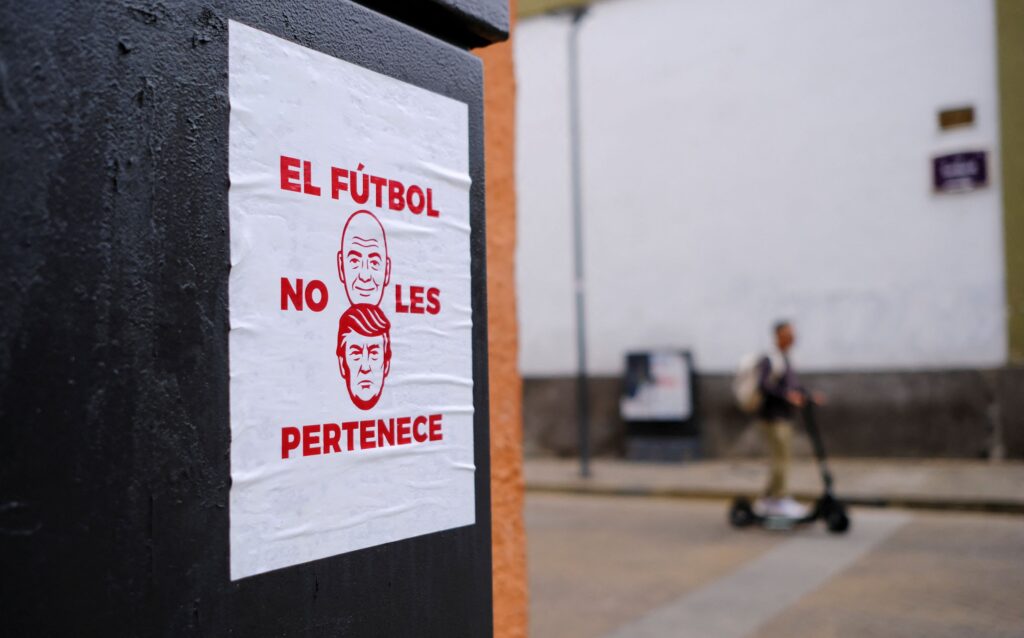
President Donald Trump is hanging over this entire tournament. Yes, soccer’s biggest event is being hosted by the United States alongside Mexico and Canada. But Trump’s role in its planning and his antagonism toward the other co-hosts make for a clear storyline heading into the event.
Some of this is FIFA’s own doing. President Gianni Infantino has repeatedly praised Trump since the president swept back into office in 2025. He has been spotted by Trump’s side during countless non-soccer events and even created a FIFA Peace Prize to give to Trump when the president, much to his chagrin, did not win the Nobel Prize.
“Without his engagement and his involvement, I think it would have been impossible — as simple as that, it would’ve been impossible to organize a World Cup in the United States,” Infantino said of Trump this week. “He understood immediately the magnitude of the World Cup, the impact of the World Cup.”
All of that has led some, especially those on the left, to question whether supporting this World Cup is tantamount to backing Trump. When we have asked questions in this newsletter about the World Cup, more than a few of you have said you are hoping it fails because it will be a blight against the Republican leader.
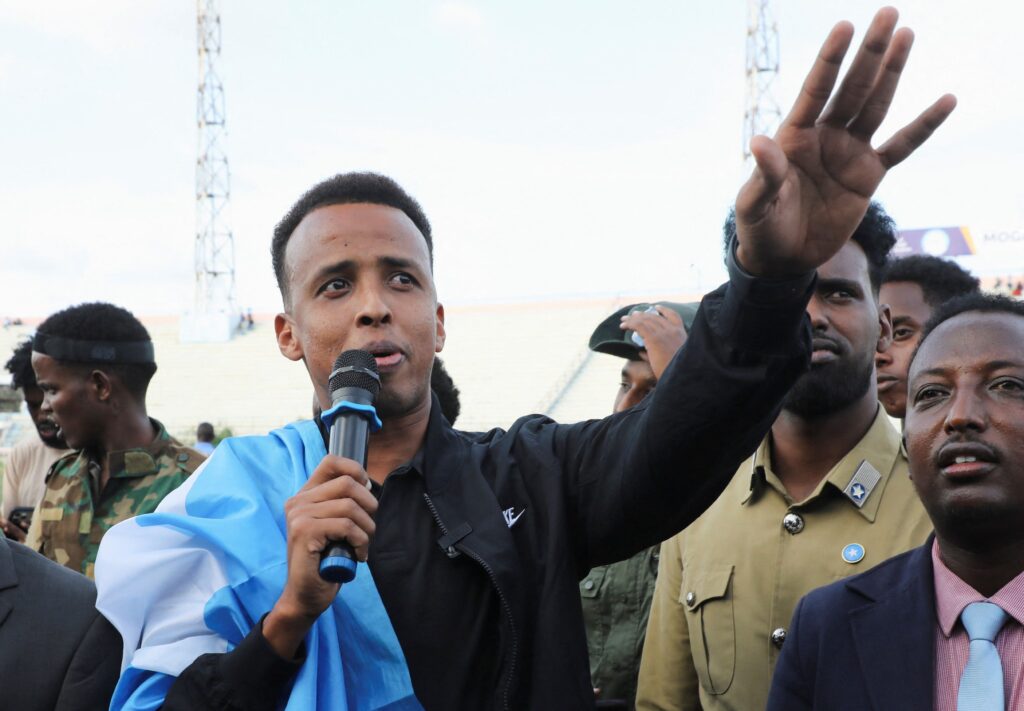
Trump’s crackdown on immigration to the U.S. has directly impacted these games.
The clearest example is Omar Artan, who was named Africa’s best male referee in 2025. Artan was denied entry to the U.S. despite FIFA intending him to referee matches in this year’s tournament. U.S. Customs and Border Protection said in a statement that he was denied entry due to “vetting concerns” but did not specify. FIFA subsequently cut him from the list of tournament referees.
A likely reason for the stoppage? Somalia is one of the nearly 40 countries on which the president has imposed new travel restrictions.
Artan is not alone. There have been reports of travel issues for fans, as well.
This new immigration policy will also be visible at matches. Our colleague David Nakamura had a great piece this week about how the World Cup “became a front line for the U.S. immigration debate,” including the presence of Immigration and Customs Enforcement officials at matches.
The World Cup has been canceled twice — in 1942 and 1946 because of World War II. But the event has also been overshadowed by international conflict. Take when England faced Argentina in 1986, a few years after the Falklands War between the two nations.
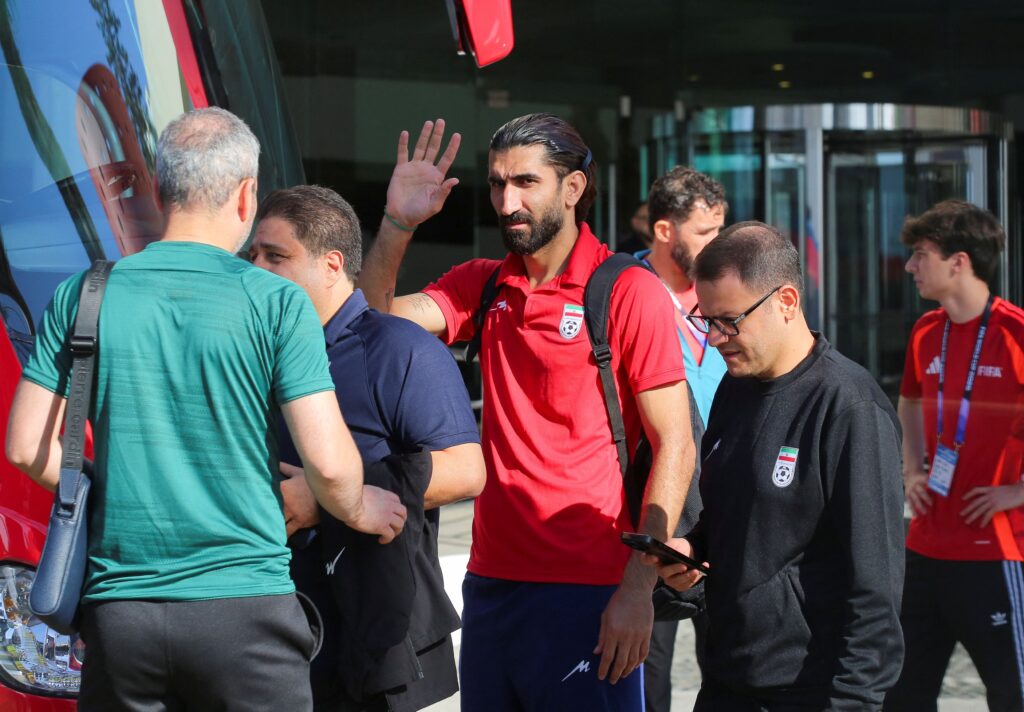
This year’s tournament could be even more directly impacted by conflict: With the U.S. locked in an armed conflict with Iran, and both teams making the tournament, this year’s competition will mark the first time in World Cup history that a host country is at war with one of the tournament’s contenders.
And the start of the World Cup has done nothing to alter Trump’s aggression toward the nation. The president vowed on the first day of the tournament to hit Iran “very hard tonight” and to take over Kharg Island, a key location for the nation’s oil industry. Trump later backed away from these threats.
Iran was supposed to stay in the U.S. for the duration of the tournament. But considering all of that, they instead opted to hold their camp just across the border in Tijuana, Mexico. Our colleagues Samantha Schmidt and Susannah George published a deeply reported story that highlighted how the team has found an unlikely home in the border city.
Some Iranian officials have also not been granted visas for the tournament. “What we’re not going to allow is for them to embed in their delegation a bunch of people that we know have nothing to do with athletics and have ties to the IRGC or things of that nature,” Secretary of State Marco Rubio said last week.
And just to add to the drama: It is possible that the U.S. could play Iran in Texas on July 3.
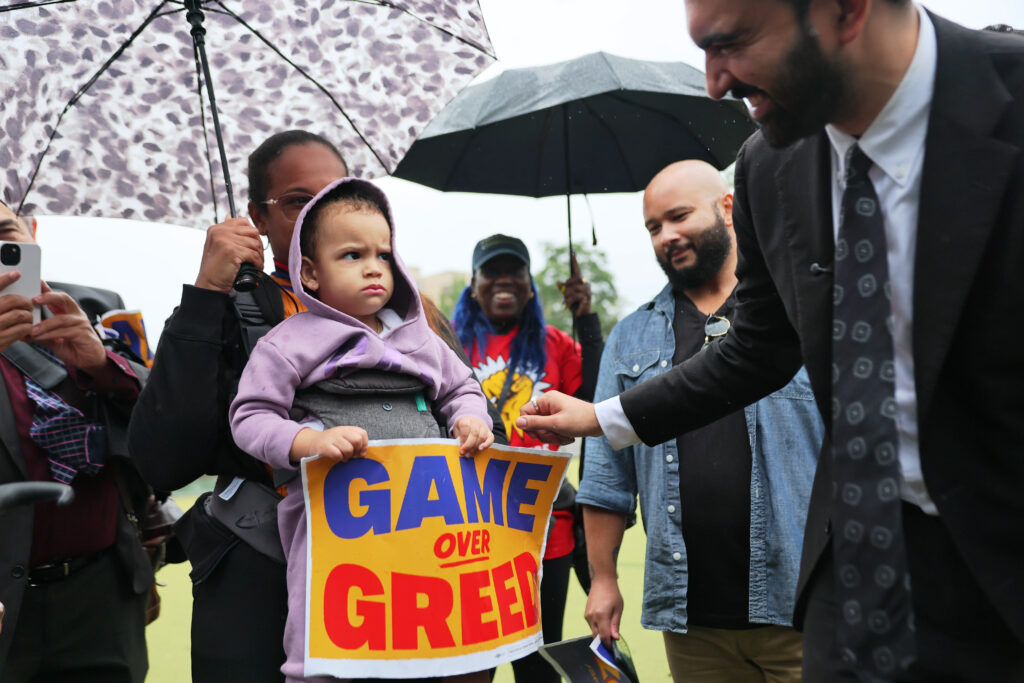
This World Cup will be uniquely expensive. And that comes at a time when the U.S. — and many other countries — have seen rising prices and inflation becoming a major political issue.
Infantino has vocally defended the pricing, citing the legality of the secondary market in the U.S.
“If you sell it at a lower price point, in this particular market it would have gone — which is perfectly legal in this country … in secondary markets at much, much, much higher prices and where would the money go then?” he said this week. “Well, to those who organize secondary markets or black market activities and not to football.”
But that will certainly not quell concerns about what these matches are costing — to both communities and fans.
Read more There are two Dan Sullivans in Alaska’s Senate race. Yes, really.
Trump announced he’ll nominate Jay Clayton, the lead federal attorney for the influential Southern District of New York, to be the next Director of National Intelligence. He replaces outgoing DNI Tulsi Gabbard, one of the most controversial picks of Trump’s cabinet.
“Few people anywhere in the Legal Community are respected at the level of Jay,” Trump wrote on Truth Social. “I encourage the United States Senate to confirm Jay as soon as possible.”
The DNI office has had a tumultuous year. Gabbard announced she would be stepping down from her position at the end of the month to take care of her husband, who was diagnosed with a rare form of bone cancer, and amid pressure from the White House to leave her position. She had long opposed the kind of military intervention that defined much of Trump’s foreign policy for the first half of this year, including ousting Venezuelan President Nicolás Maduro, bombing Iran and threatening to overthrow Cuba’s government.
Trump selected Bill Pulte, the former head of the federal mortgage regulatory agency, earlier this month to replace Gabbard in an acting capacity. But his selection drove senators into revolt. The DNI coordinates the 18 elements of the intelligence community, and federal law requires nominees for the permanent job to have ‘extensive national security expertise.’ Pulte does not, and Democrats and a handful of Republican senators seriously questioned his selection.
The opposition was so bad that it led to senators tanking reauthorizing the Foreign Intelligence Surveillance Act, a major spy law that is set to expire on Friday. Senate Democrats refused to let someone as inexperienced as Pulte have access to the legislation’s awesome espionage powers. A handful of Republicans also voted against renewing the bill over a provision that allows peeking into messages sent by foreigners without a warrant, even if U.S. citizens are involved. The House also voted not to extend the legislation yesterday before jetting off for a one-week recess, putting the authority on track to lapse at the end of the week.
Trump didn’t say in his announcement whether Clayton’s nomination would mean Pulte would take over the job in a temporary capacity, so Democrats are still furious. But Senate Republican leadership said before Clayton’s selection that having a permanent nominee would help alleviate some concerns on their side of the aisle.
A few key Democrats have come out in support of Clayton, including the top Democrat on the House Intelligence Committee, Jim Himes (D-Connecticut).
“I’ve known and respected Jay Clayton for decades. His intelligence, temperament and deep commitment to public service will make him a terrific DNI,” Himes wrote on X. “Had this nomination been made a week ago, lots of pain might have been avoided.”
Clayton will need to be confirmed by a simple majority of senators for the position. Read more about his background from our colleagues here.
The San Francisco Standard: It is well known that San Francisco Mayor Daniel Lurie spent considerable amounts of his own money to get into office. But this report finds a $30 million nonprofit is boosting his work in office, too.
VT Digger: This is the beauty of the World Cup. A small population of Congolese immigrants in Vermont is elated that their nation has qualified for the tournament in the United States. “Like Christmas for us,” said one fan.
The Texas Tribune: Texas’s Democratic Senate nominee James Talarico will air a Spanish-language ad during the FIFA World Cup, seeking to take advantage of the world’s biggest sporting event.
Honolulu Star-Advertiser: Many states are considering pausing their gas tax while prices remain high because of the war in Iran. Hawaii is one such state, with Gov. Josh Green (D) stating he is “contemplating a pause on state and county taxes on gas for part of the summer, just to give people maybe 30 cents a gallon relief.”
We wanted to highlight one thoughtful response we received to our questions about political baggage and whether it matters as much as it used to.
“I’m old enough to remember when ‘scandal’ actually meant the political aspirations of a candidate came to a screeching halt. Gary Hart comes to mind,” wrote Mary Ciriello, a reader in Akron, Ohio. “Now his indiscretions seem quaint.”
So what happened? Ciriello speculates that voters “gradually became desensitized to the snowball that rapidly became an avalanche of misbehavior among politicians and other public figures. If the current shenanigans had happened in the not-too-distant past, this president, his administration, as well as people like Paxton and Platner would have been run out of town on a rail.”
She added: “It will be a very long time before Pandora gets stuffed back into the box.”
We wrote today about the politics of the World Cup — and we noted that some viewers angered by Trump’s involvement hope the tournament does not go as planned. We wanted to dig into that: How are you feeling about Trump’s role in the World Cup? Are you hoping the tournament isn’t a success because of his involvement? Or do you separate your politics from the event? Let us and your fellow Early Brief readers know at [email protected].
Thanks for reading. You can follow Dan and Matthew on X: @merica and @matthewichoi.
Read more Oil executives warn White House that gas prices will get worse