GOP senators criticized provisions including a plan to set up a $300 billion fund meant to rebuild Iran.
Read more Jason Day pulls out of US Open with back problems
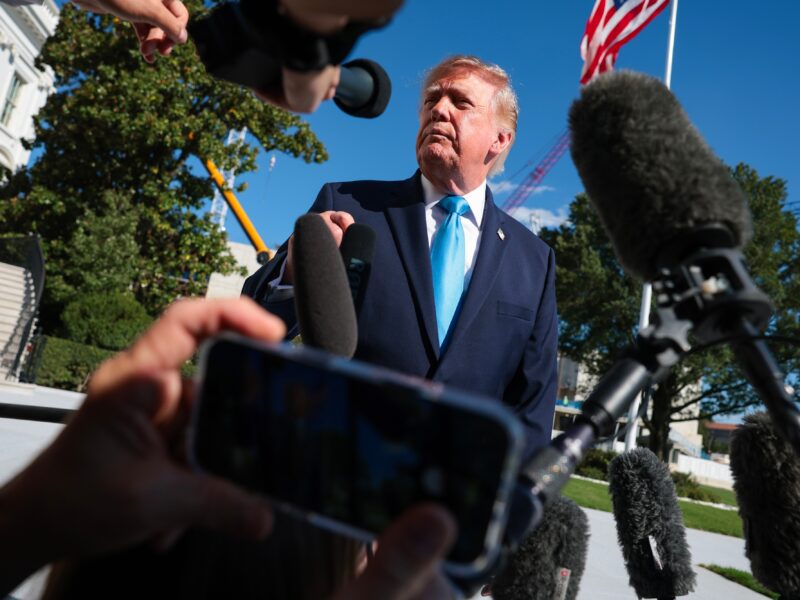
Senate Republicans are finally learning the details of the agreement that President Donald Trump struck with the Iranian government days ago to end the war — and many of them are not happy.
The Trump administration initially kept the memorandum of understanding that it signed on Sunday a secret, before making it public Wednesday.
The agreement immediately drew loud protests from Democrats — but Republican senators also criticized many provisions, including the lifting of U.S. sanctions on Iran’s oil exports and its plan to set up a $300 billion fund to rebuild Iran.
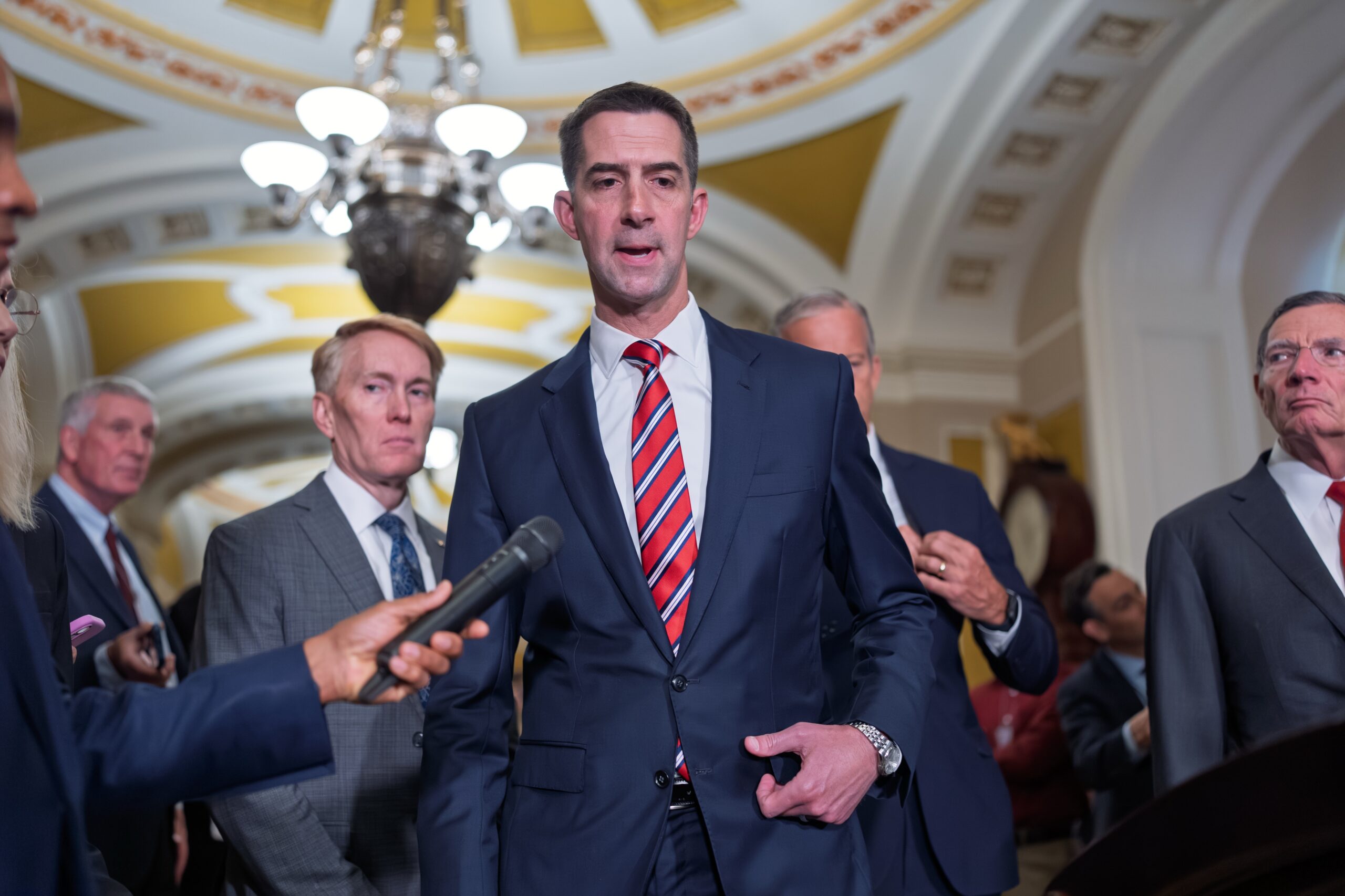
Sen. Tom Cotton (R-Arkansas), chairman of the Senate Intelligence Committee, said he was concerned that “certain aspects of this deal are a step in the wrong direction.”
Cotton criticized lifting U.S. sanctions on Iran’s oil exports, which he estimated would allow the country to bring in between $4.5 billion and $6 billion a month.
“That’s a lot of money,” Cotton said Thursday on Fox News. “And we know that this terrorist revolutionary regime is not going to spend that money on day care or on hospitals. They’re going to use it to rebuild their drone stockpiles, their missiles, to fund Hamas and fund Hezbollah.”
Sen. Roger Wicker (R-Mississippi), chairman of the Senate Armed Services Committee, lambasted the $300 billion fund. While the administration has said it will be funded by other countries in the region rather than the United States, Wicker said it makes the $1.7 billion that the Obama administration sent to Iran as part of a 2015 nuclear deal “look like a pittance by comparison.”
Wicker also raised concerns about the agreement’s declaration that all military operations would cease in Lebanon, which Israel has occupied as part of its campaign against Hezbollah, the militant group allied with Iran. Israel was not involved in negotiating the agreement, and many Israelis have denounced it.
“I also oppose the U.S. lifting any sanctions on Iran, or unfreezing Iranian funds, in exchange for Iran’s mere agreement to negotiate for another 60 days,” Wicker said in a statement. “The Iranian regime has not renounced its ultimate goal — ‘Death to America, Death to Israel.’ The regime will invest every penny it receives to further that aim.”
The pushback was notable because neither Cotton nor Wicker are frequent critics of the administration.
The criticism from Republicans recalled in some ways the dissatisfaction among some Democrats when President Barack Obama struck a deal in 2015 meant to prevent Iran from building a nuclear weapon, although most Democratic senators did not oppose Obama’s deal. Just four Senate Democrats joined Republicans that year in voting to take up a resolution rejecting the deal.
Unlike the Obama administration’s deal with Iran, the Trump administration’s memorandum of understanding is not a final deal. Instead, it is meant to kick off negotiations between the U.S. and Iran on a more enduring agreement that addresses Iran’s nuclear program and other issues.
Senate Majority Leader John Thune (R-South Dakota), who was briefed on the deal Thursday, days after requesting a briefing from the administration, described it as a step in the right direction because it is expected to reopen the Strait of Hormuz, the crucial shipping lane that Iran closed as it sought leverage during the war.
“I view this as a first step in what will probably be a somewhat long — and continue to be a contentious — conversation about what a final deal looks like,” Thune told reporters Thursday.
Read more Scheffler shoots 2 over at windy US Open, will need to rebound to complete the career Grand Slam
Vice President JD Vance defended the deal Thursday during a White House news briefing. The only way Iran will benefit from the proposed $300 billion fund, he said, is by changing its behavior.
“You really have a win-win situation for the United States of America,” Vance said. “If the Iranians don’t change their behavior, their military and their nuclear program is still destroyed. If they do change their behavior, then they are going to have a transformative relationship with the Middle East, and the Middle East will have a transformative relationship with the people of Iran.”
Some Republicans echoed Thune in praising the deal or reserving judgment on it. Sen. Lindsey Graham (R-South Carolina), a leading Iran hawk, said he thought the agreement would benefit the U.S. by opening the Strait of Hormuz.
“I read the memorandum of understanding between the United States and Iran,” Sen. John Neely Kennedy (R-Louisiana) said on the Senate floor. “I read it twice. And for what it’s worth, here’s my conclusion: I think we ought to give peace a chance, and that’s all I’m saying today.”
Others joined Cotton and Wicker in raising concerns. Sen. Bill Cassidy (R-Louisiana) called the agreement “the worst foreign policy blunder in decades.”
Sen. Deb Fischer (R-Nebraska), a senior member of the Armed Services Committee, urged the administration not to lose sight of Trump’s aim to make sure that Iran cannot develop a nuclear weapon.
“The president has put us in a position of strength,” Fischer said in a statement. “We cannot afford to squander it. I want more details from the administration on how the final deal will put America first, limit the regime’s ballistic missiles, and verifiably ensure Iran turns over its highly enriched uranium.”
Sen. Lisa Murkowski (R-Alaska) told reporters she wanted to give the agreement the benefit of the doubt but said it was hard to see how it “leaves Iran in a worse place and the United States in a better place” than they were before the war.
Democrats, who have repeatedly forced votes in Congress to try to force Trump to end the war, also panned the agreement.
Sen. Jack Reed (Rhode Island), the top Democrat on the Senate Armed Services Committee, said he was relieved the war was ending but faulted the specifics of the agreement for failing to achieve Trump’s war aims. He described the lifting of U.S. sanctions on Iranian oil as “gross negligence.”
“Economic relief should be conditioned on demonstrated compliance, yet the Trump Administration is offering it as an opening bid,” Reed said in a statement.
Senate Minority Leader Charles E. Schumer (D-New York) — who opposed Obama’s Iran deal in 2015 — told reporters that the pushback from Republicans underscored the flaws in Trump’s agreement.
“It is so bad that even Republicans who cringe and knock their knees before criticizing Trump have no choice but to say what a bad deal this is,” Schumer said.
Read more Rep. Kean to return to Congress after mysterious absence, spokesman says
Noah Robertson contributed to this report.