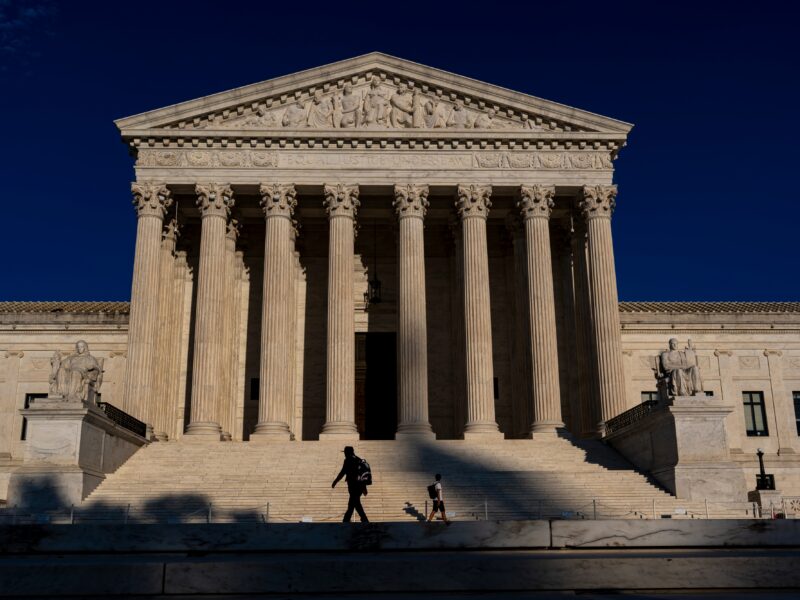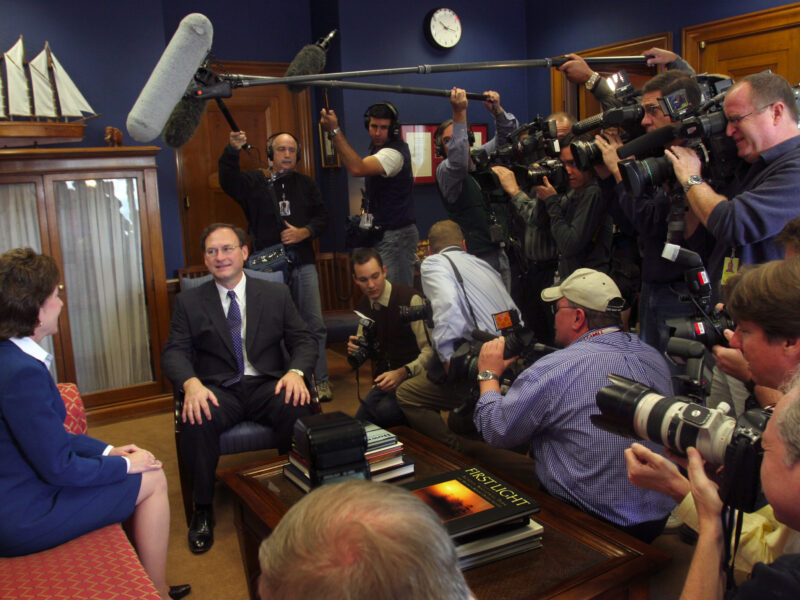
The ruling restricts one of the largest waves of product liability lawsuits in the history of the nation.
The Supreme Court on Thursday restricted a massive wave of lawsuits claiming the chemical giant Monsanto had a duty to warn consumers of alleged cancer risks from the world’s most popular weed killer, Roundup.
The decision turned on a technical legal question, but one with enormous stakes. On the line are billions of dollars, the fate of tens of thousands of lawsuits filed by cancer victims and the future of an herbicide farmers say is crucial to the nation’s food supply but health groups warn is a danger.
In an ideologically mixed 7-2 decision, the justices ruled that federal law preempts cancer victims from bringing lawsuits against Monsanto in state courts, where most such claims are filed. The justices ruled Monsanto was not required to offer a warning because the Environmental Protection Agency holds that Roundup’s active ingredient, glyphosate, is not a cancer risk.
“EPA has not required glyphosate-based pesticides like Roundup to include a cancer warning on their labels,” Justice Brett M. Kavanaugh wrote for the majority. “Therefore, as a matter of federal law, Monsanto legally must use a label without a cancer warning unless and until EPA approves or requires a change.”
The ruling came over the objections of liberal Justice Ketanji Brown Jackson and conservative Justice Neil M. Gorsuch.
“Ultimately, the effect of the majority’s interpretation is both remarkable and regrettable, for it unjustifiably closes the courthouse doors to state tort plaintiffs like Durnell,” Jackson wrote.
John Durnell sued Monsanto in 2019 in Missouri state court, claiming his use of Roundup as part of an initiative to beautify parks around his home in St. Louis over two decades caused his non-Hodgkin lymphoma, a form of blood cancer. Monsanto, which is now owned by Bayer, denies a link between the weed killer and cancer.
“Monsanto has known for decades that its popular weed killer, Roundup, can cause cancer,” Durnell’s attorneys wrote in a Supreme Court filing. “But the company has refused to make its product safer or to inform consumers that they should exercise caution when using it. Instead, Monsanto has marketed Roundup as safe to spray in a t-shirt and shorts.”
A Missouri jury in 2023 ruled for Durnell, awarding him $1.25 million. An appeals court rejected Monsanto’s appeal, before Monsanto eventually asked the Supreme Court to take up the case in April 2025.
The EPA has repeatedly found that glyphosate, which was first marketed in the 1970s, does not cause cancer.
The American Farm Bureau Federation estimates glyphosate is used on about 300 million acres of farmland in the United States and is integral to feeding the nation. Otherwise, it says, farmers might have to rely on harsher, less-safe herbicides.
“To remove glyphosate from the market would pose an immediate, devastating risk to America’s food supply,” the bureau wrote in a friend-of-the-court brief in the case. “Farmers depend on this safe herbicide to support high-yield food and fiber production, season after season.”
But in 2015 the International Agency for Research on Cancer, which is associated with the United Nations and World Health Organization, found glyphosate was “probably carcinogenic to humans” after reviewing available research on the chemical. In particular, the agency found a likely link between non-Hodgkin lymphoma and glyphosate.
Read more Democratic socialists cemented power in New York. Next, the rest of the country?
Some countries banned the herbicide in the wake of the report.
The finding also led to more than 100,000 people with cancer or their families filing lawsuits against Monsanto for failing to warn them of alleged health risks from Roundup. Bayer has spent about $11 billion on settlements to date, but thousands of cases remain open.
The litigation prompted Monsanto to remove glyphosate-based Roundup from the consumer market, but it is still available to farmers and commercial users.
Monsanto asked the Supreme Court to immunize it from nonfederal lawsuits. The company argues the Federal Insecticide, Fungicide and Rodenticide Act (FIFRA), which regulates the sale and marketing of pesticides and herbicides, preempts state-court claims.
The law requires companies to submit studies showing an herbicide carries no “unreasonable risk” to human health or the environment before the EPA will approve its sale.
The EPA must also clear a product’s label, which is barred from featuring false or misleading statements and must feature warnings for any health or environmental risks. The manufacturer must seek EPA approval for any substantive changes to the label.
The law allows states to regulate herbicides, but it blocks them from requiring any additional labeling not mandated by FIFRA. One of the goals of the law was to have a uniform standard for labeling, instead of different requirements in different states.
Paul Clement, Monsanto’s attorney, said during arguments before the high court in April that FIFRA preempted any state claims that the company had to warn cancer victims of alleged dangers posed by Roundup because the EPA has determined glyphosate is safe for use.
“A Missouri jury has told us that a cancer label that is not required to be put on the label is required to be put on the label,” Clement said.
In addition, the company argued in legal filings that the ongoing litigation could force it to remove Roundup from the market altogether with devastating effects for the nation’s farmers.
The Trump administration is supporting Monsanto — a switch from the Biden administration, which backed Durnell.
Durnell’s attorneys argued that Monsanto violated FIFRA’s prohibition on false and misleading labels, since they knew it might cause cancer and failed to warn people about it.
Some farm workers’ groups, cancer prevention organizations and environmentalists backed Durnell, saying Roundup poses substantial risks and should be labeled a carcinogen. They say blocking state suits will remove one of the only means people with cancer have to get recompense.
“Cancer is an epidemic, afflicting more than 1 in 3 Americans within their lifetimes,” the Center for Food Safety and other groups wrote in a friend-of-the-court brief. “The Court should not afford Monsanto immunity for its products’ risks … and deny Americans their right to know the risks of an inherently dangerous product.”
Read more History-making World Cup soccer referee Stéphanie Frappart joins staff of UEFA