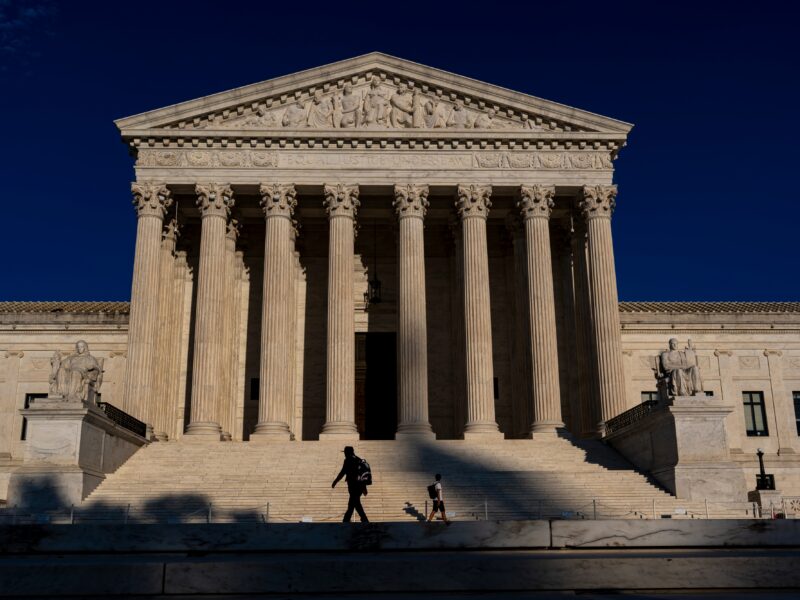
The decision could allow the government to deport hundreds of thousands of people starting this year.
Read more Supreme Court blocks thousands of suits claiming Roundup causes cancer
The Trump administration can cancel temporary humanitarian protections for Haitian and Syrian immigrants living legally in the United States, the Supreme Court found on Thursday, a decision that could allow the government to deport hundreds of thousands of people starting this year.
The effects are likely to be immediate and ripple beyond Haitians and Syrians to affect approximately 1.3 million immigrants from 17 countries who had temporary protected status when President Donald Trump took office. Since then, the Department of Homeland Security has sought to eliminate protections for 13 of those countries, including Haiti, Syria and several others that the State Department considers highly dangerous.
In a 6-3 decision along ideological lines, the conservative justices found that courts do not have authority to review determinations by DHS to end temporary protected status for Haitian and Syrian immigrants.
Congress created temporary protected status (TPS) in 1990 to shield immigrants in the United States from being deported to countries engulfed in armed conflict, a natural disaster or another extraordinary crisis, allowing them to work legally in the U.S. for up to 18 months.
Applicants to the program cannot have serious criminal records, and they must pay fees and pass a background check.
The U.S. government can renew the protections — and it has, multiple times, for several countries. That has provoked criticism from Trump and his base for allowing the provisional status to last for years, even decades.
“Keep in mind, this is temporary protected status,” Solicitor General D. John Sauer told the court during oral arguments in April. “The word temporary is used again and again in the statute, including its title.”
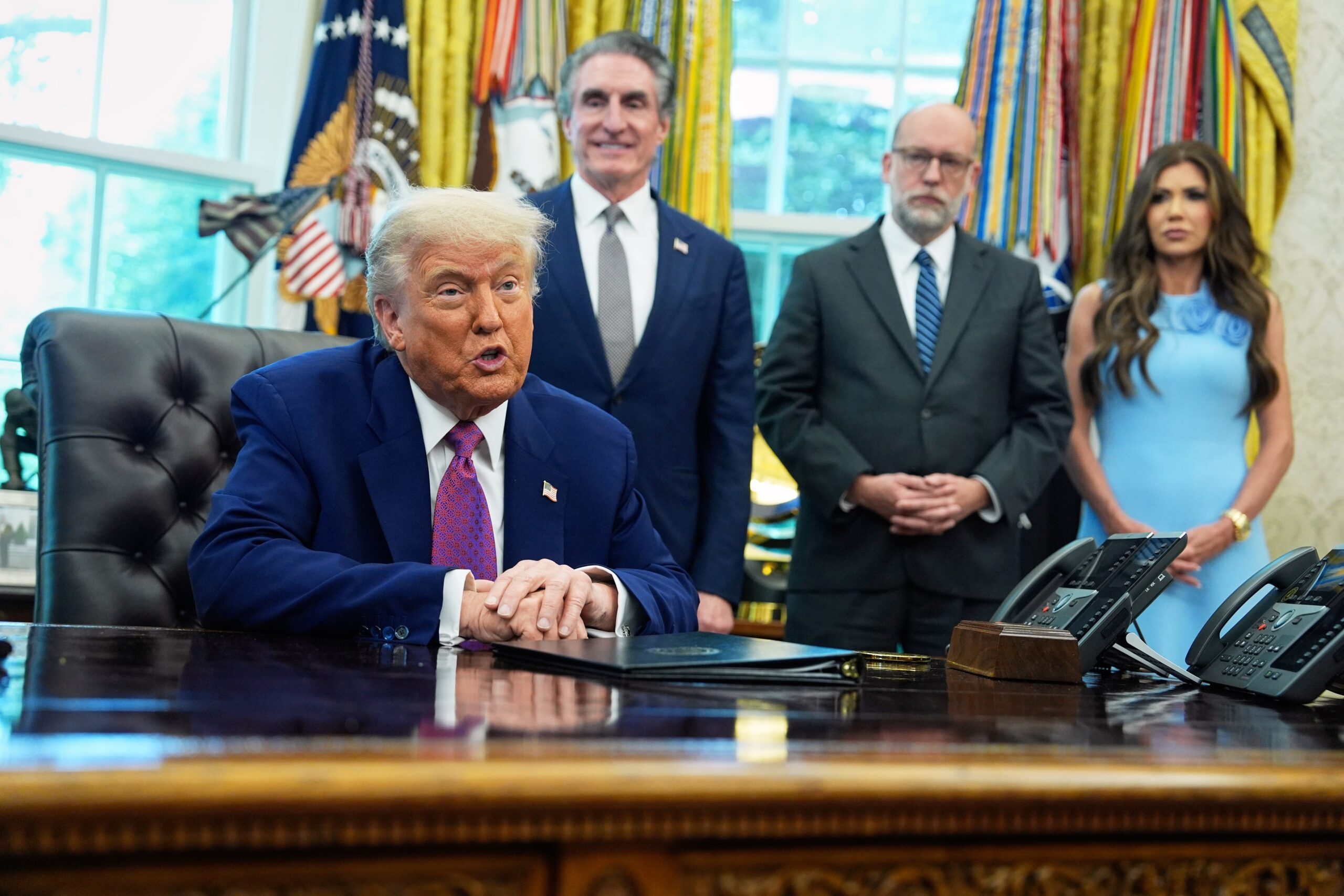
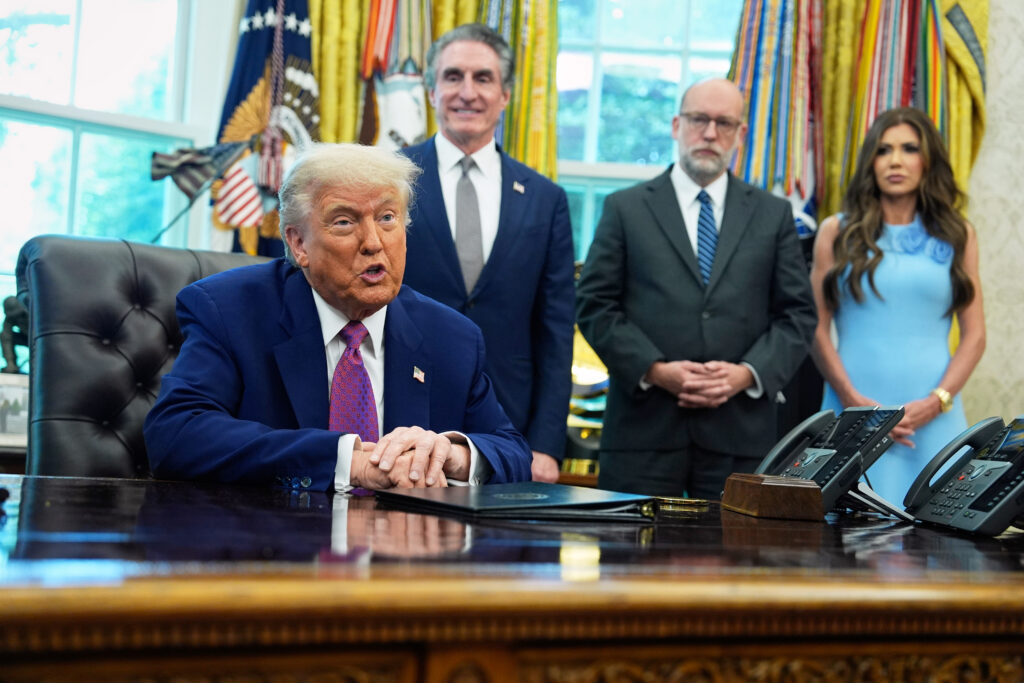
The cases tested a key part of Trump’s immigration agenda, which has not only sought to deport undocumented immigrants but also to narrow the legal pathways for immigrants to reside in the U.S.
As he campaigned for his second presidential term, Trump pledged to revoke temporary protected status for Haitian immigrants, while spreading false claims that Haitian residents in Springfield, Ohio, were killing and eating their neighbors’ pets.
This term, the justices also weighed other cornerstones of Trump’s immigration agenda, including his attempt to end the Constitution’s guarantee of birthright citizenship, the principle that almost everyone born on U.S. soil is a citizen. Trump attended oral arguments for that case in April, highlighting the case’s importance.
The justices also decided Thursday that migrants on the Mexican side of the southern border are not entitled to apply for asylum.
At the heart of Trump’s argument in the TPS cases was that courts could not review determinations by his administration that immigrants from Haiti and Syria no longer needed protections.
Lawyers for the government said strong evidence demonstrating that countries like Haiti remain dangerous cannot refute a determination by the homeland security secretary that the immigrants must return there.
Attorneys for the immigrants countered that government officials must follow a set of procedures before making a determination. They argued that Kristi L. Noem, who canceled protections for Haitians and Syrians while she was homeland security secretary, failed to properly consult with other agencies in making her decision.
As evidence, they pointed to the State Department’s advice that U.S. citizens should not travel to either Haiti or Syria because of risks of terrorism, kidnapping and armed conflict. These advisories recommend that visitors establish “proof of life” protocols in case they are taken hostage “to confirm that you are being held captive and alive.”
More than 353,000 Haitian migrants have received TPS protections. They first received protections in 2010 following Haiti’s devastating 7.0-magnitude earthquake, and the protected status was extended to include those who arrived later. Haiti has faced multiple crises, including the 2021 assassination of its president and widespread gang violence. In February 2025, Noem made good on Trump’s promise to limit the program, kicking off the process to cancel temporary protections.
As the justices considered the Haitians’ case in June, a Haitian police official and his family were kidnapped in broad daylight amid a resurgence of violence in the country.
In September, Noem terminated temporary protected status for a little more than 6,000 Syrian immigrants. They had received protections starting in 2012 during the violent crackdown by Syria’s leader at the time, Bashar al-Assad. Because Assad’s regime fell in 2024 — and the country’s brutal civil war had subsided to “sporadic, isolated episodes of violence” — Noem determined that Syrians also could return to their home country.
Read more Democratic socialists cemented power in New York. Next, the rest of the country?