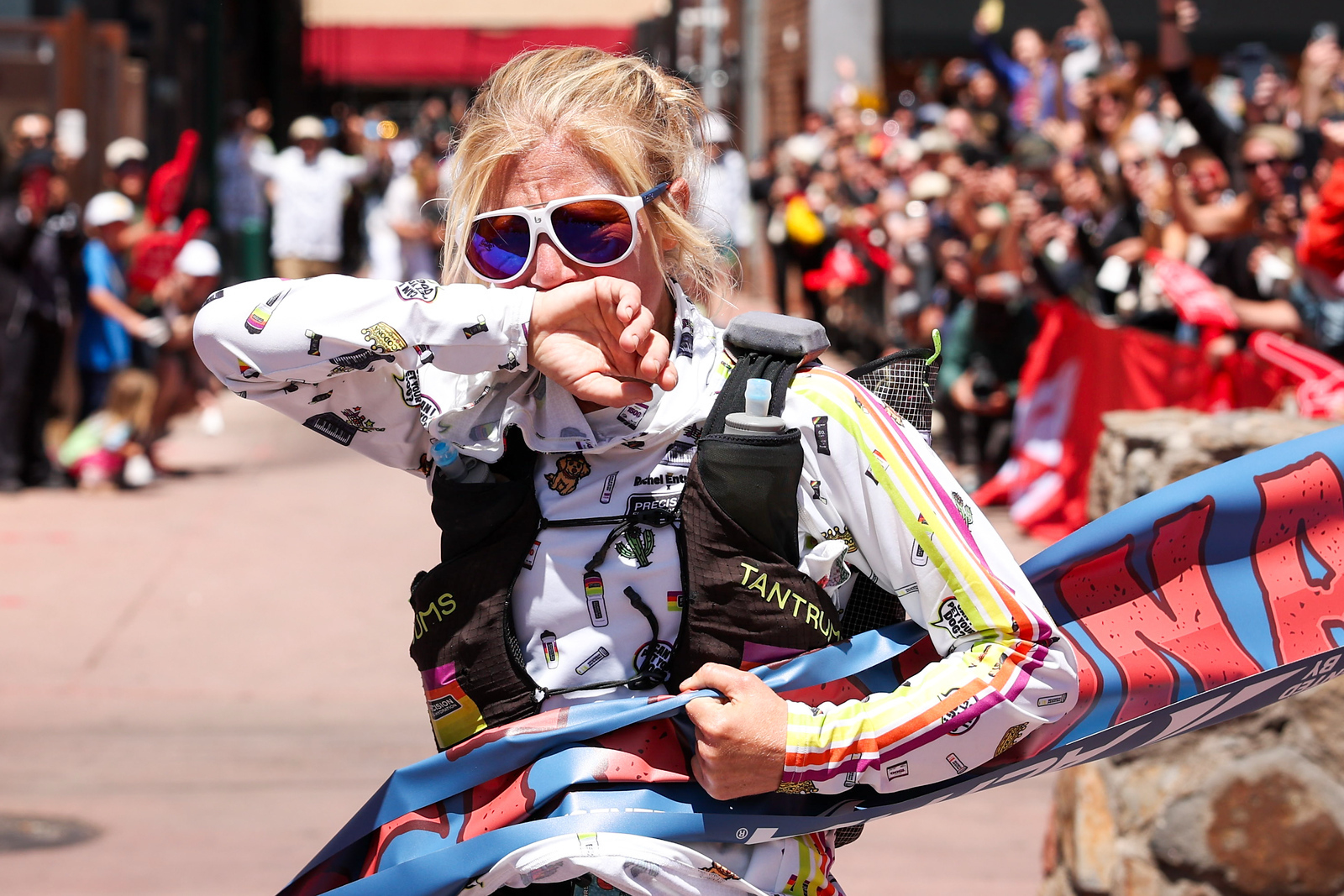
Fueled by mashed potatoes and moxie, Rachel Entrekin blew past the field at a 250-mile race known for breaking competitors’ will.
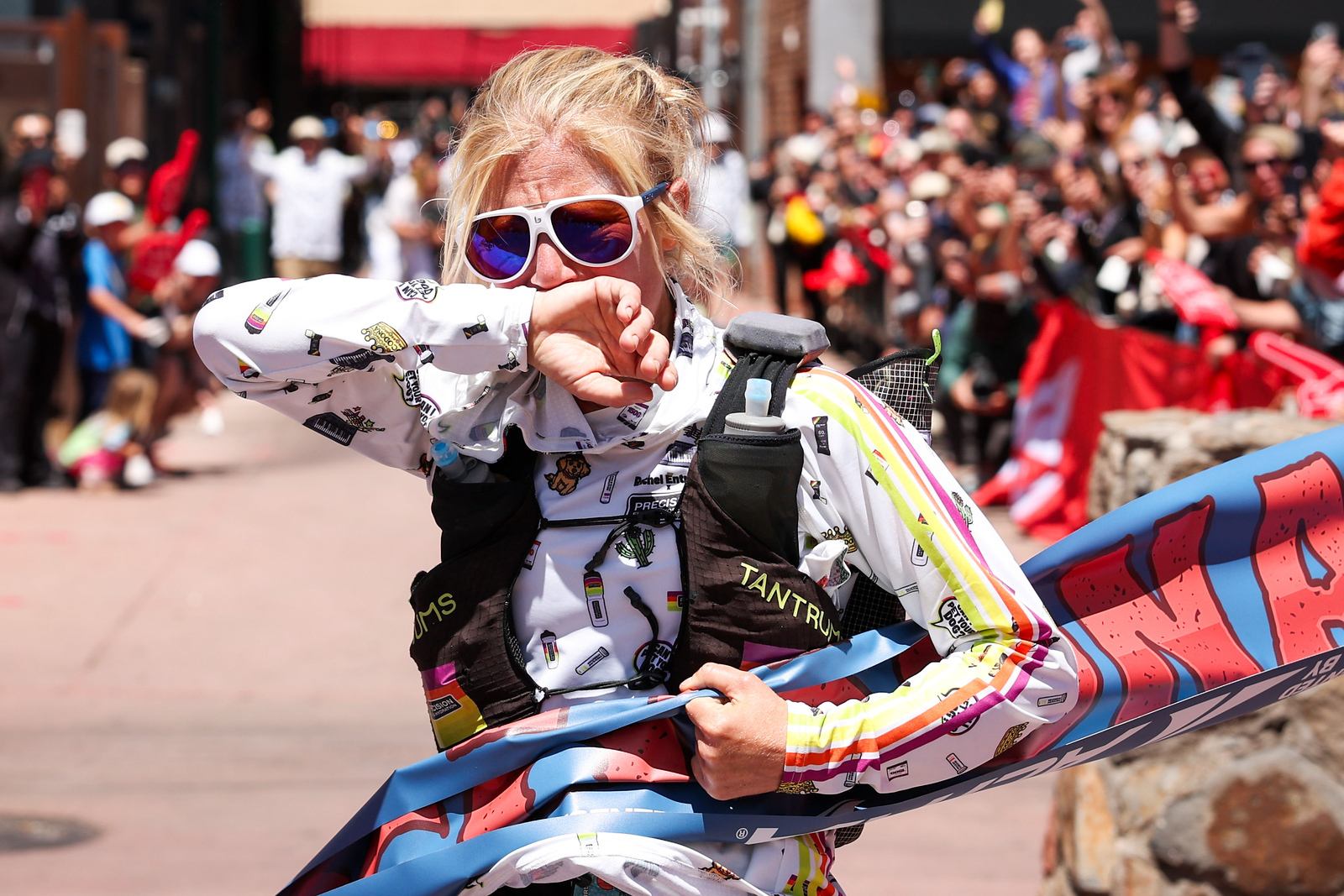
Rachel Entrekin was already known as the “Queen of Cocodona” when she arrived in Arizona last week for one of America’s most punishing ultramarathons.
Then the 250-mile race started. Entrekin, a two-time women’s champion in the event, found herself running again with the elite males, and she began wondering: “Why not you?”
Then she pulled away, crushing the course record by seven hours, beating every man and woman in the field and providing another example of how multi-day races have erased gender lines.
Now, at 34, Entrekin’s the king of Cocodona, too, or maybe something more than that.
“One of my pacers has determined that I must be from another planet,” Entrekin said in an interview this week, still buzzing from her historic win.
Entrekin began running in 2009, as a student at the University of Alabama, before starting a career in physical therapy. She eventually started competing in half marathons, then full ones, before hitting longer ultramarathons in the Southeast and descending into what she called “insanity.” When she moved to Washington state and looked up at the vistas, she found her calling.
“I love running up mountains,” she told the “For the Long Run” podcast in February.
Today, Entrekin is fully sponsored and has won or placed in about 100 ultras, regularly beating men. At Cocodona, that meant finishing in 56 hours, nine minutes and 48 seconds. Kilian Korth, the men’s winner, finished 78 minutes behind her.
Passing Korth and other top runners at mile 60 was a test of Entrekin’s “why not you?” philosophy.
“I thought about my résumé — that I’ve won this race twice already, and that I won lots of other 200-mile races and other 100-mile races. I’m just as qualified to be at the front of this race as they are, so why can’t it be me?” she said. “I thought, ‘I think I can do this, so why not?’”
Cocodona, which debuted in 2021, begins in the Sonoran Desert and weaves north through red rocks, pine forests and mountain ranges. It has quickly become a measuring stick for some of the world’s best ultrarunners.
This year’s race featured a mind-boggling 38,791 feet of elevation gain, which translates into miles of painful ascents and descents. It’s been described as the race that “breaks you,” and it’s one many starters can’t finish.
A female competitor died on the course this year from a “medical emergency.” Some social media posts from runners discuss feet that feel like raw hamburger, along with discussions about swollen tongues and videos of bloody foreheads. Hallucinations from lack of sleep are common. (Entrekin may or may not have seen bats.) Medics rushed in to meet one competitor who crawled across the line to the same chorus of cheers, 125 hours after starting.
Jamil Coury, the creator of the race, noted that Cocodona’s slogan is “Adventure Awaits,” not hell.
“The goal wasn’t to make the most brutal beatdown possible,” he said. “We wanted to create an adventure that takes you through historic towns and incredible landscapes.”
Coury said Entrekin’s performance last week was a “bit shocking,” and seeing her story break into mainstream media has been a joy. She’s been on ESPN, Bloomberg Television and “Good Morning America” since the win.
“She’s the perfect person for this,” Coury said. “She’s been dominant for many, many years, but she’s just so energetic and positive. It’s great for the sport.”
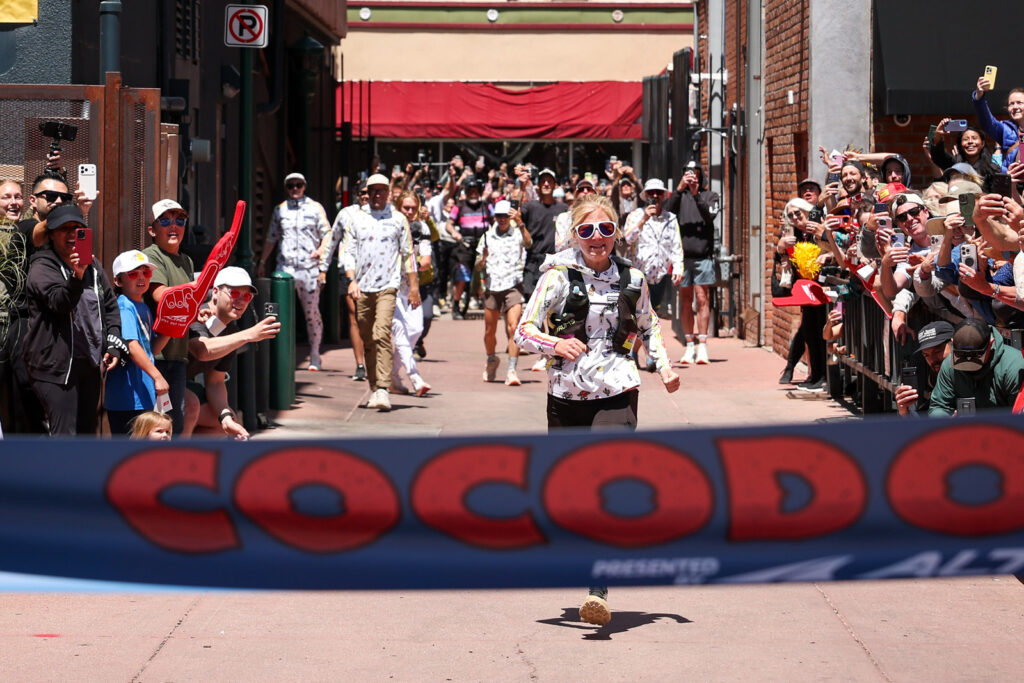
Entrekin has some theories about why women have excelled at longer distances.
“Top-end speed is not the be all, end all in the multi-day-running endurance scene,” Entrekin said. “I think women have a lot more practice, maybe, dealing with adversity and managing our emotional state and communicating.”
She mentioned Ann Trason, arguably the most accomplished female ultrarunner of all time, and Tara Dower, who finished the 2,197-mile Appalachian Trail in 40 days, 18 hours and 6 minutes in 2024, as examples.
Entrekin, who now lives in Colorado, isn’t calling for races to end gender categories and said she’s self-assured enough not to care how her win is classified. She just wishes, as Trason did decades earlier, that the conversation would evolve.
“I hope this is a step in the direction of maybe making men less of the measuring stick,” she said.
Amy Clark, editor of UltraRunning Magazine, said Entrekin is one of a handful of elite women doing unprecedented things in the sport. She said Courtney Dauwalter won the prestigious Moab 240 Endurance Run outright in 2017 and finished sixth overall at Cocodona. Entrekin, Clark said, has an uncanny ability to push through the lows that haunt every runner in ultramarathons.
“She’s so tough, and she goes hard, but she just has such a positive attitude. She doesn’t let those lows pull her back,” Clark said.
Entrekin, Coury noted, finished the race relatively unscathed. She slept just 19 minutes total over those 56 hours. While she consumed precision-crafted electrolyte drinks and gels to hydrate, like most competitors, she also had a Coke or two and a ton of mashed potatoes. She calls potatoes the “unsung hero” of ultrarunning.
“You just get tired of chewing,” she said.
In the past, loading up on candy and drinks at 7-Eleven was a pre-race ritual for Entrekin. She only recently started wearing a watch, and her cross-training consists of “occasional yoga,” she said. During the race — even one as serious as Cocodona — Entrekin is mostly all smiles, cracking jokes, petting dogs and chatting up fellow racers. She’s seemingly nonchalant about any setbacks, which are few.
“Uh, I fell in a hole,” she said at one aid station.
Instead of getting deep sleep and lots of real, hot meals after her finish, Entrekin hung around Flagstaff to cheer on other finishers. She’s not taking a beach vacation or any time off, really. In August, she’s racing in the highly competitive Ultra-Trail du Mont-Blanc in France.
She’s been itching to go for a run, but interviews keep getting in the way.
“I mean running is my favorite thing in the world,” she said. “Obviously.”