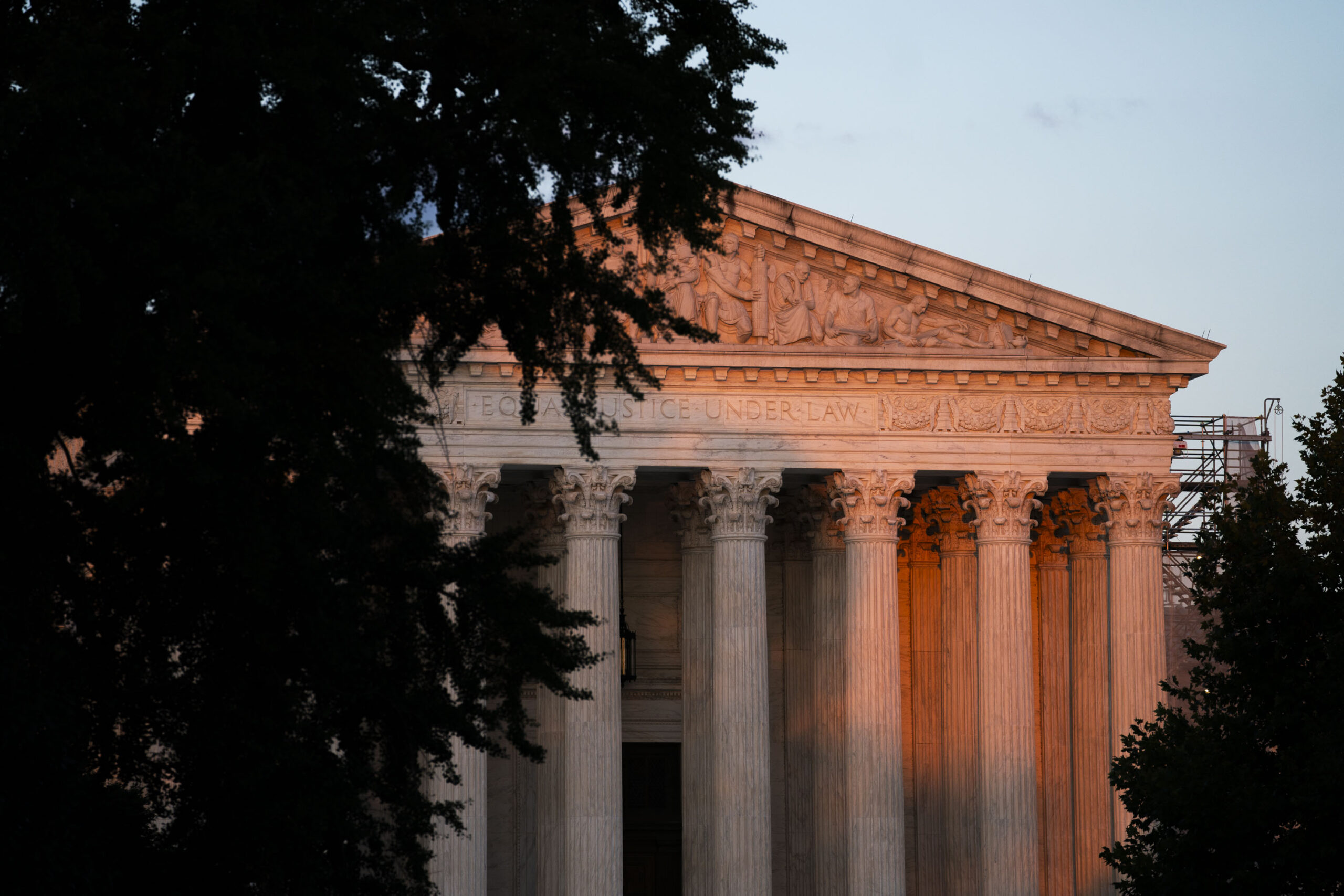
The Supreme Court on Tuesday sided with congressional Republicans in further loosening campaign finance limits, a decision likely to upend how political parties funnel millions of dollars into TV ads in the upcoming midterm elections.
Read more Supreme Court upholds bans on transgender women in female athletics
In a 6-3 decision, the majority found that limits on how much political parties can spend in coordination with candidates violated parties’ free-speech rights. The decision is the latest in recent years to strike down provisions meant to restrict money in politics.
In the near term, the ruling could favor Republicans, who have stockpiled over $125 million more than Democrats in their party committees ahead of the November midterms, The Washington Post has reported. The top Republican committees ended May with $256 million in the bank, with no debt. Top Democratic committees ended the month with $127 million in the bank, with $18 million in debt.
The decision allows the parties to spend as much as they want from those coffers in coordination with candidates, making the fundraising gap more pronounced.
Parties can now funnel money into campaigns, which are legally entitled to lower rates for TV and radio ads. That’s compared to outside groups, which are not allowed to coordinate with campaigns and have to pay more for ads.
The decision could also give more power back to national political parties relative to outside groups such as super PACs.
The decision is the latest this term that could affect the midterms. In April, the court’s conservative majority weakened Section 2 of the 1965 Voting Rights Act, touching off a scramble among some states to redraw their congressional maps to deliver seats to Republicans. The court on Monday rejected a Republican bid to limit mail-in balloting, keeping in place voting procedures in several states.
Read more Absent congressman returns to Congress after nearly four months
Vice President JD Vance and congressional Republicans had asked the court to remove limits on how much parties can spend in coordination with federal candidates on items such as TV ads and campaign expenses. They argued the existing limits hinder the parties’ free-speech rights and put parties in a weaker position than outside groups.
The Democratic Party opposed that bid, arguing that lifting limits on party spending would lead to a greater potential for quid pro quo corruption, allowing wealthy donors to dodge individual contribution limits by donating through parties instead.
While Tuesday’s decision means that parties can spend unlimited amounts on candidates, there are still limits on how much individuals can donate. Individuals can give $3,500 per election to a candidate, but can give $44,300 per year to a national party committee. By contrast, super PACs can accept unlimited amounts from individuals. Super PACs are still restricted in how they coordinate with candidates.
Over the past two decades, the Supreme Court has gradually loosened campaign finance regulations. The court, led by Chief Justice John G. Roberts Jr., has been especially receptive to arguments that restrictions violate constitutional free-speech rights.
In the 2010 Citizens United v. Federal Election Commission decision, the court ruled that corporations and other outside groups can spend unlimited amounts on candidates. Four years later, the court lifted the cap on how much wealthy donors can give to federal candidates, political parties and committees.
Read more Celebrity-backed LAFC sells majority stake in struggling Swiss soccer club Grasshopper
Dan Merica and Hannah Knowles contributed to this report.