SANTA CLARA, Calif. — Not surprisingly, Folarin Balogun was the difference in the World Cup match that could change the trajectory of the U.S. men’s national soccer team — first in the way the Americans had spent years hoping for, then in a way no one could have expected.
Read more Balogun gets US’s go-ahead goal against Bosnia and then red card
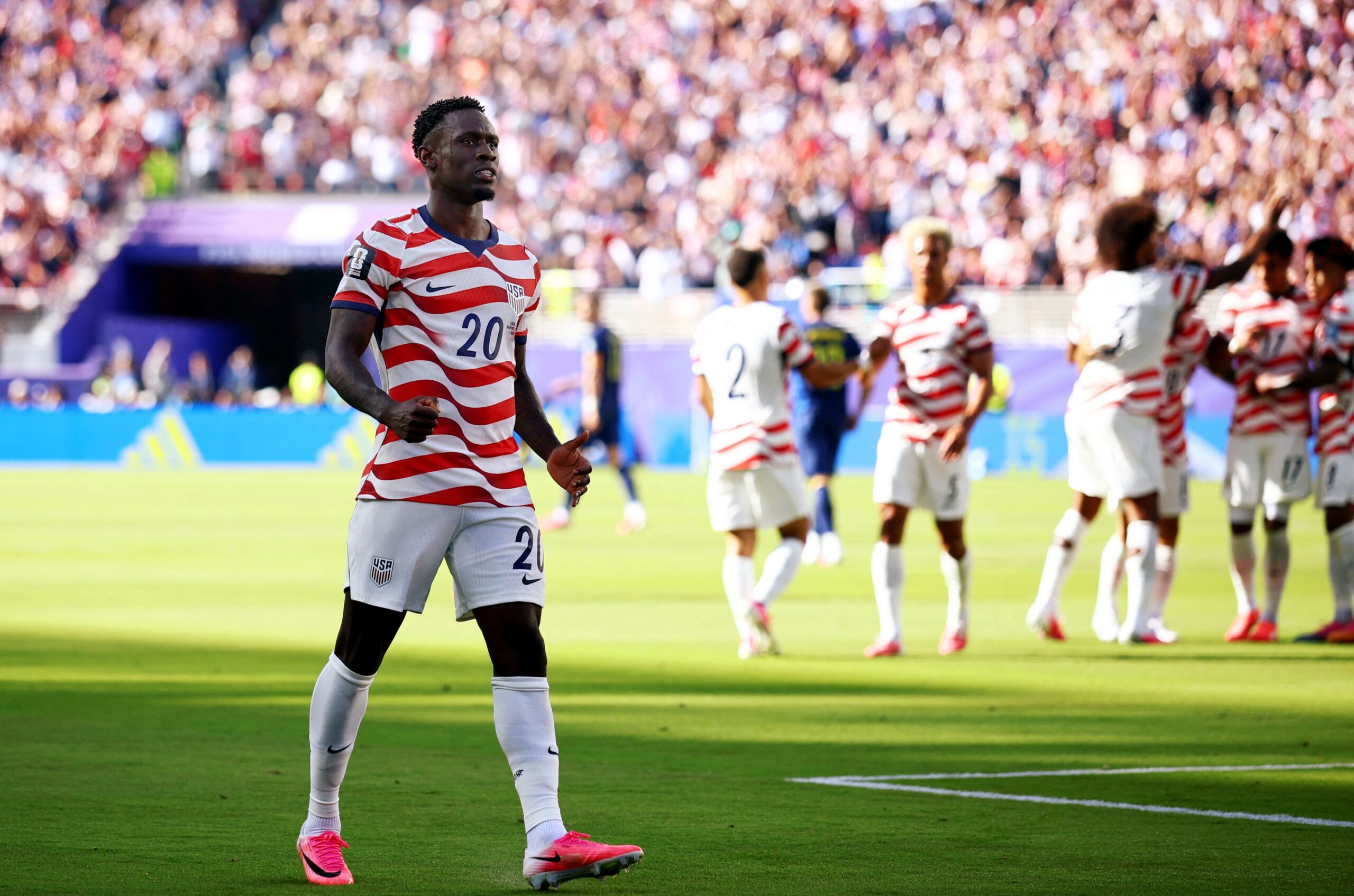
Balogun, the dynamic 24-year-old striker, has emerged at this World Cup as the decisive front-line threat the U.S. team has long searched for. His goal in the 45th minute helped lift the United States to a 2-0 victory over Bosnia, giving the Americans their first World Cup win in a knockout game in 24 years.
The U.S. came to this tournament trying to make history, and Balogun has proved essential. When the Americans take on Belgium on the round of 16 on Monday in Seattle, they’ll find out just how essential. Balogun picked up a red card in the second half Wednesday and will have to sit out the U.S. men’s team’s most anticipated World Cup match in a generation.
For all the ways fans and soccer analysts had studied the bracket and imagined a favorable path through the knockout rounds, the road was never going to stay smooth for long. Losing Balogun now, just as the tournament narrows and their toughest test awaits, leaves the Americans without their hottest scorer at perhaps the most inopportune time.
Balogun, born in Brooklyn and raised in London by Nigerian parents, had given the Americans their breakthrough late in the first half Wednesday, collecting a pass that deflected off a Bosnian defender, finding just enough space in the box and tucking a left-footed shot past Nikola Vasilj. It was his third goal of the tournament, the latest highlight in a breakout World Cup.
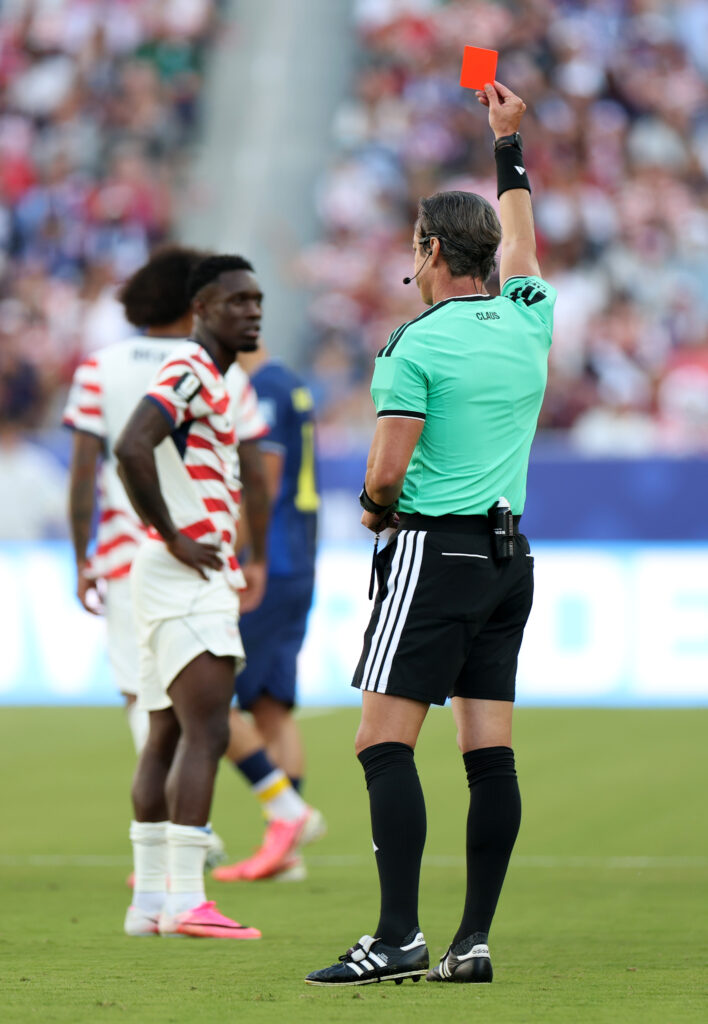
But in the 62nd minute, Balogun’s cleat caught Tarik Muharemovic, who went down and writhed in pain. The contact appeared incidental, but the consequences were enormous. After consulting video review, officials determined there was enough contact to warrant a red card, a controversial decision that sent boos pouring down from the partisan U.S. crowd as Balogun was sent to the locker room.
Mauricio Pochettino, the U.S. coach, disagreed with the decision, saying later that Balogun’s challenge was a “normal action” and that “it never was intentional.” But there was no time to argue, and only a few minutes later, during a hydration break, the Argentine coach gathered his players and tried to redirect the night.
“Now we need to show that we are a team, that we are united,” Pochettino recalled telling them. “That is the moment to show to everyone, to show ourselves that it’s not only empty words when we say we are a family.”
The Americans were still up a goal, but suddenly, they were also down a man. And for the final 30-plus minutes, their do-or-die round-of-32 showdown became something entirely different: a test of nerve, structure and survival.
The crowd was no longer sitting, and their roars rattled the stadium. In the 82nd minute, Malik Tillman blasted a free kick past a diving Vasilj for the Americans’ second goal, giving them breathing room that took them to the final whistle. It was Tillman’s first World Cup goal and the first American score off a free kick since the 1994 tournament.
“I think this game today showed our character,” Tillman said. “We will always keep on fighting, giving everything.”
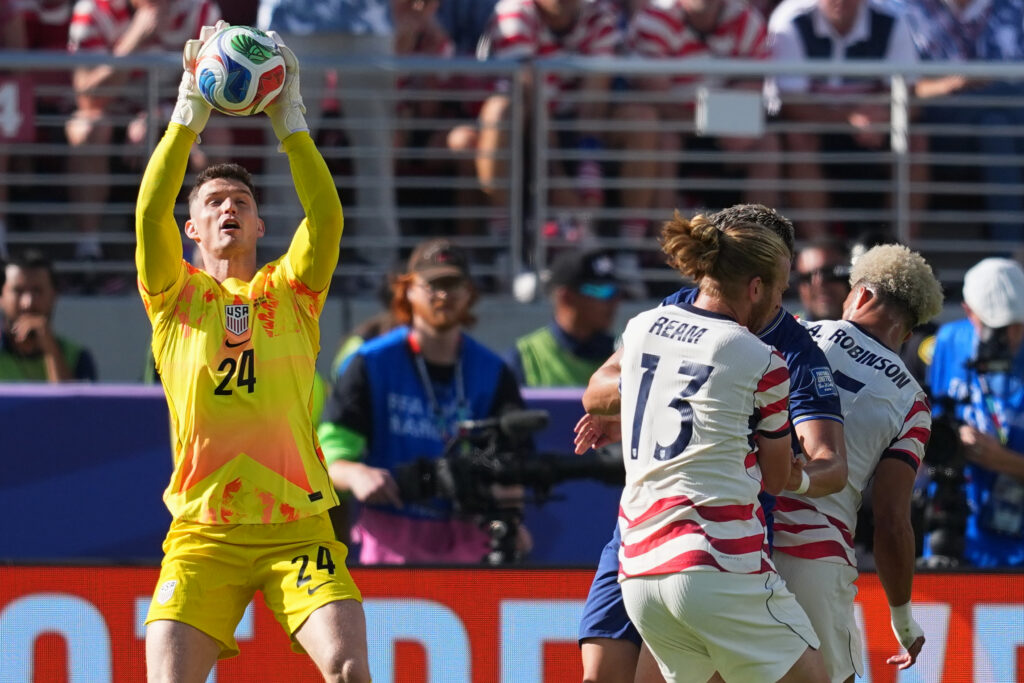
Goalkeeper Matt Freese turned in his second shutout of the tournament, and the dramatic win carried the Americans into the round of 16 for the first time since 2014, giving the program its first World Cup knockout win since 2002.
The Americans will advance to a round-of-16 showdown Monday in Seattle. They’ll take on Belgium, which battled back from a two-goal deficit to beat Senegal, 3-2, earlier Wednesday. Youri Tielemans converted on a nail-biting penalty in extra time to help the Red Devils advance in dramatic fashion.
Belgium is the same nation that ended the U.S.’s 2014 World Cup in the round of 16 in Brazil.
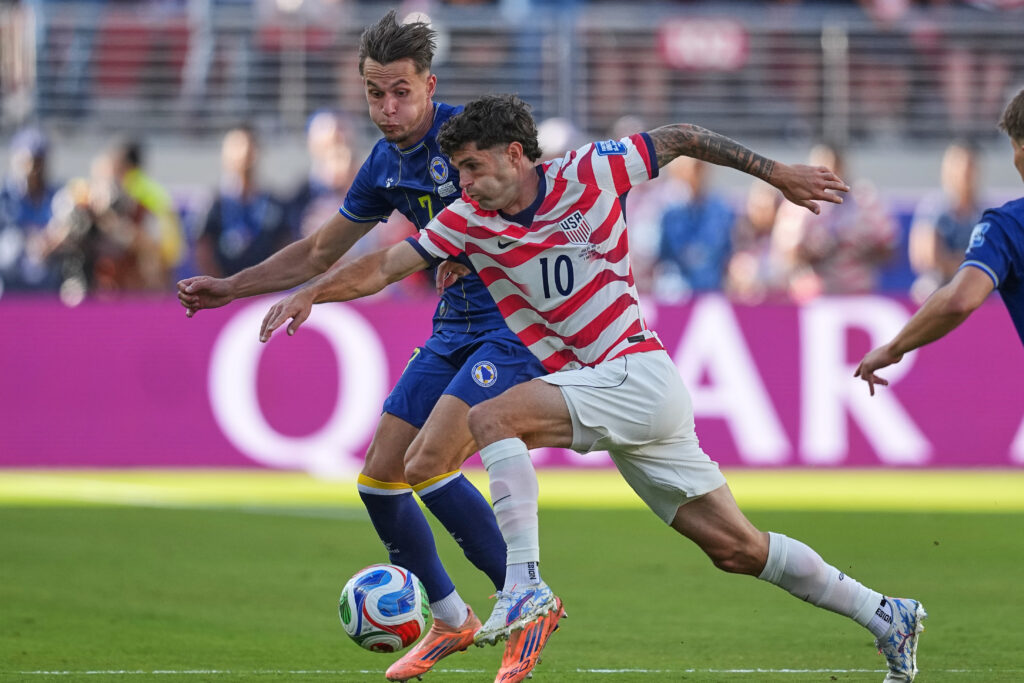
While Wednesday’s matchup represented the Americans’ biggest test to date in this tournament, they were able to tackle to challenge with their preferred lineup for the first time since the tournament opener against Paraguay. Christian Pulisic returned to the starting lineup after missing the victory over Australia because of a calf injury and coming off the bench in the second half of the loss to Turkey. His return gave the Americans their full attacking shape again, with Balogun leading the line and Pulisic back in the role that has long made him the team’s most dangerous and closely watched player.
Read more Hajime Moriyasu expected to stay on as Japan men’s national team coach after World Cup exit
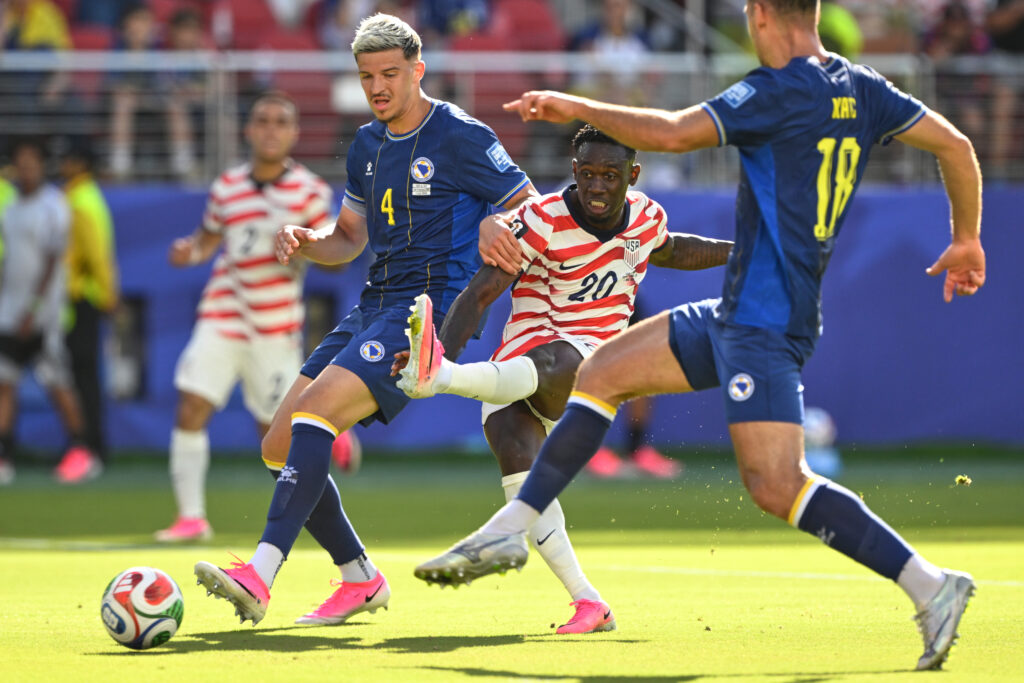
Balogun nearly put the game completely out of reach before the first half even ended. In the 32nd minute, he put the ball in the net, only to have the goal waved off for offside. And in first-half stoppage time, he almost struck again, sending a shot that dinked off the top of the crossbar.
Because he’s a playmaker, even the near misses seemed to alter the game. Each one raised the volume and nudged the U.S. attack forward, until the Americans finally found the opening they had been chasing.
That has been the larger question around this U.S. team all month: whether it had enough menace, finish and nerve to turn a favorable path into something more than possibility.
For a team playing at home, with its most accomplished generation of players and a manager hired specifically to push the program beyond its previous limits, Bosnia represented both opportunity and danger.
The Americans spent the past week insisting they understood both. They had opened the tournament with two assertive performances, beating Paraguay and Australia by a combined 6-1 and clinching first place in Group D with a game to spare. They then lost their finale to Turkey, 3-2, while resting most of their regulars, a defeat that did little to dull the optimism created by their early work.
Still, the knockout stage has rarely been forgiving to the U.S. men. Before Wednesday night, the program had won only one knockout match in World Cup history. Its recent record against European teams was even less encouraging. Since the loss to the Netherlands in the round of 16 at the 2022 World Cup, the Americans had dropped 10 straight matches against European opposition.
That history made Bosnia, ranked No. 61 in the world, a complicated opponent, and Pochettino spent the buildup trying to strip away the idea that the Americans should treat the match as anything less than perilous.
The red card ensured that peril would follow even after they advanced. The central question now is how a team that has leaned so heavily on Balogun’s speed, movement and finishing replaces him against Belgium.
“We told him we got his back,” said Chris Richards, the U.S. center back. “We’re a team of 26, not just one. Ultimately, we’re gonna miss him for the next game. … One thing about this team, we’re one really big family. We’ve shown it this whole tournament.”
Said Tillman: “Of course we’re going to miss him, but I think we have great players who can replace him.”
Pochettino’s most obvious options are Ricardo Pepi and Haji Wright, two forwards with different profiles but neither with Balogun’s hold on this tournament. More may have to come from Pulisic, who has long been the player asked to supply a little magic when the Americans need it most.
Still, this World Cup has shown the U.S. is not a one-man attack. In its three victories, the United States has outscored opponents 8-1 and found goals from across the field, including defender Alex Freeman in group play and, on Wednesday, Tillman, the 24-year-old German-born midfielder whose finish ensured Balogun’s ejection didn’t define the night.
Now comes Belgium, in what will be one of the most anticipated U.S. men’s national team games in at least a quarter century, if not longer. The opponent alone supplies the history: Belgium ended the Americans’ 2014 World Cup in the round of 16 in Brazil, a night in Salvador remembered largely for Tim Howard’s 16 saves, the U.S. team’s desperate survival and Julian Green’s extra-time goal that briefly made a comeback feel possible before Belgium held on, 2-1.
Twelve years later, the U.S. will get another chance to measure itself against one of Europe’s established powers. After clearing the first knockout hurdle on home soil, the Americans will arrive in Seattle without their top goal-scoring threat but carrying something the squad hasn’t had in the knockout rounds of a World Cup in a generation: real hope that this summer might actually be different.
Read more Mitchell triples in the go-ahead run in the 7th in the Brewers’ 4-2 win over the Reds