The administration proclaimed itself a leader of the Western Hemisphere under the “Donroe Doctrine.” A natural disaster put that to the test.
Read more NASA stops the sky from falling
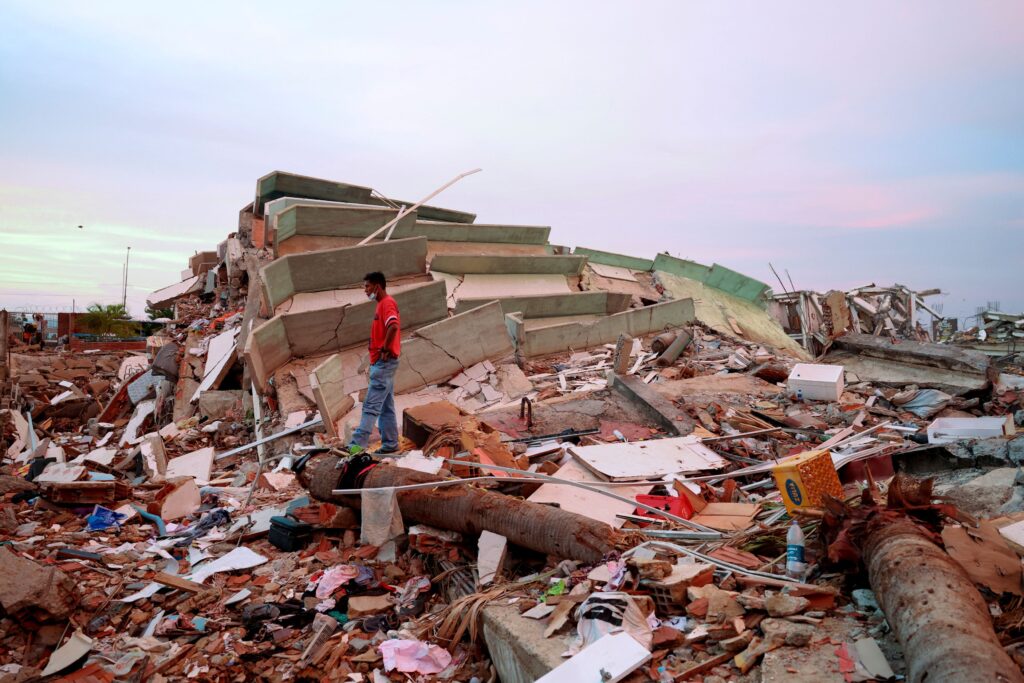
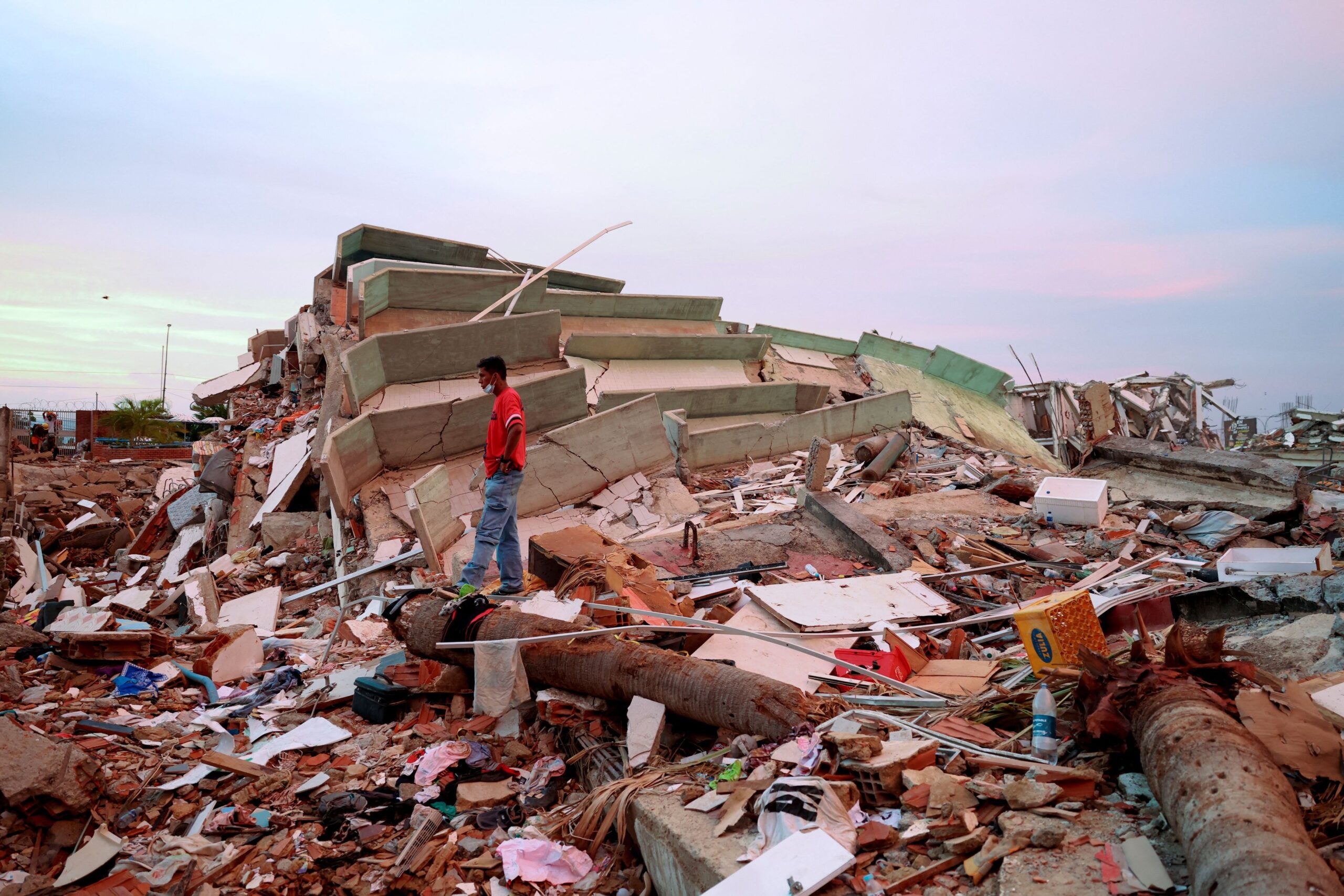
The humanitarian crisis gripping Venezuela after last week’s earthquakes is testing President Donald Trump’s claim of American leadership in the Western Hemisphere, as officials tout their surge of U.S. money and manpower to the country after gutting America’s foreign assistance apparatus early in the administration.
At first glance, the large-scale relief effort may be surprising as the Trump administration has championed a policy of “trade over aid” in its attempt to reimagine how Washington apportions the federal government’s largesse.
But the U.S. aid presence now in Venezuela — including search-and-rescue teams along with military and civilian logistical support — is an example of the big, brash displays of humanitarian assistance and disaster relief that the administration says it favors over slower-paced development work.
“There is a definite ‘Team America’ element to a search-and-rescue deployment,” said Jeremy Konyndyk, former head of disaster assistance at the United States Agency for International Development (USAID), which the Trump administration dismantled and shuttered within months of the president taking office. “ … It makes for good TV.”
Another twist is Washington’s newly close relationship with Venezuela, which has become tethered to the United States since a January military raid captured President Nicolás Maduro. The Trump administration has fostered ties with the country’s interim leader, Delcy Rodríguez, focusing on shared economic benefits, including the takeover of Venezuela’s oil industry, and sidelining its exiled opposition leader María Corina Machado.
Trump emphasized this dynamic in the hours after the two quakes struck June 24, writing on social media that the U.S. would “be there for our new and great friends.”
On Capitol Hill, some in the president’s own party have appeared more skeptical of this relationship, citing reports of Venezuelan officials stymieing the efforts of international rescue teams, including those from the U.S. Such accounts are “very troublesome for the White House,” Rep. María Elvira Salazar (R-Florida) told reporters this week, adding that it raised questions about where Rodríguez’s “heart is.”
Asked about the reports, John Barrett, chargé d’affaires of the U.S. Embassy in Caracas, told reporters Wednesday that “local authorities have fully complied with our requests and have accelerated this massive humanitarian response.”
Since returning to office, Trump has advanced a more assertive U.S. leadership role in the Western Hemisphere in a bid to dilute the influence of China and Russia. His supporters call it the “Donroe Doctrine,” a play on the 19th-century pledge by President James Monroe to protect America’s neighboring nations from European colonial powers.
At the same time, the Trump administration has radically overhauled the U.S. government’s decades-old approach to foreign aid, and what remains is sharply scaled back in key areas, including global health, food aid and support for refugees around the world.
Few have expressed doubt that the U.S. response to the Venezuelan earthquakes is substantial, though some experts question the metrics being used by the Trump administration to promote its claims that the relief effort is one of Washington’s fastest and most robust in decades.
Jeremy Lewin, a senior official with the State Department’s foreign aid bureau, told reporters Monday that the $300 million the United States had pledged to spend on the relief effort was likely to grow significantly.
“This is, by really any estimate, at this point the largest response to any natural disaster the United States has mounted in this century in terms of personnel on the ground, money out the door [and] speed,” Lewin said.
It is unclear how the State Department arrived at that assessment. One official, speaking on the condition of anonymity to describe internal discussions, pointed to the number of U.S. personnel “on the ground,” including military staff, urban search-and-rescue teams and other U.S. government employees, as well as the initial pledge of monetary support.
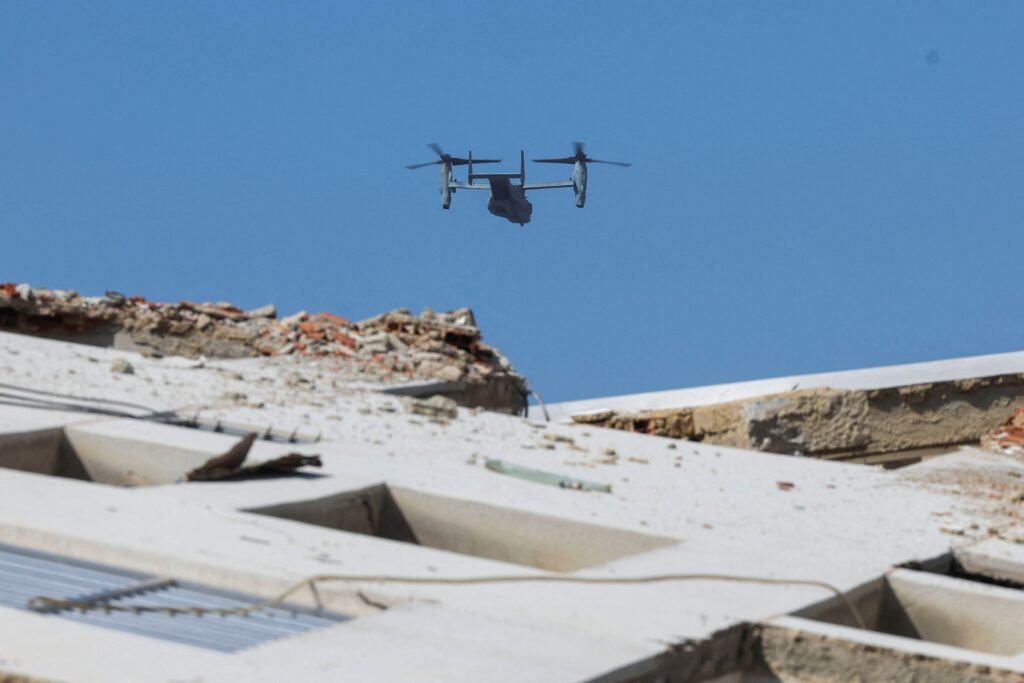
Gen. Francis Donovan, the commander of U.S. Southern Command, told reporters this week that there were “roughly 2,000 teammates” from the Defense Department in area to help with search and rescue. The U.S. military has used drones to aid those efforts and led the repair and reopening of an international airport in Caracas that had been inoperable due to damage.
Sam Vigersky, a former USAID official now at the Council on Foreign Relations think tank, said that in 2010, when Haiti experienced a devastating earthquake, records show that the U.S. sent roughly 5,800 military personnel to help within five days — a figure significantly larger than those currently deployed to Venezuela.
The Obama administration deployed six search-and-rescue teams to Haiti, compared to the four in Venezuela, Vigersky said.
Read more Pape Gueye won’t play again for Senegal under current coaches following World Cup loss
President Barack Obama also extended temporary protected status (TPS) to Haitian nationals after the earthquake, allowing tens of thousands of people to continue living and working in the U.S. by shielding them from deportation.
Vigersky said that the different nature of the natural disasters in Haiti and Venezuela, as well as the political situations in the two nations, may explain disparate figures; the U.S. initially estimated more than 65,000 dead in Haiti, far more than the current toll of about 1,700 in Venezuela.
Even still, Vigersky said, “Venezuela is a huge response by any measure.” And with the $300 million in aid announced by the State Department so far, the Trump administration may well surpass early U.S. spending after the Haiti earthquake.
However, only a third of that money appeared to be new funding for partner organizations in Venezuela, with the rest made up of previously announced assistance for the United Nations Office for the Coordination of Humanitarian Affairs (OCHA) and other agencies.
Representatives of both organizations said Wednesday that they had not yet received funding from the State Department.
Brittany Wichtendahl, a media relations contact for CRS, said that their “request is still in proposal form” and they did not have a dollar figure yet.
Franklin Graham, president and CEO of Samaritan’s Purse, said his organization was in “final discussions” with the State Department for a $15 million funding agreement. “While that has not been finalized yet, these funds would certainly enable us to do more and to help more people,” Graham said in a statement.
In response to a request for comment from The Washington Post, the State Department said that there were 1,900 personnel currently deployed to Venezuela and that the number of search-and-rescue teams sent to the region does not “signify any perceived level of support.”
“In terms of personnel, financial support, and speed, the State Department’s response has been swift and comprehensive,” the State Department said in a statement.
The Trump administration drew criticism last year for a slower and smaller response to an earthquake in Myanmar that occurred amid the dismantling of USAID. More than 5,000 were later estimated to have died in that disaster.
Speaking to reporters Monday, Lewin, the State Department official who oversaw much of USAID’s dismantling, said politics and geography would play a role in the Trump administration’s response to such disasters going forward.
“Venezuela,” he told reporters, “has been part of our system and part of our hemisphere … it’s one of our neighbors.”
Lewin pointed to efforts in the Caribbean last year, where the State Department led a smaller disaster-relief effort after Hurricane Melissa struck the region. The new model, he explained, is to support these nations as “quickly, efficiently, and accountably as possible, whenever these sudden onset disasters occur in friendly nations and our neighbors.”
Konyndyk, who now leads the nongovernmental group Refugees International, said he supported the administration spending big on the disaster-relief efforts underway in Venezuela. “There’s a really powerful symbolism to it, in addition to being lifesaving,” he said.
But in terms of dollars spent per life saved, the administration could do more if it also reinstated other forms of foreign assistance, Konyndyk added.
“The administration has fully cut off food aid to Somalia ahead of what could turn into a famine there,” he said. “You could save exponentially more lives for dramatically less money in Somalia just by turning food aid back on there. They’re choosing not to do that.”
Read more How Melat Kiros, a Colorado democratic socialist, unseated a 30-year incumbent