The United States’ high-stakes World Cup showdown with Belgium is still hours from kickoff, but the two sides are already battling over FIFA’s disciplinary code, a last-minute Belgian appeal and questions about whether the White House improperly helped get the Americans’ leading scorer back on the pitch.
Read more Belgian federation to challenge FIFA’s decision to let Folarin Balogun play in World Cup match
President Donald Trump’s reported involvement in the process has stirred a soccer world already deeply distrustful of FIFA, fueled concerns about political influence and cast a pall over a match that is supposed to measure the Americans against one of Europe’s established powers.
On Sunday, Alexi Lalas, the former U.S. defender and lead soccer analyst for Fox Sports, said that the decision had cast the Americans in an even more adversarial light.
“Any support, affinity, or benefit of doubt from rest of world just got thrown out the window,” Lalas wrote in a social media post.
Less than 24 hours before the kickoff, Belgium was granted the right to appeal FIFA’s decision to suspend Folarin Balogun’s automatic one-game ban, according to the Athletic. The Royal Belgian Football Association had already said it was “astonished” by FIFA’s ruling, calling the move in “direct contradiction” of tournament regulations and saying it was exploring “all potential options.”
The Athletic reported that Belgium formally wrote to FIFA to appeal the matter and that both U.S. Soccer and the Belgian federation were asked to make submissions by 8 a.m. Eastern time Monday. A ruling was possible before the match, according to the report, though Belgium had not been given any guarantee that one would arrive before kickoff.
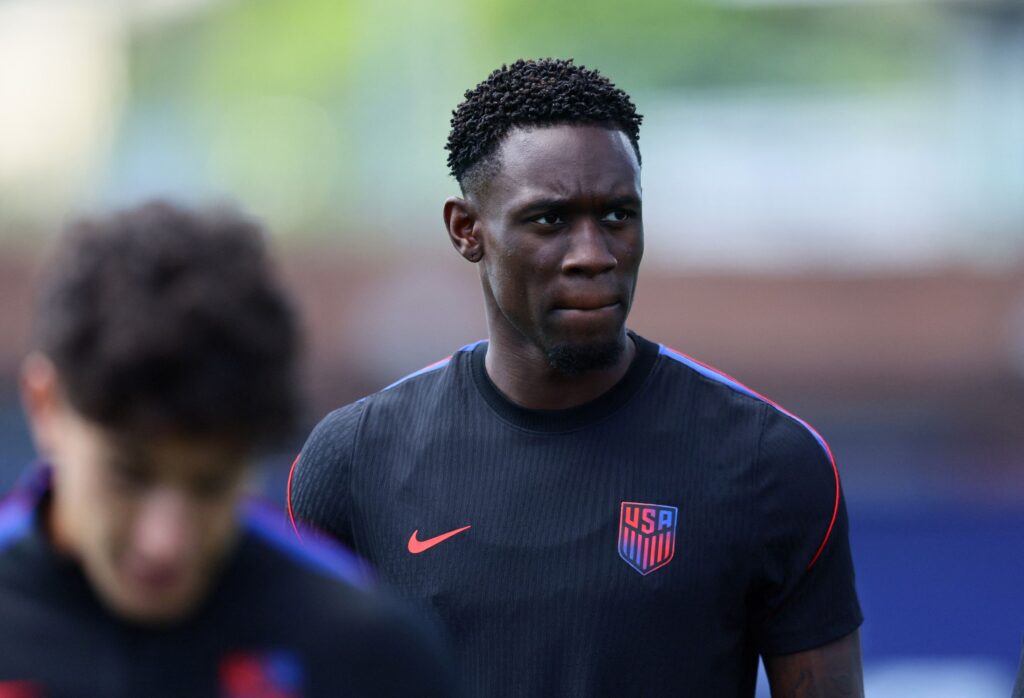
At issue is the sudden availability of Balogun, the 25-year-old striker who was shown a red card in the 64th minute of the United States’ 2-0 victory over Bosnia in the round of 32 on Wednesday in Santa Clara, California. Balogun was due an automatic suspension and was set to miss Monday’s match until FIFA made the surprising decision Sunday that the automatic one-game ban would be suspended for a one-year probationary period under Article 27 of its disciplinary code.
The decision came days after Trump, speaking directly with FIFA President Gianni Infantino, urged the global soccer governing body to review Balogun’s suspension, according to two people familiar with the matter. The people spoke on the condition of anonymity to freely discuss sensitive matters.
According to one person familiar with the conversation, Trump was seeking an explanation for the red card and ensuing suspension, and administration officials also provided additional evidence for FIFA to consider.
Trump’s role transformed what might have been a narrow disciplinary dispute into something larger: a politically charged test of FIFA’s independence, with the Americans’ World Cup path hanging in the balance.
UEFA, European soccer’s governing body, issued an unusually forceful statement Monday, saying FIFA’s decision “crossed a red line” and calling it “unprecedented, incomprehensible and unjustifiable.”
The statement said soccer relies on rules as “the basis for fair, honest and transparent competition” and argued that a minimum one-game suspension after a red card “is not a discretionary option.” UEFA said allowing an exception in the middle of the tournament, after other players had already served red-card suspensions, threatened the integrity and credibility of the World Cup.
“When the certainty of rules is no longer guaranteed by its guardians, the integrity of the game is at stake and the credibility of a competition is undermined,” UEFA said.
FIFA did not respond to requests for comment or further information about the decision.
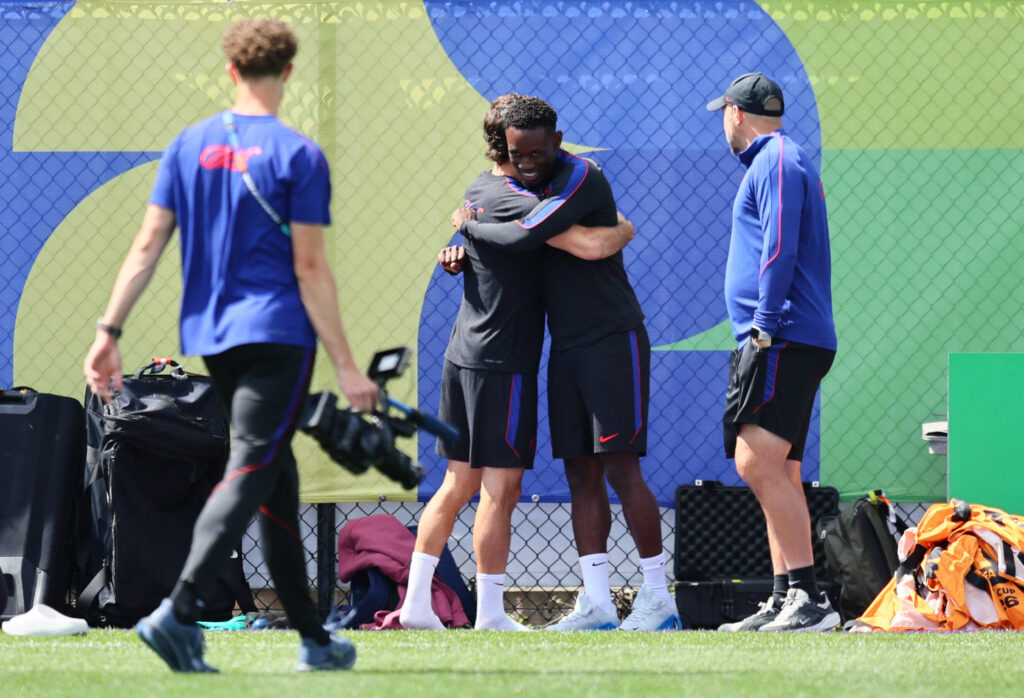
The backlash was immediate and sharp, with much of it focused less on whether Balogun’s challenge deserved a red card than on how FIFA handled the aftermath.
Read more Ukraine’s Marta Kostyuk advances to Wimbledon quarterfinals as Roger Federer pays visit
“I think it’s an absolute disgrace. And Infantino — he should be ashamed of this because I think the sportsmanship of this game is in question here,” Wayne Rooney, the retired English soccer great, said on BBC. “And if I’m one of the opponents — if I’m the USA’s opponent — I’m absolutely fuming here. I just think it’s wrong in every way.”
Gary Neville, the former England defender, said he did not believe Balogun’s challenge deserved a red card, but he was troubled by the way FIFA handled the matter.
“It absolutely stinks, let’s be really clear,” Neville said on ITV. “But what stinks the most is that there should be a review process in place. I actually didn’t think it was a red card, but there should be a process that allows it to be overturned.”
Neville said Belgium and other teams would have reason to object if FIFA had found a way around its own procedures.
“I’d be absolutely raging if I was Belgium or any other team in the tournament that’s had a player sent off that might think it’s harsh,” he said. “Am I surprised? No, not with this lot.”
The criticism spread well beyond Belgium. Sepp Blatter, the former FIFA president and a longtime critic of Infantino, also weighed in, saying, “Football must never become a playground for political power.”
“Red cards are not overturned by political phone calls,” Blatter wrote in a social media post on Monday. “They are overturned by rules, evidence and independent bodies. If a U.S. President intervenes with the FIFA President — and a player is suddenly cleared before a World Cup knockout match — the question is unavoidable.”
“Quo vadis, FIFA?” Battler wrote, essentially asking where the organization is headed.
Coming from the man who led FIFA for 17 years before being forced from power amid the corruption scandal that shook global soccer, the critique certainly carried its own complicated baggage. But it also underscored how quickly Balogun’s availability had become about something larger than one red card, casting a light on Infantino’s cozy relationship with Trump and the appearance that political pressure had reached into a disciplinary process hours before one of the tournament’s biggest matches.
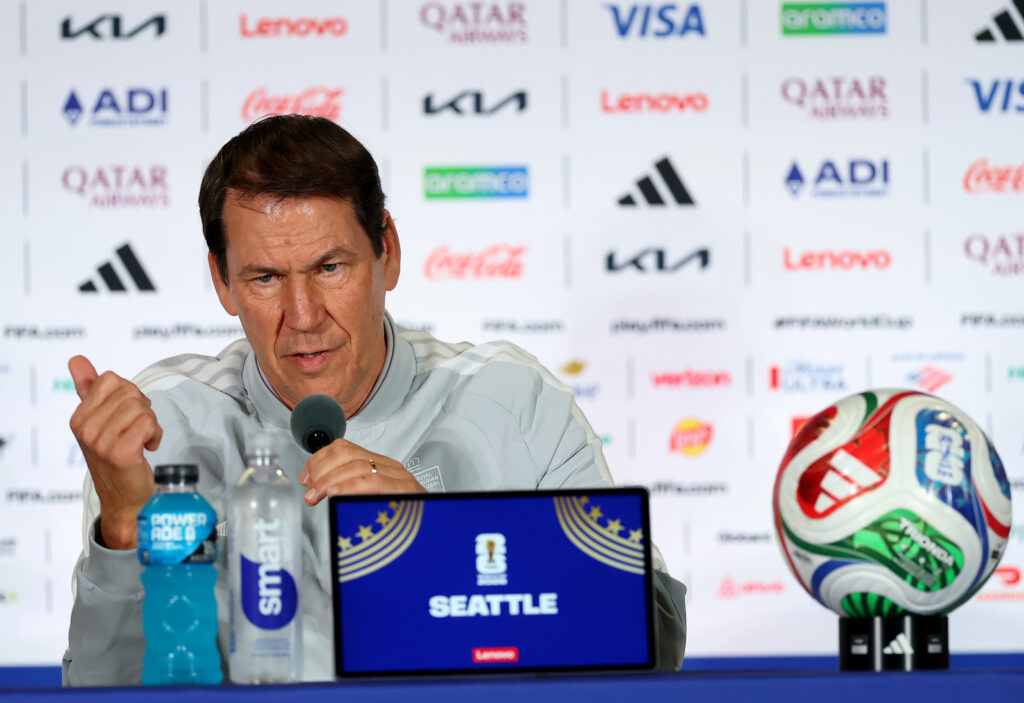
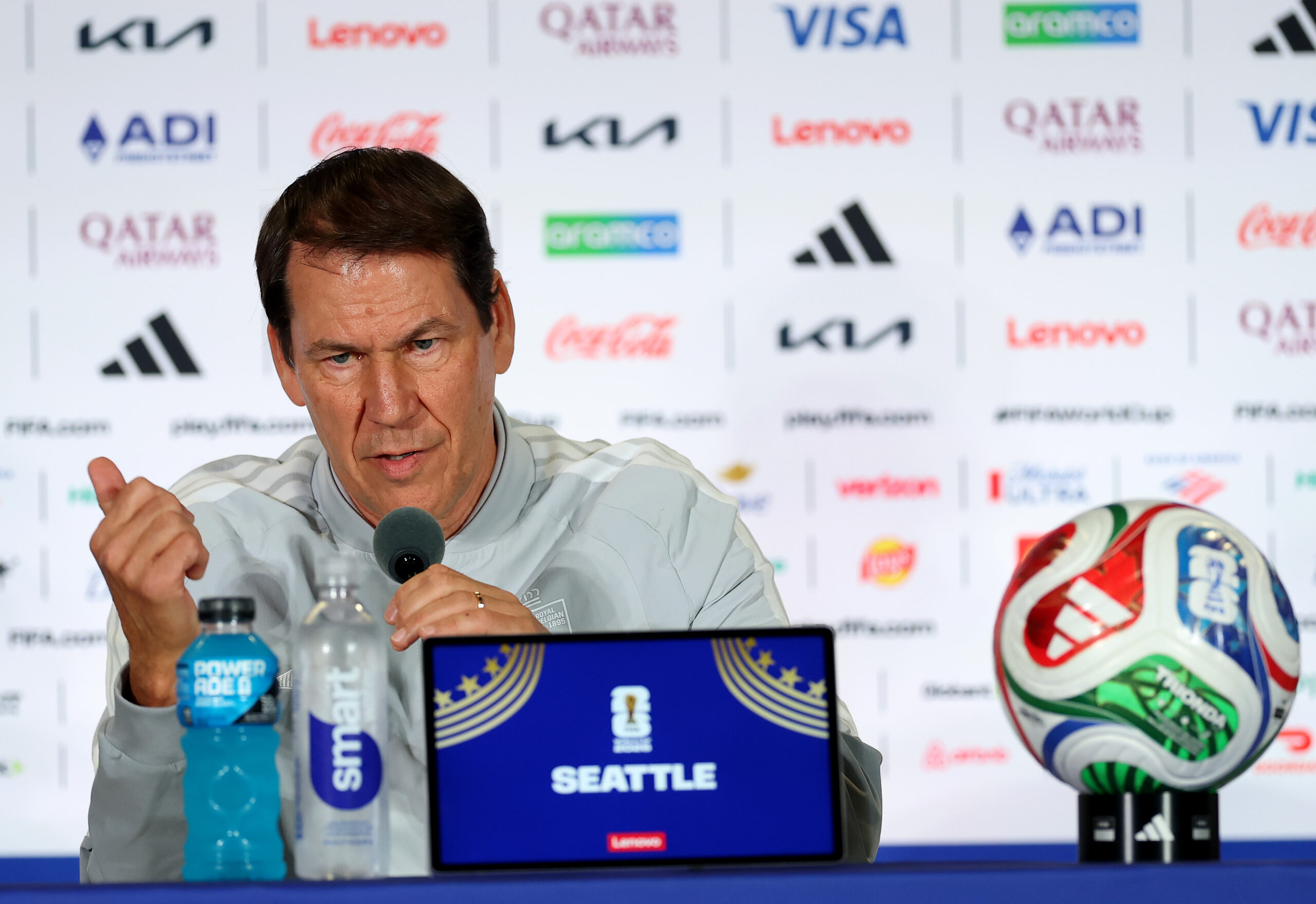
Stunned by FIFA’s reversal, Belgium Coach Rudi Garcia likened the day’s news to an April Fool’s Day prank.
“I didn’t realize July 5 was equal to April 1 at FIFA,” he said via an interpreter at a Sunday news conference. Addressing Belgium’s attempt at recourse, he added: “We are not defending the national team or the federation. We are defending football, whether it’s ethics or integrity.”
For the Americans, the soccer implications remain straightforward: Belgium is their biggest test, and Balogun is their leading scorer
Balogun has been one of the revelations of the Americans’ home World Cup run. The Brooklyn-born striker, raised in London by Nigerian parents, scored twice in the tournament opener against Paraguay and then knocked in the breakthrough goal against Bosnia. His speed, movement and finishing have given the Americans the kind of front-line threat they have long searched for.
At stake Monday is a spot in Friday’s quarterfinal in Inglewood, California, a stage the U.S. men have not reached since their memorable run in South Korea and Japan 24 years ago — and one Balogun is now, at least for the moment, eligible to help them chase.
Read more UEFA says decision by FIFA to let U.S. forward play at World Cup is ‘incomprehensible’
Thomas Floyd contributed to this report.