Some Democrats are worried an unapologetic liberal could squander their hopes in a must-win state for control of the Senate.
Read more Sens. Fetterman (D) and McCormick (R) form rare bipartisan fundraising committee
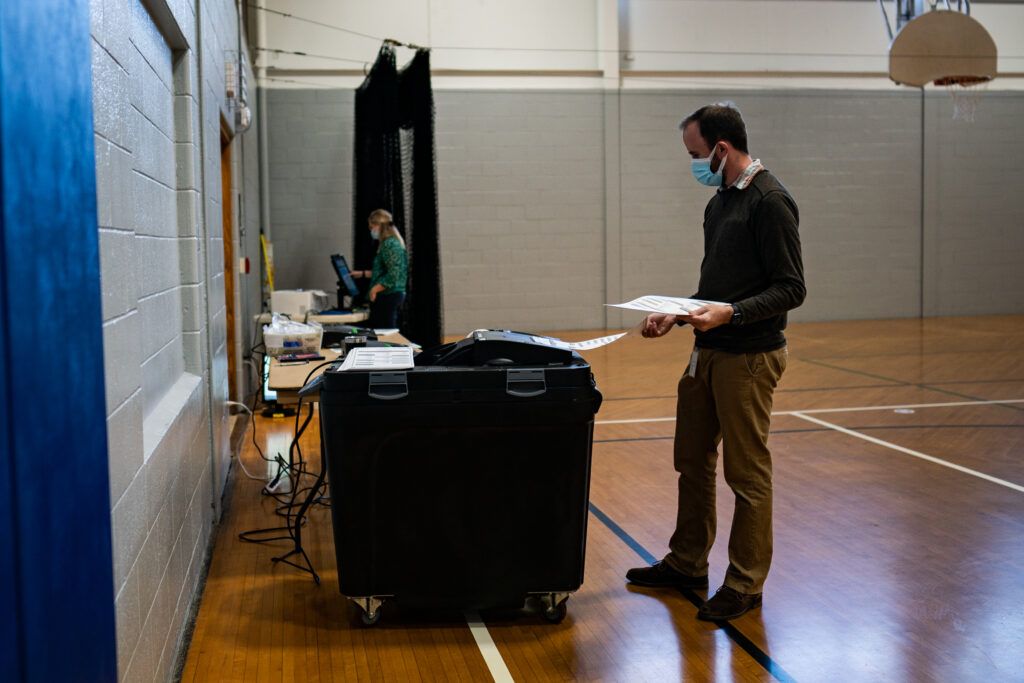
Alongside the turmoil in Maine, Michigan has become another must-win state for Democrats to take back the Senate.
Michigan is where a contentious and potentially messy primary for the party is playing out — yet another showdown between the party’s left wing and its centrist leaders, and one that some Democrats fear could cost them the race.
“It’s always been an important bellwether,” senior Democratic strategist Jim Manley said. “We truly have a chance to try and flip the Senate, but only if everything goes just exactly perfectly. If Maine is now slipping away, it highlights the need to pick up Michigan.”
Here’s what to know:
There’s a lot of focus on what states Democrats need to win back from Republicans in November’s midterm elections. Maine is top of the list.
But to win the Senate majority for the final two years of President Donald Trump’s time in office, Democrats also need to play defense. They need to keep Michigan in Democratic hands (as well as Georgia). Then arguably the hard part comes: They need to beat Republicans in Maine and North Carolina, and then win at least two races in redder states such as Ohio and Alaska, or Texas or Iowa.
Michigan is a potentially tricky state for Democrats. It had been considered part of a Midwestern blue wall in presidential races until Trump came on the scene. Michigan narrowly voted for Trump in 2016 and 2024, in part through his efforts to appeal to the state’s working-class voters.
“People underestimate the extent to which Michigan is a very purple state,” said a Democratic strategist in the state advising one of the campaigns, who spoke on the condition of anonymity to speak candidly.
But Republicans have struggled to win Senate races in Michigan, said Dennis Lennox, a Michigan-based Republican strategist. “Democrats have gotten lucky in Michigan Senate races,” he said. “They’ve either had a bad Republican candidate or ran in a good Democratic cycle nationally.”
Still, Democrats have openings. Michigan is deeply tied to manufacturing and cross-border trade with Canada, making Trump’s tariffs a potential liability for Republicans. And former congressman Mike Rogers (R) would be running in a state Trump carried only narrowly, not a red state.
Rogers is expected to be the Republican candidate. He ran for Senate and lost in 2024 even when Trump won the state, but Republicans describe him as an uncontroversial figure in Michigan who is running a smarter campaign this time around.
Democrats, meanwhile, are in a contentious battle over who their nominee will be. (The sitting senator, Democrat Gary Peters, is retiring.) The establishment candidate is Haley Stevens, who is a member of Congress and led President Barack Obama’s auto industry rescue in the state.
The liberal candidate is Abdul El-Sayed, a former public health official who is backed by Sen. Bernie Sanders (I-Vermont) and running as an outsider. He has led in several recent public polls, though the race remains competitive.
Read more Democrats seek a way forward amid finger-pointing in Maine
A third candidate, state Sen. Mallory McMorrow, recently dropped out ahead of the August primary, and her voters could go to either side.
Some national Democrats are worried that if El-Sayed is the nominee, they could lose Michigan. But polling over who might beat Rogers in November is inconclusive.
El-Sayed supports Medicare-for-all; has campaigned with Hasan Piker, a controversial influencer who has been accused of antisemitism; and has labeled Israel’s actions in Gaza as “genocide.” El-Sayed also calls for abolishing the U.S. Immigration and Customs Enforcement agency. He is mostly popular with younger voters, but Michigan’s general electorate is more older voters without a college degree.
El-Sayed argues Michigan is ready for a change. The state has the nation’s largest concentration of Arabs and Muslims, and Arab and Muslim voters in places such as Dearborn and Hamtramck moved sharply away from Democrats in the 2024 election over Israel’s attacks in Gaza.
“People in Michigan are like, ‘Wow, we hate politics, and if politics hates that guy, he might actually be the one for us,’” El-Sayed told The Washington Post in June. He recently won the endorsement of the powerful United Auto Workers union, which said El-Sayed is “someone we can trust to have our backs, including when we need it most.”
Stevens holds liberal views, as well. She supports a public option for health care (as opposed to making all health care public) and champions her efforts to oppose Trump in Congress. She’s framed El-Sayed, who made his money in podcast production, as more interested in the attention that comes with campaigning than in policymaking.
“We do not need a celebrity senator, we need a workhorse,” she said in the debate.
Some Democratic strategists think El-Sayed’s strength in the primary suggests he can win statewide.
“I’d rather run someone who is fiercely pushing for change on a top issue like health care affordability over someone associated with the status quo any day of the week,” said Texas-based Democratic pollster Nancy Zdunkewicz, who is working to help Democrats win a Senate race in that state.
“I’m watching this with increasing concern,” Manley said. “At the start of last year, no one in their right minds thought the Senate was in play for Democrats. But now, in part due to Trump’s spectacular implosion, a lot of these seats are winnable. Except we’re looking at a situation where some of our candidates might be too extreme for the general election.”
Amber Phillips writes The 5-Minute Fix newsletter, a quick analysis of the day’s biggest political news. Send her an email here, or ask a question that could be featured in an upcoming newsletter.
Read more The biggest drag on Virginia’s business ranking is Trump