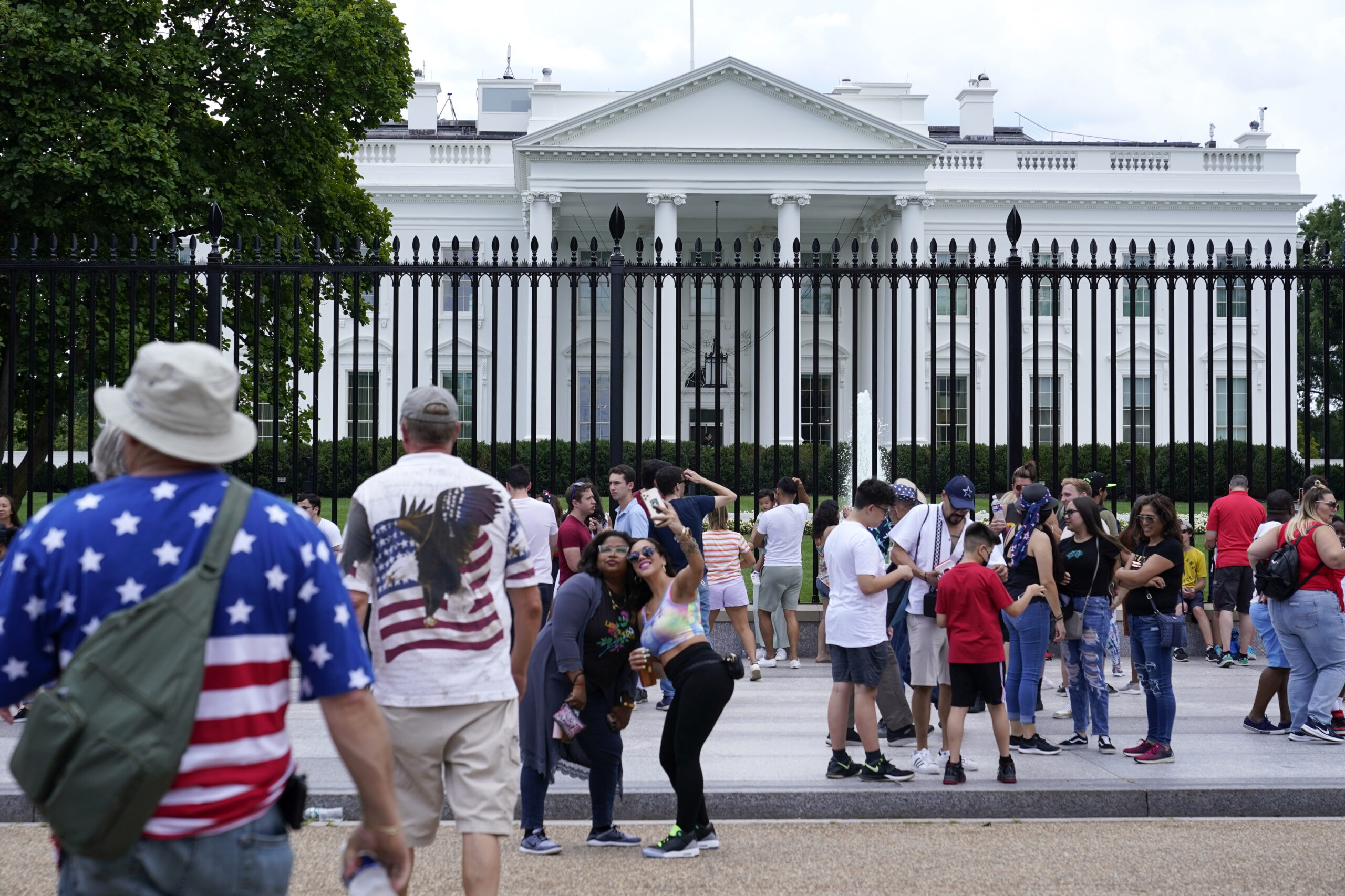
The fences, sought by the Secret Service as a security measure, would make it easier to shutter pedestrian access, said people with knowledge of the plans.
Read more What do lawmakers owe constituents during lengthy absences?
The Trump administration plans to erect new fences on the ends of Pennsylvania Avenue NW outside the White House, the latest effort to boost presidential security, according to three people who spoke on the condition of anonymity because they were not authorized to publicly discuss the plans.
The White House and Secret Service would be able to close the new fences, planned where Pennsylvania Avenue intersects 15th and 17th streets NW, and prevent pedestrian access in front of the White House if they determine there are security risks, the people said.
The White House has long relied on temporary barriers, staffed by Secret Service personnel, to shut down Pennsylvania Avenue to pedestrians. Secret Service officials have previously suggested building permanent fences on Pennsylvania Avenue, but faced resistance from past administrations over the perception of restricting public access to the White House, the people said.
Asked about the planned fencing, a White House official said that conversations about improving campus security were ongoing and that any proposed projects would go through a review process.
The National Capital Planning Commission and the Commission of Fine Arts, a pair of federal agencies that oversee design matters related to construction projects in the capital region, have historically reviewed major changes to the White House and its grounds. That process often can stretch months or years, although the commissions — which are now led by Trump allies — have rushed several of the president’s projects.
The Secret Service referred questions to the White House.
The Trump administration also plans to build new permanent fencing around Lafayette Square, the public park across from the White House mansion, The Washington Post previously reported.
Trump officials and the Secret Service have conducted additional reviews of presidential security risks after an April shooting at the White House correspondents’ dinner, the third time in less than two years that Trump found himself under the threat of gunfire.
The stretch of Pennsylvania Avenue in front of the White House — which offers the closest view of the building for pedestrians — has long drawn visitors from around the world. The space has also been used by protesters for a wide array of political causes.
Read more Trump aimed to finish these projects by July 4. Many are not done.
Several organizations, such as the Smithsonian American Art Museum’s Renwick Gallery and the Milken Center for Advancing the American Dream, are also located on Pennsylvania Avenue outside the White House. Spokespeople for the Renwick Gallery and the Milken Center did not respond to questions about whether their organizations had been briefed on the planned fences and the effect on their workforce.
Past administrations have considered a range of efforts to boost security around the White House grounds, including building more and higher fencing.
President Bill Clinton in 1995 shut down Pennsylvania Avenue in front of the White House to cars, turning a long-standing road into a pedestrian thoroughfare.
“It should be seen as a responsible security step necessary to preserve our freedom, not part of a long-term restriction of our freedom,” Clinton said in a radio address announcing the change.
Officials in the early 2000s repaved the stretch of Pennsylvania Avenue and made other changes to make it more pedestrian-friendly, an effort overseen by then-first lady Laura Bush. The project also included building new security booths and bollards that remain in use today.
“The redesign of America’s Main Street has transformed the Avenue from one cluttered with ad-hoc security measures to a beautiful civic area befitting one of the nation’s most prominent and visited destinations,” the National Capital Planning Commission wrote in 2004.
Michael McGill, a former General Services Administration official who served on the commission at the time, said he was concerned that new fencing around the White House and the Secret Service’s push for security measures would lead to Pennsylvania Avenue being wrongly shut down for pedestrians.
“This would mean that residents and tourists alike would be unable to see the White House from any reasonable distance, especially if Trump plants more trees in the Park,” McGill wrote in an email Thursday, alluding to the president’s separate plan to plant 47 trees in Lafayette Square.
Read more Bulldozing renegade John Riggins will get his number retired