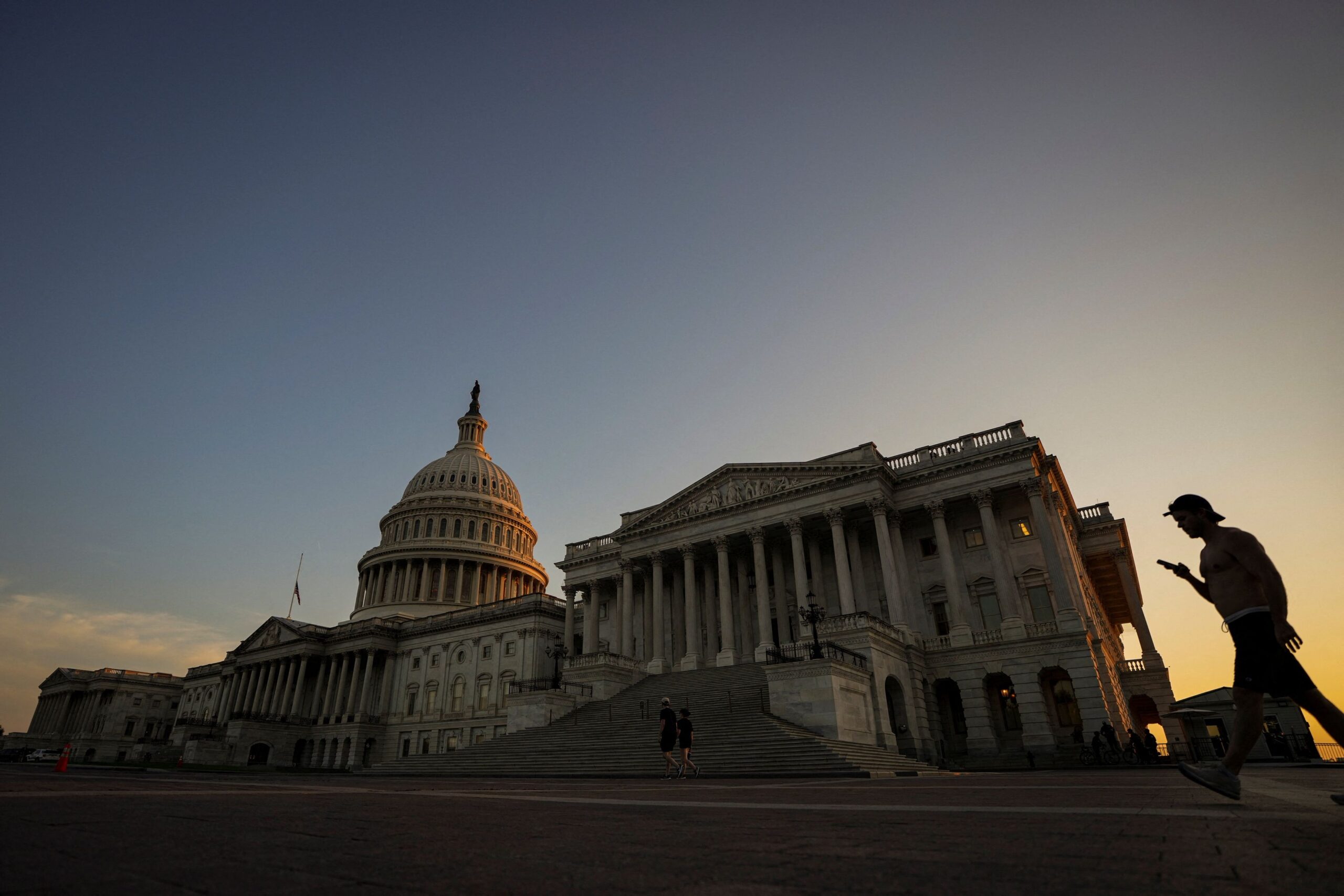
The bipartisan Sunshine Protection Act would end the practice of switching clocks twice per year.
Read more Darline Graham Nordone, Lindsey Graham’s sister, sworn in to succeed him
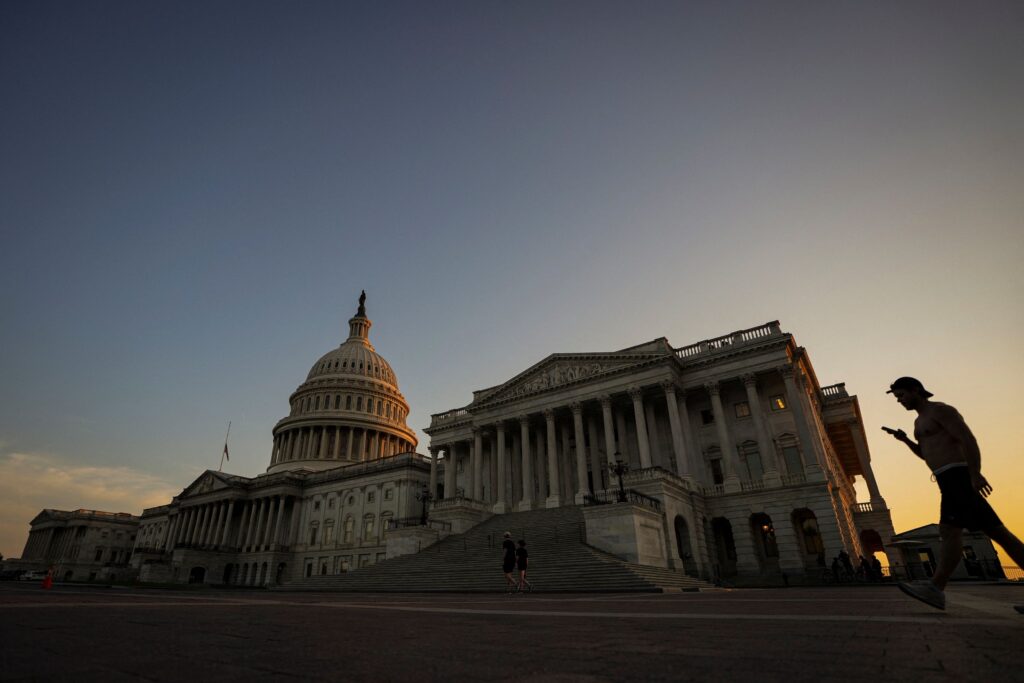
The House could vote Tuesday to end Americans’ practice of switching their clocks twice per year, delivering a win for President Donald Trump, who has called for permanent daylight saving time over the objections of medical groups and lawmakers who represent Midwestern states.
Lawmakers are set to consider the Sunshine Protection Act, which would stop the annual practice of “springing forward” and “falling back.” It would place most of the country permanently on daylight saving time, with an exemption for the few places that are on year-round standard time and already don’t change their clocks.
That change would delay late-December sunrises in the Washington region from about 7:30 a.m. to 8:30 a.m. — but also push sunset from roughly 4:45 p.m. to 5:45 p.m. Other parts of the country would see similar effects, although the specific impact would vary by longitude and latitude.
The legislation has been championed in both the House and Senate by bipartisan members disproportionately from Southern and coastal states, who argue it would allow Americans to enjoy more outdoor afternoon and evening activities during the winter. It also has drawn support from golf course operators, who say the extra hour of daylight in the evenings would notably boost their business.
“It means more sunlight at the end of the day so Americans can return safely from work and children can return safely from school,” said Rep. Brett Guthrie (R-Kentucky), who chairs the Energy and Commerce Committee, said in a hearing Monday that teed up the bill for full House consideration.
The Senate would need to also pass the legislation for the change to take effect. States could opt out of permanent daylight saving time and remain on year-round standard time if they make the change before the legislation takes effect.
The American Academy of Sleep Medicine and other medical groups have said that year-round daylight saving time does not align with humans’ natural circadian rhythms and that year-round standard time would be preferable.
Some lawmakers have also said that the status quo provides the best balance for all states, and that year-round daylight saving time would inconvenience people who live in the center of the country by pushing local sunrises beyond 9 a.m. in the middle of winter.
Sen. Tom Cotton (R-Arkansas), often a staunch Trump supporter, vowed last year that he would “always oppose” efforts for year-round daylight saving time.
Several lawmakers have predicted that the Trump-backed bill will backfire. Congress in the early 1970s enacted year-round daylight saving time, but the change quickly became unpopular — particularly with parents complaining about their children waiting in the dark for school buses to arrive — and was repealed less than a year later.
Trump, a Florida resident who owns golf courses, has repeatedly vowed to end the practice of switching clocks back and forth, calling it wasteful.
“We are going with the far more popular alternative, Saving Daylight, which gives you a longer, brighter Day — And who can be against that — This is an easy one!” Trump wrote on his Truth Social platform in May.
Read more Trump’s tax immunity could be on shaky ground
Trump has also privately urged lawmakers to enact the Sunshine Protection Act and asked his policy staff at a meeting last month for an update on the legislation, according to White House officials.
“Trump’s support is a completely unsurprising thing,” said Scott Lincicome, a Cato Institute economist who has written on the drawbacks of daylight saving time. “The guy owns golf courses; golf courses get richer because of later evenings; and he’s a total night owl, so it makes perfect sense for him. For young parents, on the other hand, slightly different calculus.”
Rejection of the measure would signify yet another blow to House Speaker Mike Johnson’s (R-Louisiana) control over his conference and trust in his ability to carry out Trump’s priorities.
The legislation, which advanced out of the House Energy Committee in May with overwhelming support from both Republicans and Democrats, has stoked an unusual divide in today’s hyper-partisan Congress. Disagreements on how Americans should set their clocks tend to fall along a geographical divide, not a political one.
Trump, who frequently returns to his Mar-a-Lago estate in Palm Beach, Florida, is not alone in prioritizing sunshine later in the day, particularly in that part of the country.
The switch to permanent daylight saving time has historically been led by GOP members of the Florida congressional delegation, such as Rep. Vern Buchanan and, during his time in the Senate, Marco Rubio. Some unlikely allies, such as prominent Senate Democrats Ed Markey (Massachusetts) and Patty Murray (Washington), have repeatedly joined them.
Rep. Anna Paulina Luna, the leader of a GOP rebellion that sent the House into an early recess for the July Fourth holiday in response to House inaction on Trump-backed voting legislation, is also a Florida Republican and supporter of year-round daylight saving time. Luna signaled Monday she plans to support the measure.
Just 12 percent of Americans favor the current system, according to an AP-NORC poll conducted in October 2025. Another 47 percent oppose it, and the remainder said they were neither opposed or in favor.
There’s little consensus on what to adopt instead. While 56 percent of Americans say they would prefer year-round daylight saving time, with more light in the evening and less in the morning, 42 percent want year-round standard time, with more light in the morning and less at night, the AP-NORC poll found.
Currently, Hawaii, parts of Arizona and five U.S. territories observe permanent standard time. The Sunshine Protection Act would exempt those places from the change because they do not switch back and forth.
Sen. Rick Scott (R-Florida) reintroduced the bill in the Senate last year. The Senate previously passed the Sunshine Protection Act in a unanimous vote in March 2022. But the bill died in the House amid questions over whether year-round daylight saving time was actually safe or healthy. The legislative fight also galvanized new energy around what many had seen as a sleepy issue.
“To be honest, I haven’t had a single person say to me they want to change the clocks,” Rep. Frank Pallone Jr. (R-New Jersey), who has spent years debating the legislation as the top Democrat on the Energy Committee, said Monday.
Read more Trump’s helicopter flights to resume from Ellipse, breaking South Lawn tradition