
The senator represented a foreign policy consensus on U.S. support for Israel that has begun to collapse under President Donald Trump.
Read more Haley Stevens polls ahead of Abdul El-Sayed in key Michigan Senate test
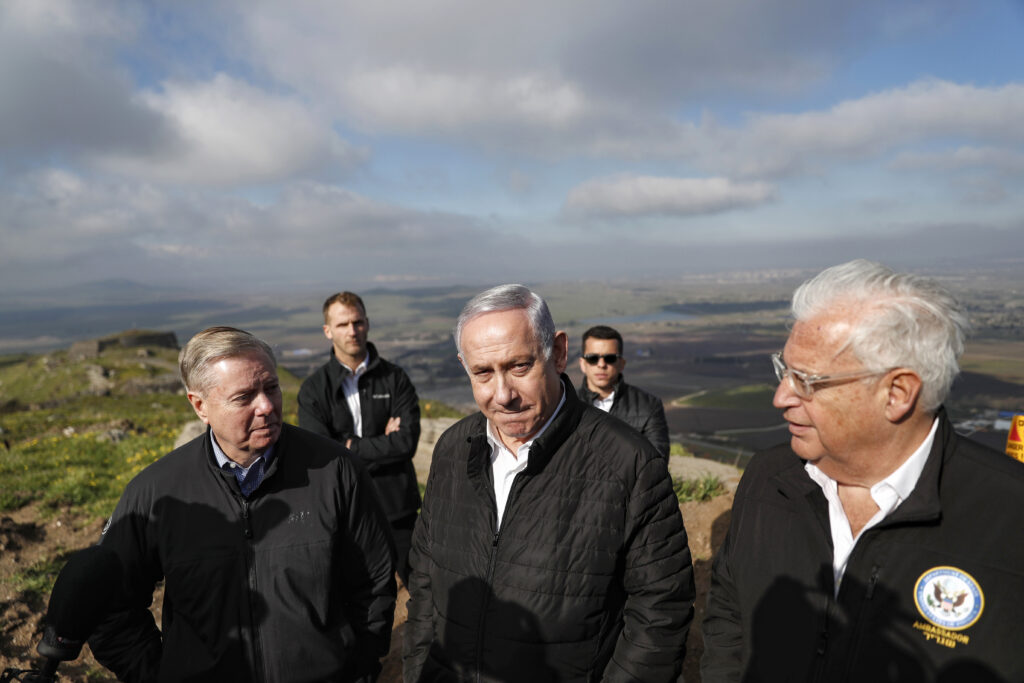
TEL AVIV — In recent years, when Sen. Lindsey Graham was not in Washington or back home in South Carolina, he could often be found in Israel.
The hawkish Republican senator, who died Saturday at 71, visited the country at least a dozen times since the Hamas-led attack on Oct. 7, 2023, which plunged the region into conflict. Before that, he often visited in the company of the senators Joseph Lieberman and John McCain, who died in 2024 and 2018 respectively.
Even as public opinion on support for Israel grew increasingly divided in the United States, becoming a wedge issue, and as growing factions within his own party called to reassess the alliance, Graham remained one of Israel’s most unwavering advocates to the last. Israelis took notice.
With his death, that circle of defenders of Israel and its government who have persisted in President Donald Trump’s remade Republican establishment continues to shrink.
“Israel has lost one of its greatest friends,” Prime Minister Benjamin Netanyahu said in a statement.
In appearances on Fox News and NBC to offer remembrances, Netanyahu said Graham had “gone ballistic” at the idea of phasing out U.S. military support for Israel, and that he was unequivocal in his backing for the U.S.-Israeli war with Iran.
“He said, ‘If you’re concerned about America’s safety, then the stronger Israel is in the Middle East, the stronger America is,’” Netanyahu recalled.
Netanyahu is planning to arrive in the U.S. over the weekend to attend a memorial service for Graham in Washington on Tuesday, a person familiar with the matter said, speaking on the condition of anonymity because they were not authorized to share sensitive details. Any meeting between Netanyahu and Trump has yet to be announced.
Graham had “genuine love, not just political love” for Israel, former Israeli ambassador to the United States Michael Oren told The Washington Post. “It’s not like he had a lot of Jewish constituents in South Carolina, so he had nothing politically to gain by being pro-Israel.”
“He certainly had strong support from AIPAC and the Adelson family,” Oren said, referring to the American Israel Public Affairs Committee, a powerful pro-Israel organization, and to family members of the late casino magnate Sheldon Adelson. “But for [Graham], it was even more than that.”
Read more House Republicans release $95 billion spending bill with no offsets, which could endanger support
Like many on the Christian right, Graham linked support for Israel to his faith. “Here’s a message for America: Don’t ever turn your back on Israel, because God will turn his back on us,” he said at a meeting of Christian Zionists in 2014, Slate reported.
“Israelis across the political spectrum looked to him as someone who was a true friend,” said Jesse Weinberg, a researcher focused on U.S.-Middle East relations at the Institute for National Security Studies, an Israeli think thank.
Oren noted that Graham’s bond with Israel was shaped in part by his close ties to senators on both sides of the aisle. “He had a deep friendship with John McCain and Joe Lieberman — together they were a powerful pro-Israel force,” Oren said.
McCain (R-Arizona) and Lieberman (D-Connecticut), leading figures in their parties, were part of a neoconservative-aligned political strain that has lost some ground under Trump to those who favor fewer foreign involvements, even as he pursued war with Iran, long advocated by national security hawks. Graham, initially a critic of Trump, became a firm ally and voice in his circles for U.S. commitments to Israel and Ukraine.
“For decades, he stood with Israel without hesitation and without apology — in times of war and in times of peace,” said Marc Zell, the chairman of Republicans Overseas Israel, the arm of the Republican Party in Israel.”
Graham was a major proponent of a normalization process between Israel and Saudi Arabia. “Put Iran in a box, pivot to peace, and by the end of this year, I think we can have a peace deal between Saudi Arabia and Israel that will change the Mideast forever,” he said earlier this year in an interview with Fox News.
According to a report in Axios, Graham spent his final weeks laying the groundwork for an ambitious drive to normalize relations between the two.
Just days before the U.S. and Israel launched a joint war on Iran in February, Graham met with Saudi Crown Prince Mohammed bin Salman. “It is my hope that if the Iranian regime is replaced by the Iranian people, it would not only lead to a bright future for Iran, it will also open up a new path for normalization,” Graham wrote on X.
Looking at who could step into Graham’s role in U.S.‐Israel relations, Weinberg said, potential successors such as Sens. Ted Cruz (R-Texas) and Tom Cotton (R-Arkansas) come to mind. “However, I don’t think they have the ability to work across the aisle like Graham had.”
Read more U.S. Mint to produce $1 coin with Trump’s face on it, treasury secretary says