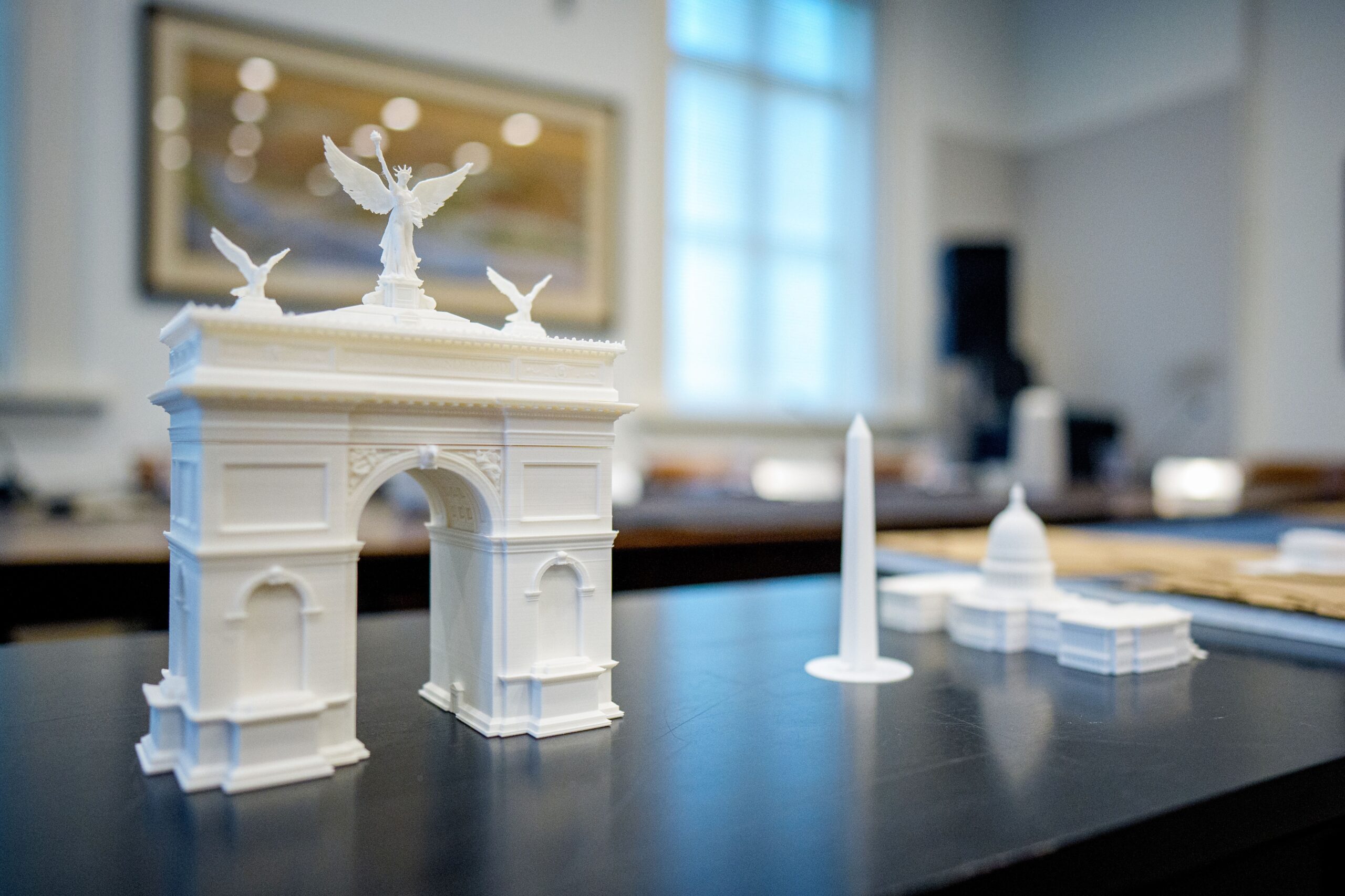
The president’s planned triumphal arch has been bound up in reviews under the law, known as Section 106.
Read more Katy Perry ‘appalled’ that White House used her song in video about bombing Iran
Trump officials on Friday voted to rewrite federal rules intended to protect historic sites, sending the plan to the White House for further review.
The Advisory Council on Historic Preservation, a federal agency that oversees preservation reviews and advises the president and Congress, said it was moving forward with changes to a federally required process that governs changes to landmarks such as the National Mall, sites that are significant to Indigenous tribes and other properties eligible for listing on the National Register of Historic Places. The process currently applies to any construction projects that are on federal land or receive federal funding, as well as private projects that require any type of federal approval.
If codified into law, the new rules would make it easier for President Donald Trump to pursue his controversial construction projects — such as building his planned triumphal arch — and could eliminate the need for public input on other major federal projects.
The ACHP is dominated by Trump appointees, leaving little doubt the proposal would pass.
The proposed rules “will now move to the interagency review process” overseen by the White House’s Office of Management and Budget, Ashley Fry, an ACHP official, wrote in an email. Once it clears that review, the proposal will be opened for public comment before being finalized.
Under the current rules, federal agencies must undertake a multistep Section 106 review assessing the potential effects of construction projects and soliciting public input, among other requirements.
The changes would allow federal agencies to approve construction projects that would impact historical sites without the previous requirement to seek the agreement of affected states, tribes and other interested parties. The proposal also would allow an agency to unilaterally decide whether or not it’s in the public interest to allow public participation in the review process.
The proposed rules could make it easier to change or destroy sites like Native American burial grounds or historic downtowns, or build projects that change the view from historic sites such as power lines near Thomas Jefferson’s Monticello estate.
The current process has created speed bumps for some of Trump’s projects, which he has sought to rush through federal reviews and complete before his term ends in January 2029.
Under the existing Section 106 rules, outside groups are currently weighing in on Trump’s plan to build a 250-foot-tall arch on federal parkland near Arlington National Cemetery.
Read more Democrats pick new Senate candidate in Maine in aftermath of Platner debacle
Trump officials complained last month that the current process was overly burdensome.
“Consulting parties also often request mitigation that is beyond the agency’s authority, unacceptable to a project proponent or the agency, or unduly burdensome, which can lead to disagreements that delay the completion of the process,” said Kevin Lilly, acting assistant secretary for fish wildlife and parks at the time, adding that the agencies could be forced into “endless consultation” under the current rules.
Historic preservationists and advocacy groups have decried the administration’s plan to overhaul the existing rules and vowed to mobilize resistance.
“The proposed changes threaten the history of our nation and the fabric of our society — this is an attack on our civic and cultural inheritance,” Brent Leggs, the CEO of the National Trust for Historic Preservation, said in a statement on Friday night.
The National Association of Tribal Historic Preservation Officers, a nonprofit that focuses on protecting culturally important places for Native Americans, said in a statement that the proposed changes are “an affront to Tribal sovereignty.” Other groups warned about the potential lack of protections.
Rep. Chellie Pingree (D-Maine), the top Democrat on a House subcommittee that oversees funding for the Interior Department, said that the administration’s plan would allow rushed construction projects that could “permanently damage” historical sites.
“They have shown time and again that they’re not interested in respecting the full scope of America’s history — only in fast-tracking the president’s vanity projects and giving sweetheart deals to donors and supporters,” Pingree said in a statement.
Sara Bronin, who led the ACHP under the Biden administration, told The Washington Post that she was not surprised the council voted to advance the proposed rule. Twenty of the 24 seats on the council are either directly appointed by the president or are reserved for the heads of federal agencies, such as the Interior Department, which are controlled by Trump.
“I expect the ACHP to ignore public comment and finalize the rule in the next month or so,” Bronin said. “Once they do, the preservation community and its allies will be ready both to challenge their action in court and to ask Congress to intervene.”
Read more Brazil denies visas to U.S. officials who aimed to impugn electoral system