Michigan’s bitter Senate primary was the clearest signal yet: The Democratic establishment is gasping.
Read more Why did the polls miss so badly in Michigan?
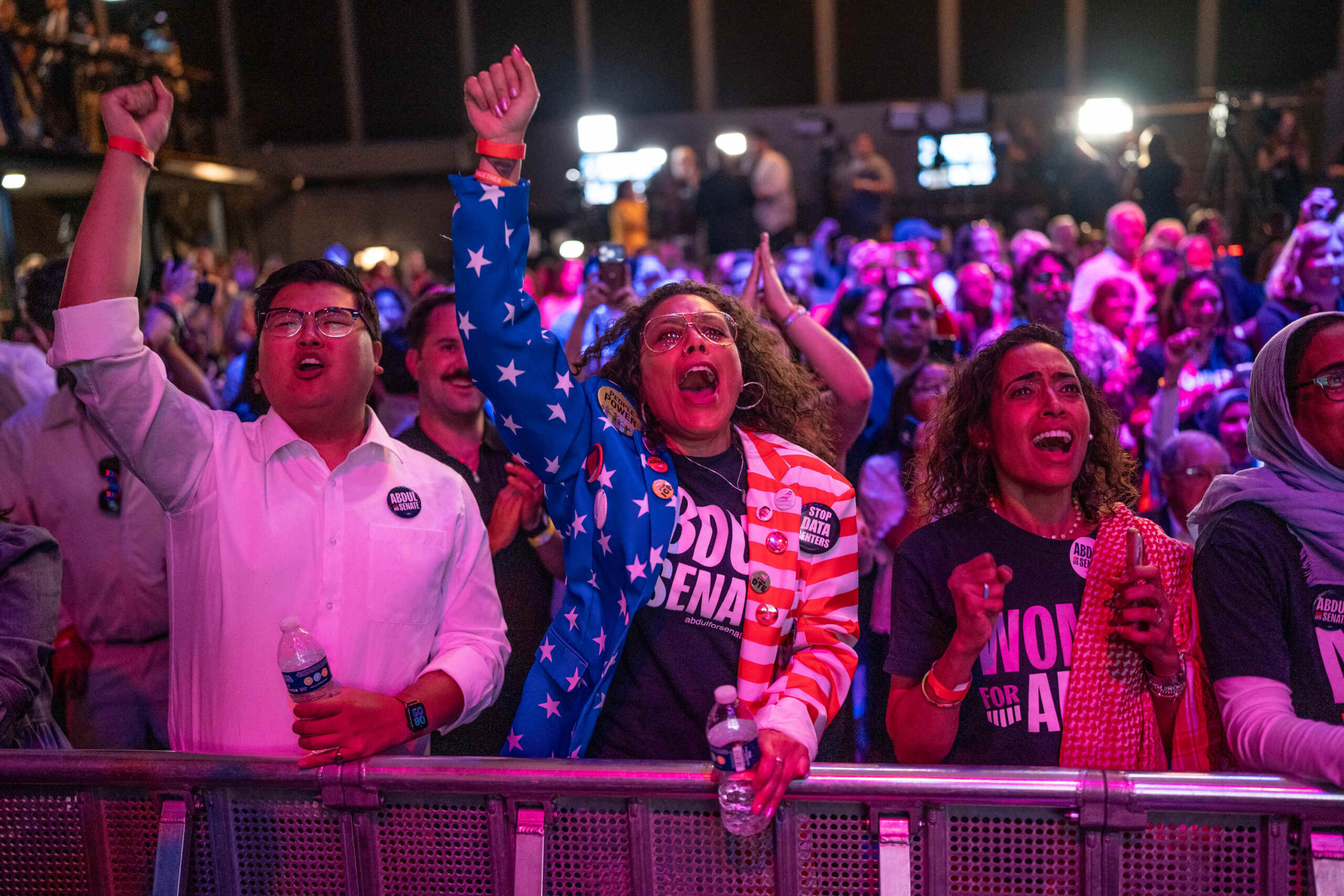
The narrow victory of former health official Abdul El-Sayed over four-term Rep. Haley Stevens, who had the near-unanimous backing of senior establishment figures in Washington and Michigan as well as a more than 8-to-1 television spending advantage, marked yet another stumble by the traditional power brokers.
It also amplified how out of touch they have grown with the angry left that has become the party’s ascendant force.
This time, the victory by a progressive insurgent happened not in a deep-blue enclave, such as New York City, where Democrats are pretty certain to win no matter what candidate they put up. It was in a statewide contest in Middle America. Donald Trump won Michigan twice, in 2016 and 2024.
In 2026, the stakes could hardly be higher. Democrats currently hold the Michigan seat being vacated by the retirement of Sen. Gary Peters. Should El-Sayed lose in November against Republican nominee Mike Rogers — a former congressman who came within a third of a percentage point from winning Michigan’s other Senate seat in 2024 — the party’s uphill effort to win back control of the Senate will become even steeper.
Much criticism has focused on how Senate Minority Leader Chuck Schumer and the campaign arm that he effectively steers, the Democratic Senatorial Campaign Committee, have attempted to orchestrate the primary process. They have boosted favored contenders in three primaries this year. Michigan marked the second one — the first having been Maine — in which Schumer’s anointed contenders were rejected by Democratic voters.
“What voters have been screaming from the rooftops is they’re sick of the status quo. They’re sick of the establishment. They want something different,” said Lis Smith, a Democratic consultant who worked for Mallory McMorrow, a state senator who dropped out of the race after failing to gain traction in a middle lane.
Nor were Democrats in a critical swing state persuaded by the argument that Stevens was more “electable.”
“If you listen to focus groups or interviews with Michigan voters, they are very interested in winning,” former Obama White House official Dan Pfeiffer wrote Monday in his Substack. “They want to pick a winner; they just don’t trust Democratic politicians to tell them who can really win. This is a very understandable impulse after 2024 and every Democratic leader backing Biden when he clearly shouldn’t have run.”
The stresses and divisions within the Democratic Party, including over support for Israel and the role of money in politics, were on full display in Michigan. El-Sayed rarely missed an opportunity to mention that Stevens had benefited from $62 million in advertising spending by outside groups, led by the American Israel Public Affairs Committee, the influential pro-Israel lobby.
The entire race, El-Sayed argued in the candidates’ final debate, “really comes down to how you are funded.” Rarely has a candidate been so effective at that kind of political jujitsu, using the weight of campaign money against its intended beneficiary.
Read more Preakness shifts date amid rocky week for horse racing’s Triple Crown
Late polls that had El-Sayed comfortably ahead of Stevens were wrong. The race turned out to be a photo finish.
The results also complicated any clean story about a party moving left. El-Sayed ran up his margins in the counties with the youngest and most highly educated voters. Stevens carried the poorest counties and the areas with the most Black residents — the parts of the Democratic coalition that have historically decided general elections in Michigan. An insurgent left that wins on campuses and in college towns but loses in Detroit’s suburbs and the state’s poorest counties has proved it can win a primary. It has not yet proved it can win a state.
Results also showed divisions among segments of the Democratic electorate: El-Sayed ran up huge margins in counties with the youngest and most highly educated voters; Stevens won the poorest counties and areas with the most Black residents — parts of the Democratic coalition that have historically decided general elections in Michigan.
Stevens quickly endorsed him after the race was called. “I spoke with Abdul a few moments ago to offer him my full support as we work to defeat Mike Rogers this November,” she posted on X. But given the acrimony of their battle, it is unclear whether Democrats can bind their wounds and regroup behind their new nominee.
Progressives in Michigan notched other victories Tuesday: William Lawrence, co-founder of the climate action group Sunrise Movement, defeated two more moderate Democrats to win the Democratic nomination in a swing district that includes Lansing. And incumbent Rep. Shri Thanedar lost to Michigan state Rep. Donavan McKinney, a democratic socialist.
The implications could well extend beyond November. The Democratic National Committee has tentatively approved Michigan to vote fifth in the 2028 presidential primaries — making it the biggest prize on the early calendar.
Should the progressives who were chosen Tuesday win this November, that may strengthen the hand of 2028 prospects who hew to the left. But if they lose, the party may be seeking a more centrist standard bearer.
With the 2026 primary season coming to an end, more optimistic Democrats are hoping that raging battles over their party’s identity will move to the back burner as they refocus their energies on Trump and the Republicans.
“We’re gonna have a great November. We’re gonna win the House, and I’m still bullish on the Senate,” former Virginia governor Terry McAuliffe, who also chaired the Democratic National Committee, said in an interview. “This is going to be about the party in power, plain and simple.”
Read more Democrats ask Interior watchdog to investigate response to Reflecting Pool damage
Clara Ence Morse contributed to this report.