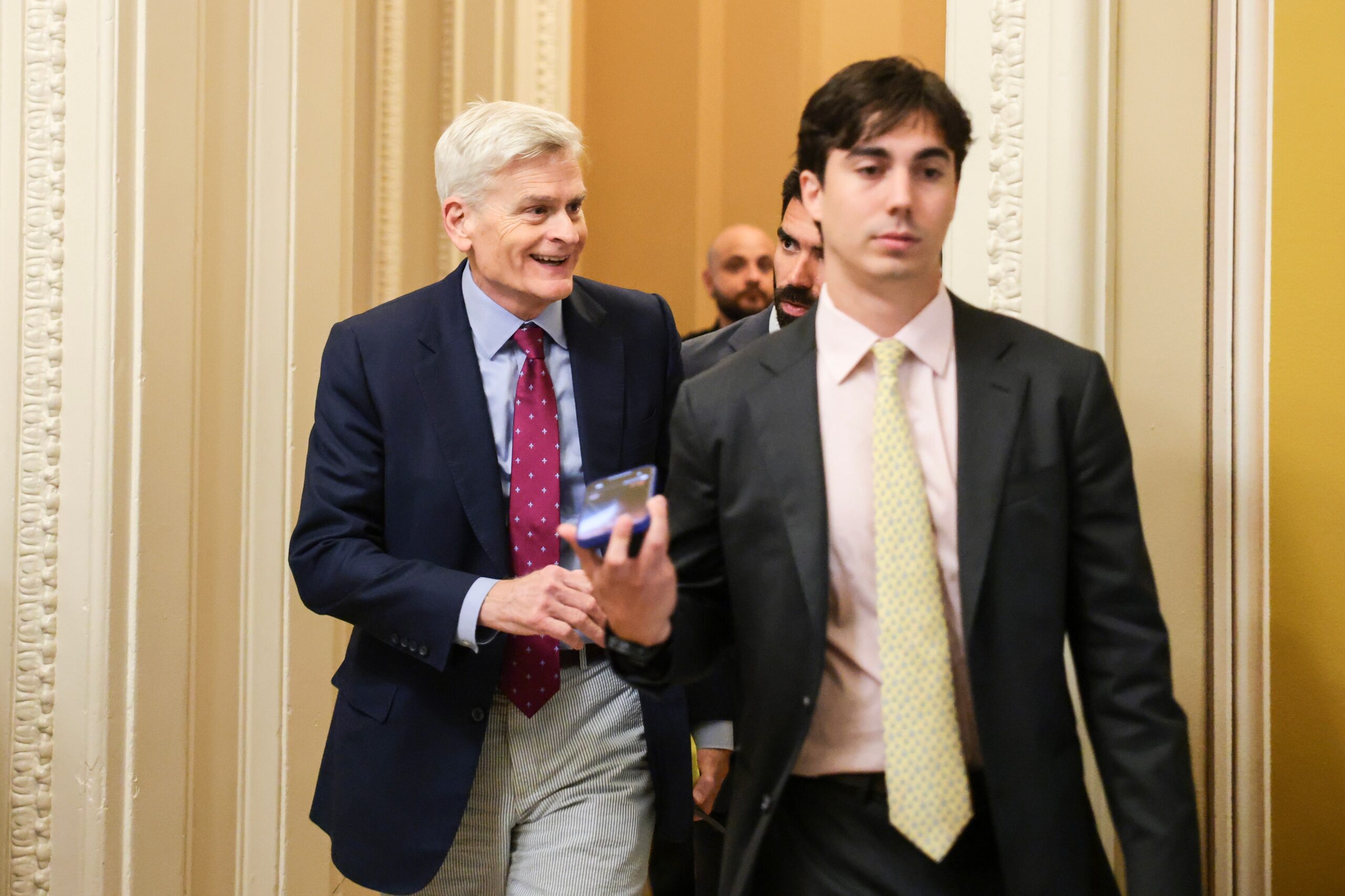
The Senate could hold the final vote on President Donald Trump’s pick to lead the Justice Department as soon as Friday.
Read more Trump won’t let the Supreme Court have the last word
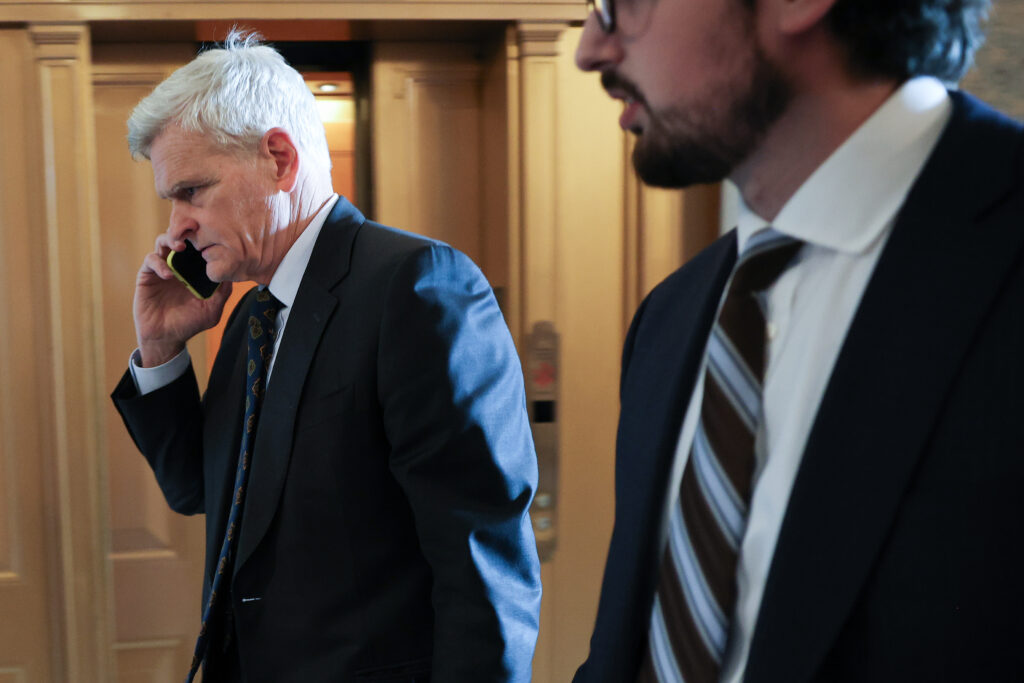
Sen. Bill Cassidy (R-Louisiana) said Friday that he will vote to confirm Todd Blanche as attorney general, giving President Donald Trump’s pick to lead the Justice Department the last expected vote he needs to be approved by the full Senate.
Cassidy made the announcement on the Senate floor just hours after Sen. Lisa Murkowski of Alaska, another critical GOP vote, said she would oppose Blanche’s nomination. Sen. Susan Collins (R-Maine) announced earlier this week that she would also be voting no.
But with Cassidy’s support now in hand, the Senate’s Republican leadership is expected to move forward with a vote on Blanche’s confirmation as soon as Friday after weeks in which the acting attorney general’s prospects appeared to be in doubt.
With all Democrats expected to oppose Blanche and Sen. Mitch McConnell (R-Kentucky) absent for health reasons, a no vote by Cassidy would at minimum have forced an embarrassing delay in the full Senate’s confirmation vote.
Cassidy said Friday he shared concerns raised by Murkowski and Collins over the “politicization” of the Justice Department under Trump and the controversial deal Blanche oversaw this spring to settle Trump’s claims against the IRS, which included a now-scuttled plan for a nearly $1.8 billion fund to compensate people who claim they were victims of political prosecutions.
But the senator couched his decision to back Blanche, who previously served as Trump’s personal defense lawyer, as a choice between the current nominee and the prospect that Trump could pick someone worse.
“Mr. Blanche is not perfect, and he will tell you this, but the choice is not between perfection and Mr. Blanche,” Cassidy said. “It is between Mr. Blanche and another acting attorney general who may not run the department effectively under President Trump and who, indeed may not be as good as Mr. Blanche.”
He added: “I’ll be criticized for this vote. What’s new?”
The fact that Blanche’s nomination was in doubt at all early Friday and hinging on Cassidy’s vote underscored the growing unease that has emerged in some corners of the president’s party over the Justice Department’s direction.
It also highlighted the extent to which Trump’s attacks on GOP lawmakers whom he deems insufficiently loyal have prompted an increased willingness among Republicans to buck his demands.
Cassidy lost his bid for reelection this year after Trump backed his GOP primary rival, Rep. Julia Letlow (R-Louisiana). He has repeatedly criticized the president since then and threatened to vote against administration priorities.
“I have a history with Mr. Trump, but that history does not matter one bit,” Cassidy said Friday in explaining his vote on Blanche.
The senator said he came to his decision after weeks of conversation with Blanche and current and former Justice Department officials, including former attorney general William P. Barr. Barr resigned late in Trump’s first term amid disagreements over the president’s false claims that the 2020 election had been stolen.
Barr, Cassidy said, advised him to back Blanche’s nomination, suggesting that as the lawyer who guided Trump through the criminal prosecutions he faced during his years out of office, Blanche had established a unique trust with the president, which could enable him to talk Trump out of bad decisions.
“I am realistic that President Trump can be unrelenting,” Cassidy said. “This will be true no matter who the attorney general is. And this is the rationale for having a Senate-confirmed attorney general with more leverage to push back.”
Read more Watchdogs press House panel over decades of missing spending investigations
Since returning to the White House last year, Trump has eroded the Justice Department’s long-standing tradition of independence while demanding it pursue prosecutions of his political enemies and reward his political allies.
Blanche has overseen many of those efforts serving first as the No. 2 official under then-Attorney General Pam Bondi and then as the department’s acting head after Trump fired Bondi in April. He has defended the president’s “right” to interfere with criminal investigations and his controversial pardons of those who attacked the U.S. Capitol on Jan. 6, 2021.
Democrats have decried Blanche as a uniquely dangerous nominee who thus far has proved unable or unwilling to talk the president out of decisions that run contrary to the rule of law. As his confirmation battle has worn on, more and more Republicans have expressed similar concerns.
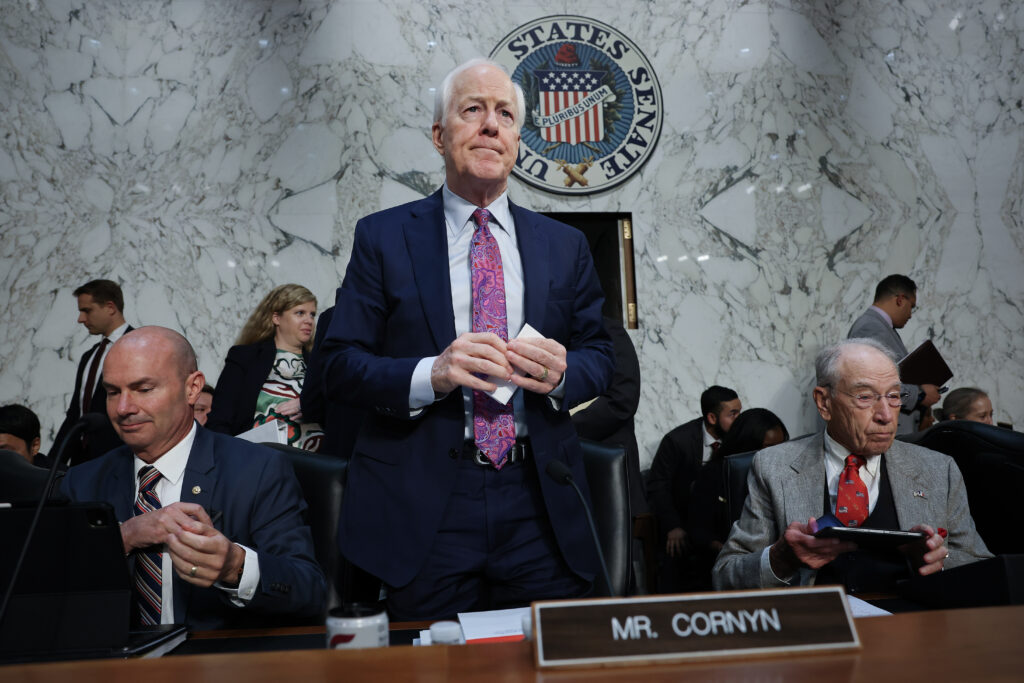
Earlier this week, Sens. John Cornyn (R-Texas) and Thom Tillis (R-North Carolina), two members of the Senate Judiciary Committee, had threatened to kill Blanche’s nomination in committee over reservations they harbored about the out-of-court deal Blanche oversaw to resolve Trump’s lawsuit against the IRS over the leak of his tax returns to the media.
In addition to the taxpayer-backed payout fund, the deal also provided unusual tax protections to Trump, two of his sons and their businesses, shielding them from any preexisting tax audits.
The fund proposal drew immediate bipartisan backlash with Democrats deriding it as a “slush fund” designed to reward Trump’s allies forcing Blanche to walk back the proposal days after its announcement.
But Cornyn and Tillis, who are leaving the Senate after this year after tangling with Trump, demanded written assurances from Blanche that the president would not later reverse that decision before they agreed to support him.
Blanche ultimately relented, issuing statements late Sunday declaring the fund officially dead and clarifying that the deal’s tax provisions protected the Trumps only from past tax audits and would not prevent the IRS from reviewing their finances in the future.
But critics have questioned whether Blanche’s written pledges hold any legal weight, given they weren’t also signed by Trump and his legal team, and could be ignored by the president at any point.
Murkowski raised that possibility in her statement announcing her decision to vote against Blanche’s nomination Friday. The only reason the payout fund was now off the table, she said, was because Blanche needed Senate support for his nomination.
“Once we vote, that will end, and there is no telling what the future holds,” she said, adding later: “The country needs an attorney general who will check the worst impulses of this administration. I hope Mr. Blanche is able to achieve that, if confirmed, but I simply do not have confidence that will be the case.”
Despite pledging his support for Blanche, Cassidy echoed Murkowski’s concerns. He said Blanche showed “poor judgment” in signing off on Trump’s IRS deal and added that he was “particularly concerned about episodes of apparent lawfare — DOJ bringing suits against political enemies.”
The Justice Department has, at the president’s demand, launched probes of critics including former FBI director James B. Comey, New York Attorney General Letitia James (D), former CIA director John Brennan, ex-White House aide Cassidy Hutchinson and Democratic lawmakers who recorded a video this year calling on military service members to resist illegal orders.
“A never-ending cycle of prosecuting political enemies undermines the rule of law, degrades the public’s trust in our institutions and makes our politics more extreme when we need to unite to solve the big problems of our time,” Cassidy said.
Read more Trump says he’ll bring ballroom fight to Supreme Court after lower court halts work