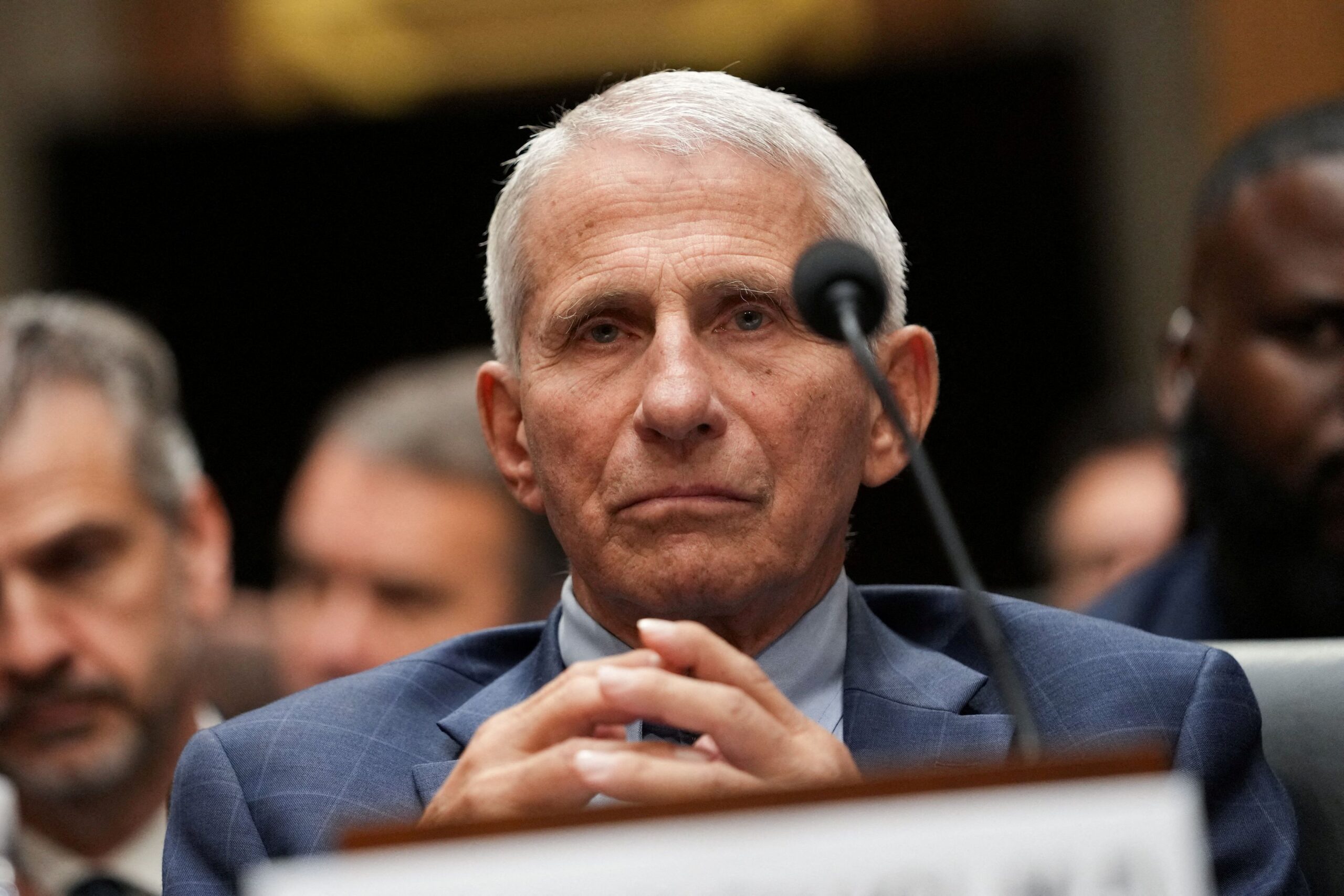
The Justice Department faces competing pressures as it decides whether to bring Fauci before a grand jury.
Read more What happened under Trump this week
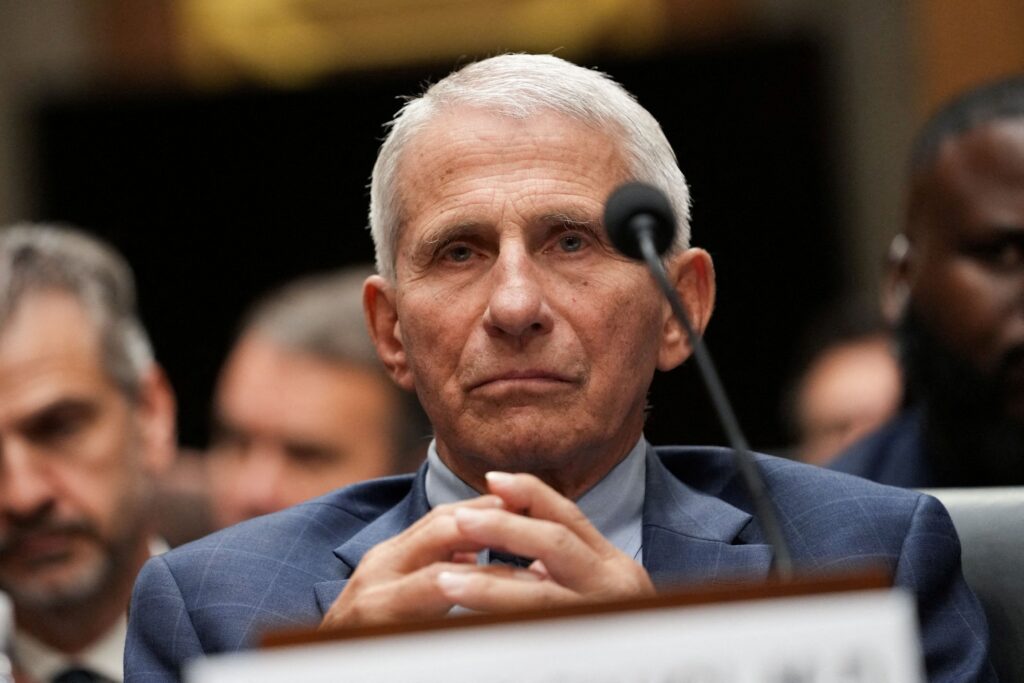
A Senate committee’s vote this week to hold Anthony S. Fauci in contempt of Congress hands the Justice Department two thorny questions: Will the agency prosecute the 85-year-old infectious-disease scientist, and could it win such a case in court?
The contempt vote does not automatically mean Fauci will face charges, and if that does happen, legal analysts say there are hurdles and potential weakness for any possible case.
The 8-7 vote centered on Fauci’s recent appearance before the Senate Committee on Homeland Security and Governmental Affairs, during which the former public health official repeatedly invoked the Fifth Amendment and declined to answer questions.
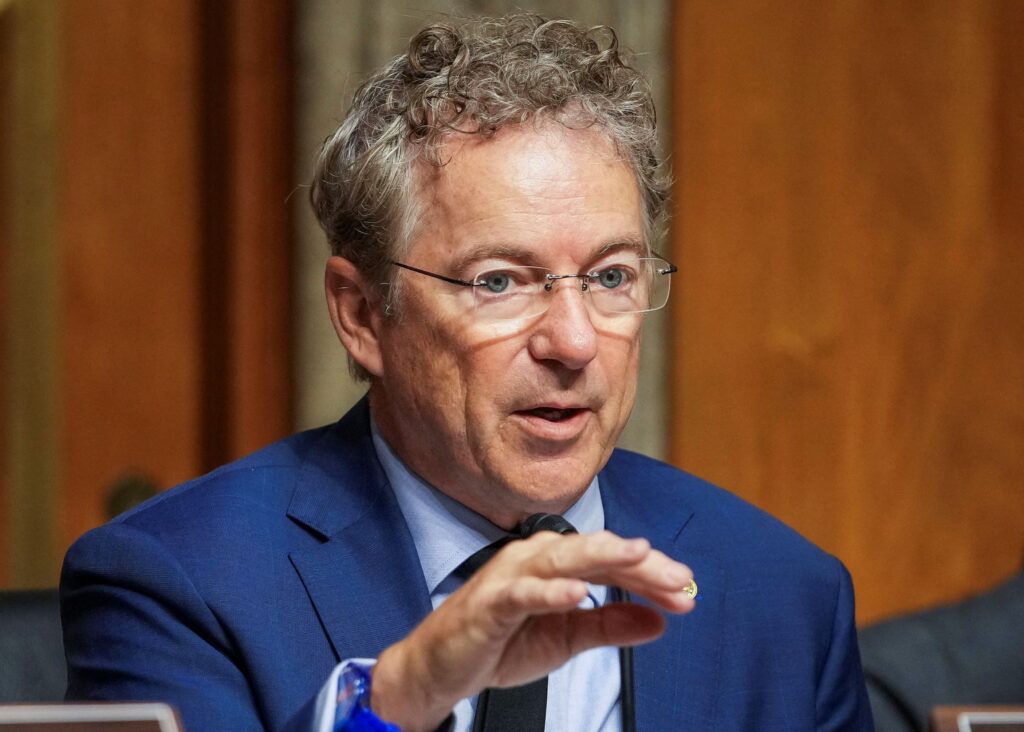
Fauci said committee Chairman Rand Paul (R-Kentucky) — who has long assailed the scientist over his handling of the coronavirus pandemic and called for him to be jailed — was trying to trap him in a misstep. Paul said Fauci had no legitimate reason to avoid questions, since President Joe Biden granted him a preemptive pardon before leaving office last year.
Deciding whether Fauci should actually face criminal charges that could land him behind bars, though, is up to the Justice Department. Its leader, Todd Blanche, just faced a grueling confirmation fight, with senators of both parties pressing him to resist politicizing the department.
Carlos Uriarte, who was assistant attorney general for legislative affairs during the Biden administration, said lawmakers routinely refer matters to the Justice Department — but that doesn’t mean prosecutions follow.
“DOJ has a lot of discretion in terms of what investigations it pursues, regardless of what steps Congress takes,” said Uriarte, now a partner at the firm Morrison Foerster.
Federal law says contempt of Congress cases must be referred to a U.S. attorney, “whose duty it shall be to bring the matter before the grand jury.”
But the Justice Department has concluded in the past that presenting these cases to a grand jury is optional.
In a 1984 legal opinion for the agency, then-Assistant Attorney General Theodore B. Olson — who later served as solicitor general under President George W. Bush — wrote: “Congress does not have the statutory or constitutional authority to require a particular case to be referred to the grand jury.”
The Justice Department said Friday in a statement about the Fauci contempt case that it had “received the document, we are reviewing it, and will work with the Senate accordingly.”
The Fauci case, though, is far from typical. It involves a longtime health official who became the face of the American response to the pandemic, celebrated by many Democrats and vilified by conservatives.
In a letter Thursday to Blanche and Jeanine Pirro, the U.S. attorney for D.C., Paul wrote that Fauci had improperly invoked the Fifth Amendment, which protects against self-incrimination.
“Dr. Fauci cannot have any reasonable fear of federal prosecution because he received a sweeping pardon,” Paul wrote.
Senators asked Fauci many questions about “exclusively federal subject matter,” Paul wrote, involving “conduct for which the pardon eliminates federal jeopardy.”
David Schertler, an attorney for Fauci, said there was “absolutely no basis for a criminal contempt charge against Dr. Fauci.”
“His assertion of his Fifth Amendment rights was completely appropriate and justified given Senator Paul’s many explicit statements that his clear intention was to see Dr. Fauci ‘behind bars,’” Schertler said in a statement.
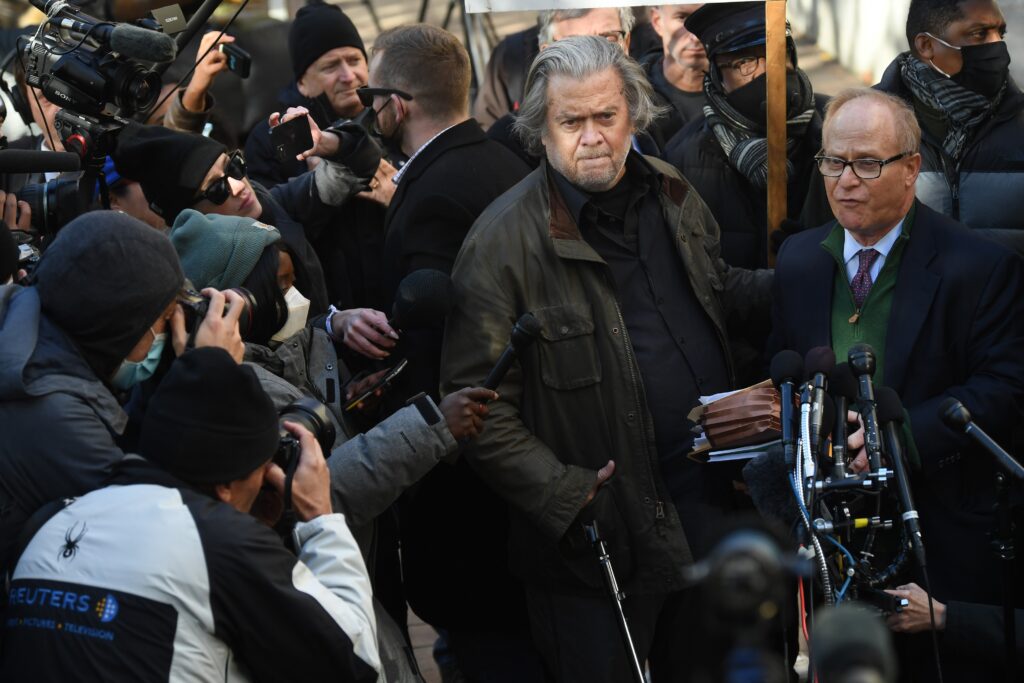
Fauci’s is not the first politically charged contempt case of recent years. Stephen K. Bannon and Peter Navarro — top advisers to President Donald Trump — were held in contempt in separate episodes by the House of Representatives during the Biden administration for defying subpoenas from the House Jan. 6 committee.
Bannon and Navarro were both prosecuted, convicted and jailed. Two other Trump aides — Mark Meadows and Daniel Scavino Jr. — were also held in contempt by the House, but the Justice Department declined to prosecute them.
Trump, who has criticized Fauci, cited the Bannon and Navarro cases after the contempt vote this week in suggesting the doctor should be prosecuted.
During Trump’s second term, the Justice Department has shown an appetite for taking aim at his foes, including former FBI director James B. Comey, New York Attorney General Letitia James (D) and former Federal Reserve Chair Jerome H. Powell.
Federal prosecutors could take a few different routes with the Fauci case, including deciding not to bring it to a grand jury at all, pursuing a contempt case as Paul wants and seeking entirely different charges against Fauci.
If prosecutors proceed with a criminal case against Fauci, a grand jury could reject it. That has repeatedly happened during Trump’s second term, including earlier this year when a federal grand jury in D.C. refused to indict six Democratic lawmakers who had recorded a video saying military service members could disobey illegal commands.
Read more Cassidy backs Blanche for attorney general, appearing to clear way for confirmation
A case against Fauci would risk genuine legal peril for him. If Fauci is convicted on a misdemeanor count of contempt of Congress, he could be jailed for at least 30 days and up to a year. But legal analysts said the case faces several hurdles.
The resolution finding Fauci in contempt was approved by a Senate committee on a party-line vote, but it was never presented to the full Senate, where it is not clear it would have passed. Some legal analysts suggest Fauci’s attorneys could try to challenge a prosecution in the case on that basis alone.
Stanley Brand, who represented Navarro in his contempt case, said that under the statute, the full Senate needs to review such cases when it is in session.
Paul’s decision to send the case to DOJ without the full Senate involved “is just fatal to the case,” said Brand, who previously worked as general counsel for the House of Representatives.
Brand said bypassing the full Senate and sending it from the committee vote on to the Justice Department is “like flushing it down the toilet.”
Others were not certain that this would doom a prosecution of Fauci, though they expected his attorneys would at least raise the issue if the case proceeds.
“It’s possible that’s a procedural defense he could raise,” said Amanda Vaughn, an attorney at Fairmark Partners, who was part of the teams at the U.S. attorney’s office in D.C. that prosecuted Navarro and Bannon. “But there’s not a lot of case law on it, as to whether bypassing the full Senate would be okay.”
Another unusual element in the case is Fauci’s pardon.
Shortly before leaving office, Biden granted pardons to Fauci and others who he said faced the threat of “unjustified and politically motivated prosecutions” by Trump’s second administration.
The language of the pardon states that it covered actions stretching back more than a decade, including Fauci’s work on the pandemic response. Paul wrote to Blanche and Pirro that the broad nature of the pardon negated Fauci’s need for the Fifth Amendment.
“It is difficult to conceive of a more comprehensive grant of federal immunity, and it forecloses the ordinary basis for Fifth Amendment protection for any topics covered by the Committee,” Paul wrote.
Legal experts, though, noted that the pardon was not boundless, in part because it only covered actions through the date it was issued in January 2025.
“A fundamental rule about pardons is that the president can only pardon events which occur before the moment that the pardon issues,” said Frank O. Bowman III, an emeritus law professor at the University of Missouri and an expert in presidential clemency.
“A pardon does not cover anything after its issuance,” he said. “The person pardoned could certainly be prosecuted for, for example, any false statements or perjury that he committed after the date of the pardon.”
Presidential clemency is also limited to federal offenses and does not protect against state charges.
Three Republican attorneys general — in Florida, Louisiana and West Virginia — announced this week that they were subpoenaing Fauci, and a fourth in Oklahoma ordered an investigation into him there.
The contempt resolution said Fauci had waived his right to invoke the Fifth Amendment by giving “opening testimony on subject matter pertinent to the questions under inquiry.”
This is not the first time lawmakers have made such an argument.
In 2014, the House of Representatives voted to hold ex-Internal Revenue Service official Lois Lerner in contempt after she made an opening statement at a hearing and later invoked the Fifth Amendment. The following year, the U.S. attorney for D.C. at the time, Ronald C. Machen Jr., said his office was declining to bring that case before a grand jury.
David I. Schoen, an attorney who represented Bannon in his contempt case, said Fauci’s opening statement could prove an issue for his defense.
“I would make the argument, if I were on the prosecution side, that that is a statement denying the charges against him,” he said.
Schoen was also critical of Fauci for invoking the Fifth Amendment when pressed during the hearing on relatively mundane topics, including when Sen. Josh Hawley (R-Missouri) asked him about the color of his tie.
“The Fifth Amendment is a vitally important part of the Constitution,” Schoen said. “On the other hand, it shouldn’t be abused.”
Bowman said that technically, Fauci could not invoke the Fifth Amendment in those areas “because the answers to those questions couldn’t reasonably incriminate him.” But people who are invoking the Fifth Amendment often do so broadly, he added, because defense lawyers tell them not to answer anything to avoid getting “drawn into question-by-question justifications of why you answered this and didn’t answer that.”
Read more Trump won’t let the Supreme Court have the last word