The Michigan Democratic Senate candidate’s “AI Under Control” proposal would freeze development of powerful AI systems and data centers.
Read more With judgment nearing, candidates lean on bipartisan partnerships
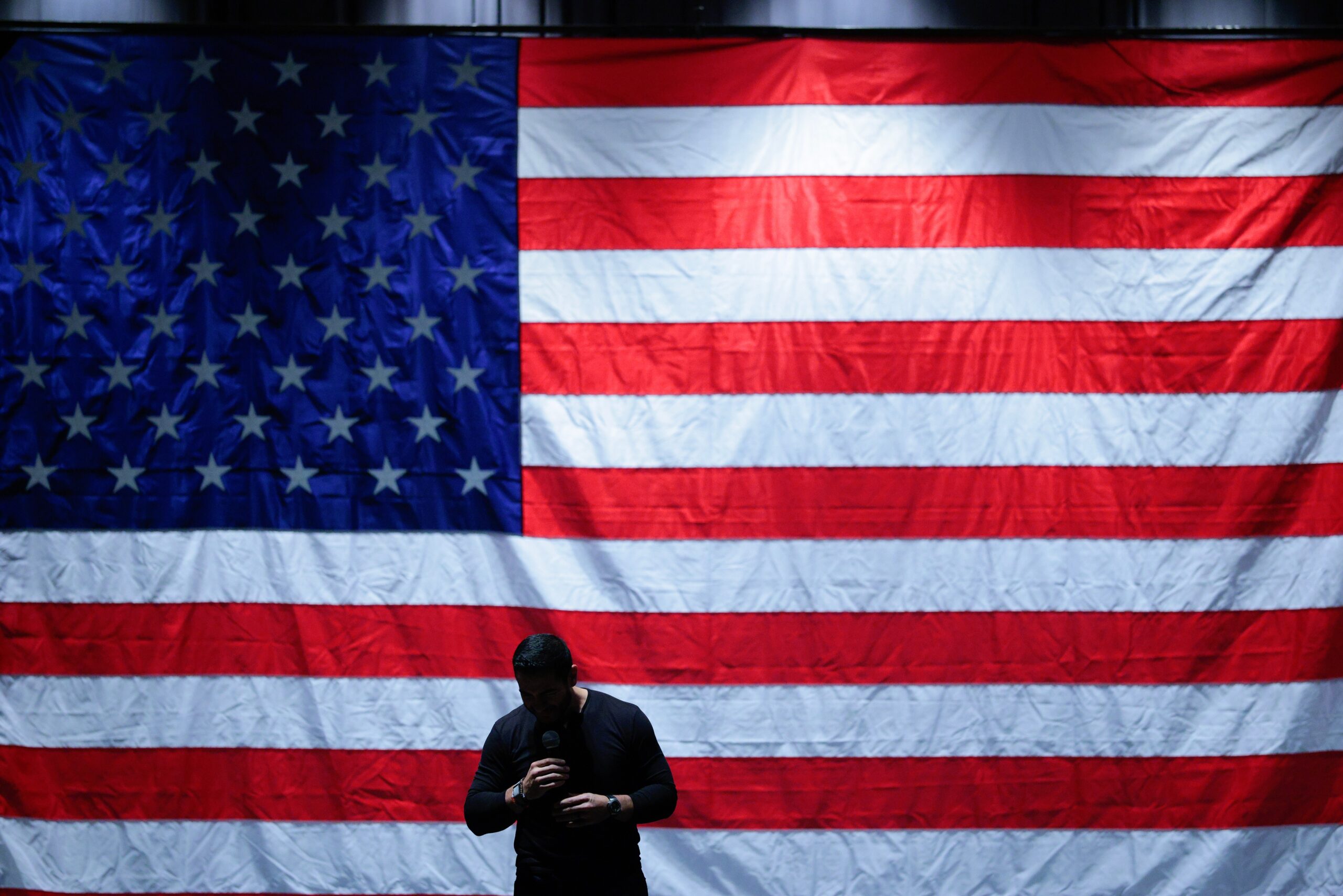
Michigan Democratic Senate candidate Abdul El-Sayed on Tuesday unveiled a proposal to freeze development of advanced AI models and data centers, seeking to connect with voters who have expressed deep concerns about the technology.
El-Sayed’s “AI Under Control” proposal would require tech companies to pause the training and release of the most powerful AI systems until policymakers develop new guardrails to limit the technology. He also supported the creation of a Cabinet-level government agency that would inspect labs building AI models, block release of dangerous products and order a shutdown of any rogue system if necessary.
El-Sayed’s decision to release the plan in the final weeks of the election highlights the Democratic Party’s growing efforts to capitalize on public anxiety about AI, as polls show the majority of Americans are wary of the technology and its rapid development.
El-Sayed is tying the issue to lines of attack he has used against his Republican opponent, Mike Rogers, and President Donald Trump, who has rejected calls to slow down AI development and called for the tech industry to police itself.
“Donald Trump, Mike Rogers, and their Big Tech billionaire donors can’t be trusted to keep either Michigan or humanity safe from the existential dangers of unrestrained AI,” El-Sayed said in a statement Tuesday.
Only 2 percent of Michigan voters said that AI and data centers were the most important issue in deciding their votes for Congress, according to a New York Times/Siena poll conducted in September. However, Democrats and independents were more likely than Republicans to say it was the key issue, and political operatives in both parties say it is a significant issue even for those who don’t list it as their No. 1 concern.
Read more Montana Democratic Party chair steps down, endorses independent candidate
Michigan voters said El-Sayed would do a better job than Rogers at addressing data centers by an 11-point margin, according to the same poll.
Rogers in August endorsed a one-year moratorium on data centers in Michigan, after reports that he held at least $1.7 million in investments in companies that stood to benefit from the AI and data center boom.
El-Sayed’s plan builds off a proposal introduced by two prominent progressive lawmakers, Sen. Bernie Sanders (I-Vermont) and Rep. Greg Casar (D-Texas).
El-Sayed’s plan, like the lawmakers’ proposal, would ban recursive self improvement, a technique in which AI systems are used to design and build their successors. El-Sayed did not specify how this would be enforced, at a time when tech companies say AI systems already are designing and training a significant percentage of new models.
El Sayed also called for the creation of new protections for employee whistleblowers who expose AI dangers, a mandatory reporting process for instances where AI systems go rogue and a national plan to respond to an AI emergency, which would involve regular government drills.
Read more Mike Johnson says execution video could be ‘recruiting tool’ for terrorists