In today’s edition … Trump’s Hail Marys … We ask you about religious groups winning at the Supreme Court … but first …
Read more Montana Democratic Party chair steps down, endorses independent candidate
In this moment of hyperpartisanship and political acrimony, it always feels odd when a Republican or Democratic candidate who spends time lambasting the opposing party touts their cross-party friendships.
But what is politics without contradictions?
Across the country, candidates are trying to burnish their bipartisan bona fides with ads that often boil down to: Have you met my friend from across the aisle?
“I usually vote Democrat, but for this one, nah, I’m gonna go for Greg,” says Ray, a barber in an ad for Greg Cunningham, the Republican in a competitive House district stretching across Southern New Mexico. “I’ve been cutting his hair for 30 years.”
“I voted for Trump every time he was on the ballot,” says Bill, a voter in Lackawanna County, Pennsylvania, before laying into Republican Rep. Rob Bresnahan and endorsing his Democratic opponent Paige Cognetti. “She’s different. … She’s an old-school tough gal. So yeah, this three-time Trump voter is voting for Paige Cognetti.”
“I’m former Democrat mayor Kathleen Palmer, and I wanna tell you what I know about Bob Brooks,” says the one-time mayor of Alburtis, Pennsylvania, in an attack ad for Republican Rep. Ryan Mackenzie.
“Take it from this veteran and Trump voter,” says a man named Zane in an ad backing Democrat Sam Forstag in Western Montana.
This isn’t new in politics. I am sure many of you have watched television long enough to see your fair share of campaign ads voiced by people from the opposing party.
But this trend stands out right now because of the acrimony between the two parties and the hyperpartisanship that has defined our politics over the last decade.
Take this poll from 2022, which found that “growing shares in each party now describe those in the other party as more closed-minded, dishonest, immoral and unintelligent than other Americans.”
“Perhaps the most striking change is the extent to which partisans view those in the opposing party as immoral. In 2016, about half of Republicans (47%) and slightly more than a third of Democrats (35%) said those in the other party were a lot or somewhat more immoral than other Americans,” reads the Pew Research report. “Today, 72% of Republicans regard Democrats as more immoral, and 63% of Democrats say the same about Republicans.”
So if voters hold those views of the opposing party, why are candidates running ads touting that members of that party have backed them?
“You’re trying to win over some folks on the other side, but mostly this is a way of telling voters, ‘Look, I’m not a lunatic. I know things are bad right now and that we need to do something different,’” said Greg Krieg, a Democratic strategist. “And we are at the stage, in the end times of the Trump Era, where acknowledging a friend across the aisle feels like rejecting the status quo.”
According to Larry Sabato, a longtime political watcher and political scientist at the University of Virginia, the ads are “a waste of money,” meant to make candidates and their families feel better about the campaign’s cross-party appeal.
“The candidates have won a party nomination, but they think of themselves as beloved by everyone,” Sabato said. “They love being loved, and they just despise it when they come across someone who doesn’t love them. Every politician I have ever known does this. They want 100 percent [approval].”
There is something to that. These ads, while often traditional attack ads, show candidates trying to tell voters they can’t be that bad; just look at this person who is backing them.
Forstag has really leaned into this. Beyond the ad, he has also held “civil discourse” town halls in the district, including one recently with Greg Frazer, a former Republican legislator in Montana.
“Greg and I don’t agree on everything, but we agree on the things that matter most,” Forstag said of the event.
This trend also reflects the rise of independents, with a recent Pew Research Survey finding that 45 percent of Americans identify that way. But Pew also found that most politically active independents regularly lean toward a party, so bipartisan ads may be a way to reach independents who lean away from your party.
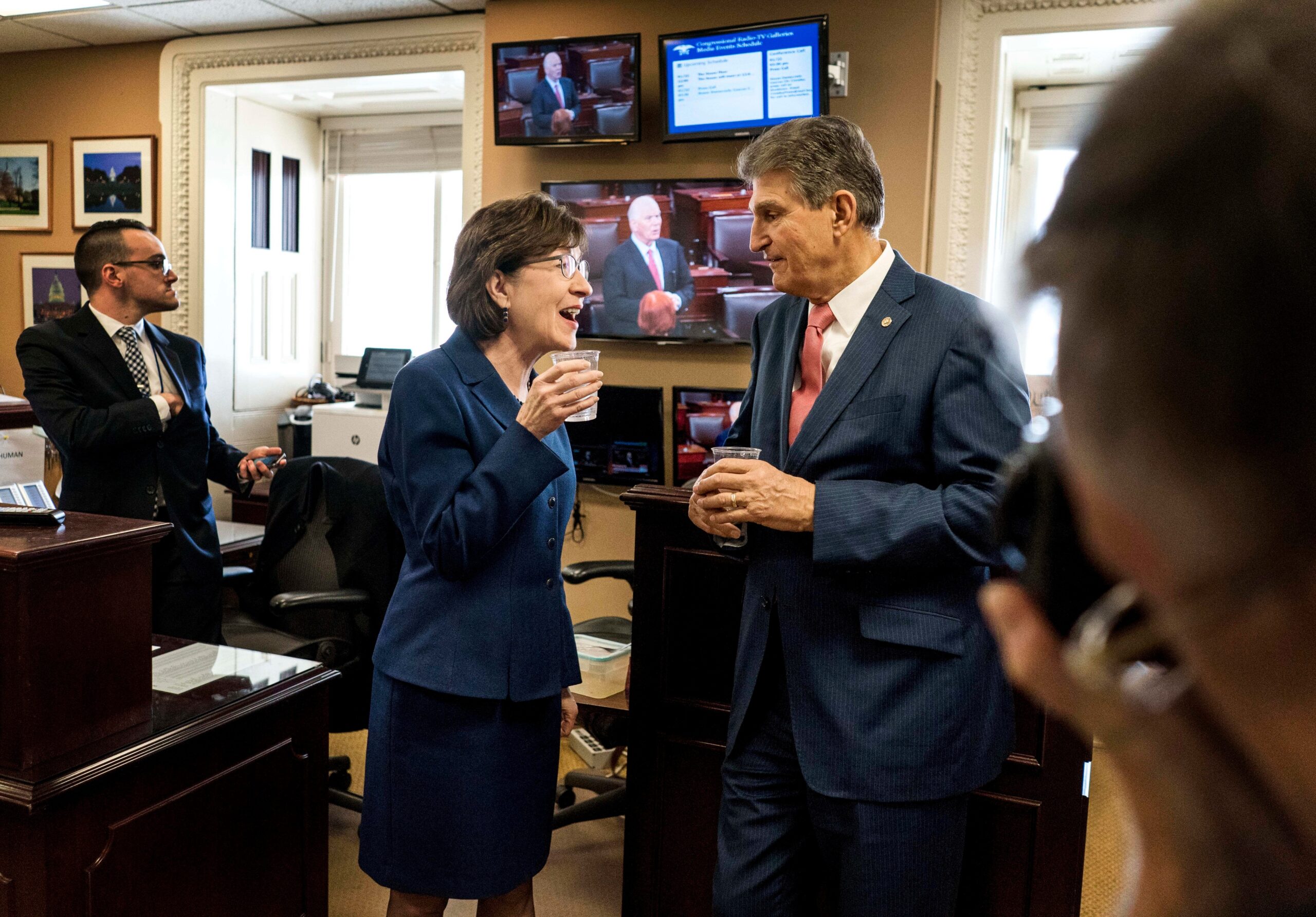
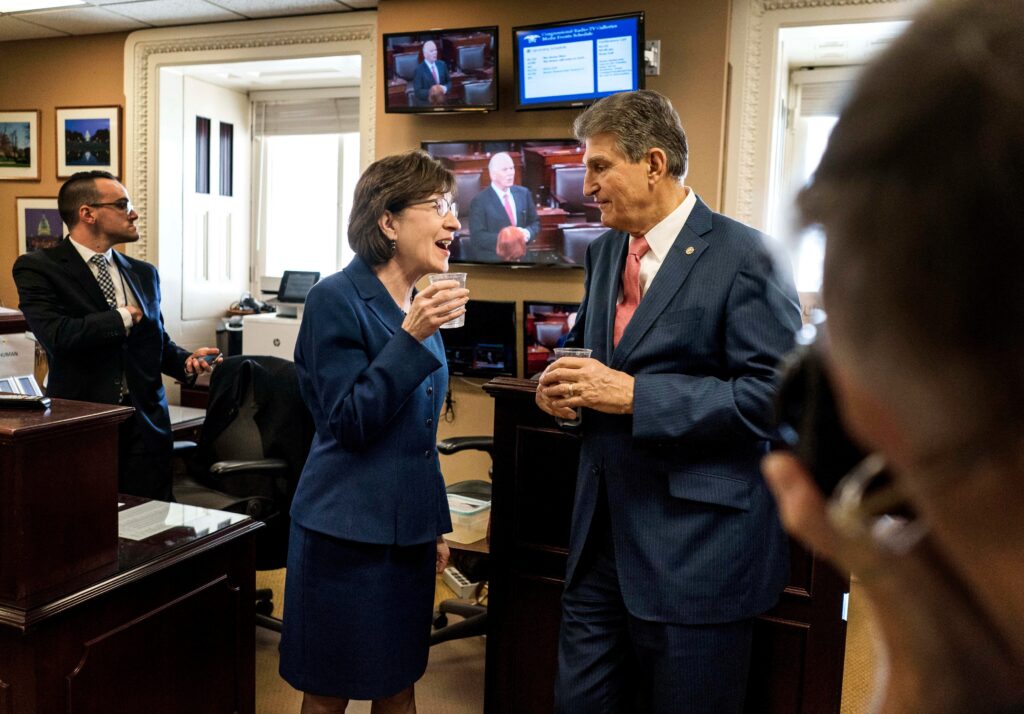
And then there are politicians, like Maine Sen. Susan Collins (R), who have staked their careers on winning cross-party support. In the midst of her toughest reelection yet, Collins recently touted an endorsement from former senator Joe Manchin III (D-West Virginia).
Read more Mike Johnson says execution video could be ‘recruiting tool’ for terrorists
“You lose the Susan Collinses of the Senate, you’re losing the soul of the Senate,” Manchin said in his endorsement of Collins, who called Manchin a “dear friend.”
“I am honored to have his support,” she said.
Collins is running in a state that has moved left, so touting a Democrat’s endorsement is pretty obvious. And Manchin has said that he would like to come to Maine to campaign for Collins, something I am told the Republican would welcome.
Yesterday, I wrote about President Donald Trump’s attempt to bring down diesel prices by striking a deal with Russia.
It feels like an election-year Hail Mary, one that undercuts his party’s messaging on Russian leader Vladimir Putin and represents, at the very least, an acknowledgment from Trump that his midterm fate is tied to fuel prices.
Mike Pence, Trump’s former vice president turned critic, called the decision a “betrayal” and urged him to “rescind” it.
But it got me thinking about all the other big swings Trump has attempted in the final weeks of the campaign — and how we should watch for more in the coming days.
Here are other ways Trump has tried to pull levers to reverse how voters feel about his administration:
Trump is already promising some “big surprises” that will upend the midterms in the coming weeks. Those will almost certainly land on this list when they are announced.
Minnesota Reformer: The Department of Homeland Security infiltrated an anti-ICE organization during their operations in Minnesota, using a Signal username “‘peanutbutterjelly’ and attending “an ‘upstander’ training and anti-Immigration and Customs Enforcement planning meetings and regularly messaged with others doing the same.”
Maine Morning Star: The Wabanaki Nations have far less autonomy because of a 1980 land settlement that treats the tribe like a Maine municipality. But Hannah Pingree, Maine’s leading gubernatorial candidate, could build a new relationship with the state after Democratic Gov. Janet Mills.
The Southern Maryland Chronicle: Maryland voters will decide next month whether to give state lawmakers more redistricting power. A recent poll found 53 percent of voters oppose giving lawmakers that power.
I am unabashedly biased on baseball playoff questions. I asked who you want to win yesterday, and my take: Anyone but the Dodgers.
I’d like to watch baseball next year with my sons — whether the Nats are good or not — and I worry that if the Dodgers win again, the chances of a lockout skyrocket.
“The two teams I wanted to advance did not so at the moment I do not have a team in the mix. I follow the highlights but am not watching any games,” wrote John Frank. “And frankly, all the talk about the CBA lockout has me down on anything MLB right now.”
Barbara Beck was down on my Nats. “Meh,” she wrote.
“Devout Cardinals fan but all for the Cubbies failing that, so White Sox as a substitute for the Cubs as a substitute for the Cards,” wrote Beck. “Now that they are all gone, go Brewers, even tho I like Dodgers but gotta give the Midwest a little love.”
As for my favorite baseball moment: It was undoubtedly the 2019 World Series run. My wife and I had just gotten married, and she joined me as a Nats fan. We went to multiple World Series games, but my best baseball memory was Juan Soto’s bases-loaded, go-ahead three-RBI single in the 2019 National League wild-card game. Soto got thrown out running the bases, but no one cared — including him. After the Nats won the World Series in Houston, I had to remind my wife that this doesn’t happen often — and the last seven years have been proof!
John Perryman took a more lighthearted approach and said his favorite memory was the 1989 classic baseball movie, “Major League,” in which the Cleveland Indians win the World Series, and Bob Uecker exclaims, “0h my god, the Indians win it.”
My colleagues Julian Mark and Justin Jouvenal wrote yesterday that religious rights are on a winning streak at the Supreme Court and a forthcoming case may test how far the court will go when they decide “whether a Catholic school that does not accept the children of gay parents can participate in a Colorado prekindergarten program.”
This stat in their story was striking: “Since the 2020 term, the Court has sided with those groups in seven of those eight cases [on expanding religious rights].” What do you think of the religious wins at the Court? And what about the Colorado case? How should the Court rule in that? Let me and your fellow Early Brief readers know at [email protected].
Read more Trump says he’s ‘looking at’ firing Kimberly Guilfoyle from Athens post
Thanks for reading. You can follow me on X at @merica.