The D.C. Council member was charged with taking thousands of dollars in cash from a contractor who did work for the city.
Read more The 9 Senate seats most likely to flip party control in November
A federal judge declared a mistrial Monday in the case of D.C. Council member Trayon White Sr., who was charged with taking bribes from a city contractor who handed him envelopes of cash during four meetings in 2024, all of them secretly videotaped by the FBI.
Jurors deliberated for more than three days, first saying Friday that they could not agree on White’s innocence or guilt. U.S. District Judge Rudolph Contreras declared a mistrial Monday morning after the jury sent a final note saying further discussions had only “cemented” their views.
A Democratic lawmaker who was first elected in 2016 to represent the city’s poorest ward, White had maintained his innocence since his August 2024 arrest. His attorneys said he was framed by a confidential FBI informant who had previously donated to White’s campaigns.
White, 42, remains under indictment. In a statement, U.S. Attorney Jeanine Pirro said she would retry the case before another jury.
White, meanwhile, said he remains focused on serving his constituents.
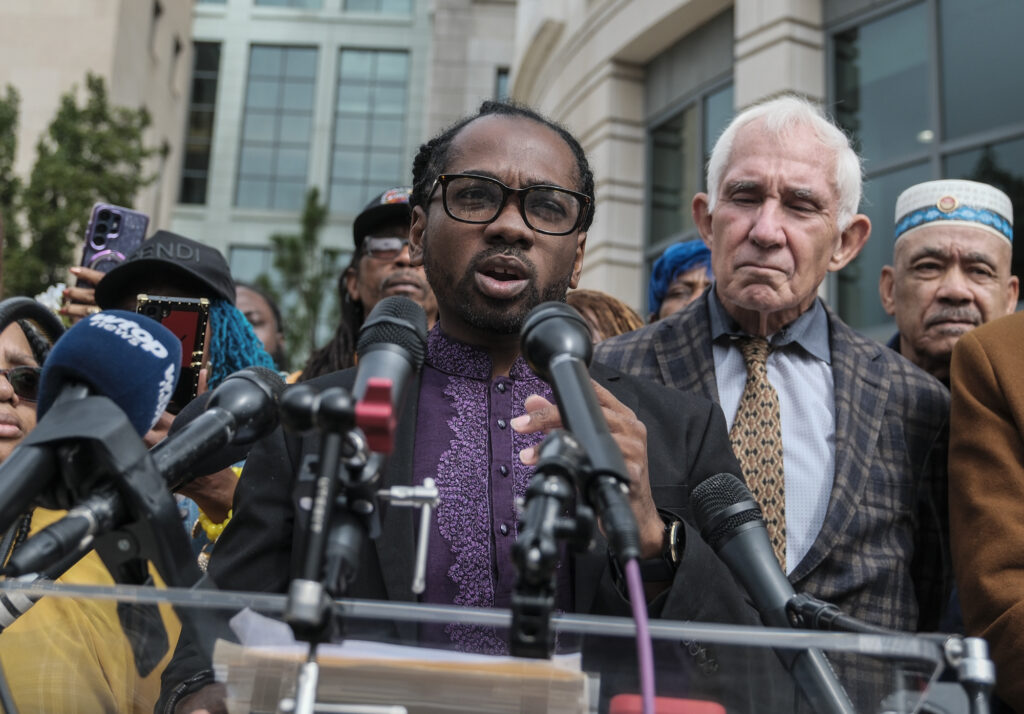
“We want to accept the jury’s decision today, regroup [and] get back to work, because there’s a lot of work around the city to ensure equity and inclusion in a $20 billion budget,” White said outside the courthouse.
The Ward 8 council member has built a reputation in D.C. politics and neighborhoods as a champion of the violence-interruption programs that prosecutors said he sought to cash in on.
He was charged with accepting $35,000 from a D.C. government contractor, Allieu Kamara, who was working as an undercover FBI informant during their meetings in 2024. In return for the cash, prosecutors said, White agreed to pressure D.C. officials to renew contracts worth millions of dollars that Kamara’s companies had previously obtained for violence-interruption services.
White’s cut of the deal was expected to grow, according to prosecutors, to $156,000, or 3 percent of the contracts. Kamara’s companies, Life Deeds and District Services Management, mostly operated in three wards outside White’s Ward 8, according to prosecutors.
The mistrial was the latest high-profile setback for Pirro, who has struggled since taking office last year to obtain convictions of some defendants charged with federal crimes.
“We have video showing piles of cash being given to a D.C. councilmember as part of a $156,000 bribe,” Pirro said Monday in a statement. “Rest assured that we will retry this case and every corruption case to verdict.”
Last week, D.C. Council Chairman Phil Mendelson (D) said the council would await a verdict before deciding what, if any, steps to take on White’s role.
Lindsey Walton, a spokesperson for Mendelson, said after the mistrial was declared Monday that council members would have to meet to consider their options but that committee assignments were not expected to shift by year’s end.
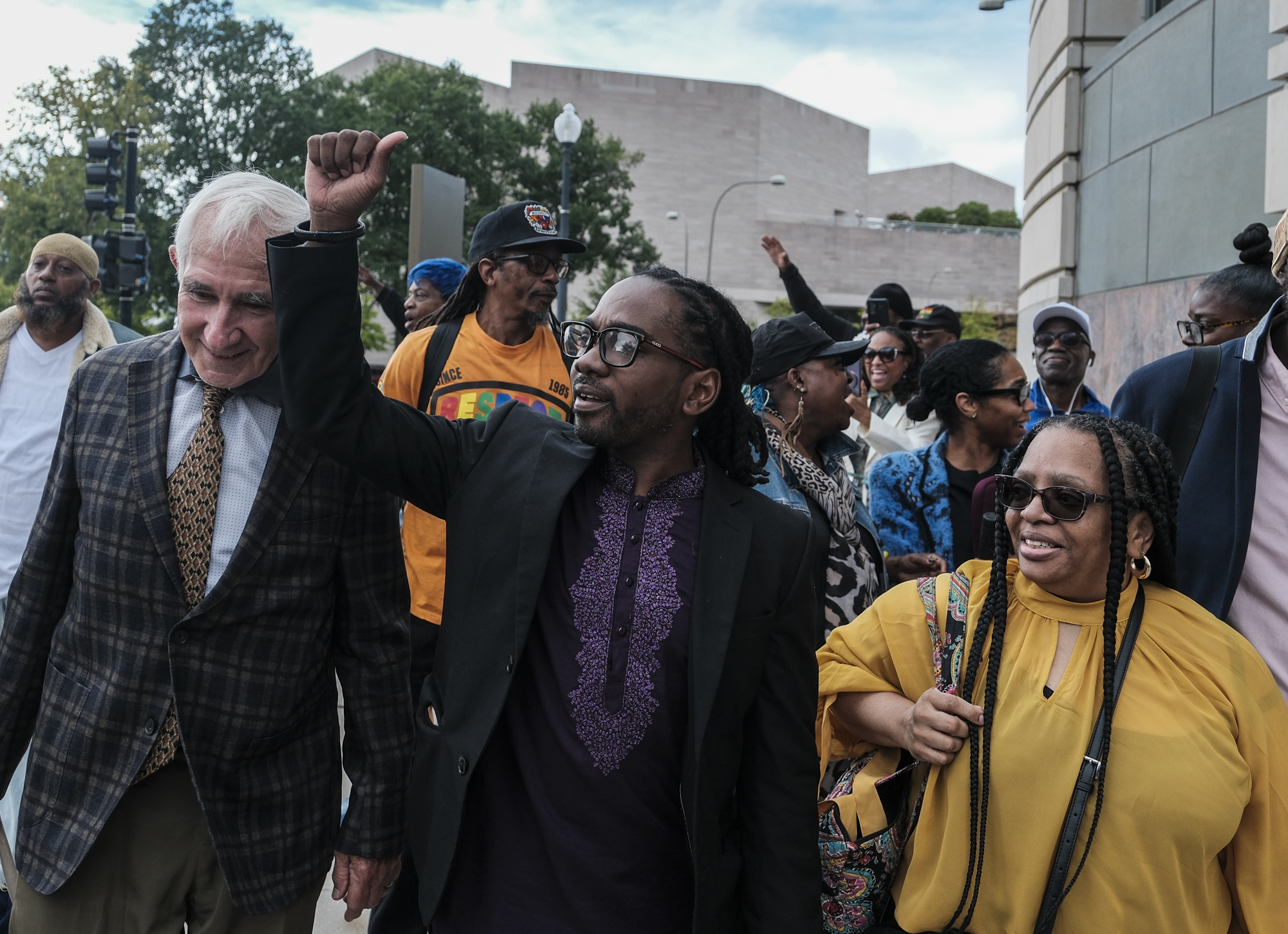
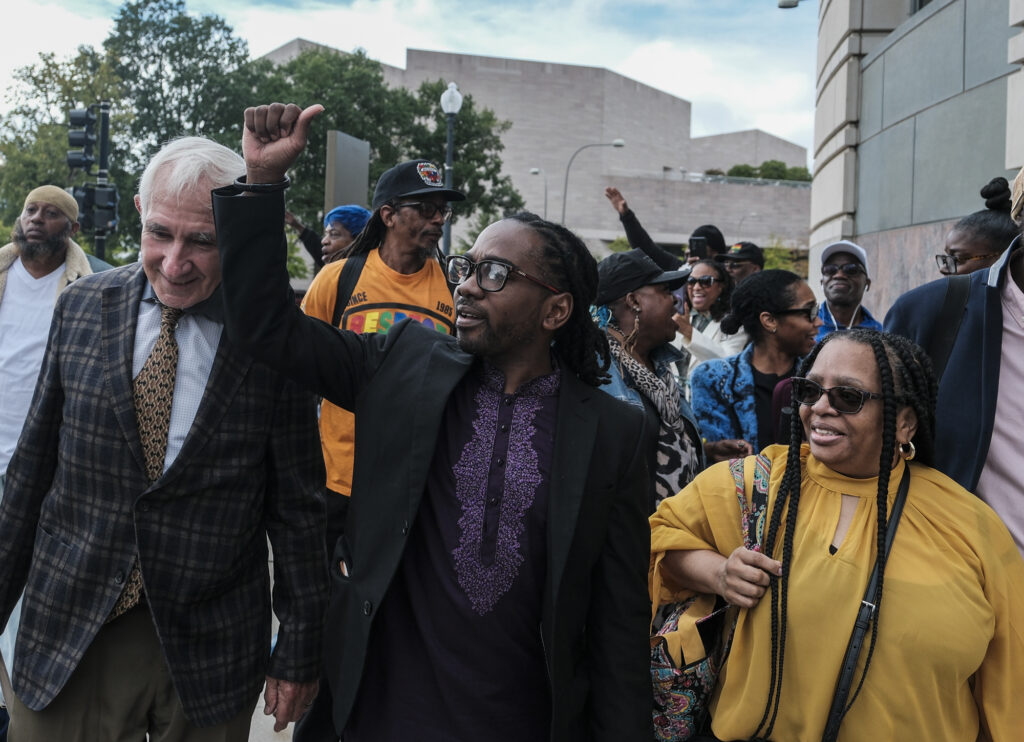
In remarks to his supporters gathered outside the courthouse, White thanked God, his defense team and all those “who played a part in this victory.”
“It’s been over two years of me being patient and hoping to get to this moment,” White said.
White declined to answer a question about why he had accepted cash from Kamara and what he had planned to do with it, saying there was no “there there.”
“That the prosecutor didn’t submit sufficient enough evidence to convict of crime — there was no crime in the first place, and so I leave it at that,” he said.
Read more White House to reopen part of Lafayette Square after eight months
Ron Moten, founder of the Go-Go Museum and Cafe in Ward 8 and a longtime community leader, said that “it’s sad that you didn’t get a conclusion” and that White “still has to deal with the cloud over his head.”
“We need to support him until this is resolved, one way or another,” Moten said of White. “We can’t afford to have a divide in Ward 8.”
During the trial’s opening days, jurors, lawyers, courthouse spectators and the council member’s supporters watched in rapt silence as 87 minutes of video, secretly recorded by the FBI and played on courtroom screens, showed White’s unguarded interactions with Kamara inside a Cadillac Escalade.
An assistant U.S. attorney, Rebecca Ross, said the video provided “a front-row seat to public corruption.” White and Kamara can be heard discussing which D.C. officials the council member should approach about the unrenewed contracts. White can be seen taking envelopes of cash in the first four meetings. A fifth video ends with White’s arrest in front of his Navy Yard condo.
“I don’t want to feel like you got to give me something to get something done, man,” White says in the first video, from June 26, 2024, while pocketing an envelope with $15,000 in cash that Kamara handed him.
White, who during trial breaks logged on to a council meeting from the courthouse cafeteria and attended a ribbon-cutting ceremony at an elementary school, declined to testify in his own defense. His attorneys did not dispute that he took the $35,000. They argued there was no crime because White never intended to pressure D.C. officials to renew Kamara’s contracts.
Three officials White told Kamara he was in touch with over the contract renewals testified at the trial that the council member never pressed contractor issues with them. They were Deputy Mayor Lindsey Appiah; Kwelli Sneed, who led a D.C. agency in charge of violence-interruption programs; and Anwar Walker, a former contracting specialist.
“Trayon White actually did nothing,” defense attorney Gary Kohlman said during closing arguments. “He had no intent other than to look into the status of the contracts that Kamara had.”
Prosecutors said White broke the law when he agreed to take cash to advocate Kamara’s contracts, regardless of whether his advocacy worked. They pointed to White’s remarks on the video, in which he tells Kamara he would not vote for Sneed’s confirmation to her position full-time unless she supported his initiatives.
John Fishwick Jr., a former U.S. attorney for the Western District of Virginia, said that recent Supreme Court decisions have narrowed the legal pathways to convict public officials of bribery and that the jury in White’s case seemed to be hung up on the fact that the council member did not appear to pressure any D.C. government officials to renew Kamara’s contracts despite taking the cash.
“At least some of the jurors reached the conclusion that he didn’t do anything with it — he didn’t pressure anybody,” Fishwick said.
The jurors asked the judge Thursday in a note, “Is it bribery if the defendant received money to perform an official act, but had no intention of fulfilling the agreement?” Contreras said no.
Contreras said that he would find out how the jury had split on whether White was guilty or not guilty and convey that to the attorneys. But he said he was hesitant to reveal the jurors’ identities.
The FBI began investigating Kamara in 2024 over allegations that he was bribing lower-level D.C. officials and defrauding a federal pandemic relief program, according to the trial evidence. When those crimes were discovered, Kohlman said, Kamara told the FBI he had previously bribed White, around 2020, and offered to help the feds build a case against the sitting council member.
“He’s drowning. He’s got one option, and that is: Reach out, grab Mr. White, and drown him instead,” Kohlman said. The defense maintained throughout the trial that Kamara was White’s brother-in-law, a claim that Kamara denied.
The two men traveled to the Dominican Republic together as friends in 2019, according to the trial evidence. Kamara said he first met White about 15 years ago and had donated to his campaigns.
Read more Andrew Bailey, No. 2 at FBI, resigns in latest shake-up at bureau
Paul Schwartzman contributed to this report.