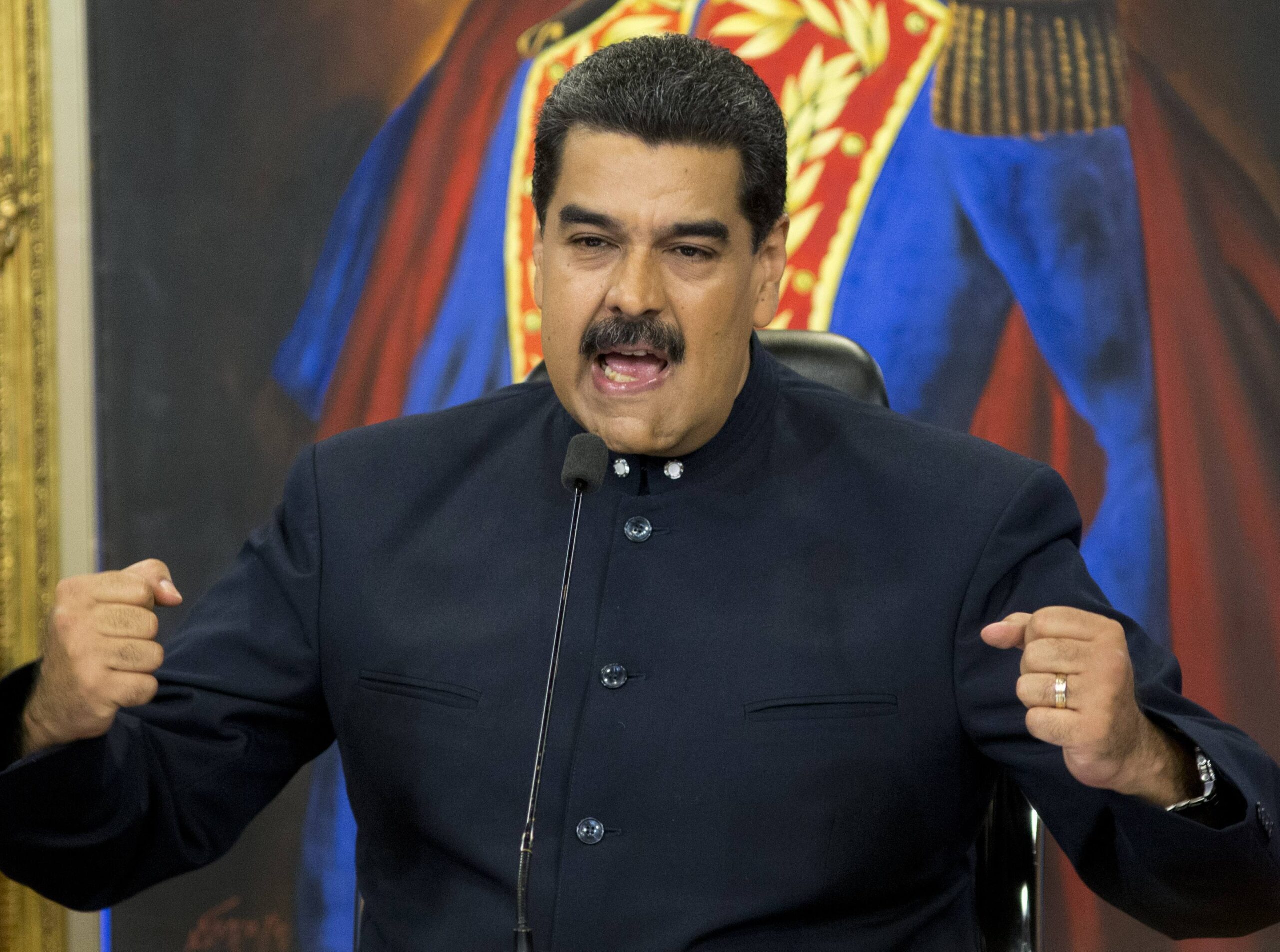
The deposed Venezuelan president was seized by the U.S. military last January in Caracas. He is scheduled to stand trial on drug conspiracy charges next year.
Read more NBA levies unprecedented penalty on Clippers, team owner Steve Ballmer
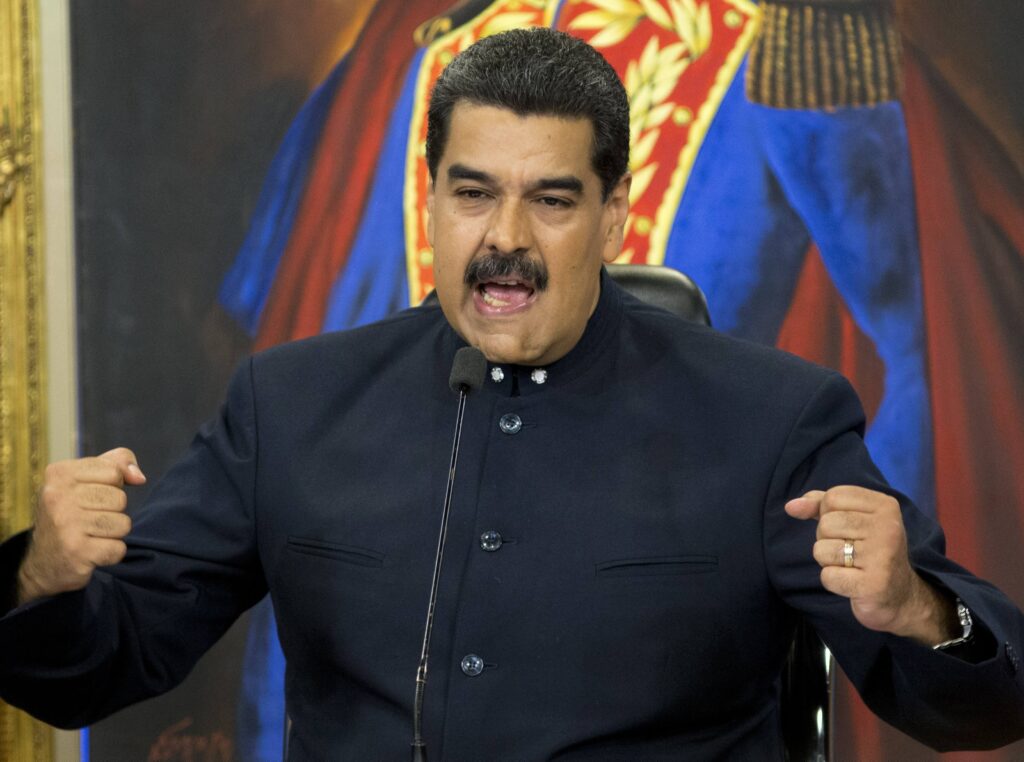
Deposed Venezuelan leader Nicolás Maduro on Wednesday launched a sweeping attack on the U.S. criminal case against him, urging a judge to dismiss the charges as an unlawful effort to prosecute a foreign head of state.
Maduro’s attorneys accused the Trump administration of launching an illegal U.S. military operation in January to seize the South American leader and bring him to New York to face narco-terrorism charges in violation of international law that shields heads of state from prosecution in foreign courts.
The lawyers also accused the Justice Department of improperly seeking to criminalize official actions Maduro took as president — a move they said runs counter to prior rulings, including the 2024 U.S. Supreme Court decision that hindered efforts to prosecute then-former president Donald Trump.
“This unprecedented prosecution is in flagrant violation of common law principles,” Maduro’s attorneys Barry J. Pollack and Anna Estevao wrote. “The government’s chilling belief that it can deprive any sitting head of state of immunity through the unilateral, political act of labeling him ‘illegitimate’ has no merit.”
Pollack articulated that argument — the most significant challenge to the case against Maduro to date — in a motion filed in federal court in Manhattan.
In a separate filing, Maduro’s defense team also contended that the case’s lead narco-terrorism charge should be thrown out, since prosecutors failed to allege that any crimes that the Venezuelan leader may have committed in his own country were carried out with the intent of harming the United States.
Both legal claims are aimed at persuading U.S. District Judge Alvin Hellerstein to dismiss the charges before Maduro’s trial scheduled for next year.
Justice Department officials did not immediately respond to Maduro’s legal filings Wednesday. They are expected to file their formal response in court next month.
But the defense bid could face long odds. A string of U.S. Supreme Court rulings, and decisions by lower courts dating back decades, have cast doubt on the notion that a criminal prosecution is not valid if it involves a violation of international law or the breach of a treaty.
Courts have also held that defendants can be prosecuted even if the circumstances in which they were brought to the country to stand trial were illegal.
Still, Pollack maintained Wednesday that Maduro’s case presents an unprecedented situation. “No American court has ever presided over the criminal trial of a foreign leader who was recognized by their own country as the sitting head of state at the time the charges were brought,” he wrote.
U.S. military operatives seized Maduro from the Venezuelan capital of Caracas on Jan. 6 in a secretive operation that was condemned at the time by numerous countries, including U.S. allies.
Federal prosecutors have accused Maduro and his inner circle of working with international drug traffickers to transform Venezuela into a hub for shipping massive amounts of cocaine into the U.S. The four-count indictment alleges Maduro fostered a culture of corruption that made millions for Venezuela’s elite through narcotics smuggling, money laundering and other crimes.
Maduro and his wife, Cilia Flores, who is also charged in the case, have denied the allegations. Both remain in a federal detention center in Brooklyn, where they have been held since the U.S. military operation in January.
Read more Trump encouraged Army secretary to stay in job
On Sunday, photos of the former Venezuelan leader — dressed in gray prison sweats, noticeably slimmer and flashing peace signs — were posted to his social media accounts, with a message purportedly from Maduro saying he was “standing firm.”
“We will remain strong, serene and confident,” read the message in Spanish accompanying the photos. “God is with us. God will provide. Venezuela will be reborn.”
Maduro’s argument that, as a sovereign head of state, he is immune from prosecution in a foreign court is likely to hinge on how Hellerstein, the judge overseeing his case and an appointee of President Bill Clinton, interprets his claim to being Venezuela’s rightful leader.
The U.S. has not recognized Maduro as the president of the South American nation since 2019, when he was sworn in after an election that officials in Washington declared was rigged. His reelection in 2024 also drew allegations of fraud, although Maduro has insisted both votes were legitimate.
Pollack argued Wednesday that U.S. recognition of Maduro’s legitimacy should not matter.
“Even though the United States ceased recognizing him as … president years ago, Mr. Maduro continued to be recognized internationally as, at a minimum, the de facto head of state,” he wrote.
Former Panamanian dictator Manuel Noriega raised similar arguments of immunity after U.S. forces captured him to face drug trafficking charges out of Miami in 1990.
Like Maduro, the U.S. did not recognize Noriega as Panama’s legitimate leader at the time. And a federal appeals later upheld Noriega’s conviction, noting that Panama never sought head-of-state immunity on his behalf.
But Pollack maintained that Maduro’s case differs from Noriega’s. The Panamanian strongman seized power in a military coup and never claimed to hold any executive office laid out in that country’s constitution.
Maduro’s government, while not officially recognized by the U.S., has largely remained in place since his arrest. Pollack stressed Wednesday that the Trump administration recognized Maduro’s hand-picked former vice president, Delcy Rodriguez, as the new legitimate acting president of the country.
Rodriguez initially insisted that Maduro was Venezuela’s rightful leader and demanded his swift return.
But in the months since, she has largely fallen silent on the issue as cooperation between her administration and Trump’s has grown. On Friday night, Trump announced that the U.S. had acquired a stake in a vast share of Venezuela’s oil fields.
“Ms. Rodríguez and other representatives of Venezuela’s government [have] made clear,” Pollack wrote Wednesday, “that Mr. Maduro remains the legitimate Venezuelan head of state and that the United States had violated Venezuela’s sovereignty by kidnapping him.”
Read more Wood returns to the lineup, but Nationals are blanked by the Braves