In today’s edition … What we learned now that the primaries are over … We ask you about people who get cushy diplomatic posts … but first …
Read more Trump’s third surgeon general nominee, Nicole Saphier, to face Senate
House primaries are over.
And, for most Americans, so too is the general election.
Let me explain.
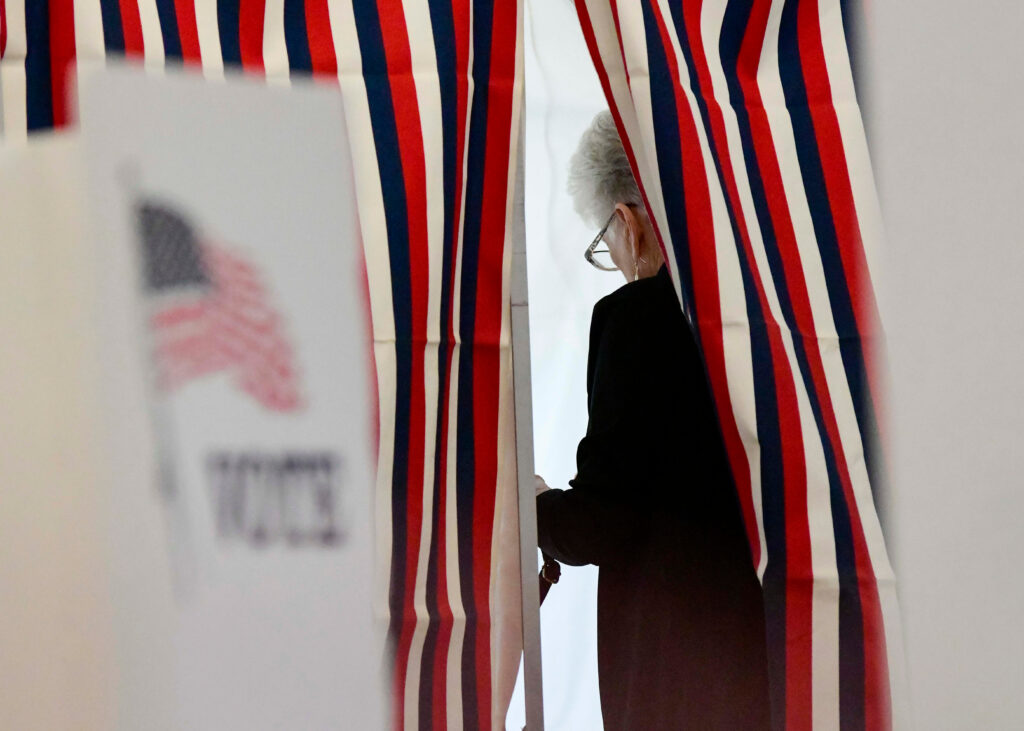
Most Americans don’t live in competitive House districts, so who will represent them in Congress next year was likely decided in the primary — making voting later this year mostly moot. And that problem is only getting worse.
According to Unite America, a nonpartisan election reform organization, just over 9 percent of eligible voters participated in dominant party primaries, and they effectively decided the representatives for 88 percent of all U.S. House seats.
Nick Troiano, the group’s founding executive director, said this dynamic “explains so much of the division and dysfunction today.”
“A very small fraction of the American electorate is effectively electing most of our leaders in Congress,” Troiano said. “No wonder Congress has an abysmal approval rating, because most Americans did not elect them and they are not representing the majority of voters in turn.”
The group arrived at this number through a few simple steps: First, they looked at how many seats in Congress are actually competitive, according to political prognosticators. Second, they looked at dominant party primaries in noncompetitive races to see how many people vote in races with more than one candidate on the ballot.
The numbers are striking. According to the group, 383 of 435 contests are considered uncompetitive in the general election, and therefore are decided in the primary.
This problem has only worsened in recent years, with more seats being decided by the primaries each cycle. This year, that trend was further exacerbated by mid-decade redistricting that cut the number of competitive House seats on the ballot this November.
In 2020, 10 percent of eligible voters elected 83 percent of all U.S. House seats, according to the group’s data. The number shifted to 8 percent effectively electing 83 percent in 2022 and 7 percent effectively electing 87 percent in 2024.
Additionally, the fastest-growing segment of the American electorate — those voters who don’t identify as either Republican or Democrat — are not allowed to vote in primaries in 16 states, a reality that Troiano says automatically disenfranchises 17 million voters “from the vast majority of congressional races.”
“This problem is structural. It is a function of a design of the system, not of participation in the system,” Troiano said. “Before a single vote is cast in November, more members of Congress will have effectively been elected than at any time in past elections.”
So how do advocates like Troiano and others hope to change this issue?
First is a push to allow any voter to vote in primaries, opening up party primaries for independent voters. Some states, like Delaware, one of the places with a closed primary, have moved closer to opening up.
The group is also pushing for more states to adopt a nonpartisan primary system where all candidates run in the same primary, and the top two or four vote-getters move on to the general election. This kind of system is in place in states like California and Alaska. Voters in Massachusetts will decide this November whether to adopt a top-two system.
“Most attention in politics is being paid right now to, well, which party is going to control Congress in November?” Troiano said. “And that overlooks the bigger story in politics, which is that 90 percent of November elections are already decided before a single vote is cast, and we should not accept that as normal in a country that considers itself a democracy.”
There are some lessons to be learned from the 2026 primaries that will apply to the general election, too.
I published a story on these takeaways this morning, but there were two overarching lessons from the past six months:
It’s the economy, stupid
It’s difficult to overstate how important the economy is in these midterm elections.
“The number one issue on voters’ minds, as it relates to their overarching concern and how they are choosing to vote, centers around cost of living and the economy,” said Mike Smith, the head of House Majority PAC, the top Democratic super PAC focused on winning back the House. “Every time you ask voters what they care most about … essentially they say cost of living in three different ways.”
A Marquette Law School poll released this month found that half of American voters feel either “inflation and the cost of living” or broadly “the economy” is the top issue heading into the midterms.
Read more Daylen Lile comes through in a pinch, and Nationals outduel Phillies
And it’s not just Democrats driving this trend.
A New York Times/Siena poll released this week found Republicans, too, are turning on the president’s economic record. While 72 percent of Republicans said the economy was better than it had been the previous year when surveyed in January, that number fell to only 29 percent now.
Those could be destabilizing numbers to any Republican candidate, given President Donald Trump was explicitly elected to bring inflation down and revitalize an economy damaged by years of the coronavirus pandemic.
Voters are angry — at the establishment and at Trump
Some of Democrats’ primary plans were upended this year when — from Maine to Michigan to Florida — establishment candidates lost to progressive primary challengers often running on messages that tapped into antiestablishment fervor.
Possibly one of the most noteworthy, yet undercovered, races was in Colorado, where Sen. Michael Bennet lost his bid to be the state’s Democratic gubernatorial nominee to state Attorney General Phil Weiser, who made the case to voters that he had been more aggressive in confronting Trump than Bennet and lambasted the senator as part of the problem in Washington.
The overall trend shows that the anger with Washington — which has dominated conservative politics for more than a decade — has now spread to the left, with polls showing Democrats too hold deep distrust of government institutions. This could well carry into the general elections, where scores of vulnerable incumbents will be on the ballot.
“There is a great deal of cynicism about politicians and politics in general,” said Eileen Laubacher, a Navy veteran hoping anti-incumbent fervor will help her oust Rep. Lauren Boebert (R-Colorado) in November. “[Voters] want something different.”
You can read more about these takeaways — along with thoughts on the rise of niche political issues and Trump’s standing with Republicans — here.
Morgan County Citizen (Utah): Colleges and universities nationwide are preparing for a dramatic shift in who attends the nation’s more than 5,000 higher education institutions, with the changes affecting their bottom line and, in some cases, their futures altogether.
Creative Loafing (Florida): The Sunshine State is often not home to high gas prices, especially when compared with places like California. But the price hikes because of the Iran war have become so significant that even prices in Florida are climbing, now over $4 throughout the state. It’s a reminder of how widespread these gas shocks have become.
Minnesota Reformer: What was the impact of Operation Metro Surge in Minnesota? According to a new report, the surge in immigration enforcement in the Minneapolis area “led to over 2,300 immigrants leaving the country.”
Most of you said you’d rather not receive a $5,000 check from the Trump administration — even if the extra money would be welcome.
“While some extra money is always nice, the risk of fueling inflation and blowing the debt out of the water, I hope not to get a check,” wrote John G. Schickler. “Better moves would be to reverse policies, including tariffs, to bring down the cost of living.”
“While I can’t say I don’t need extra money I would not accept it when so many people are on deeper need,” added Rick Prescott.
“Would be instantly given to the food bank,” added Lori Jahn.
Then there are those of you who just don’t think the plan to give every American adult $5,000 if Republicans win the midterms is going to happen.
“No, of course it’s never going to happen. Because it’s illegal. It’s paying for your vote. And that is not legal,” wrote Beth Dimon.
Some of you, however, weren’t so sure about rejecting the money out of hand.
“I would take Trump’s money as a reimbursement for all the money his laws and wars have taken from me, at the gas pump, the grocery store, through rising health insurance and home heating oil costs,” added Judith Doherty.
Kimberly Greenwood, the wife of singer and Trump friend Lee Greenwood, has been nominated to be the next ambassador to Barbados. It’s an example of presidential friends getting tapped for high diplomatic positions. It has happened in every administration. But what do you think of the practice? Should the president be able to name whomever they want to these positions? Or should guidelines limit the selections? Let me and your fellow Early Brief readers know at [email protected].
Read more Sports leagues ask regulators to help curb bettor harassment
Thanks for reading. You can follow me on X at @merica.