Plus: AI layoff fears and measles vaccine trust.
Two new polls find more Americans worry that AI and tech will cost jobs, while another poll finds trust in measles vaccines is down since 2020. But first…
Read more Why Karl Rove, a father of the modern Texas GOP, is voting for a Democrat
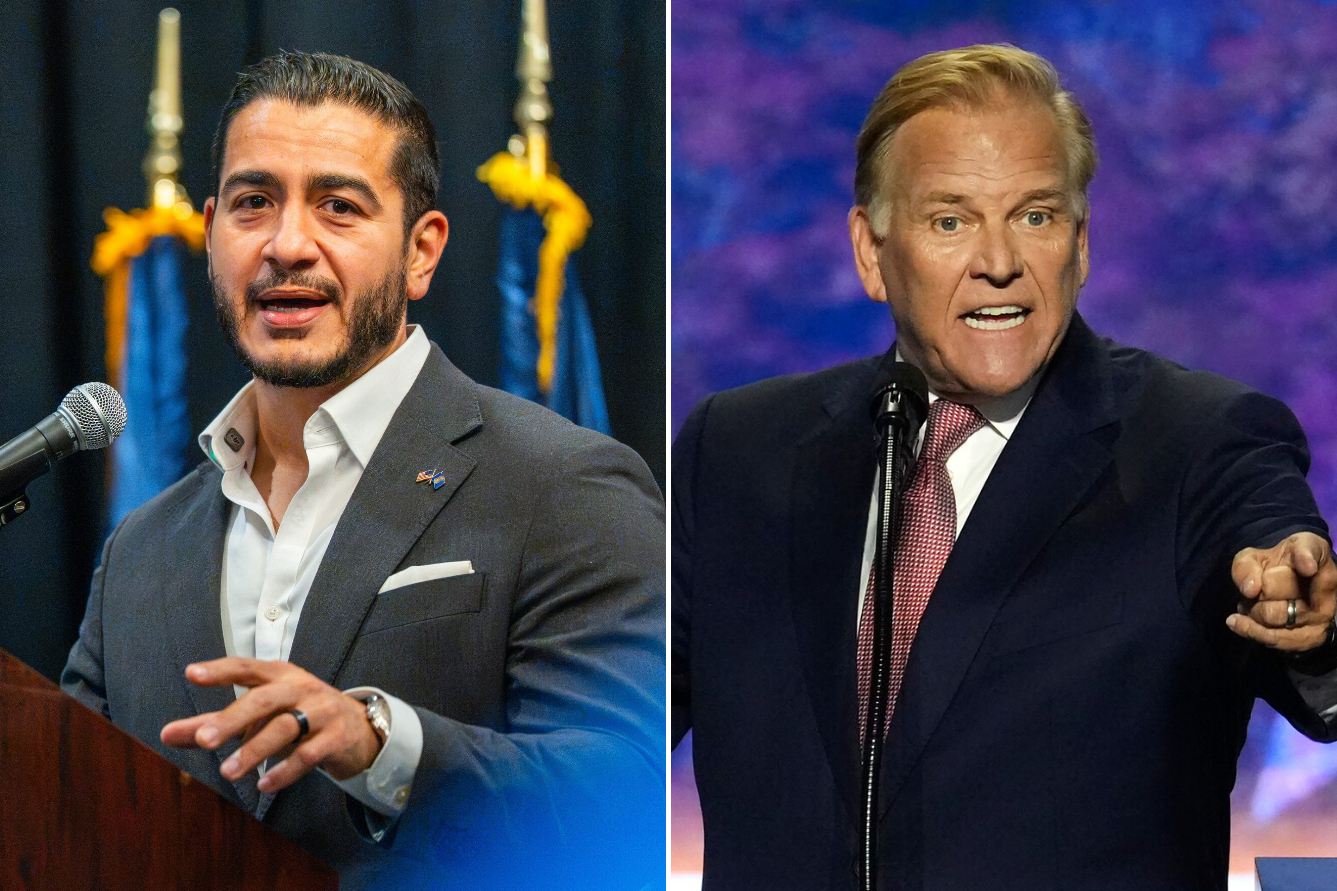
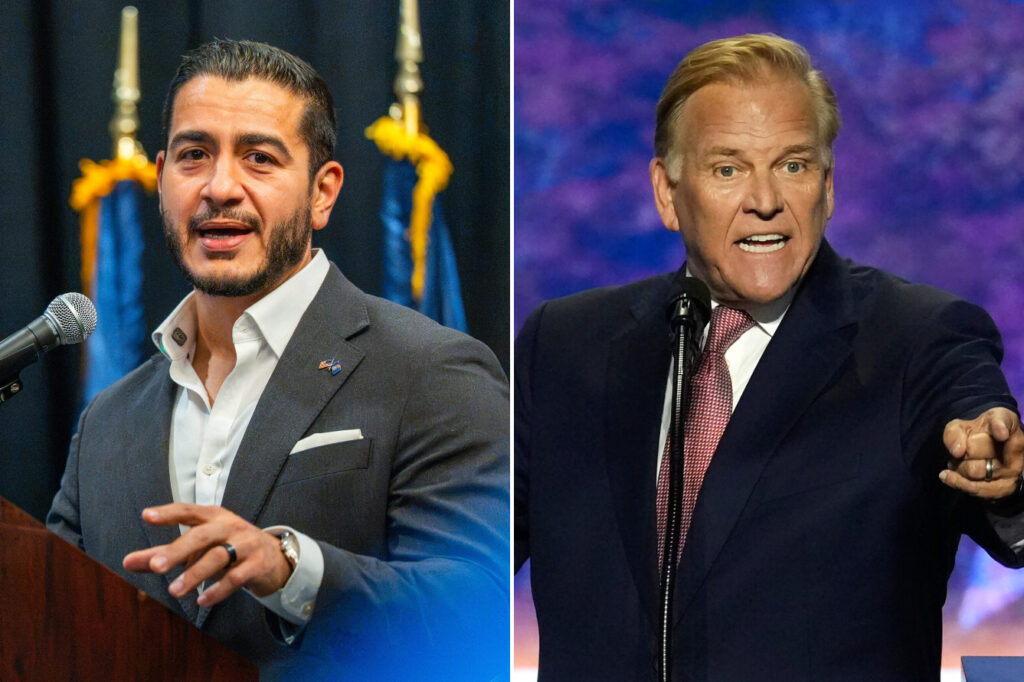
On Thursday, The Washington Post and George Mason University’s Schar School released our first poll of the fall midterm campaign in Michigan. The state hosts a toss-up Senate contest that could decide control of the chamber while also testing the appeal of candidate Abdul El-Sayed’s progressive politics.
Beyond the main story and results, I wanted to take Pollwatcher readers inside how we are conducting polls in election battlegrounds this fall.
The Post-Schar School poll samples come from voter files, which are official databases that include all registered voters in a state. Data firms such as Aristotle purchase the files and append contact info and other data for voters that can be used to conduct polls. Our polls draw a random sample of registered voters which is grouped (or “stratified”) by geography, demographics, partisanship and past turnout to ensure the sample reflects the state’s electorate.
Voter file sampling has some challenges, such as the fact phone numbers cannot be identified for a sizable minority of voters. But its strengths are substantial, including the ability to track participation by demographics and partisan indicators, such as party registration. Data on voters’ turnout record in recent elections is also useful in identifying likely voters (more on that below).
Once the sample is drawn, professional interviewers from Braun Research call selected voters on cellphones (65 percent were reached this way in the Michigan poll) and landlines (10 percent), while also texting voters a link to take the survey online (25 percent). Respondents have to confirm they have the same name as the person on the state voter record.
Post-Schar School polls first ask respondents to rate their chances of voting and which candidate they would support if the election were held today. This ensures that questions about other topics — like President Donald Trump or the economy — won’t influence their answers to vote-choice questions.
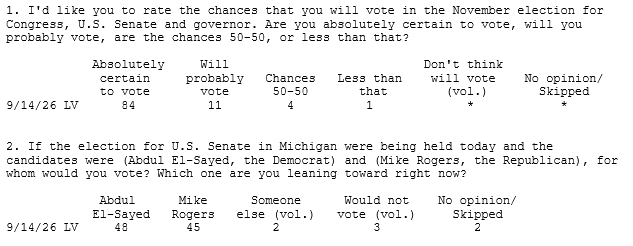
Questions on other topics use simple language that all respondents can understand and are sequenced from general to specific to limit question-order effects. For instance, our Michigan poll asked for one-word descriptions of the two U.S. Senate candidates Abdul El-Sayed (D) and Mike Rogers (R) before asking about support for Israel and their willingness to support a Muslim candidate for president, avoiding priming religion. Less than 2 percent of voters volunteered “Muslim” when describing El-Sayed, but it might have been higher had we asked this first.
The Post publishes a topline results document with the wording and order of poll questions along with overall results.
The sample of people who answer a survey rarely lines up perfectly with the electorate, with response rates typically higher among voters who are older, those who vote more frequently and those with more formal education.
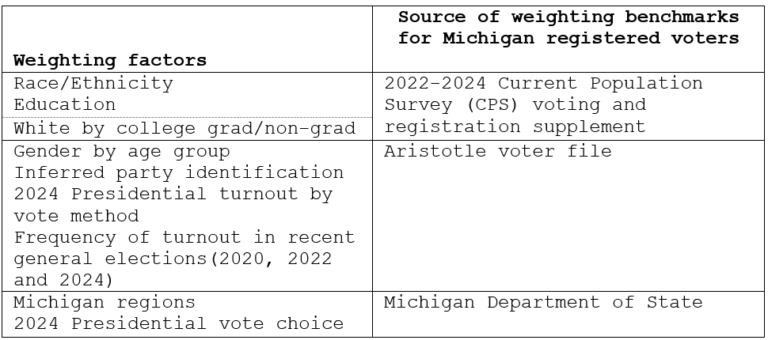
Weighting polls to match the population is a proven method for improving accuracy. The concept is simple: If 40 percent of registered voters have bachelor’s degrees but 60 percent of poll respondents report having one, college grads are weighted down to match their population share. Statistical software can weight samples by many different factors at once.
Read more Democrats demand to know where Venezuelan oil revenue is going
The Post-Schar School poll on Michigan was weighted to benchmarks for registered voters in the state by age, gender, education, race/ethnicity, a voter-file estimate of partisanship, 2024 presidential vote and method, and turnout frequency in recent elections.
Like the mythical Scottish village of Brigadoon that appears only one day every 100 years, the population of actual voters in any election exists only on Election Day after everyone has decided whether to vote.
While likely voters are always an approximation, studies looking at which poll respondents actually vote for have found past turnout and self-assessed certainty of voting are among the strongest predictors. Post-Schar School polls combine voter-file records of each respondents’ past turnout with their self-assessed certainty to vote to assign a probability of voting, which is used to produce likely voter results.
Measuring likelihood to vote is a uniquely valuable insight into understanding voters’ motivations. All year, national polls have shown Democrats were more enthusiastic about turning out. Yet our Michigan poll showed a different dynamic, with Republicans slightly more certain about voting, partly due to lower enthusiasm for voting among Black voters who are also more critical of El-Sayed.
The Washington Post was the first news organization to commit to the Transparency Initiative of the American Association for Public Opinion Research (AAPOR), which mandates that polls disclose details about sampling, question wording, weighting and other factors (I am also a member of AAPOR). Such details are hard to find for many polls, but readers can find results, cross tabs and technical details for all Post polls in our poll archive.
Send your questions, comments and ideas to [email protected].
Americans are worried that AI will cost jobs
Two polls released this week suggest fears of job loss from artificial intelligence are continuing to grow. A poll conducted in June by the Pew Research Center found 71 percent predicting that AI will lead to fewer jobs over the next 20 years, up from 64 percent who said this in 2024.
Separately, a poll conducted in August by Gallup found 27 percent of American workers worry that their job “will become obsolete because of technology.” That figure is up from 20 percent last year and from 13 percent in 2017. Fears have risen most sharply among college grads and younger workers in the past few years.
Measles vaccine trust is down
Seventy-six percent of Americans believe the measles vaccine is safe for kids, but that is down from 84 percent in 2020, according to a Reuters-Ipsos poll. Reuters reported that the decline in trust was more pronounced among Republicans, although trust was lowest among political independents at 69 percent.
The partisan differences on vaccine trust echo a Washington Post-KFF poll from last year that found 22 percent of Republican parents had skipped or delayed any vaccine for their child, compared with 17 percent of independents and 8 percent of Democrats.
Who do Americans blame for inflation?
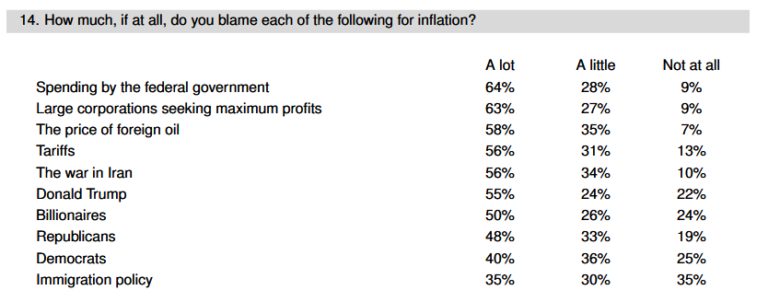
An Economist-YouGov poll this month asked registered voters how much they blame 11 different people, institutions and policies for inflation. Americans spread the blame fairly broadly, with majorities saying government spending, large corporations seeking profits, the price of foreign oil, tariffs, the war in Iran and Trump deserve “a lot” of blame. Half blamed billionaires, while less than half blamed Democrats and immigration policy.
Read more Poll finds close Michigan Senate race. Here’s how El-Sayed lags his party.