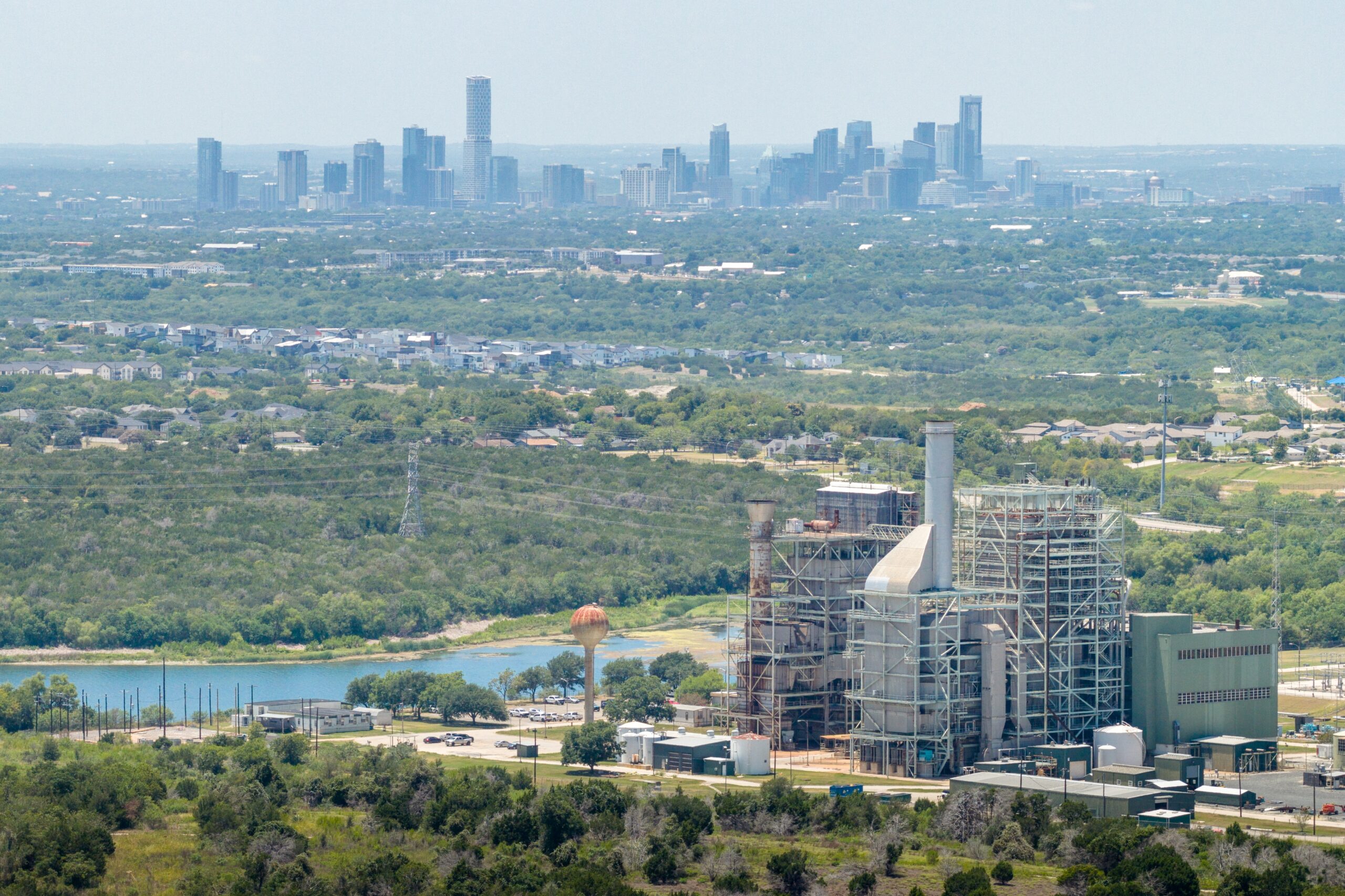
The president is defending the data center boom as GOP officials across the country turn against projects that have angered voters.
Read more Democrats want to draw more safe House seats. It could cost Black lawmakers.
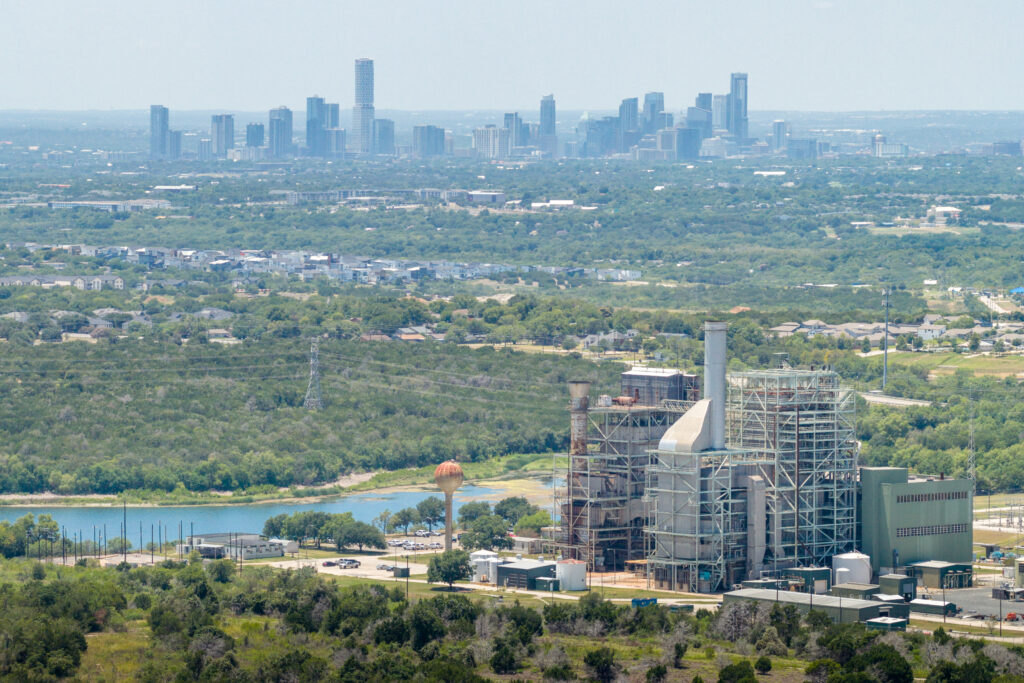
As voters in both parties grow anxious about the rapid build-out of data centers, President Donald Trump remains one of the tech industry’s most prominent champions — putting him increasingly at odds with members of his own party.
Nowhere is that divergence clearer than in Texas, where Trump travels Thursday to campaign for Ken Paxton, the state’s attorney general and Republican Senate candidate.
The state has courted some of the country’s biggest data center projects, but now Paxton and Gov. Greg Abbott (R) have moved to address voters’ concerns about the centers’ potential to raise power costs and disrupt neighborhoods, with Abbott pausing new projects from connecting to the state’s power grid and Paxton endorsing his approach.
Days after Abbott imposed the pause, Trump called the Texas governor’s resistance to data centers “a mistake.” The rift highlights a rare policy issue where Republicans are willing to break openly with the White House.
Trump has made accelerating data centers a signature priority, signing an executive order last year that expedites federal permitting, facilitates construction on federal land and makes qualifying projects eligible for financial incentives. He has hosted tech leaders in the Oval Office to celebrate multibillion-dollar deals for new data centers. And even as more members of his party turn against them, he repeatedly defends the rise of the tech infrastructure in public comments and interviews.
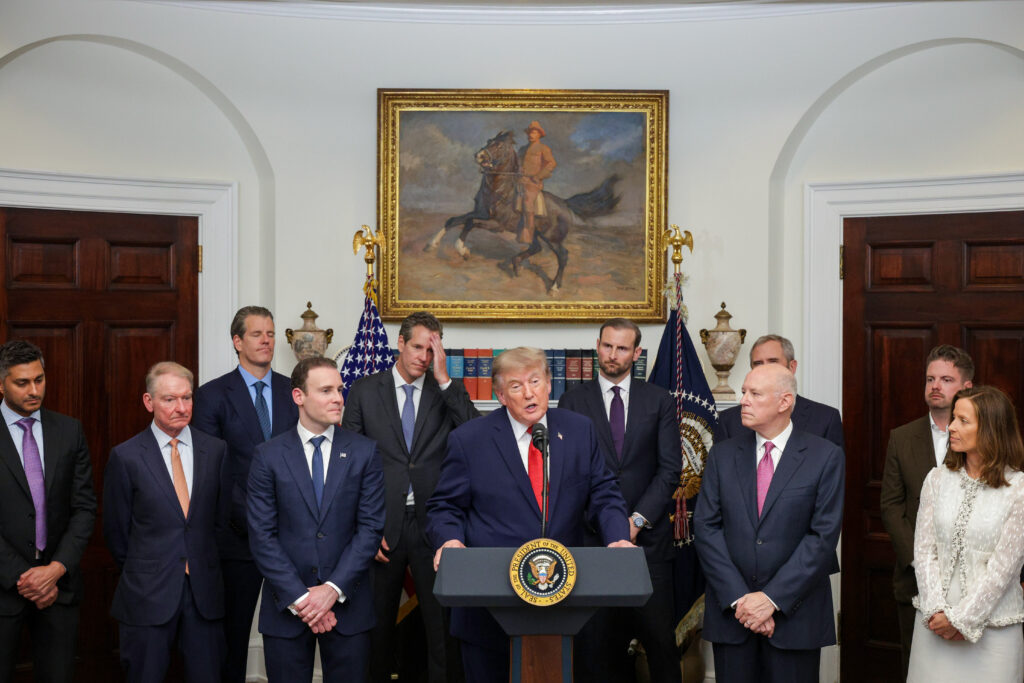
“If I were the mayor of a town or the governor of a state, and I had a chance to get a big plant in an AI plant or a data center, I would absolutely want it because the jobs are enormous, and the money paid, the taxes paid are just enormous,” Trump said last week, surrounded by leaders from the crypto industry.
“And if you don’t take it, you’re going to be left behind because there are plenty of places that want it.”
A national survey conducted Aug. 21-24 by the Economist and YouGov found that 51 percent of Americans disagree with the president’s assessment, including 41 percent of respondents who identified as conservatives.
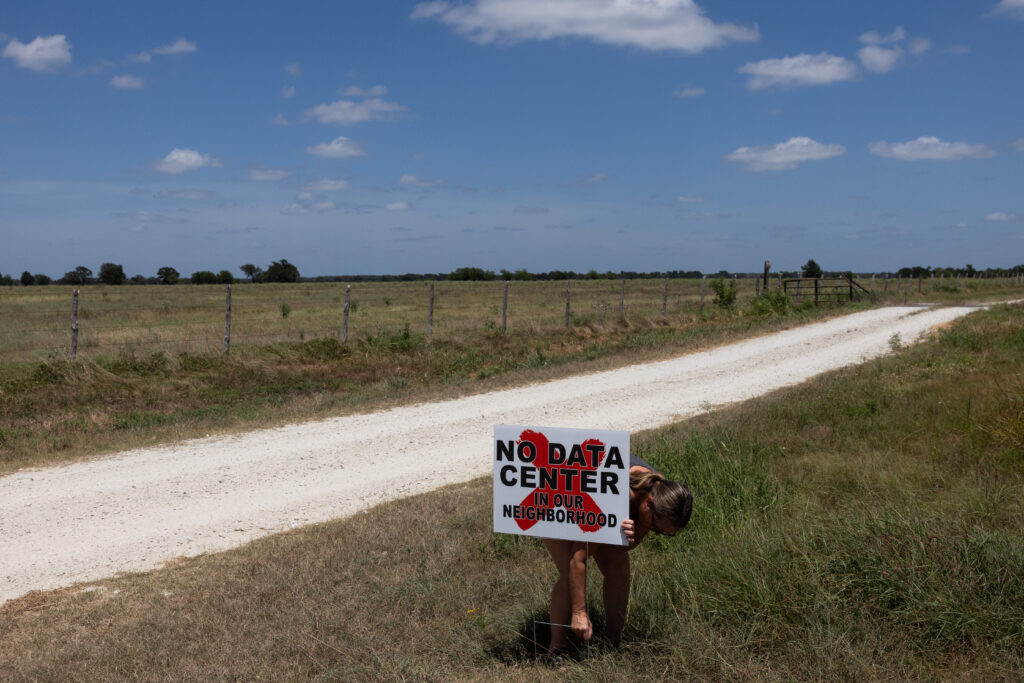
The poll also found that 61 percent of Americans opposed construction of a data center in their community, including 47 percent of Republicans.
More than half of people who voted for Trump in the 2024 election said that a new data center in their community would increase their electricity costs — a concern supported by evidence that the facilities’ enormous power demands can raise wholesale prices and leave other customers paying for grid upgrades.
How much consumers actually pay depends on how regulators and utilities allocate those costs, but the fear that ordinary people will get stuck with the bill has fueled increasingly pitched political fights across the country.
“Opinions on data centers have gone south so fast, faster than anything I’ve ever seen,” said Brent Buchanan, the founder and CEO of the Republican polling firm Cygnal. “Voters are looking for someone to stand up and say, ‘I have your interests above these tech companies. I have your interests above these data center companies. I have your interests above AI.’”
A White House official said that the president wants data centers to be built only in communities that want them. On Friday, Trump said Republican candidates do not need to take the same position as him on data centers.
“I want them to do what they want,” Trump said on Friday. “Some people feel differently. I really want them — if a Republican is against the data center, that’s okay with me.”
Trump’s support for the tech industry could complicate Republicans’ ability to sell that message to voters as they head to the polls. Democrats have launched ads attacking candidates who they say are receiving funds from donors tied to the tech industry and Trump.
Read more Perales has a shaky Nationals debut, but he arrives with a triple-digit fastball
The artificial intelligence boom has been central to many of Trump’s talking points about his economic accomplishments, including historic stock market highs and companies’ large investments in the U.S. economy.
Trump’s data center policies were influenced by a cohort of tech leaders who were prominent donors to his campaign. He signed the executive order that encouraged the build-out of data centers last year at an event with the co-hosts of the “All In” podcast, a show hosted by several prominent tech investors, including former White House AI and crypto czar David Sacks.
Sacks and Sriram Krishnan, a former White House official and venture capitalist, were also among the authors of the administration’s AI Action Plan, which outlined ways to expedite environmental permitting for data centers.
Trump has also expressed a fear of supporting regulation that could hold back the artificial intelligence industry, saying the United States could lose its edge to China. A wave of Chinese models released in July has increased concerns that U.S. companies could lose their lead over rivals.
“Trump just personally cares about this topic,” said a person familiar with his thinking, who spoke on the condition of anonymity to describe private conversations. “You just can’t change his mind about it.”
Over the past year, the White House has sought to respond to the growing backlash to data centers by touting a “ratepayer protection pledge” that would require major tech companies to generate their own energy for data centers, pay for grid upgrades and protect consumers from rising electricity bills.
However, the pledge is voluntary and does not specify consequences for companies if they do not comply.
Trump and White House officials have also sought to tout the number of jobs created by the expansion of data centers. Building a data center often creates many construction jobs, but the facilities typically employ relatively few people once they begin operating.
And Americans are growing increasingly wary about how AI could automate many jobs. In a Pew survey this month, 71 percent of adults said they think AI will lead to fewer jobs in the U.S. over the next two decades, up from 64 percent in 2024.
Republican strategists are increasingly aware of the vulnerability data centers pose to the party in the midterms, especially as Democrats increasingly run ads attacking their opponents for supporting data center projects in the past.
The National Republican Senatorial Committee warned in a memo obtained by The Washington Post last week that former Democratic senator Sherrod Brown’s aggressive campaign to tie Sen. Jon Husted (R-Ohio) to unpopular data centers could cost the incumbent his seat.
“More than any other thing in this race, data centers are the anchor hanging around Husted’s neck,” the NRSC wrote. “If he loses and data centers get the blame, politicians across the country will take notice — and they will not go near the next one.”
The growing criticism of data centers from Republican politicians is not limited to Texas. In the past six months, Republicans’ public statements about data centers have turned sharply negative, according to a Post analysis of thousands of social media posts and newsletters from hundreds of politicians from both major parties since April 2024.
A representative for Paxton, who is expected to appear with Trump on Thursday, did not respond to questions about the divergence between his new data center policy and the White House’s position. Paxton’s plan proposed federal legislation to block data centers’ use of Chinese technology and to hold companies criminally liable if their data centers power AI chatbots that “undermine children’s safety.” Experts questioned whether it would be possible to enforce his plan.
Buchanan said Paxton’s approach could resonate with voters.
“The conversation is not happening with people about what these things are actually for, why we need more of them and most importantly what is the benefit if it comes near you,” Buchanan said. “There’s not a unified message behind it, so that’s how you end up in this place with reflexive opposition to them.”
Read more Commanders struggle to protect Jayden Daniels in joint practice with Ravens